

🌿 Lead-in
Yuzu has always been one of my favorite scents —
bright, uplifting, and so easy to welcome into daily life through aromatherapy, teas, and little kitchen moments.
But nothing compares to the fragrance of fresh yuzu, and its season has just arrived.
As winter begins, this small citrus brings a gentle spark of warmth and joy to Japan. Since many people outside Japan may know the word “yuzu” but not how deeply it’s woven into everyday life here,
today I’m sharing a gentle look at how this small citrus is used — in food, in warmth, in winter rituals, and in everyday comfort.
🍊What Is Yuzu? A Small Citrus with a Big Presence
Yuzu is a small, fragrant citrus that has been loved in Japan for centuries.
It looks a bit like a round, slightly bumpy lemon, but the aroma is completely different —
brighter, softer, and somehow both calming and energizing at the same time.
Unlike oranges or lemons, yuzu is rarely eaten as-is.
Instead, its peel and juice are treasured for their fragrance, depth, and ability to bring a touch of warmth into the colder months.
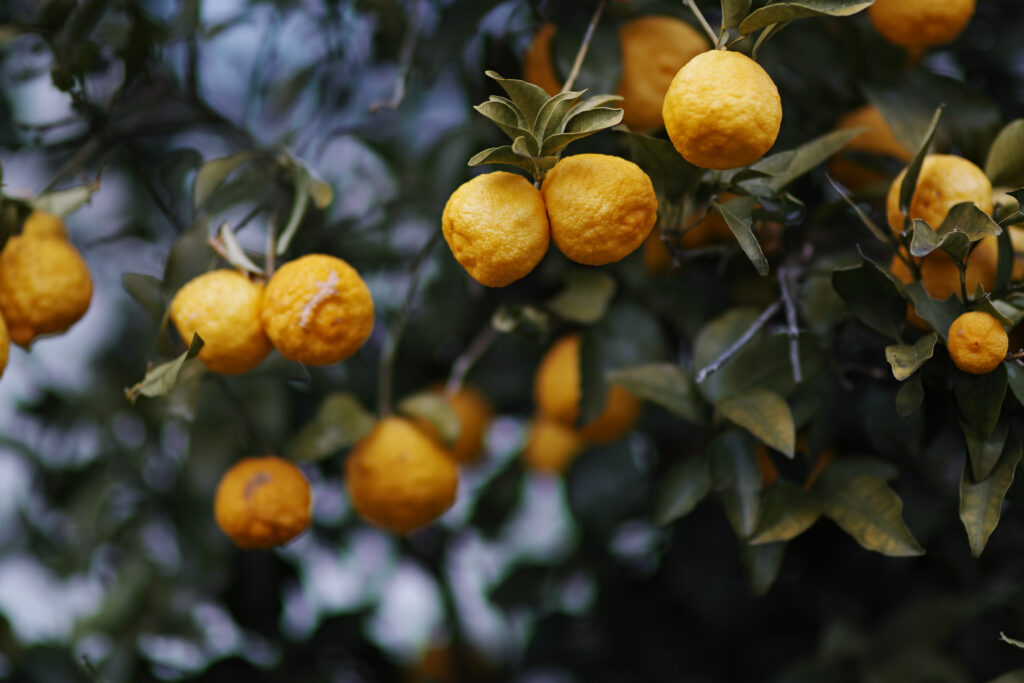
Golden yuzu glowing among winter leaves, carrying their gentle fragrance into the season.
🍽️Yuzu in Everyday Japanese Life
In Japan, yuzu quietly appears in many corners of daily life.
In the kitchen, its zest is used to brighten soups, grilled fish, and hotpot dishes.
Some people squeeze a little fresh yuzu into nabe (winter hotpot) for an instant lift in both aroma and flavor.
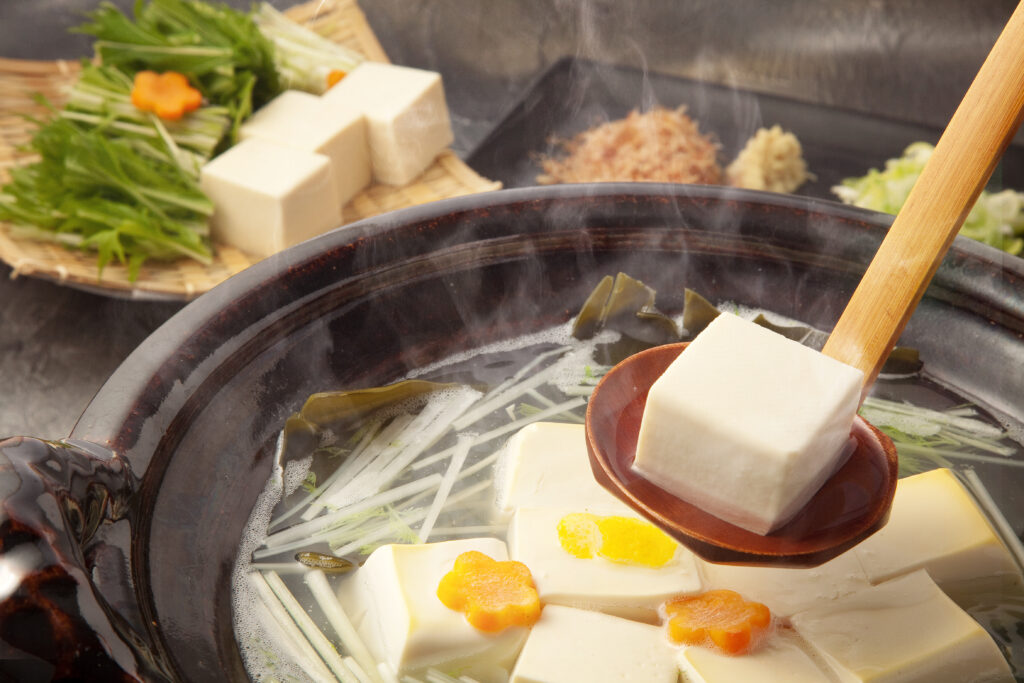
Steaming winter nabe with tofu and yuzu zest. A quiet comfort enjoyed in many Japanese homes.
There is also yuzu-cha, a sweet tea made from thinly sliced peel, which fills the room with a soft citrus glow when mixed with hot water.

👉 And if you’d like to explore more gentle, warming Japanese teas including Yuzu Tea,
you can discover my list of favorites here →Discover 7 Must-Try Japanese Teas
https://8rainbow.work/%f0%9f%97%bediscover-7-must-try-japanese-teas/
Yuzu kosho — a spicy paste made from green chili and yuzu peel — is a popular condiment that adds a sharp, fragrant heat to many dishes.
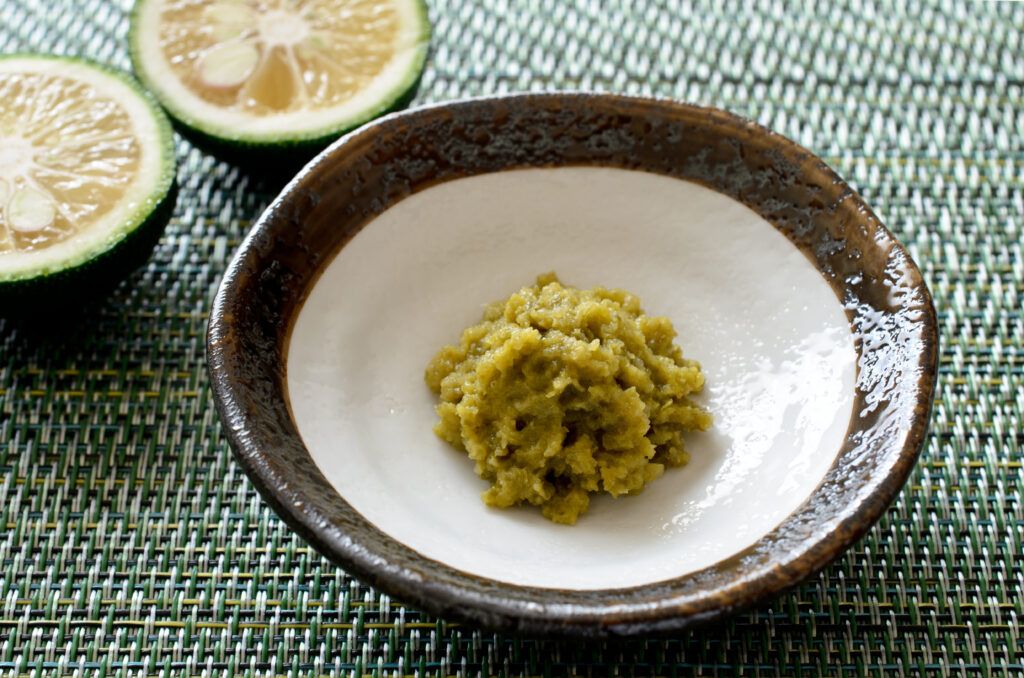
I often use yuzu kosho in simple Japanese-style pasta. You can buy it in small tubes at supermarkets or online, and it’s an easy way to add brightness and a little heat to any dish.
Beyond food, the scent of yuzu drifts through aromatherapy blends, bath salts, natural cleaners, and hand creams.
Its fragrance brings a gentle clarity, making it a favorite during colder months when people seek warmth and comfort.
♨️Yuzu and Winter: Warmth, Comfort, and the Famous Yuzu Bath
Perhaps the most iconic image of yuzu in Japan is the yuzu bath traditionally taken during the winter solstice.
Whole fruits are floated in hot water, filling the bathroom with steam and fragrance.
Not everyone does this today, of course —
but many families still enjoy the tradition, either for its nostalgic feeling or simply for the warmth and brightness it brings.
Traditionally, this ritual was believed to:
- warm the body
- protect against colds
- purify the spirit
- bring good fortune for the coming year
Even now, some people prepare a yuzu bath because it feels comforting, seasonal, and deeply connected to winter.
🐾♨️Capybaras & Yuzu Baths — A Whimsical Winter Tradition in Japan
And speaking of yuzu baths, Japan has a surprisingly charming twist on this tradition —
capybaras soaking in yuzu-filled hot springs.
This began in the early 1980s at Izu Shaboten Zoo in Shizuoka.
During a particularly cold winter, the staff noticed that the capybaras loved sitting in the warm water used to clean their enclosure.
From there, the idea of giving them their own hot-spring-style bath was born —
and when winter arrived, they added floating yuzu for seasonal flair.
Today, it has become a beloved annual event across several animal parks and hot-spring theme facilities in Japan.
✨ Why yuzu?
- The scent is uplifting and refreshing — even animals seem to relax around it.
- The bright yellow color adds a festive, wintery touch.
- It mirrors the human custom of taking yuzu baths on the winter solstice, blending culture with a bit of playful imagination.
🐾 Where you can see it
Izu Shaboten Zoo is the most famous spot, often called “the original capybara open-air bath.”
Other zoos in Japan now follow this tradition, offering their capybaras warm baths with yuzu, apples, or seasonal herbs.
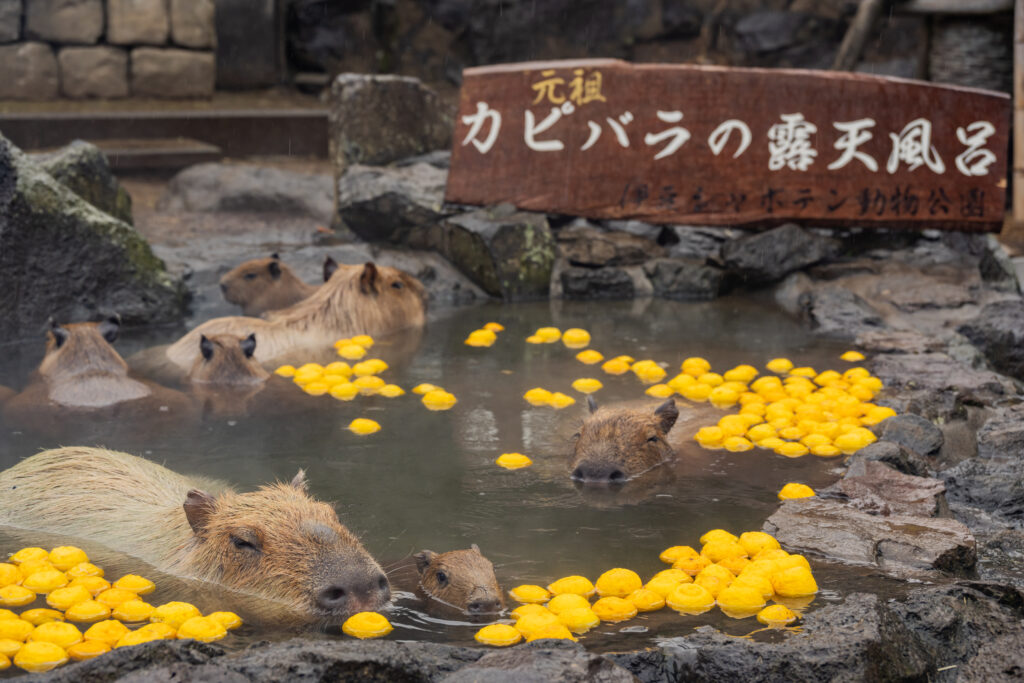
🌿 The atmosphere
With steam rising from the water, dozens of yuzu fruits bobbing on the surface,
and capybaras relaxing with half-closed eyes,
it’s hard not to smile.
It’s peaceful, a little whimsical, and beautifully Japanese —
a small reminder that comfort and warmth are universal, even among animals.

✨The Emotional and Spiritual Side of Yuzu
Beyond its bright flavor and seasonal charm, yuzu carries a gentle emotional and spiritual presence.
Its fragrance has a way of softening the mind — clear but not sharp, warm but not heavy —like a small light glowing quietly on a winter morning.
For many people in Japan, yuzu symbolizes:
- renewal — a fresh start as the year turns
- protection — a soft barrier against the cold season
- clarity — a scent that clears the “inner air”
- returning light — especially during the darker days of winter
Its cleansing energy is not forceful;
it feels more like a refreshing breeze or a subtle shift in mood, the kind you notice only after you exhale.
That’s why yuzu appears not only in kitchens and baths, but also in wellness practices, spiritual rituals, and small daily comforts.
For some, simply holding a fresh yuzu and breathing in its fragrance can bring a moment of grounding —
a reminder that warmth and brightness still exist, even in the coldest seasons.
💛Kaha’s Note
Yuzu shows up in so many products in Japan —
from aromatherapy oils and natural cleaning gels to yuzu kosho, yuzu ponzu, and sweet yuzu tea.
In winter, I love using yuzu-scented oils and enjoying hotpot with plenty of yuzu ponzu.
Its fragrance always lifts my mood, no matter how cold or busy the day feels.
If you ever come across fresh yuzu around where you live,
I hope you’ll try a yuzu bath on the winter solstice.
This fragrant fruit can bring surprising warmth and comfort to the season.
I’m looking forward to enjoying my own yuzu bath this year, too —
a small seasonal ritual that always brings me back to warmth, clarity, and a little bit of joy.


コメント