
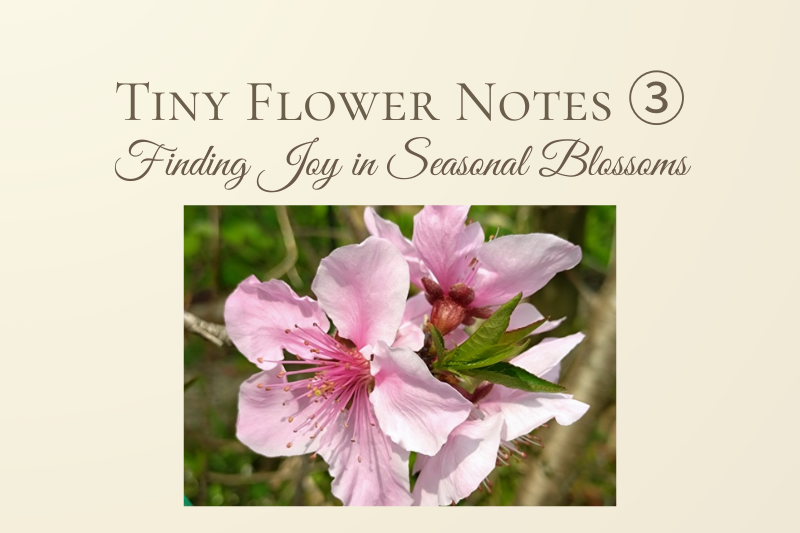
🌟 Lead-in
While the quiet presence of early spring continues to unfold,
another gentle sign of the season begins to appear.
Peach blossoms open softly,
as the air slowly shifts from the chill of winter to a warmer touch.
Their petals feel round and delicate,
holding a quiet softness that differs from the strength of plum blossoms.
After plum trees announce the coming of spring,
peach blossoms begin to deepen that feeling —
gently expanding the warmth of the season.
Their colors are tender and calm,
as if nature itself is beginning to relax.
Each blossom feels full and gently open,
yet they do not fill the landscape all at once like cherry blossoms.
Instead, they appear quietly,
blending softly into the spaces around them.
🌸 Seasonal Photo Notes
These photos were taken over several days in early spring,
capturing the gradual opening of peach blossoms —
from small buds to soft pink flowers.
Unlike more well-known spring flowers,
peach blossoms are often found in quiet, familiar places.
A small tree in a garden,
or a branch noticed during an ordinary walk,
can gently reveal their presence.
Even a single branch,
or just a few blossoms opening together,
can create a moment of calm.
These quiet encounters
offer a gentle reminder
that the season is slowly deepening,
almost without being noticed.
📸 Photo Record: From Bud to Bloom, and Beyond
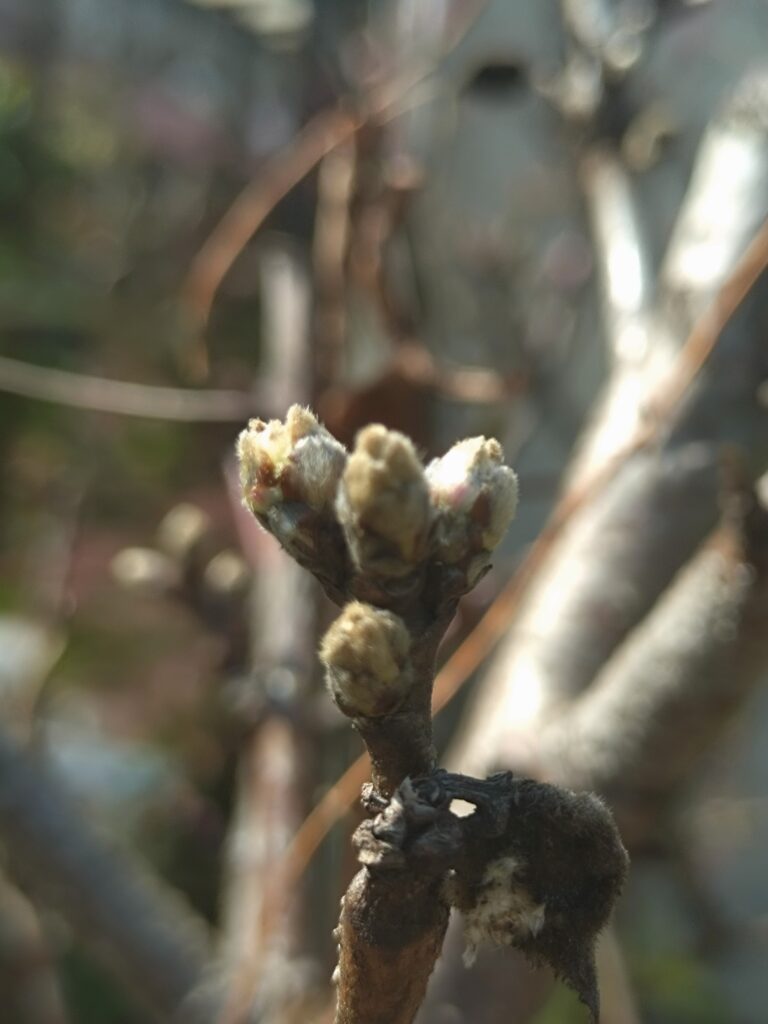
Soft peach buds beginning to awaken.

Small blossoms gently opening along the branch.

Delicate pink petals reaching toward the light.
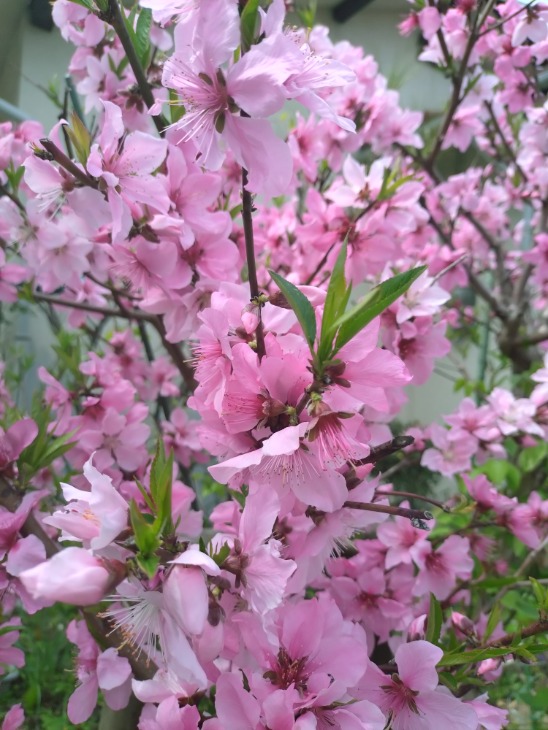
Clusters of blossoms bringing warmth to the scene.

A peach tree quietly standing in a familiar garden.
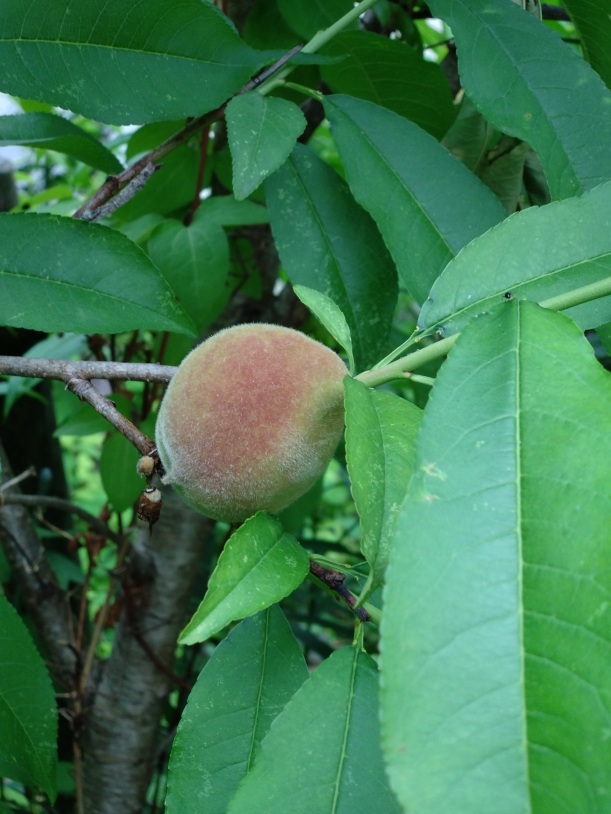
A single peach forming among the leaves in early summer.
🌼 About Peach Blossoms (Momo)
Peach blossoms, known as Momo (桃) in Japan,
have long been associated with protection and the warding off of negative energy.
This belief can be traced back to ancient traditions in both China and Japan,
where peaches were considered to carry a special significance.
In Japanese mythology, peaches are said to appear in stories of purification,
most notably in the tale of Izanagi,
where they are used to drive away harmful spirits.
Because of this, peaches have been connected with
ideas of protection and safety in traditional culture.
This cultural meaning is also reflected in seasonal customs.
On March 3rd, known as Momo no Sekku (Peach Festival),
peach blossoms are displayed to wish for health, happiness, and protection.
In Japan, there are also ornamental varieties known as Hanamomo,
which are cultivated for their blossoms rather than fruit.
These flowers bloom in soft pink, white, or deep red,
sometimes covering entire trees in rich, layered colors.
At the same time, peach blossoms can also be found
in quieter, everyday settings —
such as small gardens or along familiar walking paths.
Because of this, their presence may feel both vibrant and expansive,
or gentle and closely connected to daily life.
Their rounded petals and soft colors
often bring a quiet sense of warmth to the surrounding space in a very natural way.
⭐ Kaha’s Note
In our garden, there is an ornamental peach tree — hanamomo —
planted by my mother.
As winter slowly begins to soften,
the first to bloom are the quiet yellow flowers of wintersweet.
Soon after, plum blossoms begin to open,
and camellias quietly start to appear alongside them.
Then, as the air grows a little warmer,
peach blossoms begin to bloom.
At the same time,
camellias come into fuller bloom,
and the garden gradually becomes more colorful.
Not long after,
spring flowers such as tulips, violas, and pansies
begin to open all at once,
bringing brightness and a sense of joy to the space.
Each flower appears in its own timing,
yet together they create a gentle rhythm of the season.
Watching the garden change day by day,
it is hard not to feel a quiet sense of excitement.
Spring in the garden
does not arrive all at once —
it unfolds, little by little.
And simply watching it
can gently lift the heart,
bringing a quiet sense of joy.
🌈 Explore More
A quiet collection of seasonal reflections, nature,
and gentle moments from Japan on Rainbow Awakening.

コメント