
🍃 Lead-In
Each year, without a sound, new sansho leaves appear in spring.
They grow in corners, in dappled shade, where you might not look unless you know to.
Their scent is vivid—bright, beautiful and unforgettable.
But they don’t just belong to spring—they stay with you through the year, each time offering that unmistakable fragrance.
It lingers on your fingertips, in the kitchen air, and somewhere deeper, like a memory.
For me, sansho leaves are more than just herbs—they’re one of my top three must-have plants in the garden.
Their fragrance lifts the day, no matter how small the moment.
In spring, the scent is at its peak—fresh, vivid, and full of life. The tender new leaves can even be eaten whole.
But the leaves stay through the seasons. Step outside, reach out, and their scent will meet you—bright and unmistakable.
You don’t have to wait for a special moment. The leaves are always there, offering their presence whenever you pass.
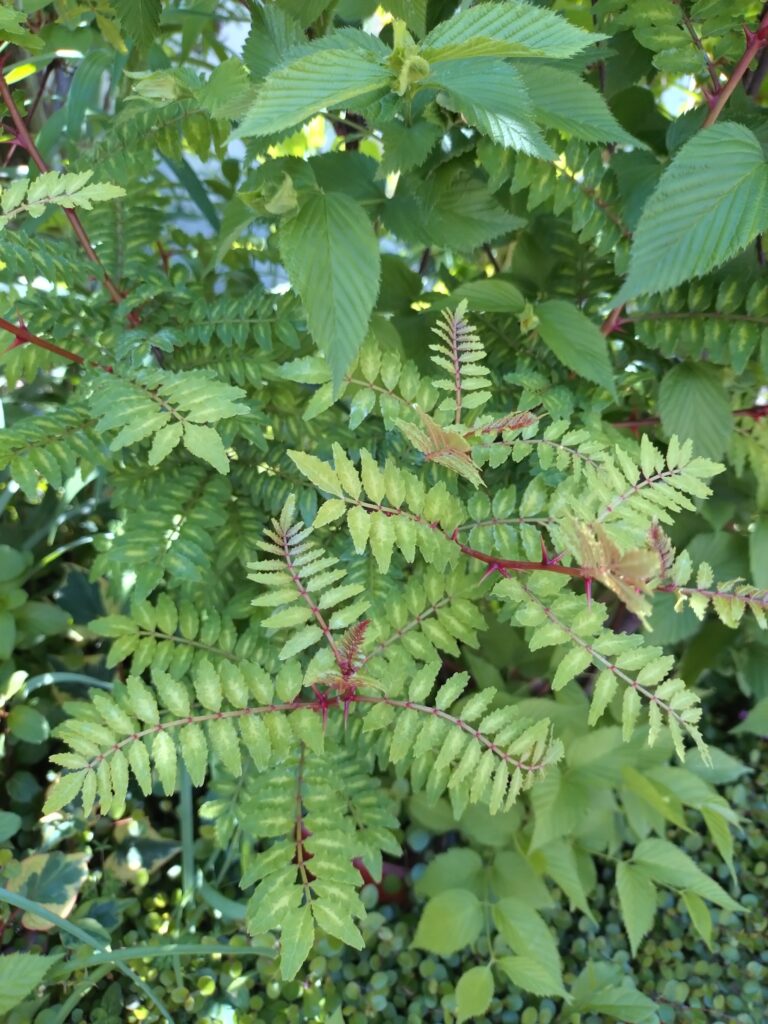
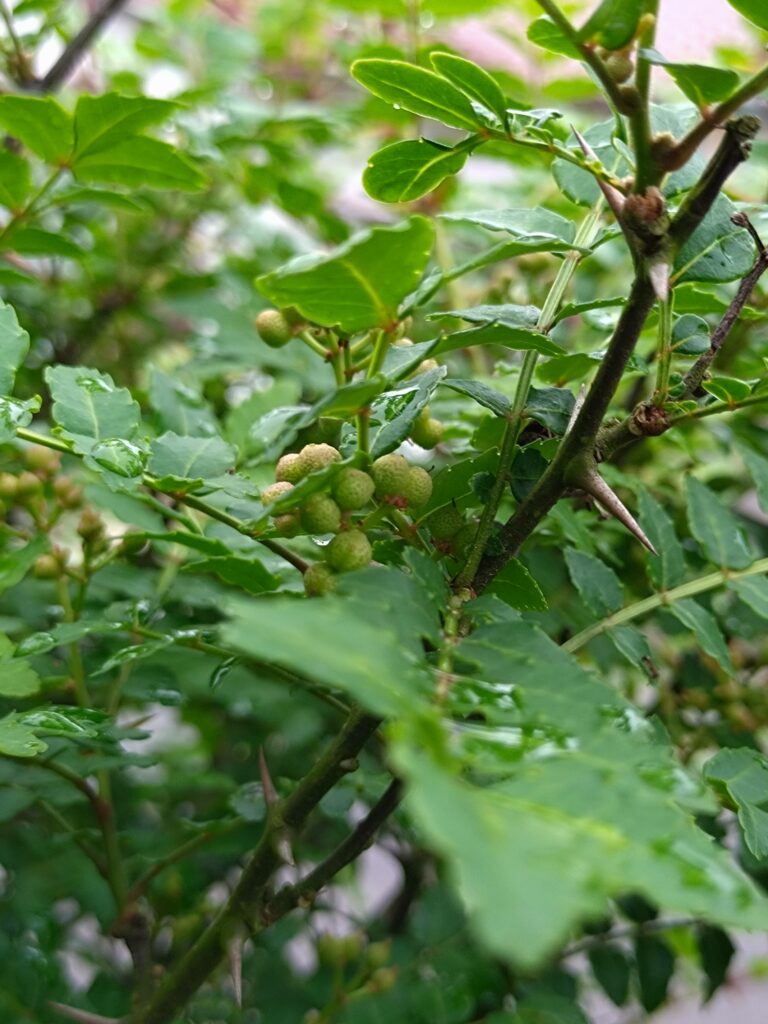
Sansho leaves in the garden—soft, bright, and full of scent.
🌱 How to Grow Sansho in Garden or Pot
Sansho (山椒) is gentle in its rewards—but to get its best, you give it the right start.
⓵ Begin with a Young Plant or Cuttings
To begin, get a young sansho tree from a nursery or a cutting from a known plant. Roots that are healthy, soil that drains—those are your foundations. Choose a pot about 30–35 cm deep if planting in container, or a spot in the ground with loose, well‑draining soil enriched with compost or leaf mold. Morning sun, afternoon shade is ideal—too much harsh sun can scorch young leaves.
⓶ Soil, Water, and Moisture Management
Sansho favors slightly acidic soil (pH around 5.5‑6.5), rich but aerated. Mix in leaf compost, coarse sand, or akadama if you have. Keep soil evenly moist—water when the top soil feels dry, but never allow standing water. Mulching with straw or bark helps retain moisture in summer, but remove mulch near trunk in winter to prevent rot.
⓷ Light, Airflow, and Seasonal Care
Sansho thrives with bright light but protected from midday heat. Filtered sun or gentle morning rays work best. Ensure airflow around leaves to prevent fungal issues. Each spring, prune back weak branches and prune lightly again after fruiting. Let it pause in summer’s height; in autumn, slowly reduce watering. In winter, protect the soil and roots from severe cold or desiccating wind.
☀️ Sansho Care Tips: Quick Snapshot
A checklist to keep your sansho strong season after season:
- 💧 Water when surface soil dries; avoid waterlogging.
- 🌞 Provide bright morning sun, shade in the hotter afternoon.
- ✂️ Prune early spring for structure; prune after harvest to encourage new growth.
- 🚫 Watch for pests like aphids or scale; treat gently.
- 🌟 Repot every few years if container‑grown; replenish soil nutrients.
🌿 Sansho Quick Facts & Background
- Native to Japan and some East Asian regions; often in woodlands.
- Dioecious: separate male and female trees; only female trees produce berries.
- Produces sanshool, the compound that gives that numbing, tingling effect.
- Leaves remain through much of the year, but fruiting takes time (5+ years in many cases).
- Used in traditional medicine: digestive aid, warming, stimulating appetite.
⚠️ A Note of Caution
Fresh green sansho berries may look small and harmless—but don’t pop them in your mouth whole.
The flavor is intense—numbing and incredibly sharp.
Put simply? Your mouth might feel like it’s on fire.
Use them sparingly, and always prepare them properly—boiled, pickled, or cooked into dishes.
A few go a long way. They’re meant to wake up your palate, not burn it down.
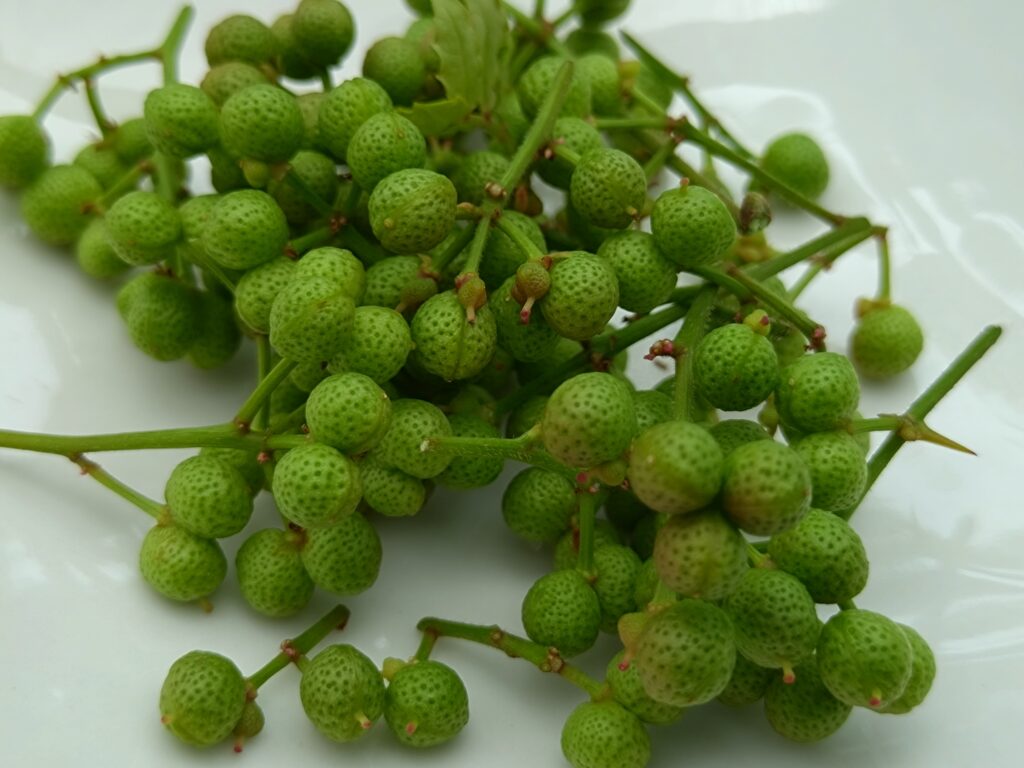
Sansho berries harvested in the garden
💡 Two Phases: Kinome Leaves & Green Berries
There are two distinct stages in sansho’s flavor journey—each with its moment and magic.
- Kinome (木の芽) — young leaves
— Tender and bright, with a citrusy, fresh bite. Best used in spring and early summer. Brushed over dishes to uplift: miso, bamboo shoots, soups. A leaf’s smell lingers long after. - Aosancho / Green Berries (青山椒)
— As berries form, they bring deeper aroma, sharper intensity. Used in pickles, tsukudani, pastes. Slightly numbing, citrusy, vivid.
Both phases carry different edges of sansho: one soft and fleeting, one bold and tactile.
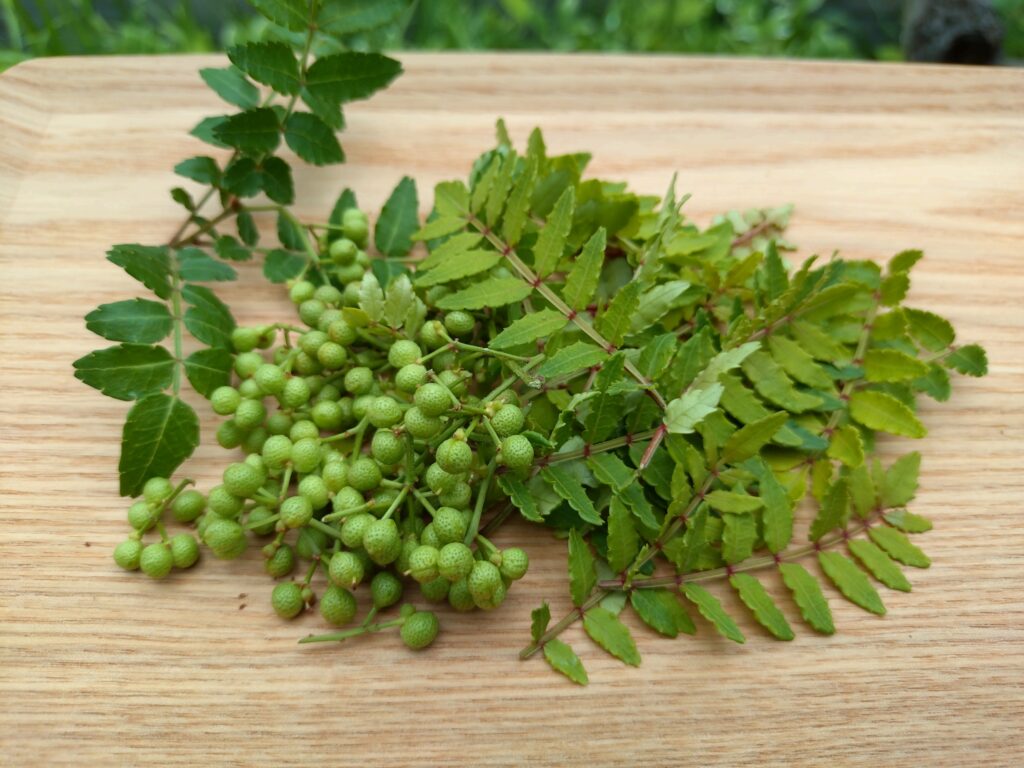
Fresh from the garden—still full of morning scent
🍱 Simple Uses at Home: Bringing Sansho Into Daily Cooking
Sansho isn’t just for special dishes—it lifts ordinary ones effortlessly.
① Top soups with a kinome leaf just before serving.
② Blend chopped kinome into miso or a veggie dip.
③ Layer leaves under tofu or add to cold noodles.
④ Fold kinome into rice before forming onigiri.
⑤ Use green berries boiled, pickled, or preserved in soy sauce or oil.
A small leaf or a few berries—just enough to smell, almost remember—that’s often more than enough.
🍃 Season, Memory & Sansho in Life
There’s a rhythm to sansho: new leaves in spring, berries in summer, quiet foliage through cooler months.
I remember being a child, when my mother would ask me to go out into the garden and pick kinome—the young sansho leaves—for her.
I’d go outside, search beneath the trees, and bring back a few sprigs.
She’d use them in our meals, in bentos(for our lunch boxes)—just a leaf or two tucked beside rice or tofu, quietly fragrant.
Even now, when I brush my hand over fresh kinome, the scent brings me back.
It’s not just a flavor—it’s part of how I grew up.
A green thread running through so many small moments: the light in the garden, my mother’s voice calling from the kitchen, the feeling of home.
Sansho doesn’t just season food—it seasons memory.
⭐Kaha’s Note
Sansho isn’t just a plant I tend—it’s one that returns my care in unexpected ways.
Its leaves cushion my mornings, its berries pepper my summers, its scent lingers in my thoughts.
I don’t grow it for abundance alone. I grow it for presence—for that moment of lifting fragrance when I reach out and touch a leaf.
Even in quiet days, sansho reminds me that small things matter.
💻 Explore More
🌈 Back to Home
Want to explore more places and stories in Japan?
👉 Return to the main page
✨ What’s Next
Sansho isn’t just a garden herb—it’s one of Japan’s oldest spices, used since the Jomon era.
In our next post, we’ll explore how sansho became a powerful seasoning, its deep culinary history, and the many ways it continues to spice both food and life today.
📘 Spice, Story, and the Soul of Sansho
Coming soon…

コメント