
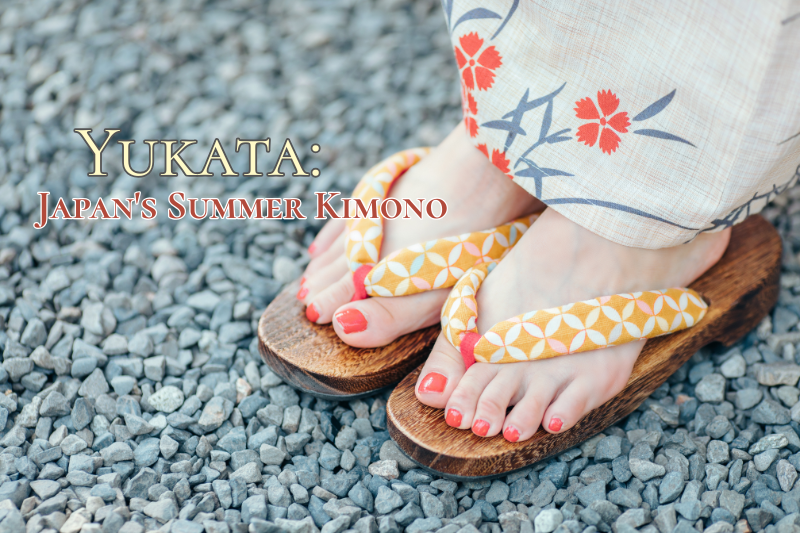
🌟Lead-in
On a hot summer night in Japan, the sound of festival music drifts through the air. Lanterns glow, fireworks burst in the sky, and people stroll in colorful yukata. For many, this light cotton kimono is the essence of summer itself.
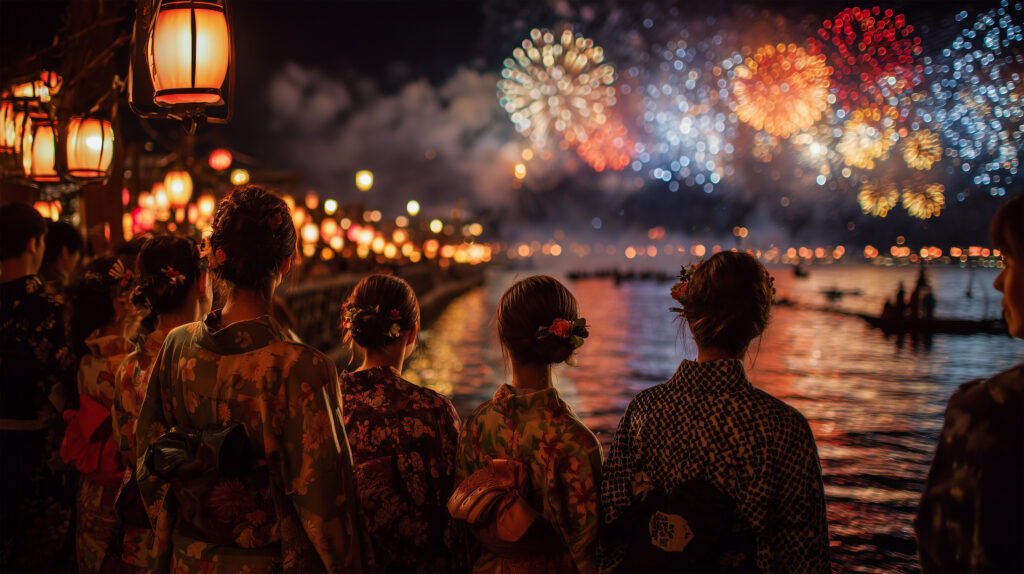
Yukata-clad friends watching fireworks over lantern-lit riversides.
Unlike the formal kimono, yukata are casual, easy to wear, and deeply connected to the season. You will see them at bon dances, fireworks festivals, and even on the streets of a small country town, worn by children, couples, and grandparents alike.
The yukata is more than clothing. It is a seasonal ritual, a link to history, and a way of experiencing the joy of Japanese summer. This article explores its origins, designs, cultural tips, and how people continue to wear it today — ending with a personal note from my own summer festival this year.
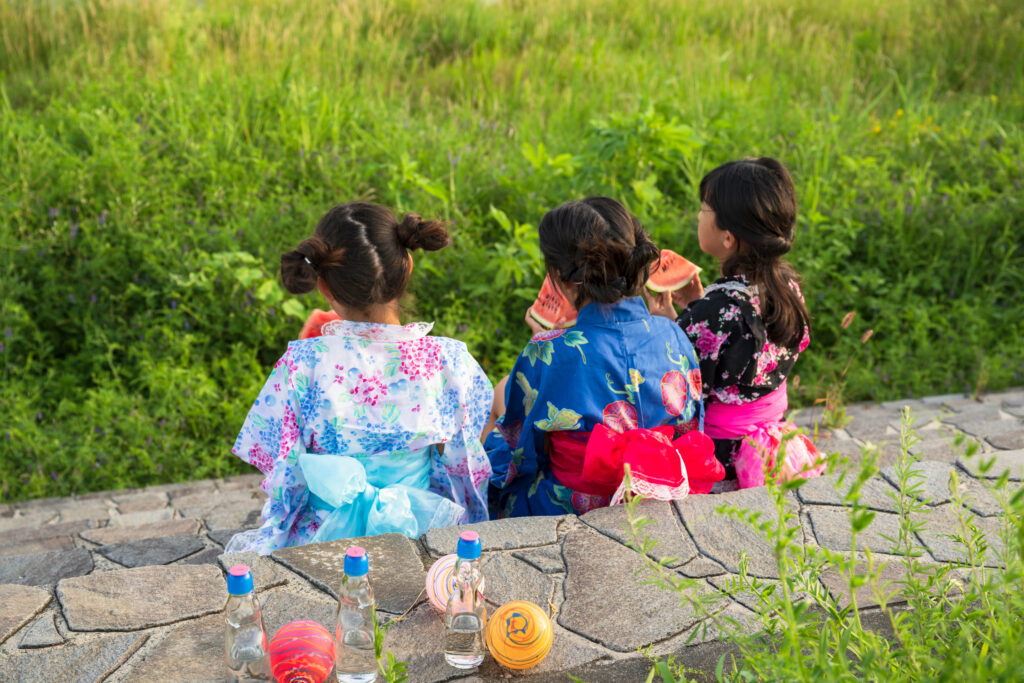
Children in yukata eating watermelon
🏮History of the Yukata
① From Bathrobe to Summer Wear
The story of yukata begins in the Heian period (794–1185). At that time, nobles wore yukatabira, simple robes made of hemp, after bathing in steam baths. These garments were purely functional.
② Edo Period: Everyday Clothing
By the Edo period (1603–1868), cotton became widely available, and yukata shifted into everyday summer wear for the common people. Indigo dye and bold patterns spread across towns, making yukata both affordable and fashionable.
③ Modern Era
In the Meiji and Taisho eras, yukata became linked with hot spring towns, leisure, and festivals. Today, they appear not as daily wear but as symbols of nostalgia and tradition, connecting past and present.
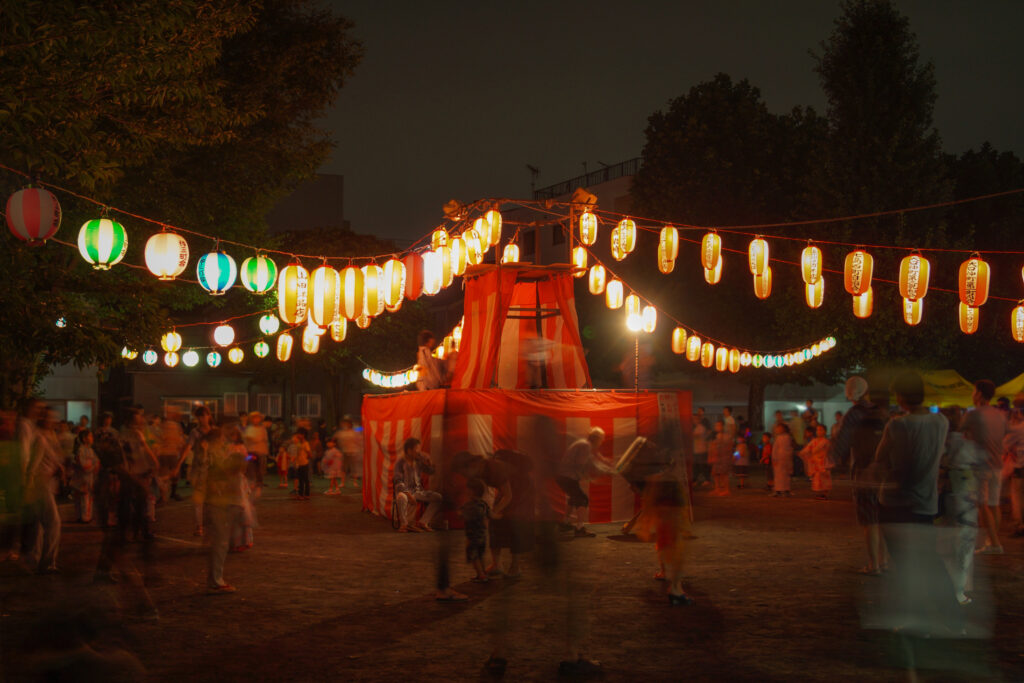
Bon dance festival — yukata once again fill the summer night.
👘Designs and Patterns
① Seasonal Motifs
Yukata designs are deeply tied to the season. Flowers like morning glories, fireworks bursts, flowing water, and goldfish patterns express the fleeting beauty of summer.
② Colors Old and New
Traditional yukata were indigo and white. Now, they come in bright, pastel, or even modern artistic designs. Men often prefer darker shades, while women and children often enjoy colorful ones.
③ Accessories
The obi (sash) adds charm, tied in various styles from simple knots to decorative bows. Fans — both sensu (folding fans) and uchiwa (flat fans) — are classic accessories. And footwear varies: geta sandals are lively and casual, while zori sandals (like my own favorites) offer a more refined, traditional touch.
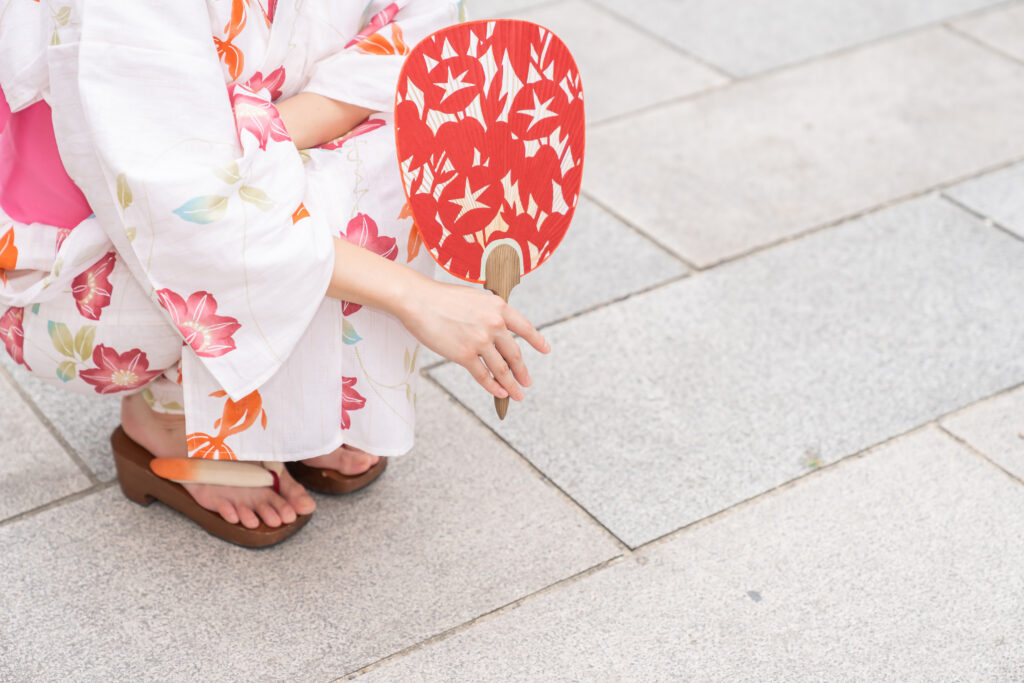
Bright floral yukata paired with a fan — a classic summer look.
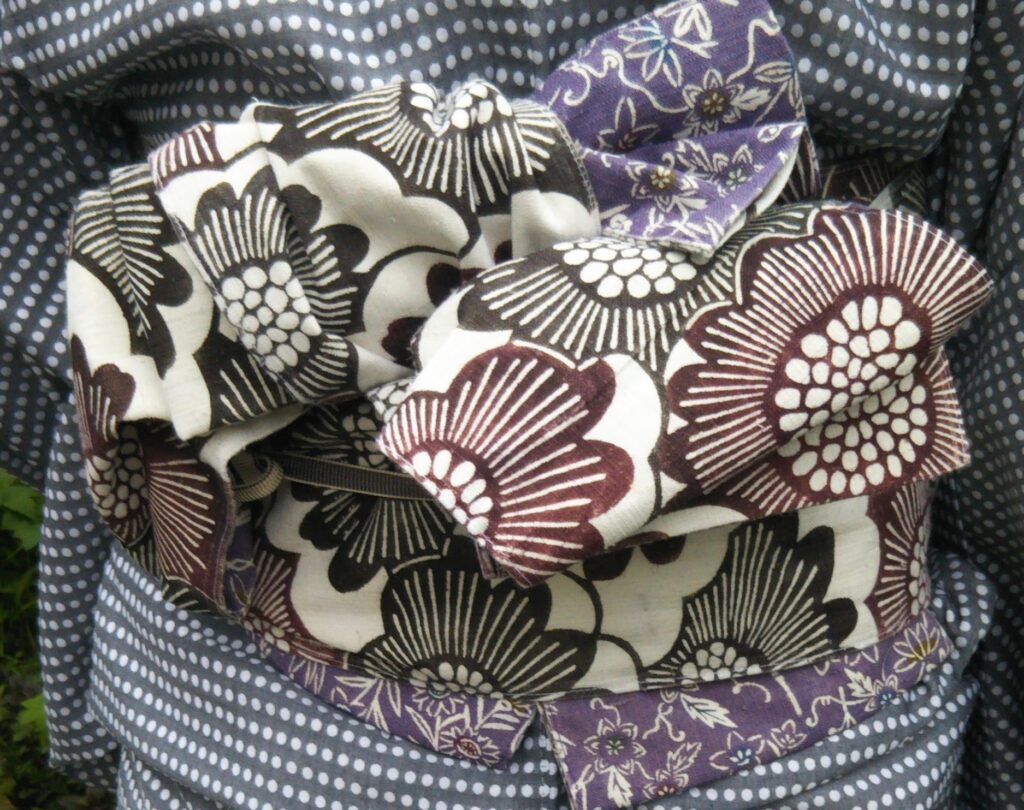
Obi musubi (obi tying style)-One of the charms of wearing a yukata is the obi (sash). Each person ties it in a slightly different way, and the knot itself becomes part of the design. Here is an example of an obi knot I learned directly from a kimono teacher — bold floral patterns creating a soft, sculptural shape at the back.
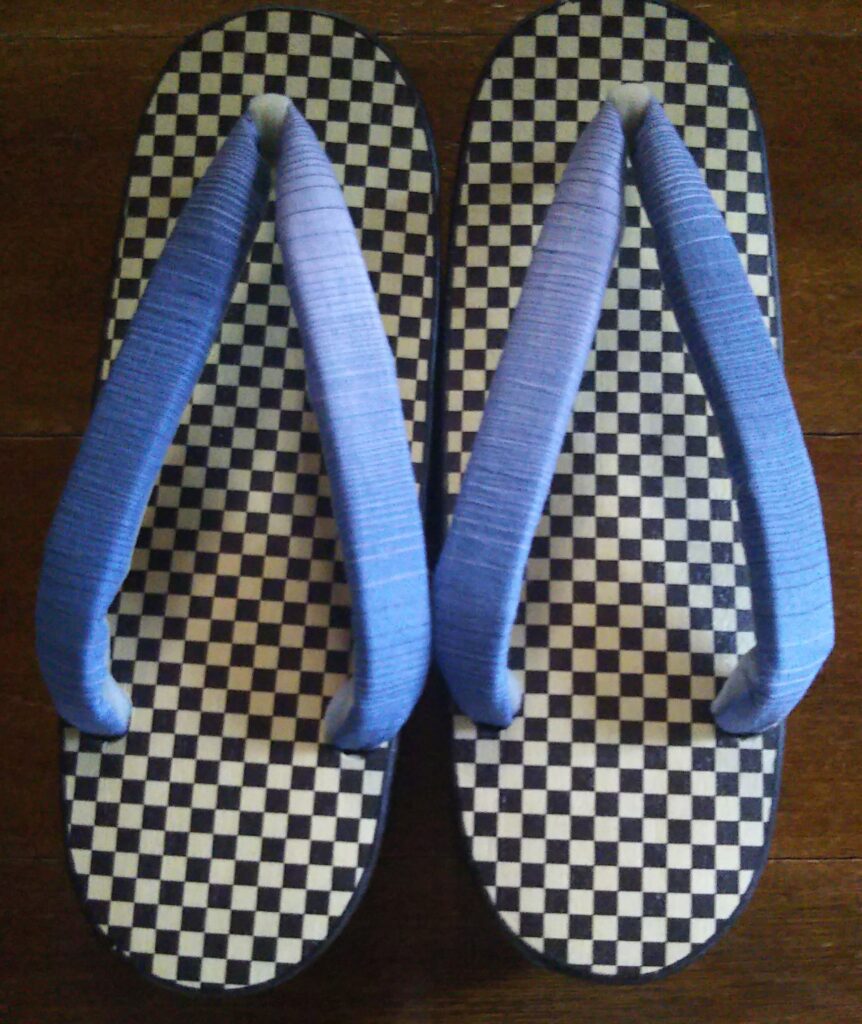
My favorite summer zori — simple but elegant.
🎆Fun Facts & Cultural Tips
① Wearing Rules
Always fold the left side of the yukata over the right. The opposite is for funerals.
② Footwear & Feel
Yukata are worn barefoot in geta or zori. This lightness adds to the refreshing summer feeling.
③ Atmosphere
Pairing yukata with small items like fans, wind chimes, or even a chilled drink enhances the seasonal mood.
④ Hotels and Ryokan
Many inns provide yukata as indoor wear, making them part of everyday travel experiences too.
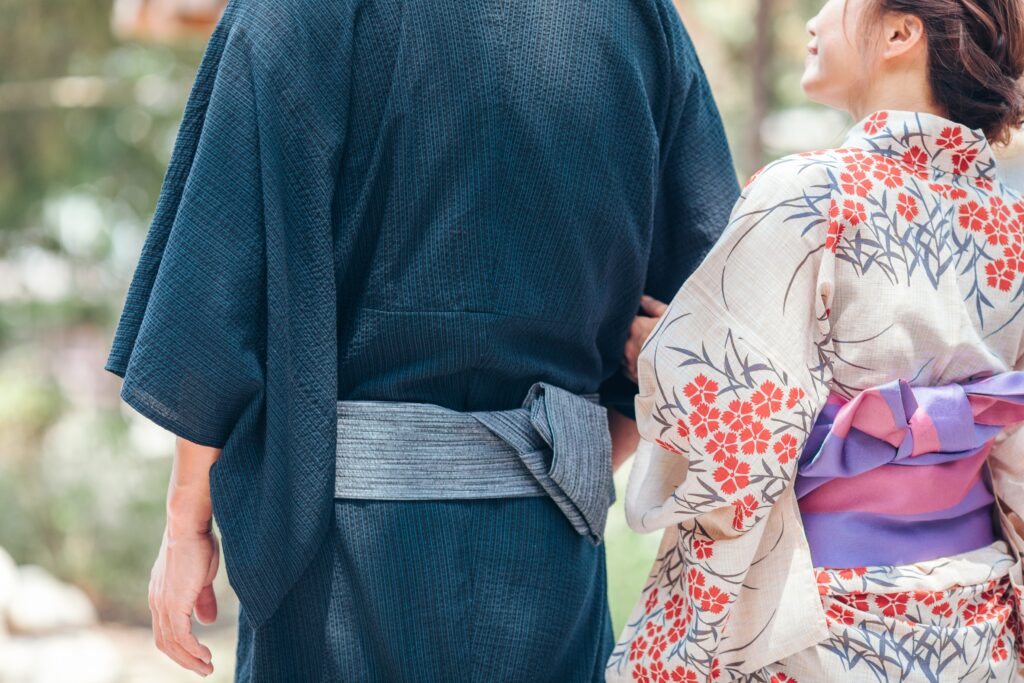
Couple enjoying a summer stroll in yukata.
⭐Yukata in Modern Japan
① Festivals and Fireworks
Nothing says summer like yukata at fireworks displays and bon dances. The sight of families and friends in yukata under lanterns is timeless.
② Rentals and Tourism
In cities like Kyoto, tourists can rent yukata and walk through historic districts, making the experience accessible to all.
③ Small-Town Traditions
Even in depopulated countryside towns, yukata still appear each summer. I experienced this firsthand at a local bon dance in my mother’s neighborhood.
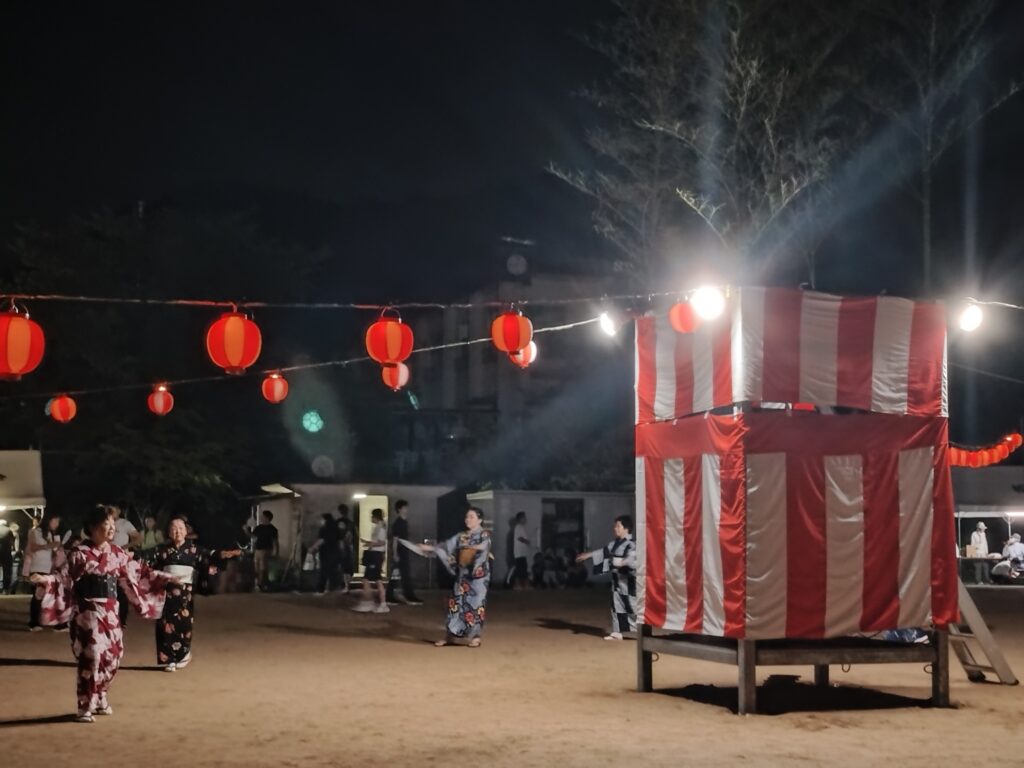
Local residents in yukata enjoying a modest festival.
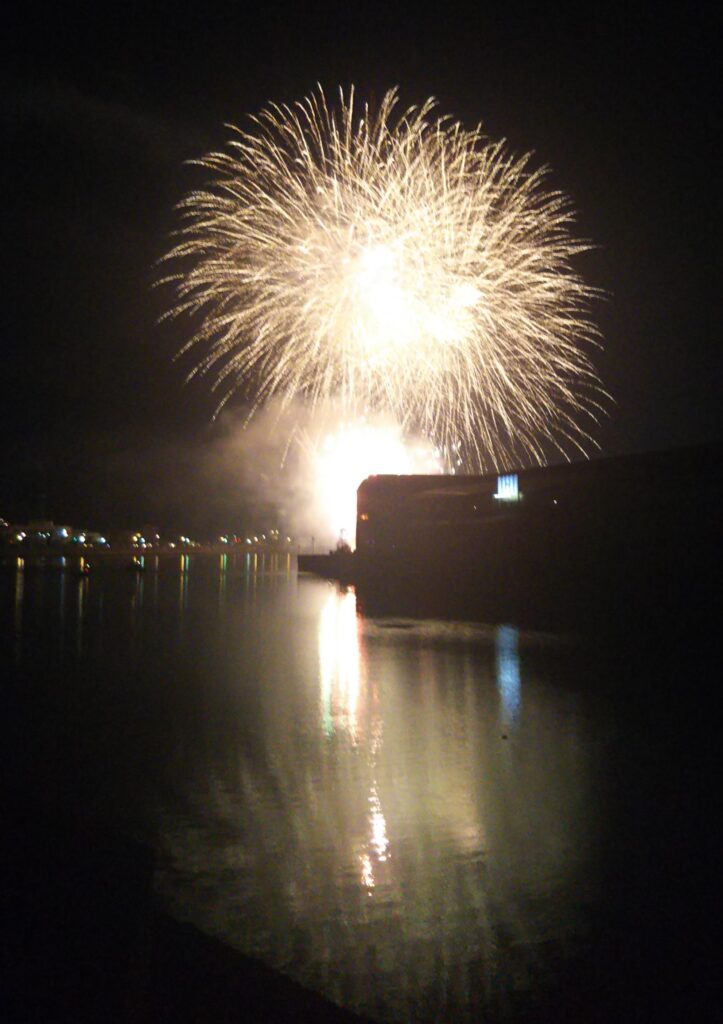
Fireworks reflected on the water — a rural summer night.
🏮A Living Tradition
The yukata is not just clothing — it has carried the spirit of Japanese summer for centuries. From its beginnings as a Heian-era bathrobe to Edo street fashion and today’s festivals, the yukata has always been tied to the season’s warmth and fleeting joy. Wearing a yukata means stepping into that living tradition, one that continues to bring people together under lantern light and summer skies.
🧨 Fireworks and Yukata — A Perfect Match
Beyond local festivals, yukata are also inseparable from Japan’s spectacular summer fireworks. From the Sumida River Fireworks in Tokyo to the Nagaoka Fireworks in Niigata and the Lake Biwa Fireworks in Shiga, these dazzling events draw crowds dressed in colorful yukata. Watching fireworks in yukata is more than just a sight — it is an experience that captures the very heart of Japanese summer.
🕊️ Kaha’s Note
This year, I went to the small bon dance festival in my mother’s neighborhood. Since she couldn’t move around freely, I picked up some yakitori from the stalls and brought it back home. We sat together in a cooler spot and enjoyed the skewers while the sound of festival music carried from just a short walk away. Even our family dog wanted to join, so we gave him some sweet potato instead.
It wasn’t a grand celebration, but for me, that evening captured the charm of Japanese summer — simple food, familiar music, and fun moments shared with family. Another joy was watching people in their yukata. No two outfits ever look exactly the same; even with similar patterns, the obi sash, accessories, and personal style always make each one unique.
I also own yukata and summer kimono myself. I wore one in June, but as the season grew hotter, I never managed to wear them again this year. Next summer, I hope to wear my yukata once more, join the festivals, and keep this tradition alive in my own way.
✨ Next in the Series: Tenugui
In ukiyo-e woodblock prints, yukata often appeared with tenugui hand towels — worn on the head, carried in hand, or used in daily life. These simple cloths are both practical and artistic.
➡️ In our next article, we’ll explore tenugui: Japanese hand towels, their designs, and how they remain part of everyday culture.
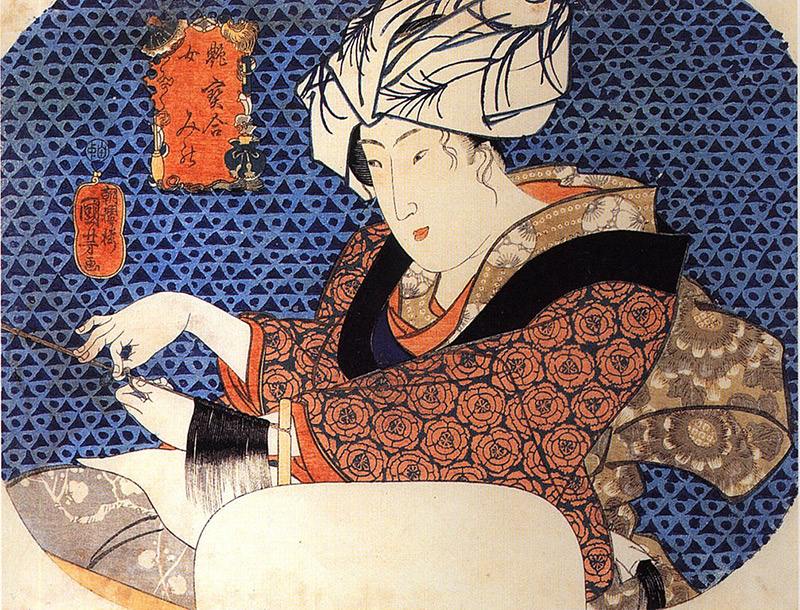
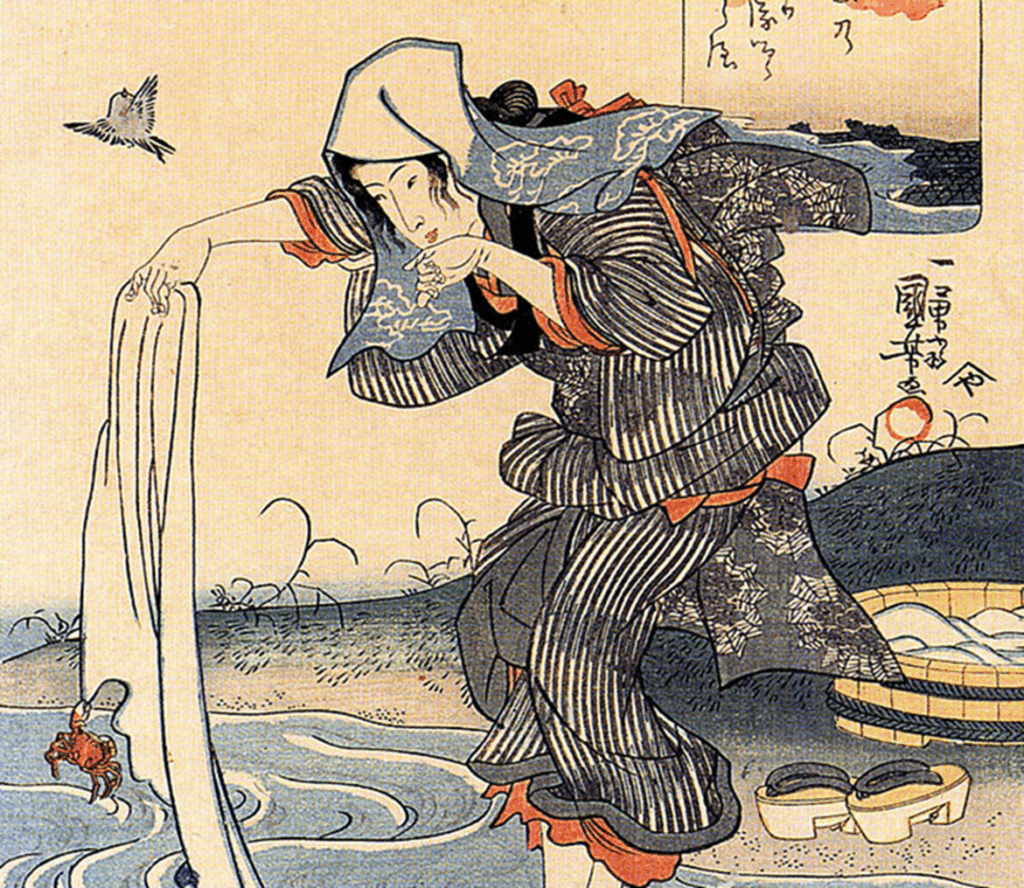
Ukiyo-e style tenugui — everyday cloth turned into timeless art.”
🔗Explore more
Return to HOME [8rainbow.work]


コメント