
- 🐉Lead-in
- 🌊Accelerators of Growth & Wish-Fulfilling Spirits
- ✨The Many Colors of Ryujin: Symbolism and Meaning
- ⓵ Blue Dragon – The Guardian of the East
- ② Red Dragon – The Guardian of the South
- ③ White Dragon – The Guardian of the West
- ④ Black Dragon – The Guardian of the North
- 🌟 Yellow Dragon – The Axis of Balance and Earthly Harmony
- ✨ Gold Dragon – Divine Favor, Prosperity, and Abundance
- 🔸 Beyond Tradition: Modern Interpretations of Ryujin
- 🛐 Goddesses as Dragons: Female Deities Bearing Dragon Power
- ⚡Dragons in Temples and Shrines: Guardians of Sacred Space
- 🌄Regional Legends and Local Dragon Faith in Japan
- ⛩️ Power Spots and Dragon Shrines: Where to Experience Ryujin Today
- 🕊️Kaha’s Note
- 🌐 Explore More
🐉Lead-in
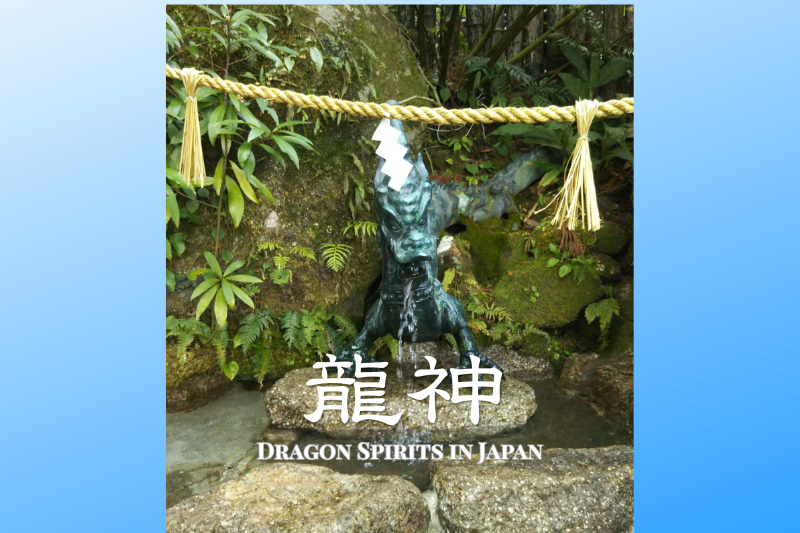
In Japan, dragons aren’t just mythical creatures—they’re revered as powerful spirits, protectors, and spiritual guides. Known as Ryujin or “Dragon Deities,” these beings are honored in shrines, temples, and everyday rituals across the country.
Why do so many people worship Ryujin? Because they are believed to be powerful, fast-acting, and spiritually uplifting. Many pray to them not only for blessings and protection, but also to have their wishes granted quickly, or to be guided to a higher level of personal growth and energy.
You’ll often see dragons at shrines and temples—especially at the chozuya (or temizuya), the water basins where visitors cleanse their hands and mouths. These dragons aren’t decorative—they’re sacred, symbolizing purification, transformation, and divine power.
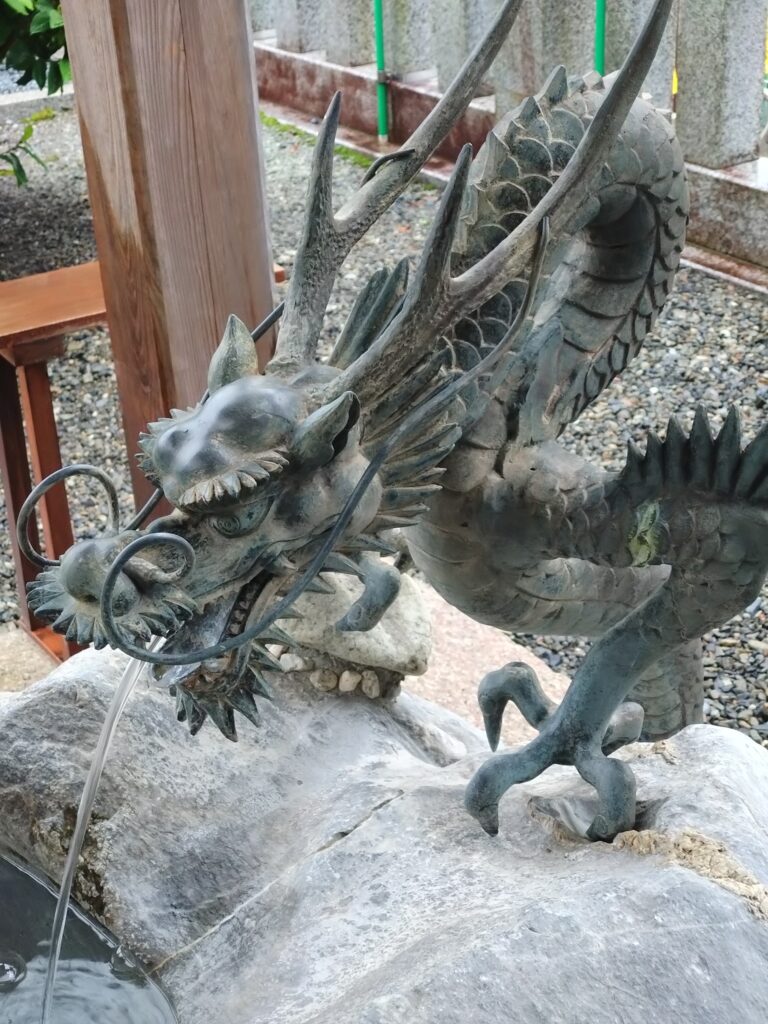
A dragon-shaped purification fountain at Niu Kawakami Shrine (Upper Shrine)—a sacred site where Ryujin and water deities are still honored today.
Ryujin also appear in many colors—white, red, gold, blue, and even rainbow—each carrying its own symbolic meaning and energy.
Today, let’s dive deep into the vibrant, mysterious world of Japan’s Ryujin traditions—from their ancient roots to modern-day power spots.
🌊Accelerators of Growth & Wish-Fulfilling Spirits
Many people seek Ryujin’s guidance not only for protection, but for rapid personal transformation and success.
Ryujin are not merely protectors of nature—they are often believed to be catalysts for personal growth and spiritual acceleration. In modern spiritual circles as well as in traditional beliefs, Ryujin are frequently called upon to help people overcome obstacles, unlock their inner potential, and move toward a more elevated version of themselves.
This is one of the key reasons why Ryujin are so beloved in Japan today. People often visit dragon-related shrines not only to purify or show respect, but to ask for swift and powerful results: success in business, healing from illness, academic achievement, finding the right path in life. Unlike more “distant” deities, Ryujin are thought to act quickly, guiding the worshipper with direct, energetic force.
Some describe the feeling as a “level up.” In prayer or meditation, devotees often feel as though a new energy is being awakened within them—as if the Ryujin are lifting them toward a higher frequency or spiritual state. This is especially common at sites with flowing water, waterfalls, or sacred springs, where dragon energy is said to be most active.
In fact, in many rituals or personal spiritual practices, Ryujin are seen as amplifiers. Just as a river can carry a boat faster when the current is strong, invoking Ryujin is believed to amplify your intentions, carrying your wishes forward with greater momentum. That’s why many practitioners write their prayers on dragon-shaped ema (wooden plaques), or meditate beside dragon fountains to channel that flow into their goals.
There’s also a deep psychological aspect here. Because dragons are associated with movement, water, and energy, they symbolize emotional release and transformation. People often feel “stuck” in life—not because of lack of effort, but because of internal resistance or fear. Ryujin, as symbols of flow and breakthrough, represent a force that dissolves those blockages. Just as water carves through rock over time, Ryujin’s energy is said to move through our lives and reshape our inner landscape.
✨The Many Colors of Ryujin: Symbolism and Meaning
Each Ryujin appears in a distinct color, reflecting not just beauty—but powerful symbolic meaning. These colors correspond to directions, elements, and energies in traditional Eastern cosmology, especially the Four Guardian Beasts (Shishin 四神). Together, they represent balance, transformation, and divine support in every stage of life.
⓵ Blue Dragon – The Guardian of the East
Symbolizing spring, protection, and personal growth, the Blue Dragon (Seiryu) watches over the East.
This dragon brings fresh energy, emotional balance, and the drive for self-improvement. Its presence supports new beginnings, mental clarity, and harmonious relationships. It is especially helpful when setting intentions or seeking clarity at life’s crossroads.
The Blue Dragon is often invoked for renewal, vision, and smooth forward motion.
② Red Dragon – The Guardian of the South
Connected with fire, vitality, and creativity, the Red Dragon (Sekiryuu) governs the South.
It energizes the heart and brings passion, self-expression, and personal power. Many artists and entrepreneurs are drawn to its vibrant, motivating energy. The Red Dragon also helps awaken confidence and joy, making it ideal when stepping into a bold or emotional endeavor.
Its fire element ignites courage and fuels dynamic transformation.
③ White Dragon – The Guardian of the West
Purity, transition, and spiritual rebirth are the realm of the White Dragon (Hakuryuu), guardian of the West.
White Dragons are symbols of clarity and cleansing—supporting those moving through emotional healing, endings, or major life transitions. Appearing at sacred springs and purification sites, this dragon is often seen as a gentle yet powerful force for renewal.
It clears old energy, making space for what’s next.
④ Black Dragon – The Guardian of the North
The Black Dragon (Kokuryuu) rules the North, embodying strength, mystery, and deep transformation.
This dragon is a guide through the unknown—helping awaken inner power and hidden talents. Its energy is grounding, protective, and introspective, ideal for shadow work, deep healing, or creative incubation.
The Black Dragon is not feared, but respected—as a source of profound breakthroughs and resilience.
🌟 Yellow Dragon – The Axis of Balance and Earthly Harmony
The Yellow Dragon (Kōryū) is the center of the Four Directions, symbolizing harmony, integration, and earth energy.
Unlike the directional dragons, the Yellow Dragon governs the center—balancing the forces of North, South, East, and West. In ancient cosmology, it represents grounding, universal order, and the axis upon which all energies turn.
Spiritually, the Yellow Dragon helps align your inner compass. It stabilizes your energy, centers your focus, and harmonizes the different parts of your soul. Many consider it the “gateway dragon”—a guide to integrating all aspects of self and life into a unified whole.
✨ Gold Dragon – Divine Favor, Prosperity, and Abundance
While not linked to a cardinal direction, the Gold Dragon shines as a celestial force of prosperity, success, and divine support.
Gold Dragons are invoked for career breakthroughs, financial blessings, and swift results. They carry prayers upward with radiant momentum, often bringing fast-acting transformation. In shrines and rituals, they are a popular focus for those seeking tangible outcomes in the physical world.
This dragon is a favorite among businesspeople, healers, and those manifesting abundance.
🌈 Modern Variations – Rainbow & Green Dragons
Beyond the traditional colors, spiritual seekers today also recognize Rainbow Dragons (integration, multidimensionality) and Green Dragons (healing, nature alignment). Though not part of classical cosmology, these dragons offer deeply personal connections in modern spiritual practice.
🔻Each color of Ryujin holds a message for the soul. Whether you seek renewal, empowerment, stability, or abundance, these dragons offer guidance along your journey—each a different face of the same divine river.
🔸 Beyond Tradition: Modern Interpretations of Ryujin
In addition to the classical color-based symbolism, modern spiritual practices have expanded the concept of Ryujin into new categories, often seen in oracle card decks, energy work, and personal meditation rituals.
For example, the Silver Dragon is said to help with stability in one’s immediate surroundings, offering support for community-based efforts, local grounding, and environmental clarity. It is often connected to home, family, and everyday spiritual life.
In spiritual circles today, many people refer to other forms such as:
- Ascending Dragons (昇龍) – Representing rising energy, personal elevation, breakthroughs.
- Descending Dragons (降龍) – Bringing wisdom, grounding, and insight into hidden truths.
- Wind Dragons / Fire Dragons / Earth Dragons / Water Dragons – Each embodying elements and their unique transformational powers.
These expressions may not appear in classical mythology, but they reflect the living, evolving relationship between people and dragon spirits in the modern world. As spiritual beliefs continue to adapt, Ryujin remains a dynamic force, supporting transformation in both traditional and contemporary contexts.
🛐 Goddesses as Dragons: Female Deities Bearing Dragon Power
In Japanese belief systems, divine feminine energy and dragon power are often intertwined in surprising and sacred ways.
While dragons are often imagined as masculine in many cultures, in Japan, the dragon spirit—Ryujin—is not strictly gendered, and in many cases is even associated with powerful female deities. This reflects a deeper truth within Japanese spirituality: the most profound forces in nature often transcend human binaries like male and female.
Perhaps the most well-known example is Benzaiten (弁財天), a goddess of music, wisdom, and water, who was adapted from the Hindu goddess Sarasvati. In Japan, Benzaiten is frequently depicted riding a dragon ( or often a white snake ), or even merging with one, symbolizing the integration of feminine wisdom and fluid, transformative dragon energy. She is enshrined at many famous locations like Enoshima, Chikubushima, Miyajima and Tenkawa, where both water and dragons are deeply revered.
Another profound figure is Seoritsuhime (瀬織津姫), a water purification goddess with mysterious and powerful energy. Though her name does not appear in the main Shinto texts today, she is believed by some to have once been the consort of Amaterasu, when the sun deity was still seen as male. Some traditions suggest that as Amaterasu was rewritten as female, Seoritsuhime was erased or hidden, adding to her aura as a divine yet forgotten dragon-associated goddess. In esoteric teachings, she is sometimes considered a white dragon spirit, watching over rivers and sacred springs.
Amaterasu (天照大神) herself, the sun goddess and one of the most central figures in Shinto, is occasionally interpreted in spiritual circles as having dragon-like solar energy—radiant, sovereign, and life-giving. Though she may not be traditionally linked to dragons, her overwhelming spiritual force invites this symbolic crossover in some beliefs.
Another example is Ame-no-Uzume (天鈿女命), the goddess of dawn, dance, and joy. In some interpretations, she is seen as possessing transformative energy, making her a symbolic dragon figure associated with emergence, expression, and movement.
Lastly, we find Okami no Kami (龗(おかみ)の神), a spirit revered especially in water-related shrines like Kifune and Niu Kawakami. The name “Okami” can refer to a water dragon, or even a female shamanic deity, blurring the lines between guardian spirit, priestess, and divine dragon. In some traditions, Okami appears as a female dragon, watching over water, rain, and sacred rituals.
Together, these goddesses show that Ryujin is not only a powerful force of nature, but also a vessel for divine feminine power. Whether guarding sacred rivers, dancing at dawn, or embodying the sun itself, these female deities remind us that dragon energy is fluid, adaptable, and deeply sacred, echoing through both sky and sea, myth and ritual.
⚡Dragons in Temples and Shrines: Guardians of Sacred Space
In sacred places across Japan, dragon imagery plays an important role in purification, protection, and spiritual presence.
Walk into almost any Shinto shrine or Buddhist temple in Japan, and you’re likely to encounter a dragon—not as a mythological decoration, but as a spiritual guardian. Most commonly, dragon figures appear at the chozuya (or temizuya), the water purification basins found near the entrance of shrines. These dragon-headed spouts provide sacred water for visitors to cleanse their hands and mouths, symbolizing the beginning of a spiritual encounter.
The dragon at the chozuya is more than a statue—it embodies Ryujin as the guardian of water, flow, and spiritual clarity. By washing in the dragon’s water, the worshipper symbolically releases worldly impurities and prepares to step into sacred space. This purification ritual connects visitors directly with the dragon spirit’s essence: movement, transformation, and spiritual readiness.
Beyond the chozuya, dragons can be seen carved into shrine gates, painted on ceilings, and depicted in offering lanterns or protective talismans. In Buddhist temples, ceiling paintings known as “dragon ceilings” (雲龍図) are especially famous. These often massive artworks show dragons twisting through clouds, guarding the temple from above. One of the most well-known examples is at Kennin-ji Temple in Kyoto, where a vast twin-dragon painting fills the ceiling of the main hall.
Dragons also guard natural water sources within temple grounds—springs, wells, or streams—especially when those waters are believed to be spiritually potent. At certain shrines, like Kifune Shrine in Kyoto and Niu Kawakami Shrine in Nara, the dragon is venerated not only as a symbol, but as the very kami of the water itself, often referred to as Okami or Ryujin. In these cases, the dragon is seen as both the source and the spirit of the sacred water.
In some temple legends, dragons also serve as protectors against fire, especially in wooden buildings. Water dragons, in particular, are said to protect sacred halls by balancing elemental forces. In this way, Ryujin becomes not only a guardian of purification but also a spiritual firewall safeguarding sacred places.
All of these roles—purifier, protector, elemental guardian—show that Ryujin is deeply integrated into the architectural, ritual, and symbolic life of Japanese temples and shrines. Far from being mythological remnants, dragons are active participants in spiritual life—watching, guiding, and cleansing all who enter their sacred domain.
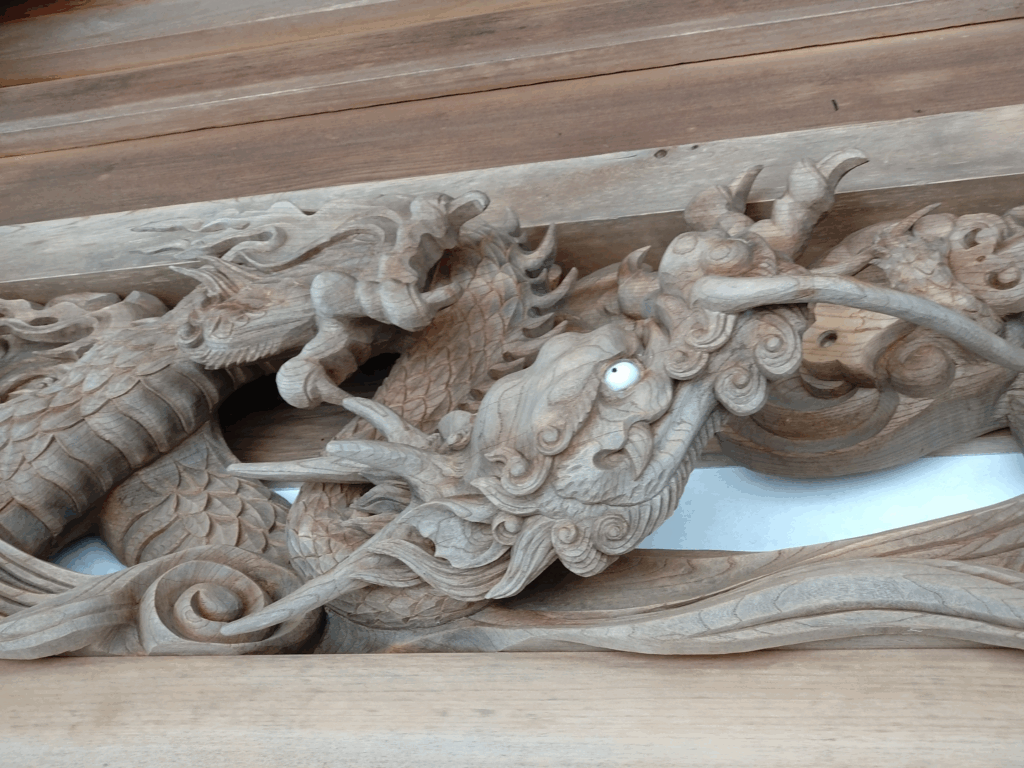
Wooden Dragon Relief at Ryusen-ji, Nara (龍泉寺) Intricately carved wooden dragon adorning the beams of Ryusen-ji’s main hall. Such carvings serve as spiritual guardians, protecting the sacred space through elemental symbolism.
🌄Regional Legends and Local Dragon Faith in Japan
Across Japan, dragon spirits are not just mythical—they are part of living folklore and everyday belief.
While Ryujin are often associated with grand cosmological forces, many of the most enduring dragon legends in Japan are rooted in local communities, natural landscapes, and everyday life. From mountain springs to coastal villages, countless regions have developed their own stories and traditions surrounding dragon spirits—often seen not as distant spirits, but as familiar protectors of land and water.
One well-known site is Kifune Shrine (Kyoto), where the dragon deity is believed to control the rain and the flow of rivers. Historically, this shrine was visited by emperors and farmers alike to pray for rain during droughts. The Okami no Kami, worshiped here, is often interpreted as a dragon or serpent-like water spirit, embodying the fierce yet nurturing nature of water.
In Nara Prefecture, Niu Kawakami Shrine (丹生川上神社) stands as another key site of dragon belief. Located near pristine mountain waters, the shrine honors water kami believed to govern rain, agriculture, and the life force flowing through nature. Rituals to appease the dragon spirit and ensure proper rainfall have been practiced here since ancient times.
Moving to Fukushima, the legend of Lake Inawashiro speaks of a dragon who resides in its depths, protecting the lake and its surroundings. Stories of fishermen encountering strange currents, or mist that forms in dragon-like shapes, continue to this day—reminders of a spiritual presence that cannot be seen but is always felt.
In Wakayama and the Kumano region, tales of dragon spirits interweave with sacred pilgrimage routes. The Ryujin Valley (Ryujin-keikoku) and Ryujin Onsen are both named after dragon legends tied to mountain gods and hot springs. These places are still visited as power spots where people seek healing, guidance, or transformation through natural energies believed to be channeled by dragons.
Even in urban areas, traces of dragon worship remain. In parts of Tokyo and Kanagawa, small shrines or wayside temples hold votive plaques and statues dedicated to local dragon spirits—often as guardians of wells, bridges, or forest groves. These dragons are not dramatic or fiery, but quiet presences that watch over the flow of daily life.
These regional beliefs show that Ryujin is not confined to mythology or elite religion. Instead, dragon spirits have long been part of local faith traditions, deeply embedded in the rhythms of farming, weather, health, and family well-being.
From mountain shrines to seaside legends, the spirit of the dragon moves with the land and the people, adapting to the culture and needs of each place it touches.
⛩️ Power Spots and Dragon Shrines: Where to Experience Ryujin Today
From ancient shrines to natural springs, Japan offers many places where the spirit of the dragon is said to be alive and powerful.
For those who wish to connect with Ryujin not just through stories, but through experience, Japan offers a rich array of shrines, temples, hot springs, and sacred landscapes where dragon energy is believed to flow strongly. These places are often referred to as “power spots”—locations where spiritual energy is concentrated and felt.
🐉 Kifune Shrine (Kyoto)
Located deep in the forested mountains of Kyoto, Kifune Shrine is one of the most famous Ryujin-related sites. Dedicated to the goddess of water and rain, this shrine venerates the Okami deity, often associated with dragon energy. The shrine’s atmosphere is serene, misty, and full of natural flow, making it a favorite for those seeking purification, guidance, or emotional clarity.
🐉 Niu Kawakami Shrine (Nara)
Niu Kawakami Jinja—a sacred complex composed of Upper, Middle, and Lower Shrines—is one of the most important spiritual sites associated with water kami and dragon spirits. Located in Nara Prefecture and surrounded by pure mountain streams, the shrines honor the kami of rain, agriculture, and life energy.
The Upper Shrine sits closest to the water’s source, and has long been a place of rain rituals. The Middle Shrine carries political and ritual importance, while the Lower Shrine is believed to protect daily life and farmlands. Together, they form a powerful spiritual triangle, and many pilgrims still perform the traditional “three-shrine pilgrimage” (三社巡り) to receive blessings of flow, protection, and balance.
Visitors often describe the journey between the shrines as a cleansing spiritual path, each site offering a different facet of Ryujin‘s or water goddesses’ presence.
🐉 Kuzuryu Shrine (Hakone)
Located near Lake Ashi in Hakone, Kuzuryu Shrine honors the Nine-Headed Dragon God (Kuzuryu). The lake and its surrounding forests are believed to be spiritually charged, and many visitors pray for relationships, prosperity, and spiritual strength. The shrine is a popular destination for those drawn to both traditional worship and modern energy work.
🌊 Ryujin Onsen (Wakayama)
Named after the dragon spirit itself, Ryujin Onsen is not only a healing hot spring but also a site of spiritual pilgrimage. Visitors come to soak in the mineral-rich waters believed to carry the essence of Ryujin—offering relief not just to the body, but also to the soul.
🐉 Chikubushima (Shiga)
An island in Lake Biwa, Chikubushima is home to Benzaiten, often depicted riding a dragon. The island’s temples and lush surroundings create a powerful spiritual ambiance, and the blending of dragon imagery with goddess worship is especially strong here.
Many of these places offer not just visual beauty but a felt experience—a sense of quiet energy, flowing movement, or emotional stillness. Whether through rituals, prayers, water offerings, or simply breathing in the sacred air, visitors often report feeling a connection to something larger, ancient, and deeply alive.
By visiting these sites, one doesn’t just learn about Ryujin—they begin to walk with the dragon, step by step.
🕊️Kaha’s Note
I’ve always felt a deep connection with Ryujin.
To me, the dragon spirit is not just a powerful symbol, but a living presence—one that feels close, supportive, and endlessly strong. When I connect with Ryujin, or with goddesses who embody dragon energy, I feel uplifted, empowered, and grounded at the same time.
I truly believe that anyone can connect with Ryujin, regardless of religion or background. Because Ryujin is part of nature itself—flowing like water, moving through clouds, appearing in the wind—it doesn’t feel distant or unreachable like some deities might. If you open your heart and listen quietly, the dragon spirit may already be near you.
This article has explored many faces of Ryujin:
From their status as nature’s highest spirits, to their role as accelerators of transformation, to the deep symbolism in their colors and directions. We’ve looked at goddesses linked to dragon power, the temples and shrines that honor Ryujin, and the local legends that keep dragon belief alive across Japan.
But more than myth or tradition, Ryujin represents an invitation—to return to nature, to trust your own path, and to rise with courage and clarity. Whether you’re walking through a mossy forest, visiting a sacred spring, or simply meditating at home, the dragon energy is always available to those who seek it with sincerity.
If this article has sparked even a little curiosity in your heart, I hope you’ll take a moment to reach out to Ryujin in your own way.
They’re not far. Just a breath, a stream, or a heartbeat away.
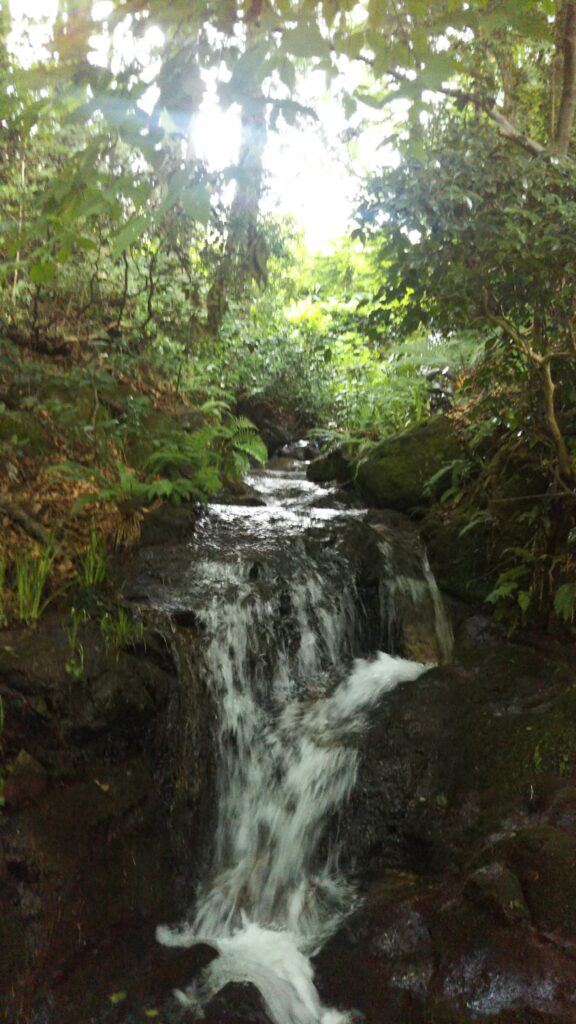
A Dragon of Light in the Sacred Stream – Hakusan Hime Shrine, Ishikawa
This small waterfall sits quietly within the forest near Hakusan Hime Shrine. As I stood there, I felt the presence of a dragon. A beam of light moved with the water—and for a moment, it truly felt like Ryujin appeared.
🌐 Explore More
If Ryujin’s world sparked something in you, there’s much more to discover.
👉 Return HOME
🌈 Dive deeper into dragon energy, sacred sites, and spiritual insights.
Take a look around the site and explore what resonates with you. Your journey may just be beginning.


コメント