
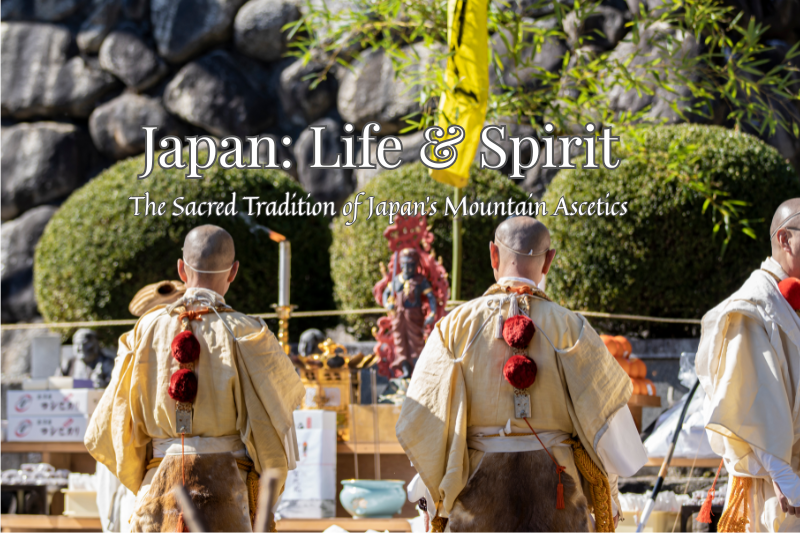
🌿Lead-in
If you’ve ever visited Dorogawa, a small mountain village in Nara Prefecture, you may have noticed people dressed in white robes, carrying walking staffs and blowing conch shells. During my visits to Ryūsenji Temple (龍泉寺), I often saw yamabushi (山伏:mountain ascetics), and on one occasion, I unexpectedly came across a sacred ceremony taking place.
For centuries, Dorogawa served as a gateway to Mount Ōmine (大峯山), one of Japan’s most important sacred mountains. Inns were built here to accommodate practitioners preparing for their mountain training, and traces of that history can still be found throughout the village today.
Today, Dorogawa is much more accessible than it once was, welcoming both pilgrims and visitors. Yet despite these changes, it remains an important center of Shugendō, where mountain ascetic traditions continue to this day.
In this article, we’ll explore the origins of Shugendō, who the yamabushi are, the legacy of En no Gyōja (役行者), and why the sacred mountains of Ōmine continue to hold such an important place in Japanese spiritual culture.
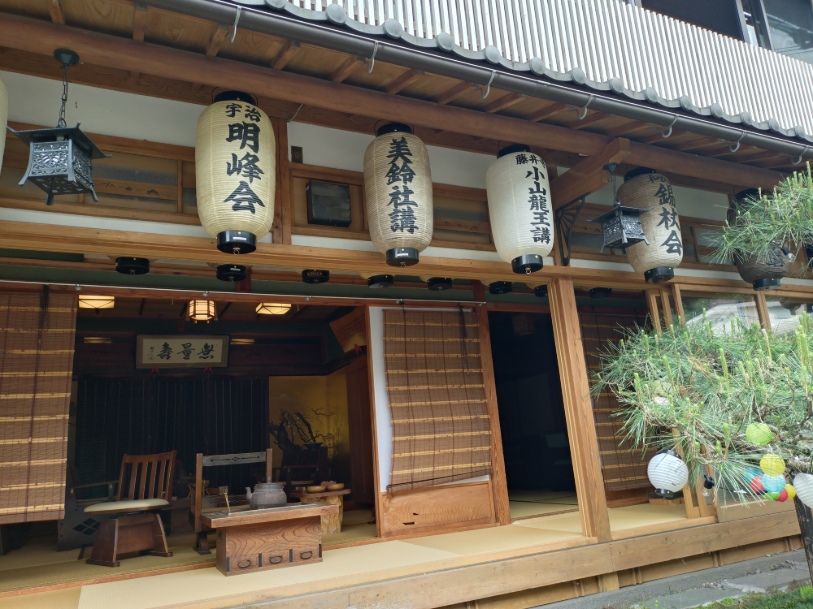
Traditional inns in Dorogawa continue to reflect the village’s long history as a gateway to Mount Ōmine.
⛰️ What Is Shugendō?
Shugendō (修験道) is a unique Japanese spiritual tradition centered on mountain asceticism. Rather than viewing mountains simply as places to climb, practitioners regard them as sacred spaces where they can deepen both body and mind through rigorous training and prayer.
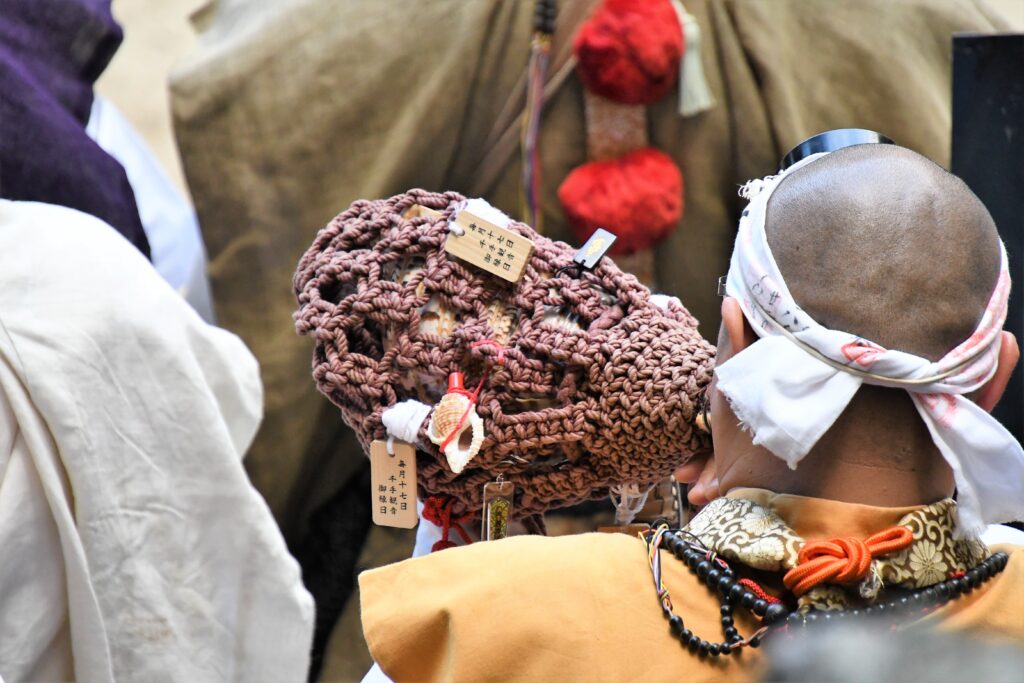
The sound of the horagai (conch shell) has long echoed through Japan’s sacred mountains as part of Shugendō practice.
Shugendō is often described as a path of spiritual training and realization through practice. Over many centuries, it developed by blending Japan’s ancient mountain worship with elements of Shinto, Esoteric Buddhism, Taoist philosophy, and local folk beliefs.
Unlike many religious traditions that focus primarily on temples or scriptures, Shugendō places nature itself at the center of spiritual practice. Mountains, forests, waterfalls, rocks, and even the changing seasons are regarded as teachers, offering opportunities for discipline, reflection, and gratitude.
Shugendō continues to be practiced in sacred mountain regions such as Ōmine, where generations of yamabushi still follow traditions that have been passed down for centuries. Although many visitors come simply to enjoy the natural beauty, these mountains remain living places of faith and spiritual practice.
📜 The History of Shugendō
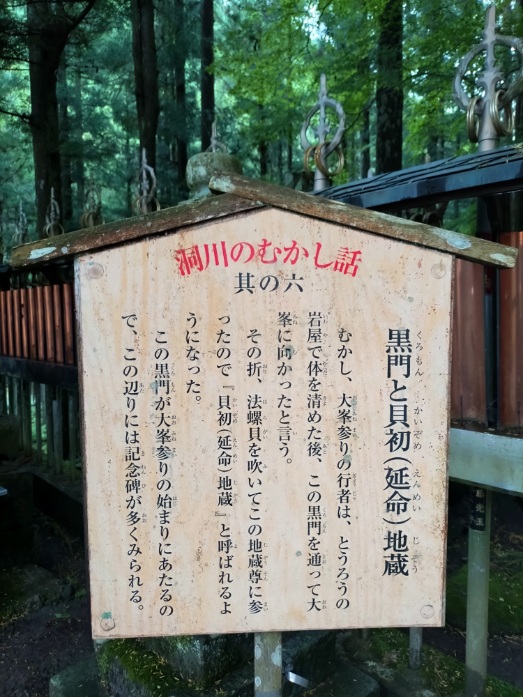
An information board in Dorogawa explains how mountain practitioners purified themselves before passing through the Black Gate on their pilgrimage to Mount Ōmine.
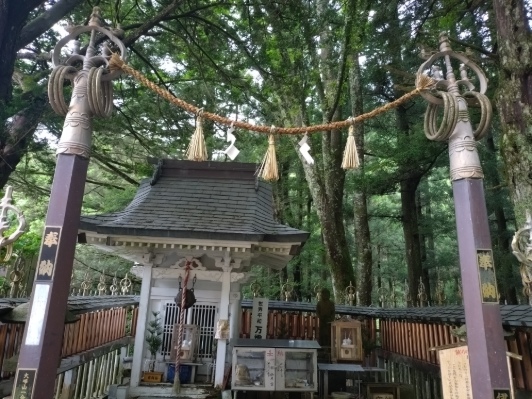
The Black Gate and Kaihatsu Enmei Jizō remain important reminders of the traditions followed by generations of Shugendō practitioners.
The roots of Shugendō reach back to ancient Japan, when mountains were revered as sacred places where gods and spirits were believed to dwell. Long before Buddhism became established in Japan, people entered the mountains to pray for protection, abundant harvests, and guidance from the natural world.
As Buddhism spread through Japan in the sixth century, these ancient mountain beliefs gradually merged with Esoteric Buddhism, Shinto, Taoist philosophy, and local folk traditions. Over time, this unique blend evolved into what is now known as Shugendō.
By the Heian and Kamakura periods, Shugendō had become an established spiritual tradition. Sacred mountains such as Yoshino and Mount Ōmine developed into important training grounds, attracting practitioners from across Japan.
During the Meiji Restoration, Shugendō was officially banned as part of the government’s policy separating Shinto and Buddhism. Although many temples and practitioners were affected, the tradition survived and was gradually revived.
Today, Shugendō continues to flourish in several sacred mountain regions, preserving rituals and ascetic practices that have been passed down for centuries.

Stone monuments in Dorogawa preserve the memory of generations of Shugendō practitioners.
🐚Who Are the Yamabushi?
The practitioners of Shugendō are known as yamabushi, or mountain ascetics. For centuries, they have trained in Japan’s sacred mountains, seeking spiritual growth through discipline, prayer, and a deep connection with nature.
Yamabushi are easily recognized by their distinctive white robes, small black caps called tokin, walking staffs, and the horagai (conch shell) they blow during rituals and mountain ascents. These traditional garments and tools have been passed down through generations and continue to be used today.
Unlike monks who spend most of their lives in temples, yamabushi practice their faith in the mountains themselves. Their training may include long mountain pilgrimages, waterfall purification, chanting, meditation, and other demanding ascetic practices that strengthen both body and mind.
Although these traditions date back more than a thousand years, the yamabushi are not simply figures from history. During my visits to Dorogawa and Ryūsenji Temple, I often encountered practitioners preparing for or taking part in mountain training. On one occasion, I even came across a sacred ceremony taking place, a reminder that Shugendō is still very much a living tradition.

Yamabushi gather for a sacred ceremony, continuing a tradition that has been passed down for centuries.
🏔️ En no Gyōja:The Legendary Founder of Shugendō
No discussion of Shugendō is complete without En no Gyōja (En no Ozunu), who is traditionally regarded as its founder. Although little is known about his life with certainty, he is believed to have lived during the late seventh and early eighth centuries.
According to tradition, En no Gyōja devoted himself to spiritual training in the mountains of Yoshino and Ōmine. Through rigorous ascetic practices, he sought harmony with both nature and the divine, inspiring a spiritual path that would later become known as Shugendō.
Many legends surround En no Gyōja. He is said to have possessed extraordinary spiritual abilities, communicating with deities and spiritual beings while opening sacred mountain routes for future practitioners. Whether viewed as history, legend, or a combination of both, his influence on Shugendō remains profound.
Statues of En no Gyōja can be found throughout Japan, particularly at temples and sacred sites connected with mountain asceticism. During my visit to Yanagidani Kannon (Yōkokuji Temple), I was surprised to discover a weathered stone statue dedicated to him, quietly reminding visitors of the enduring legacy of Shugendō.
His legacy continues to inspire generations of yamabushi, who still undertake mountain training in sacred places such as Mount Ōmine.
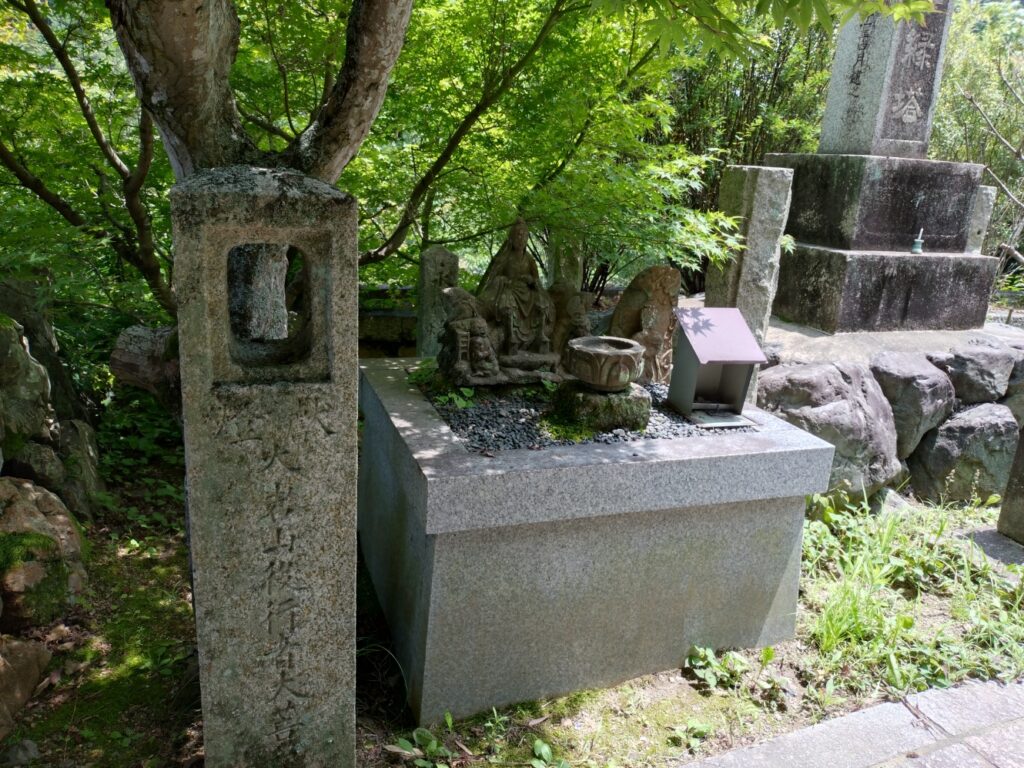
A stone statue of En no Gyōja at Yanagidani Kannon (Yōkokuji Temple), reflecting his enduring influence on Shugendō.
🏔️ Mount Ōmine: The Sacred Heart of Shugendō
Mount Ōmine (大峯山) has long been regarded as the spiritual heart of Shugendō and remains one of Japan’s most sacred mountain regions. Rather than referring to a single peak, Ōmine is a mountain range stretching through the Kii Peninsula, where ancient pilgrimage routes, sacred temples, and places of ascetic practice have existed for centuries.
For generations, yamabushi have climbed these mountains as part of their spiritual training. The steep trails, dense forests, waterfalls, and ever-changing weather are not simply obstacles to overcome—they are considered essential parts of the practice, teaching perseverance, humility, and harmony with nature.
One of the most important destinations within the range is Mount Sanjō (Sanjōgatake), home to Ōminesanji Temple (大峯山寺). For more than a thousand years, practitioners have made the challenging journey to this sacred site as an act of devotion and spiritual discipline.
In 2004, the Sacred Sites and Pilgrimage Routes in the Kii Mountain Range, including Mount Ōmine, were inscribed as a UNESCO World Heritage Site, recognizing their outstanding cultural and spiritual significance.
Even today, Mount Ōmine is far more than a destination for hikers. For practitioners of Shugendō, it remains a sacred place where centuries-old traditions continue to be passed down through mountain training and pilgrimage.

Signs throughout Dorogawa point the way to Mount Ōmine, reflecting the village’s deep connection with Shugendō.
🌸 Women and Mount Ōmine
One of the most distinctive traditions associated with Mount Ōmine is the Nyonin Kekkai (女人結界), or “women’s boundary.” For centuries, women were not permitted to enter certain sacred areas of the mountain, a custom rooted in the ascetic traditions of Shugendō rather than in everyday Japanese society.
Today, the sacred area beyond the Nyonin Kekkai Gate leading to Mount Sanjō (Sanjōgatake) remains closed to women. However, the location of the boundary has changed over time. Since 1970, women have been able to visit more of the surrounding mountain area and nearby sacred sites than was previously permitted, although the restriction on Mount Sanjō itself continues.
This long-standing tradition has become a subject of discussion in modern Japan, where perspectives on preserving religious customs and promoting equal access sometimes differ. At the same time, many practitioners regard the restriction as an important part of Shugendō’s historical identity and mountain discipline.
Whether viewed from a religious, historical, or cultural perspective, the tradition remains closely connected to the unique spiritual heritage of Mount Ōmine and continues to shape the character of this sacred mountain today.
🌄 A Living Tradition
Although Shugendō has a history spanning more than a thousand years, it is far from a forgotten tradition. In places such as Dorogawa and Mount Ōmine, practitioners continue to undertake mountain training, preserve ancient rituals, and pass their knowledge on to future generations.
During my visits to Dorogawa, I often encountered yamabushi preparing for their training and witnessed sacred ceremonies still taking place. These experiences reminded me that Shugendō is not simply part of Japan’s history—it remains a living spiritual tradition, deeply rooted in the mountains and carried forward by the people who continue to walk this path today.
🌿 Kaha’s Note
Before visiting Dorogawa, I didn’t know very much about Shugendō. I had seen yamabushi and heard the sound of the horagai (conch shell), but it wasn’t until I spent time in this sacred mountain village that my curiosity began to grow. Since then, whenever I encounter yamabushi or see Shugendō rituals, I find myself watching with a much deeper appreciation and interest.
During the summer solstice, I had the opportunity to attend a special prayer ceremony in Tenkawa Village. Watching the fire ritual performed by the practitioners was an unforgettable experience. The ceremony felt both solemn and incredibly powerful, and I personally felt as though the presence of the Dragon Deities was there. It reminded me that these ancient rituals are not simply traditions preserved from the past, but living prayers strengthened through years of spiritual training and devotion.
🌈Explore More
If you would like to discover more about Japanese spirituality, sacred places, and mountain traditions, visit the Rainbow Awakening homepage.

コメント