

🍂Lead-in
In Japan, autumn is more than just a change in the air—it’s a season of subtle richness, where nature speaks through color, taste, and stillness. Among its quiet offerings, the persimmon—known as kaki—stands out as a humble yet deeply rooted symbol of the season.
Bright orange and hanging low in temple gardens or strung in rows outside countryside homes, persimmons are not just food; they are memory. You may spot them glowing against a backdrop of red maple leaves or ripening silently in a quiet backyard. Their presence tells a story of tradition, of quiet days, of a season that invites pause.
From crisp fresh fruit to sweet dried hoshigaki, persimmons reflect the heart of Japanese autumn—simple, nourishing, and full of gentle power. This post explores the role of kaki in Japanese life, its healthful gifts, and the ways it’s enjoyed across generations.
🌄From Ancient Trees to Autumn Tables — The Long Story of Kaki
Persimmons (Diospyros kaki) have lived alongside Japanese people for well over a thousand years. Archaeological remains show that wild persimmon seeds were already present in the Yayoi period, and by the Nara era, the fruit was known and consumed. A written record from the year 758 even documents “hoshigaki”—dried persimmons—suggesting how deeply rooted they were in both the diet and seasonal customs of early Japan.
As centuries passed, kaki became more than sustenance. They appeared in poems, rituals, seasonal offerings, and even art. The gentle fruit grew in temple gardens, rural backyards, and was laid out to dry under the soft autumn sun. Their presence signified more than food—they became markers of time and mood.
One of the most beloved haiku in Japan, written by Masaoka Shiki, captures this beautifully:
“As I bite into a persimmon, the bell of Hōryū-ji rings.”「柿くへば 鐘が鳴るなり 法隆寺」(Masaoka Shiki, 1895)
The image is vivid and still—melding the taste of ripe fruit with the distant sound of a temple bell, blending place, moment, and memory.
Today, persimmons continue this quiet tradition. Though modern in form—blended into smoothies or offered as café delicacies—they still whisper the same message: a soft, sweet invitation to pause, observe, and taste the season’s shift.
🍁Cultural Presence – Persimmons in Japanese Landscapes
In the heart of Asuka, where rice fields meet quiet village homes, I found a persimmon tree quietly holding onto its fruit. The branches were thin and tangled, but each orange fruit hung with a kind of calm confidence—as if it had been growing there forever, watching seasons pass.
Persimmons, or kaki, are everywhere in Japan’s countryside during autumn. You’ll find them in temple gardens, on the edges of farm roads, or in someone’s backyard, like the one I saw in Asuka. Their quiet presence is part of the landscape.
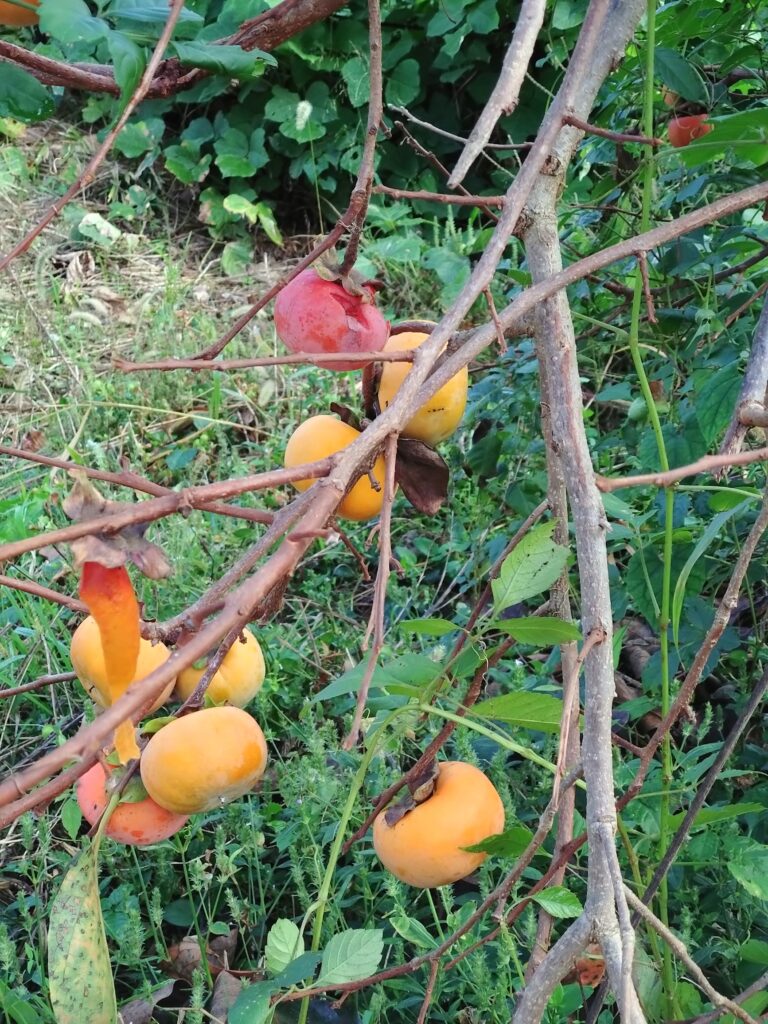
A persimmon tree stands between rice fields and village homes in Asuka, gently ripening in autumn light.
In Izumo, I walked past a small soba restaurant where dozens of persimmons were strung in neat rows, drying outside a wooden window. The orange fruits swayed gently in the wind, framed by green maple leaves just beginning to turn. It was a simple sight—but it felt like a painting from a slower time.

Outside a soba restaurant in Izumo: strings of persimmons hang to dry, framed by the first hints of autumn colour.
In modern streets too, like on Sanjō‑dōri in Nara, tradition finds new expression. There, a cozy smoothie shop was offering “Japanese Persimmon KAKI Smoothie.” The fruit I’d seen on trees and hanging from homes had become something modern, fresh, and surprisingly elegant.

On Sanjō‑dōri in Nara: a modern persimmon smoothie shop, bridging tradition and city life.
Whether wild, dried, or blended, persimmons are woven into Japan’s autumn in quiet, meaningful ways. They are not just fruit—they are memory, mood, and a piece of time.
💪 Sweet Strength — The Healing Power of Kaki
There is a Japanese proverb:
“When persimmons turn red, doctors turn blue”
(「柿が赤くなると医者が青くなる」)
This expression reflects an old belief: that when kaki are in season, people fall ill less often. Autumn’s gentle weather, combined with the health benefits of ripe persimmons, gives both body and spirit a time of natural recovery.
Rich in vitamin C—often even more than citrus fruits—persimmons help strengthen the immune system just as the air turns cooler. They’re also packed with fiber, potassium, and antioxidants like beta-carotene and polyphenols, which support digestion, skin clarity, and reduce inflammation. These small, orange fruits carry more than sweetness—they carry quiet wellness.
Hoshigaki, or dried persimmons, take this power even further. They’re often strung outside on balconies or wooden eaves, slowly transforming into soft, dense, sugar-coated jewels. The natural white bloom on their surface is the sugar rising to the skin—a sign of perfect preservation. In some Japanese homes, they’re enjoyed in winter, offered in tea ceremonies, or used in festive dishes.
Rather than modern supplements or artificial health trends, persimmons offer something quieter and more enduring—an everyday gift from the season. As the weather shifts and the body seeks warmth, the soft sweetness of kaki supports not just health, but also a sense of rhythm and calm.
🧡Kaha’s Note
I wouldn’t say persimmons are my favorite fruit—but they hold a gentle place in my memory.
When I was a child, my aunt had a sweet persimmon tree in her garden. Every autumn, she would hand me a small basket and say, “Take some home.” And somehow, it always tasted sweeter because it came from someone’s hand, not a store.
Later, a cutting from that tree—yes, you can grow persimmons from a branch—was planted in my parents’ garden. Now, every year as the leaves turn, the tree bursts with fruit again. The cycle continues quietly, sweetly.
I also remember a friend, an excellent cook, who told me about her autumn curry. She would grate a ripe persimmon into her homemade Indian curry, blending natural sweetness with spices in a way that was deeply comforting. It sounded unusual—but beautiful. I haven’t made curry in a while, but writing this post made me want to try again.
Persimmons may not be the most popular fruit of the season, but they’re woven into my memories, soft and still. They remind me that some things—like flavor, family, and autumn light—don’t need to be perfect to be meaningful.
🍂 Explore More
Discover more stories of nature, spirit, and sacred places in Japan.

コメント