
💧Lead-In
Each June, hydrangeas begin to bloom across Japan, bringing color to the rainy season.
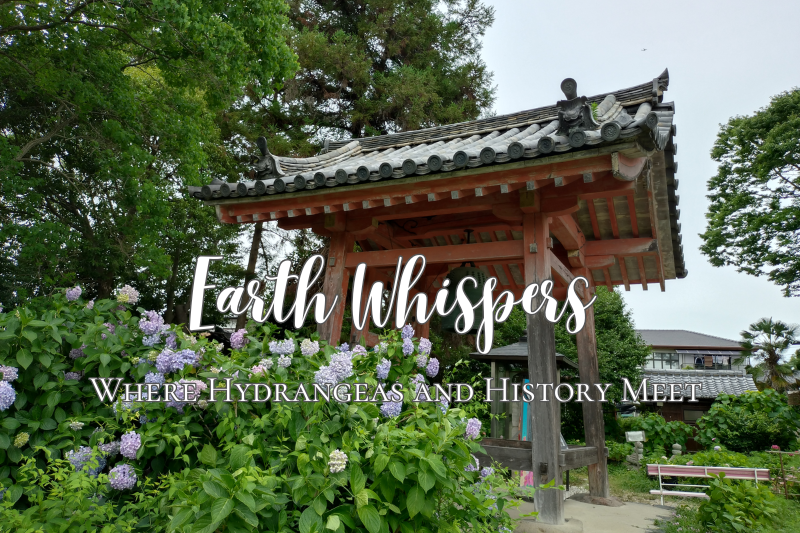
There are countless places where these flowers can be enjoyed, but during this visit I found myself at Hannyaji Temple in Nara — a place where nature, history, devotion, and seasonal beauty quietly exist side by side.
Known for its hydrangeas and cosmos flowers, the temple offers far more than a floral display. Ancient stone monuments, weathered Buddhas, memorial stones, and seasonal arrangements all share the same space, creating a landscape shaped by both nature and human hands.
As I wandered through the grounds, I was reminded that flowers do more than decorate a place. They have the power to soften a landscape, to bring comfort, and to create moments of connection between people, history, and the natural world.
At Hannyaji, the hydrangeas seemed to do exactly that.
In this post, I would like to share some of the places and stories that stayed with me during my visit — from seasonal displays and stone monuments to quiet reminders of healing, remembrance, and the enduring relationship between nature and spiritual life.
🍃The Hydrangea Walkway
One of the highlights of my visit was the Hydrangea Walkway, a seasonal display created with hundreds of colorful hydrangeas.
Rows of potted flowers line a covered pathway, while glass spheres filled with hydrangea petals and crystal ornaments hang overhead. The display feels both playful and elegant, offering a different atmosphere from the temple’s ancient stone monuments and historic structures.

Seasonal Hydrangea Display at Hannyaji Temple
As I walked beneath the canopy, I found myself slowing down to notice the details — the changing colors of the flowers, the reflections inside the glass spheres, and the soft movement of the decorations in the breeze.
Although hydrangeas can be found throughout the temple grounds, this walkway has become one of Hannyaji Temple’s most beloved seasonal features and attracts many visitors each year.
📹 Walk Through the Hydrangea Walkway
If you would like to experience the atmosphere of the walkway, you can watch a short video below.
👉https://youtube.com/shorts/KEF1UcXdwVg
🌿 A Path of Hydrangeas and Healing
As I continued beyond the Hydrangea Walkway, stone Kannon statues began to appear among the flowers.
Some stood close to the path, while others were tucked farther back among the greenery, creating the feeling of a quiet pilgrimage woven into the temple grounds.
According to the temple pamphlet, these statues are associated with the famous Saigoku Pilgrimage. They were dedicated during the Edo period by a man named Terashima in gratitude for recovery from illness.
The statues were also intended for those who were unable to undertake the pilgrimage themselves due to illness or other circumstances, allowing them to offer prayers closer to home.
I was touched by the quiet kindness behind this idea.
Surrounded by hydrangeas in full bloom, the statues seemed to offer a gentle reminder that every journey begins with a single step — and that sometimes, even a short walk can become a pilgrimage of its own.
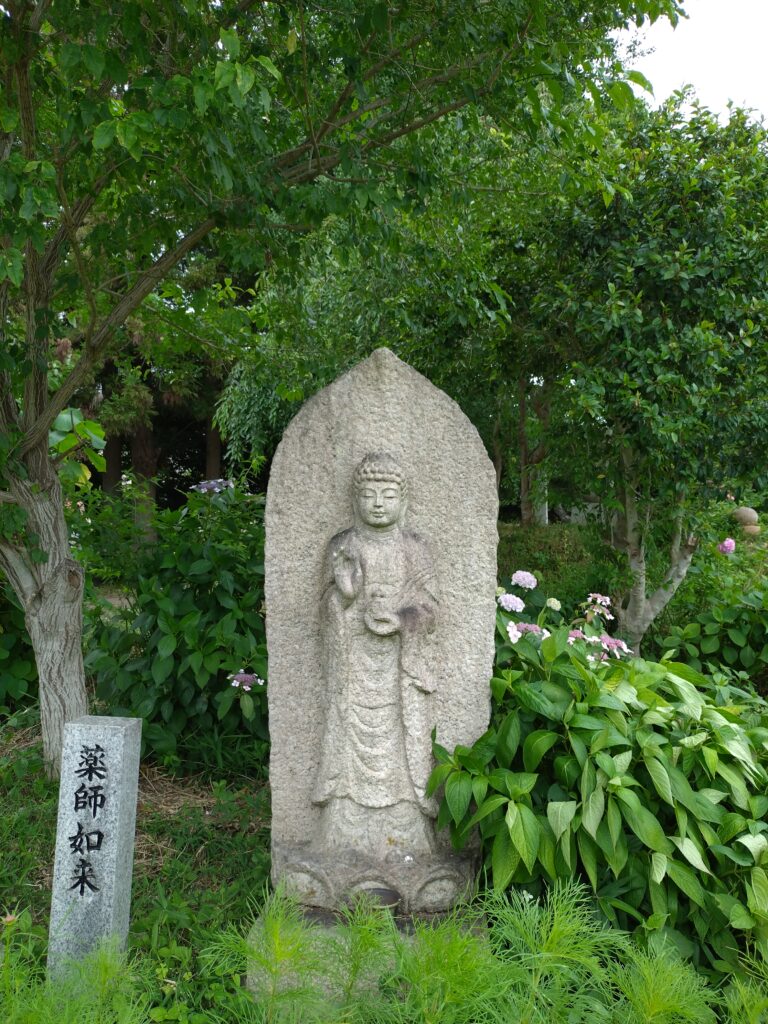
Yakushi Nyorai Among the Hydrangeas at Hannyaji Temple

Stone Buddhist Figures Along the Temple Grounds at Hannyaji Temple
📜 Stone Stories of Hannyaji
Beyond the seasonal flowers, Hannyaji Temple is also home to a remarkable collection of historic stone monuments.
As I wandered through the grounds, I discovered ancient pagodas, carved Buddha images, memorial stones, and other artifacts that quietly preserve centuries of history.
Together, they reveal another side of the temple — one shaped not only by the changing seasons, but also by the people, beliefs, and stories that have passed through this place over many generations.
🗿 The Thirteen-Story Stone Pagoda
Standing quietly within the temple grounds is Hannyaji Temple’s remarkable thirteen-story stone pagoda.
Originally rebuilt in 1253 during the Kamakura period, the pagoda rises to approximately 14.2 meters and is considered one of Japan’s most significant stone pagodas.
What I found especially fascinating was the presence of the Four Directional Buddhas carved into the stone.
Although time has softened many of the details, each side of the pagoda is associated with a different Buddha, quietly watching over the four directions.
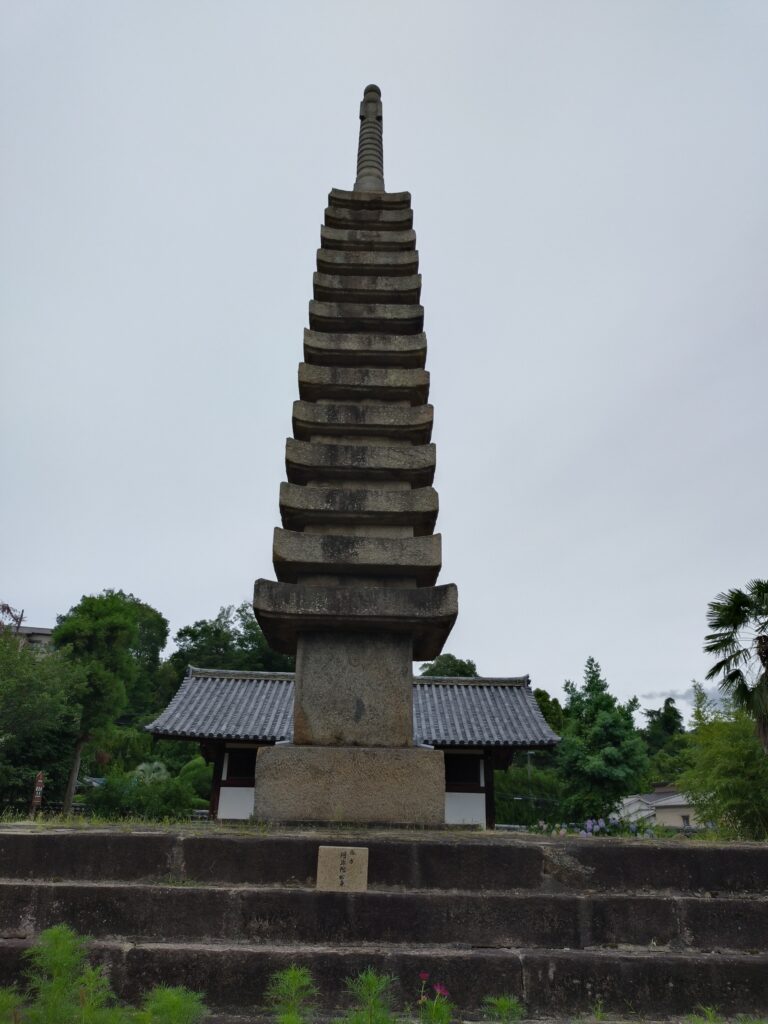
West Side — Amida Nyorai (Amitabha Buddha)
The Buddha of Infinite Light, connected with compassion and rebirth in the Pure Land.
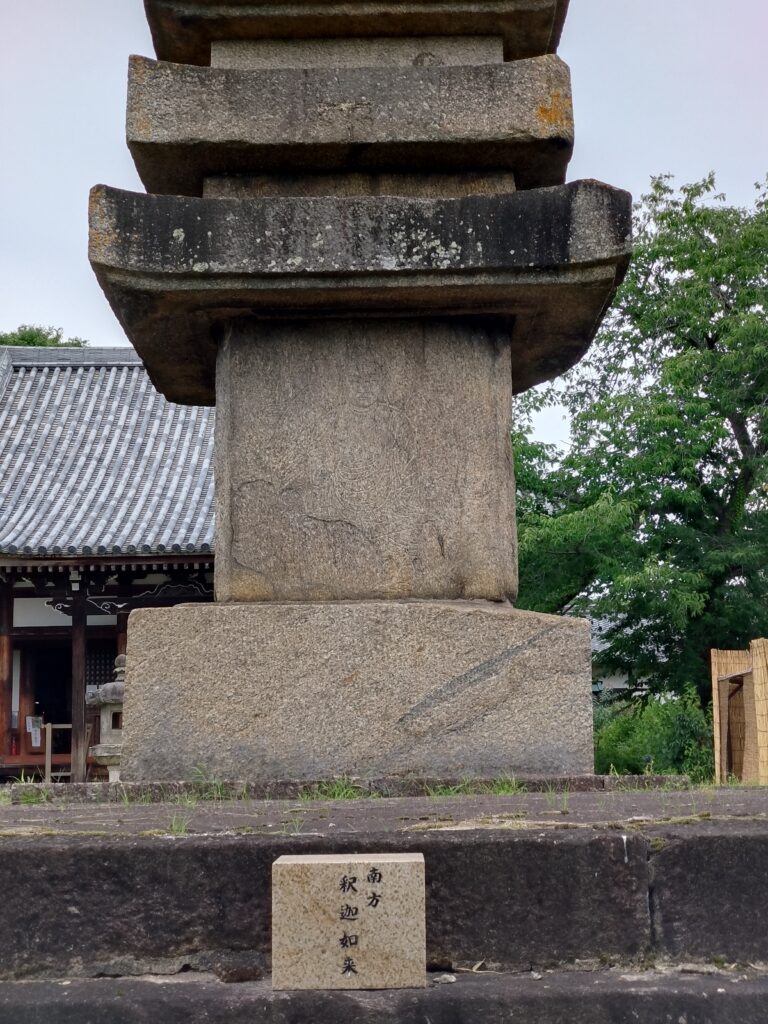
South Side — Shaka Nyorai (Shakyamuni Buddha)
The historical Buddha, representing awakening and the path toward wisdom.
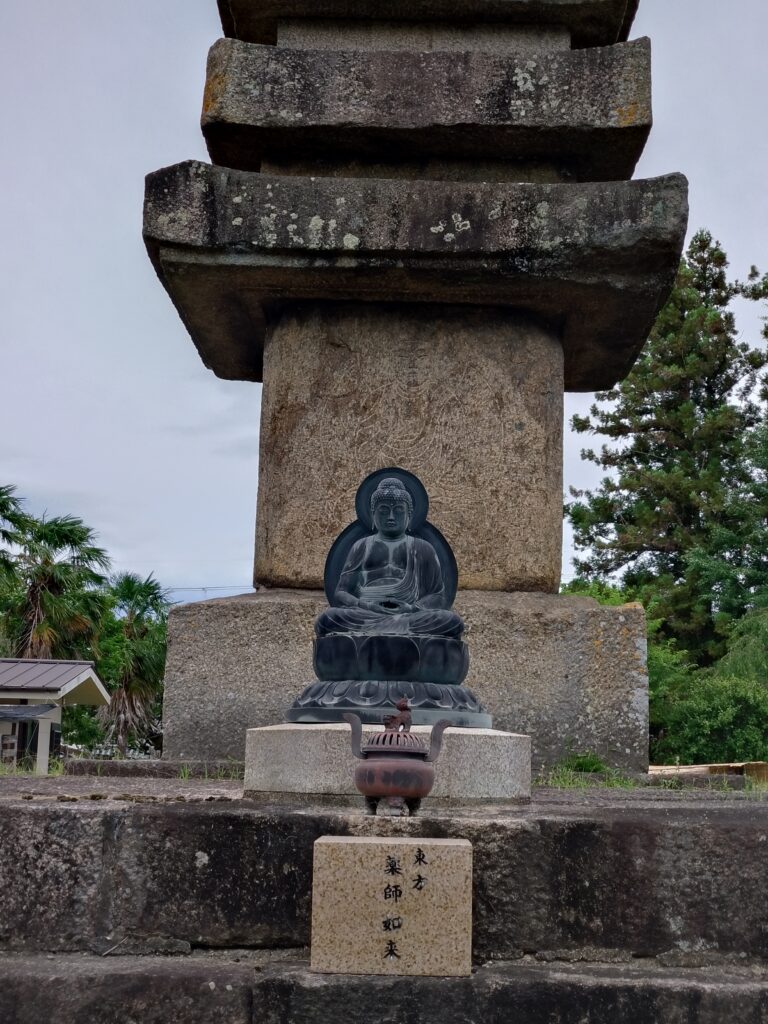
East Side — Yakushi Nyorai (Medicine Buddha)
Associated with healing, protection, and the easing of suffering.
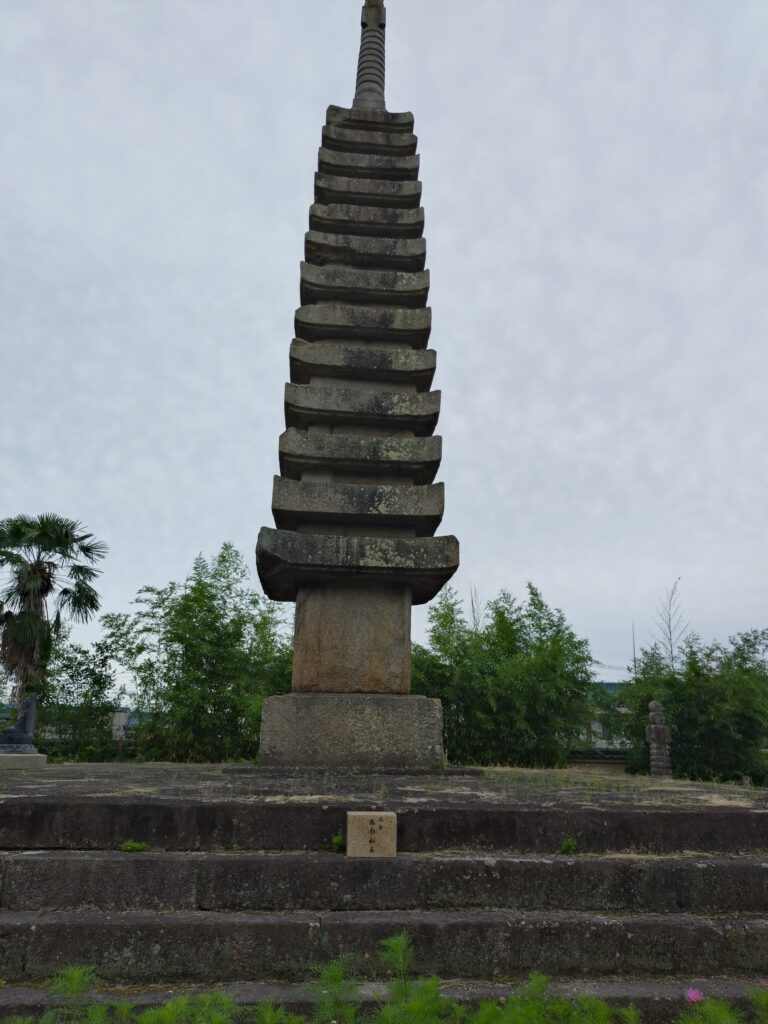
North Side — Miroku Nyorai (Maitreya Buddha)
The future Buddha, said to appear in a distant age to guide beings once again.
Standing before the pagoda, I found myself slowly walking around all four sides, reflecting on the different qualities each Buddha represents.
🪨 A Stone of Remembrance
Another stone monument that caught my attention was the Sangaimanrei Memorial Stone.
According to the temple information board, this area was once associated with Hannyano Gosanmai, a burial and memorial site established during the Heian period. Together with places such as Toribeno in Kyoto, it was regarded as one of the major funeral and memorial grounds of the region.
The stone is believed to have originally stood near the entrance to this cemetery area as a memorial monument dedicated to all souls. During the Meiji period, it was moved into the grounds of Hannyaji Temple, where it remains today.
The inscription, “Sangai Banrei Juppō Shishō Hōkai Byōdō,” expresses a Buddhist view that all beings and spirits are embraced equally within the Dharma Realm.
Surrounded by blooming hydrangeas, the stone quietly preserves a connection to a much older history — one that reaches back beyond the temple gardens and into the lives and memories of countless people who once passed through this landscape.

Memorial Stone (Sangaimanrei-hi) Among the Hydrangeas
🪷 The Lotus Pedestal Stone
Another stone relic preserved at Hannyaji Temple is the Fumi Renge-ishi, or Lotus Pedestal Stone.
According to the temple information board, it dates to 1267, during the Kamakura period, and is believed to be a rare surviving fragment related to a large Monju Bosatsu image commissioned by Eison of Saidai-ji Temple.
The stone is thought to have formed part of the lotus pedestal beneath the lion associated with Monju Bosatsu.
Although only a fragment remains today, the shape of the lotus petals still hints at the scale and craftsmanship of the original Buddhist image.

Lotus Pedestal Stone Related to a Kamakura-Period Monju Bosatsu Image
🪨 The Temple’s Strength Stones
One of the more unusual features within the temple grounds is a set of traditional Chikara-ishi, or strength stones.
According to the temple information board, the stones are connected to a story recorded in the medieval chronicle Taiheiki.
The story relates to the conflicts of 1333. After prayers for victory had been offered, monks from Hannyaji Temple, Kasagi-dera Temple, and Kōfuku-ji’s Daijō-in are said to have competed in a test of strength by attempting to throw a large rock up Mount Kasagi.
The strength stones displayed today commemorate that tradition.
Visitors are invited to test their own strength using three stones:
- Women’s Stone — approximately 20 kg
- Men’s Stone — approximately 30 kg
- “Unliftable” Stone — approximately 50 kg
Standing among the hydrangeas, the stones offer a fascinating glimpse into a lesser-known local tradition preserved within the temple grounds.

The Strength Stones of Hannyaji Temple
🌟Seasonal Beauty Beyond the Hydrangeas
Although hydrangeas are the most famous flowers at Hannyaji Temple in June, they were not the only seasonal details I encountered during my visit.
Throughout the grounds, hydrangeas appeared not only along the paths, but also in small displays arranged with water, glass, and flowers.
Glass bowls filled with hydrangea petals added moments of color and reflection, while the flower-filled chozuya offered another beautiful expression of the season.


Hydrangea Bowl Displays at Hannyaji Temple

Seasonal Hydrangea Chozuya at Hannyaji Temple
I was also surprised to discover that even the temple pamphlet had been updated with a seasonal hydrangea design. The cover featured a beautifully photographed hydrangea display, reflecting the atmosphere visitors experience at this time of year.

Cosmos Flowers Blooming at Hannyaji Temple
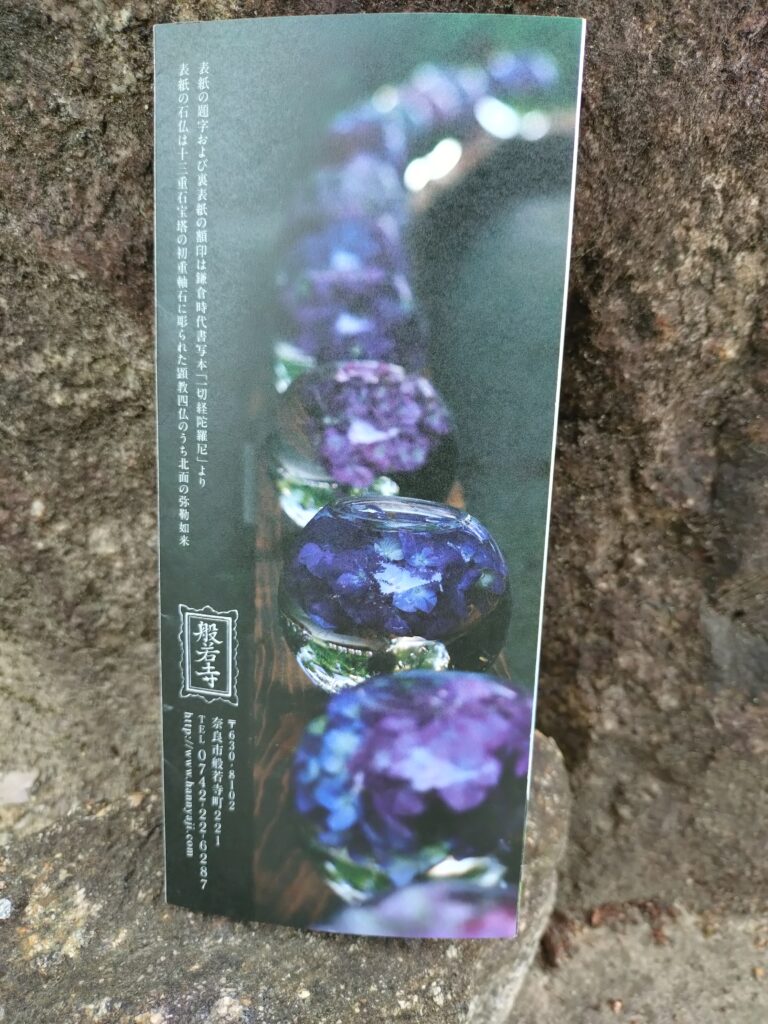
Seasonal Hydrangea-Themed Temple Pamphlet
☔Kaha’s Note
What stayed with me most about Hannyaji Temple was not any single monument or display, but the feeling of discovery that accompanied each step through the grounds.
Around one corner stood a centuries-old stone pagoda.
Along another path, weathered Buddhist figures appeared among blooming hydrangeas.
Even small details — a seasonal temple pamphlet or the first cosmos flowers of the year — seemed to reflect the temple’s quiet connection with the changing seasons.
As I wandered through the grounds, I found myself moving between different layers of time: ancient stone monuments, living traditions, and the fleeting beauty of flowers that bloom for only a short season.
Perhaps that is part of what makes Hannyaji Temple so memorable.
It is a place where history is not confined to the past, but continues to coexist with the rhythms of nature, year after year.
🌈 Explore More
If you enjoyed this post, you may also enjoy:

コメント