
- 🌟 Lead-in
- 📅 October Seasonal Highlights
- 🌾 Welcoming Autumn — Following the Calendar and the Weather
- 💧 October 8 │ Kanro (寒露) — Cold Dew
- 🌾 Mid-October │ Kanname-sai (神嘗祭) — Giving Thanks for the Harvest
- 🏮 Autumn Festivals — Traditions That Continue Today
- 🌙 October 23, 2026 │ Jūsan’ya (十三夜) — Another Autumn Moon
- ❄️ October 23 │ Sōkō (霜降) — Frost Descends
- 🎶 Listening to Autumn
- 🥢 Seasonal Nourishment🥢 Seasonal Nourishment
- 🌿 Small Ways to Welcome October
- 🌿 Explore the Season
- 🌸 Earth Whispers #3 │ Cosmos and the Temple Light
🌟 Lead-in
Thank you for reading Japanese Seasonal Living #2, and for visiting my Japanese Calendar — Lucky Days & Holidays in Japan!
October brings a more noticeable sense of autumn to Japan. Although warm days may linger, mornings and evenings gradually grow cooler, and cosmos flowers sway in the breeze. Before the vivid autumn leaves arrive in many parts of the country, flowers and ripening harvests bring their own colors to the season.
At the table, chestnuts offer another taste of autumn — from gently seasoned chestnut rice to Japanese sweets. Even a small sweet enjoyed with a warm cup of tea can become a simple way to welcome the season.
This month, let’s enjoy autumn through flowers, seasonal traditions, chestnuts, and small moments of everyday life in Japan.
📅 October Seasonal Highlights
🌾 Welcoming Autumn — Following the Calendar and the Weather
Japan’s traditional calendar offers many ways to notice the changing season. Yet October does not always bring the cool weather its seasonal names suggest. Warm days can linger, and autumn arrives differently from region to region.
Koromogae (衣替え), the seasonal change of clothing, is traditionally associated with the beginning of October. Today, it may be more comfortable to make this change gradually — keeping lighter clothes close at hand while preparing an extra layer for cooler evenings.
Rather than following a fixed date, we can use the old calendar as an invitation to notice what is changing around us.
💧 October 8 │ Kanro (寒露) — Cold Dew
Kanro, one of Japan’s 24 traditional seasonal divisions, means “cold dew.” It evokes dew resting on autumn grasses as mornings begin to cool.
Even when the days remain warm, a gentler evening breeze or a change in the morning air may offer a small sign of the season.
🌾 Mid-October │ Kanname-sai (神嘗祭) — Giving Thanks for the Harvest
At Ise Jingū, Kanname-sai is the most important annual festival. Newly harvested rice is offered to Amaterasu Ōmikami in gratitude for the blessings of the harvest.
The principal ceremonies at the Outer and Inner Shrines take place from October 15 to 17, with related observances continuing at other shrines within Jingū until October 25.
Rice connects this sacred tradition with everyday life. A bowl of shinmai (新米), newly harvested rice, offers a simple opportunity to pause and appreciate the season’s abundance — and the people whose work brings food to our tables.
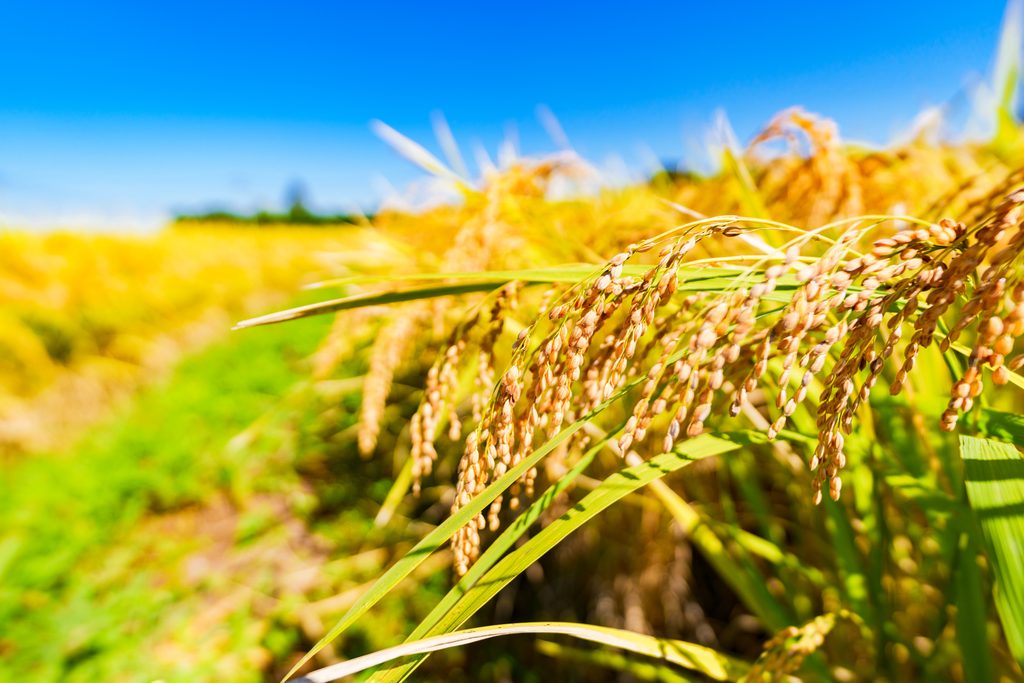
Ripening rice — a reminder of the harvest and the gratitude behind Kanname-sai.
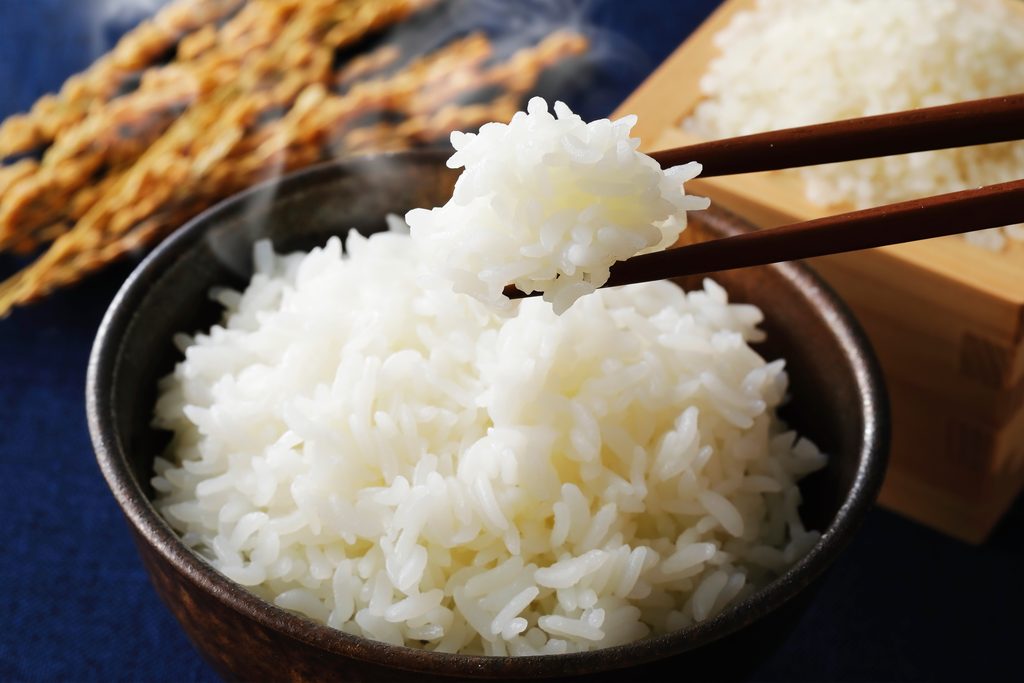
A simple bowl of rice — bringing gratitude for the harvest to the everyday table.
🏮 Autumn Festivals — Traditions That Continue Today
Autumn is also a season of local festivals in many parts of Japan. Depending on the community, these celebrations may express gratitude for the harvest, honor a shrine’s deity, or carry forward traditions passed down through generations.
Some feature mikoshi — portable shrines carried through the streets — while others bring festival floats, taiko drums, music, or offerings within the shrine grounds.
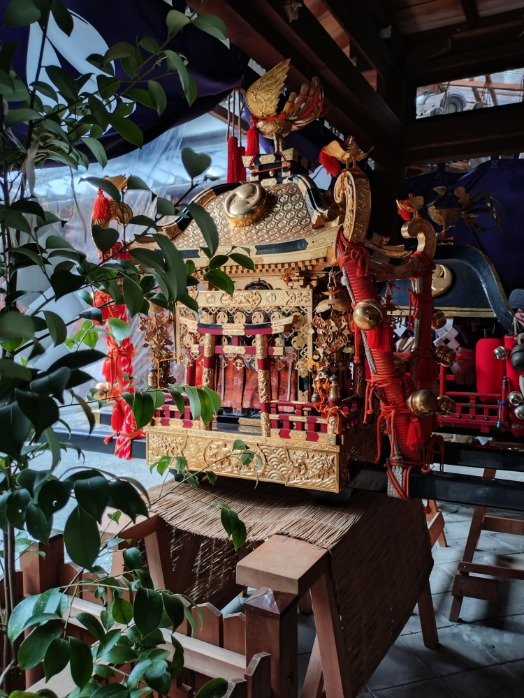
A mikoshi at Hakusan Shrine in Kyoto, photographed during my September visit ahead of the shrine’s autumn festival.
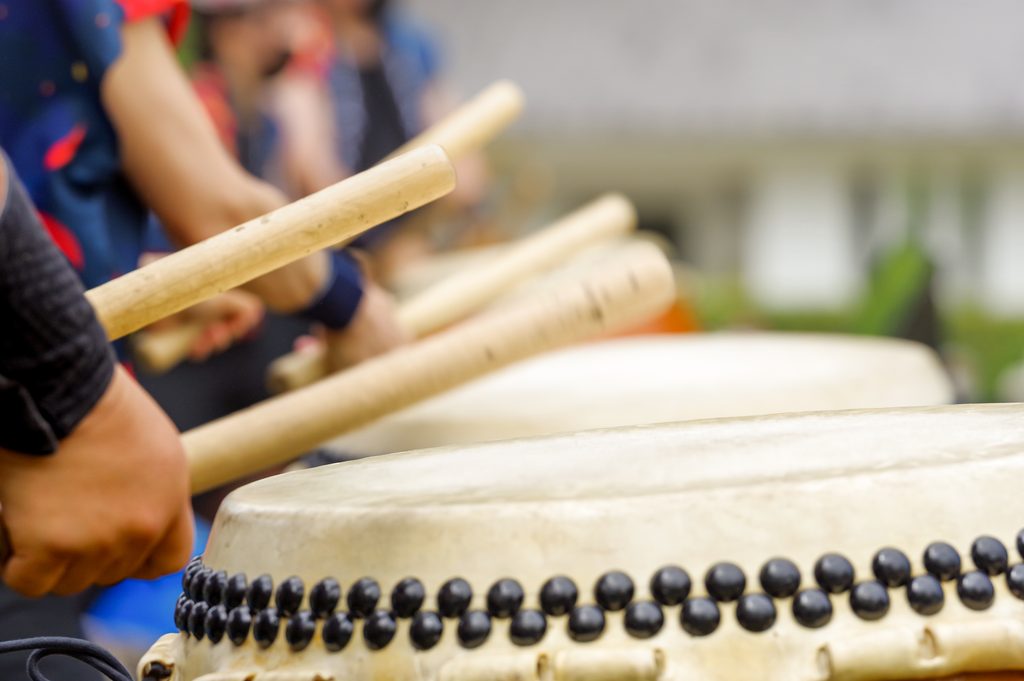
Taiko drumming — a lively sound heard at many Japanese festivals.
Dates and customs vary from place to place. If you are visiting Japan, a local autumn festival can offer a glimpse of how prayer, celebration, and community life remain connected today.
🌙 October 23, 2026 │ Jūsan’ya (十三夜) — Another Autumn Moon
Following September’s Tsukimi, October brings another traditional occasion for moon viewing: Jūsan’ya.
Observed on the thirteenth night of the ninth month of the old lunisolar calendar, it celebrates a moon that is almost full. In 2026, Jūsan’ya falls on October 23.
Chestnuts and beans are associated with its offerings, giving rise to the names Kuri-meigetsu — the “Chestnut Moon” — and Mame-meigetsu — the “Bean Moon.”
It is a lovely opportunity to enjoy chestnuts, look up at the evening sky, and appreciate the moon before it reaches fullness.
❄️ October 23 │ Sōkō (霜降) — Frost Descends
Sōkō means “frost descends,” a traditional image of autumn deepening toward winter.
Frost may still be far away in warmer areas of Japan. Rather than expecting the weather to match the name, we can take it as a reminder to notice local changes — the colors of leaves, the lengthening evenings, or the need for a warmer layer after sunset.
🎶 Listening to Autumn
As we explored in September, insect sounds are another way to experience autumn in Japan. Where they can still be heard, the calls of crickets and other autumn insects bring the season into the evening.
You do not need to visit a famous place to enjoy this. Pause beside a garden, take a quiet evening walk, or open a window when the weather is comfortable.
The calendar gives the season its names; the world around us gives it a voice.

Listen quietly for the sounds of autumn among the grasses.
🥢 Seasonal Nourishment🥢 Seasonal Nourishment
In this series, I share simple seasonal foods and flavors that can be easily enjoyed in everyday life.
This month, let’s welcome autumn with chestnuts — enjoyed in rice, as a simple snack, or in Japanese sweets.
🌰 Chestnuts — A Taste of Autumn
Chestnuts, known as kuri (栗) in Japanese, bring a gentle sweetness to the autumn table. Whether you prepare a dish at home or choose something ready to enjoy, they offer a simple way to taste the season.
🍚 Kuri Gohan — Chestnut Rice
Kuri gohan (栗ご飯) combines rice with peeled chestnuts and simple seasonings. The chestnuts add sweetness and a soft, crumbly texture, while the rice allows their flavor to shine.
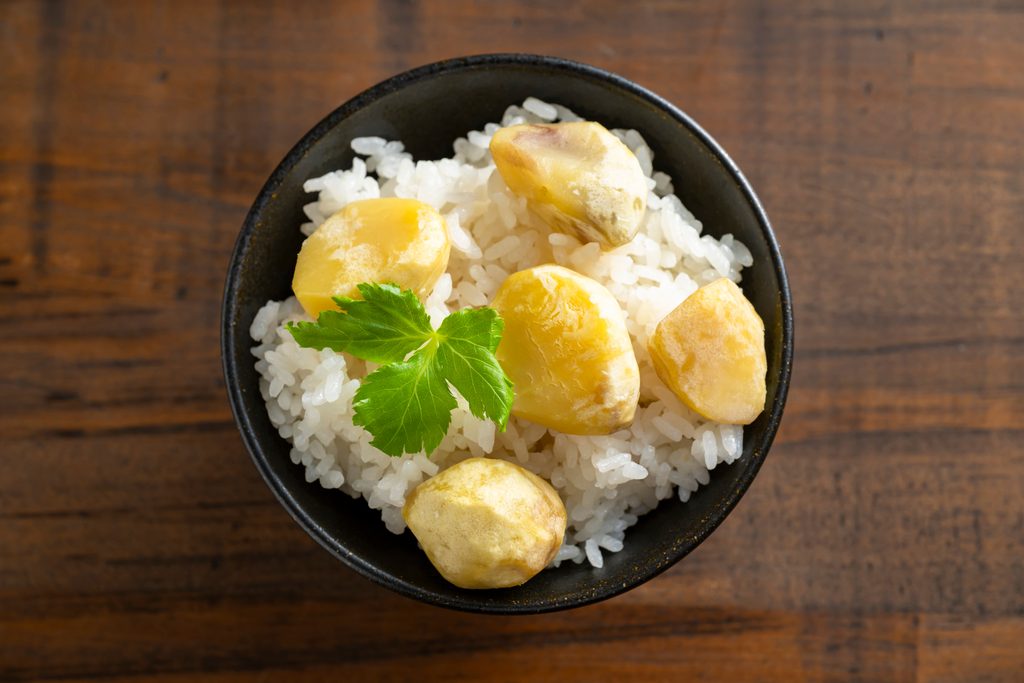
Chestnut rice — a simple way to bring autumn to the table.
Preparing fresh chestnuts takes a little patience, but ready-peeled chestnuts can make the dish easier to try. Choose plain, unsweetened chestnuts for cooking. In Japan, seasonal chestnut rice mixes also offer a convenient way to enjoy this autumn favorite at home.
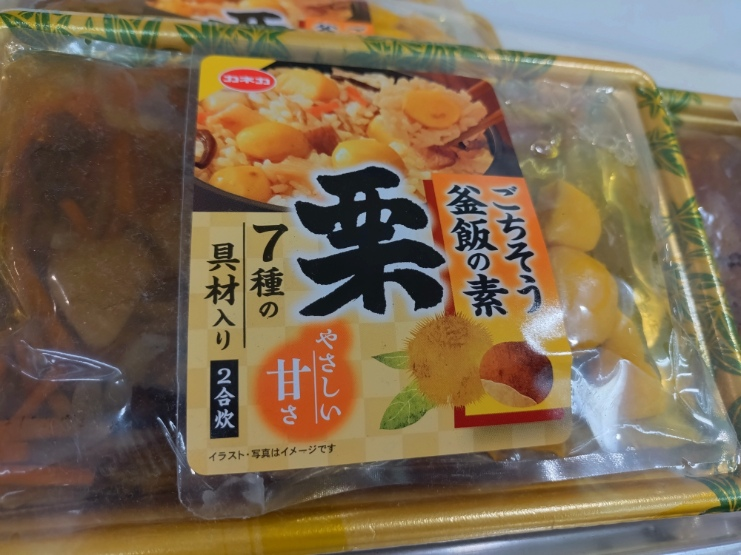
A chestnut kamameshi mix with seven ingredients, spotted at a Japanese supermarket.
🌰 A Simple Chestnut Snack
You do not need to prepare a whole dish to enjoy the season. Roasted chestnuts or packaged amaguri (甘栗) make a simple snack, especially alongside a cup of tea.
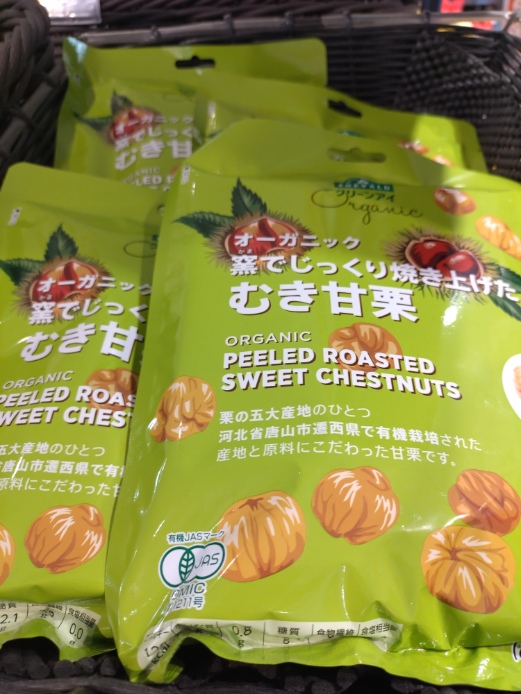
Packaged peeled roasted chestnuts — a convenient snack found in Japanese supermarkets.
Outside Japan, plain cooked or roasted chestnuts can offer an equally welcoming taste of autumn. Enjoy a few during an afternoon break, noticing their sweetness and texture.
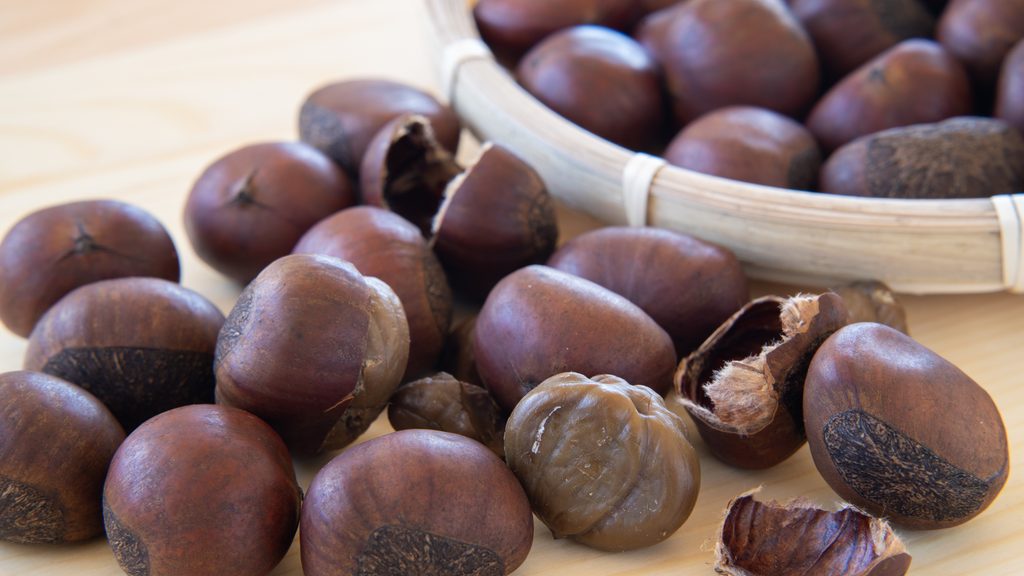
Roasted chestnuts — a small taste of autumn to enjoy with tea.
🍵 Chestnuts in Japanese Sweets
Chestnuts also appear in autumn wagashi, or Japanese sweets. Some feature a whole chestnut; others use chestnut paste or small pieces to bring the seasonal flavor into each bite.
During a September visit to Kyoto, I enjoyed a chestnut sweet that offered an early taste of autumn. Seasonal pleasures do not need to wait for the calendar to turn to October.
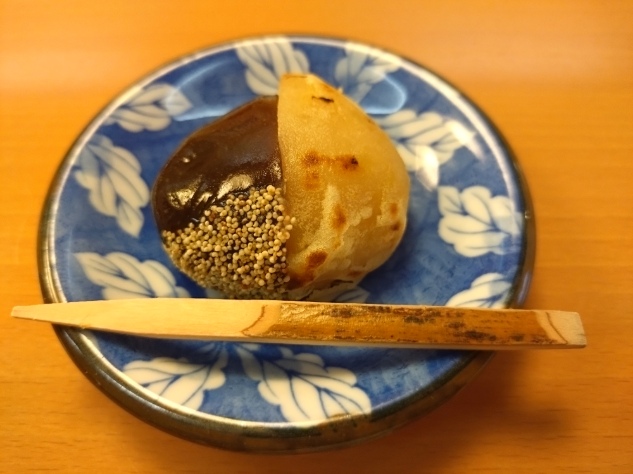
A chestnut sweet enjoyed in Kyoto in September — an early taste of autumn.
🌼 Autumn Shapes in Higashi
Flavor is only one way Japanese sweets express the season. Higashi (干菓子), delicate dry sweets, also bring autumn to life through their shapes and colors.
The autumn assortment I brought home from Kyoto included flower, leaf, and mushroom-shaped sweets, nestled among colorful konpeitō sugar candies.
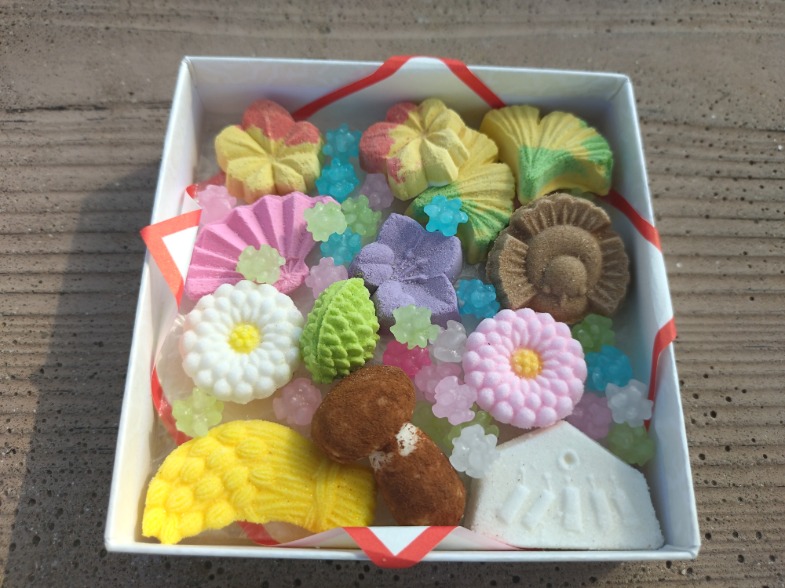
An autumn assortment of higashi from Kyoto, with seasonal shapes and colorful konpeitō.
Choose a few, arrange them on a small plate or a piece of kaishi paper, and enjoy them with tea. A flower, a leaf, and a tiny mushroom can turn an everyday tea break into a quiet celebration of autumn.
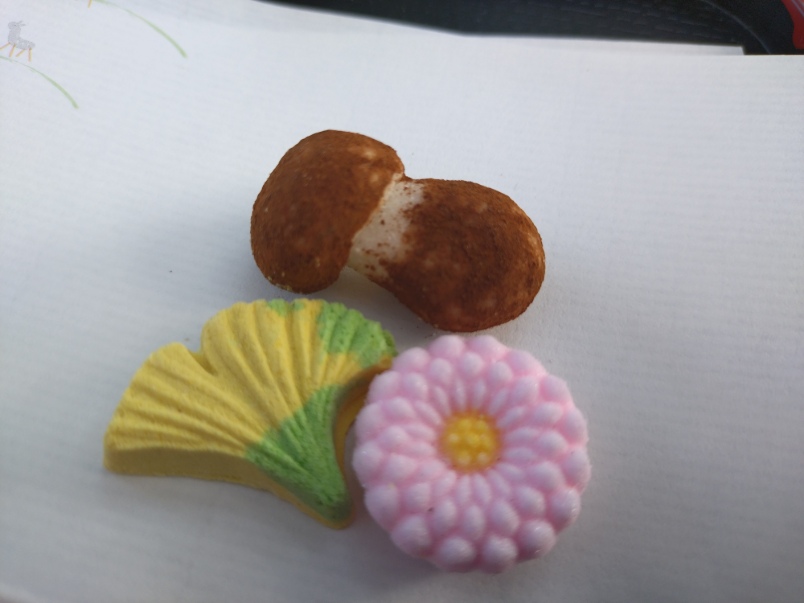
Mushroom-, ginkgo-leaf-, and chrysanthemum-shaped sweets arranged on kaishi paper.
🌿 Small Ways to Welcome October
A taste of autumn and a moment among flowers — these are two simple ways to enjoy October. Welcome the season at your own pace.
🥄 Try Boiled Chestnuts — A Childhood Memory
When I was younger, my mother used to boil fresh chestnuts in lightly salted water. She would make a small cut in each shell so that we could open them more easily afterward. Without that cut, the shells were difficult to break open.
We would scoop out the flesh with a spoon. The chestnuts were naturally sweet and delicious just as they were — a simple autumn taste I still remember.
You will need:
- Fresh chestnuts in their shells
- Enough water to cover them generously
- About 9 g of salt per liter of water (roughly 1%)
How to prepare them:
- Rinse the chestnuts. Place each one securely on a cutting board and carefully make a shallow cut in the shell.
- Place them in a pot, cover generously with water, and add the salt.
- Bring slowly to a boil over medium-low heat, taking about 10 minutes.
- Reduce the heat and simmer for 30–40 minutes, depending on their size.
- Remove from the heat and let the chestnuts rest in the cooking water for 30–60 minutes.
- Drain while still warm. Once comfortable to handle, use the cut to help open the shells, or carefully cut the chestnuts in half. Scoop out the flesh with a spoon.
It takes a little time, but there is no need to peel each chestnut before cooking. A little salt brings out their natural sweetness.
Boiling times and salt quantities adapted from Shirogohan.com (in Japanese). Making a small cut in the shell was my mother’s way of helping us open them.
🌿 Explore the Season
🌸 Cosmos at Hannyaji — Nara
Autumn has flowers to enjoy before the vivid leaves arrive. For me, cosmos are one of its loveliest sights, with delicate petals and slender stems that move in the breeze.
Last year, I filmed cosmos at Hannyaji Temple in Nara. Here is a glimpse of those blooms — a little autumn moment to revisit this October.
🎥 Watch on YouTube
Cosmos at Hannyaji Temple in Nara — filmed in 2025.
For more photographs and reflections from that visit, explore the full story:
🌸 Earth Whispers #3 │ Cosmos and the Temple Light
Discover cosmos flowers and quiet moments among the temple grounds at Hannyaji in Nara — a gentle glimpse of autumn from my visit last year.

You do not need to visit a famous flower spot to enjoy the season. Notice what is blooming in a nearby garden or park, or bring a single seasonal flower to your table. Autumn can begin with something small.
✨ October in a Few Words
Give thanks for the gifts of the harvest.
Watch the colors of nature gently change.
Feel autumn arriving in the quiet moments.
コメント