
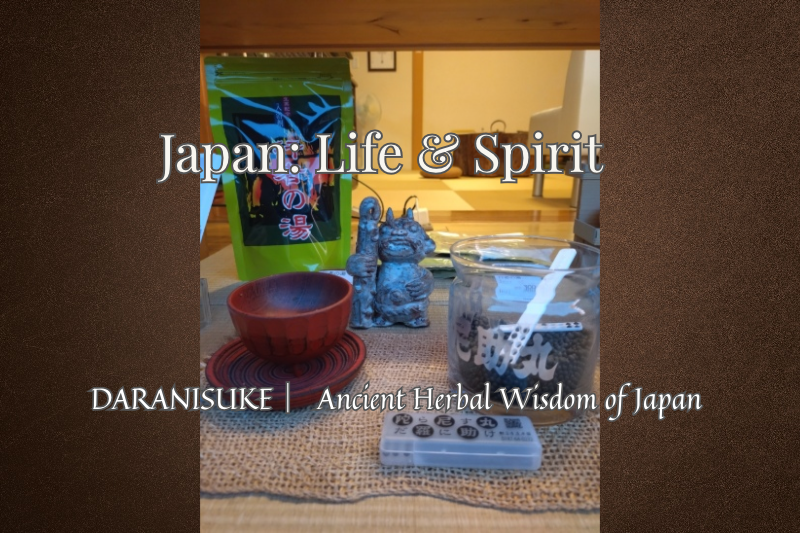
🍀 Lead-in
In Dorogawa, a mountain village in Tenkawa, Nara Prefecture, a traditional herbal medicine called Daranisuke (陀羅尼助) has been sold for generations.
These tiny black pills have a long history closely connected to Shugendō, Japan’s ancient tradition of mountain ascetic practice.
During my recent visit, I stopped at a local shop where three herbal ingredients were displayed alongside traditional packaging and small oni figures.
Behind this familiar mountain medicine lies a fascinating story connecting medicinal plants, ancient spiritual practices, and the legends of the oni who are said to be ancestors of the people of Dorogawa.
🌿 Daranisuke and the Tradition of Shugendō
According to local tradition, En no Gyōja (役行者), the legendary founder of Shugendō, prepared a bitter herbal remedy using the bark of the kihada tree to help people suffering from stomach problems.
This remedy is said to have been the origin of Daranisuke.
Dorogawa later became an important gateway for mountain practitioners entering the sacred Ōmine mountains, where herbal knowledge and religious traditions were passed down through generations.

Traditional Daranisuke packaging displayed in a shop in Dorogawa, Nara.
🌱 Three Medicinal Plants Behind Daranisuke
At a shop in Dorogawa, three herbal ingredients used in Daranisuke were displayed side by side: ōbaku, gajutsu, and gennoshōko.
Each comes from a different plant, with its own characteristics and history in Japanese herbal medicine.
🌳 Ōbaku (黄柏) — Japanese Cork Tree
Ōbaku is made from the dried inner bark of the kihada tree (Phellodendron amurense). Its vivid yellow color and intensely bitter taste come from compounds that include berberine.
Traditionally, it has been used in herbal preparations for digestive complaints.
🌿 Gajutsu (莪朮) — Zedoary
Gajutsu comes from the underground stem of a plant in the ginger family, commonly identified as Curcuma zedoaria.
Known for its distinctive aroma and bitter taste, it has long been used in traditional stomach remedies.
🌸 Gennoshōko (現の証拠) — Japanese Geranium
Gennoshōko (Geranium thunbergii) is a small flowering herb traditionally used in Japan to support digestive health.
Its unusual Japanese name, meaning roughly “proof of its effect,” reflects the reputation it gained as a familiar household remedy.

Three herbal ingredients displayed in Dorogawa: ōbaku extract, gajutsu, and gennoshōko.
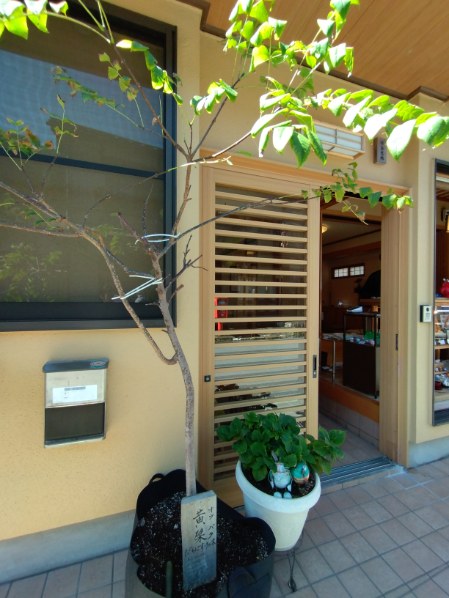
A kihada tree growing outside the shop, with a sign explaining its connection to traditional herbal medicine.
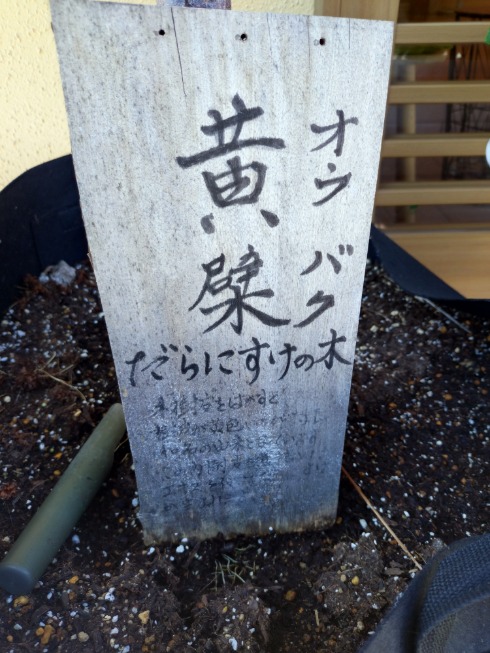
An informational sign outside the shop introduces the kihada tree, whose inner bark is used to produce ōbaku, a traditional ingredient in Daranisuke.
👹 Oni, En no Gyōja, and the People of Dorogawa
According to local legend, En no Gyōja was accompanied by two oni named Zenki (前鬼) and Goki (後鬼), who became his devoted followers.
Goki is traditionally regarded as an ancestor of the people of Dorogawa. It is also said that En no Gyōja entrusted Goki with the knowledge of preparing herbal medicine, which his descendants passed down through generations.
This connection gives the small oni figures displayed in the shop a special significance.
In Tenkawa, oni are not always regarded as frightening beings to be driven away.
At Tenkawa Daibenzaiten Shrine, a special ritual called Oni no Yado (“Lodging for the Oni”) is held on the eve of Setsubun to welcome the oni as sacred beings.
During the following day’s Setsubun ceremony, beans are scattered with the words “Fuku wa uchi, oni wa uchi!” — “Good fortune, come in! Oni, come in!”
Unlike the more familiar custom of driving oni away, this tradition honors them as divine visitors.

Red and blue oni figures displayed in a Daranisuke shop in Dorogawa, where local legends connect oni with the village’s ancestors and herbal medicine traditions.
💊 A Traditional Medicine Still Used Today
Daranisuke is still widely sold in shops throughout Dorogawa, making it a familiar part of the village’s everyday life.
The medicine comes in the form of tiny black pills, with some packages containing individual doses of 30 pills. These small packets are convenient to carry when traveling.
Depending on the product, Daranisuke is used for digestive complaints such as indigestion, loose stools, and constipation. Some formulations also list symptoms associated with excessive drinking among their approved indications.
There is also a local belief that taking Daranisuke before drinking alcohol may help prevent a hangover, although this should be understood as a traditional claim rather than a proven preventive effect.
What began as a traditional mountain remedy has continued through generations, preserving a remarkable piece of Japan’s herbal heritage.

Tiny black Daranisuke pills displayed at a shop in Dorogawa, Nara.
🌈 Kaha’s Note
When you visit Dorogawa, you’ll find Daranisuke in shops all around the village.
Perhaps picking up a small package as a travel souvenir or keeping some in your medicine cabinet could be a lovely way to bring a little piece of Dorogawa home.
I find it heartwarming to see the wisdom of earlier generations still being passed down in this mountain village.
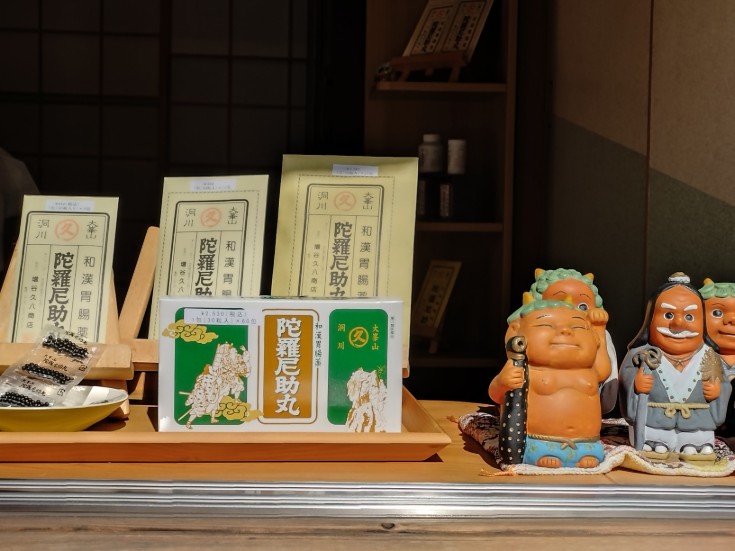
Daranisuke in a variety of traditional packages, displayed alongside colorful oni figures at a shop in Dorogawa.
🌈 Explore More — Follow the Threads of Dorogawa
The story of Daranisuke is just one part of Dorogawa’s rich cultural heritage. Explore the mountain traditions, local legends, and sacred places that continue to shape this remarkable village.
⛰️ Shugendō — Japan’s Mountain Ascetics
Discover the spiritual tradition of the yamabushi, the legacy of En no Gyōja, and the sacred mountains of Ōmine.

👹 Setsubun — Japan’s Tradition to Welcome Spring
Explore Japan’s Setsubun customs, including Tenkawa’s unusual tradition of welcoming oni as sacred visitors.

🐉 Dragon Path #1 — Ryūsenji Temple
Visit the sacred dragon temple of Dorogawa, where the Eight Great Dragon Kings, mountain waters, and ancient legends come together.

Explore more stories of Japan’s sacred places, seasonal traditions, and everyday discoveries.

コメント