
🍀 Lead-in
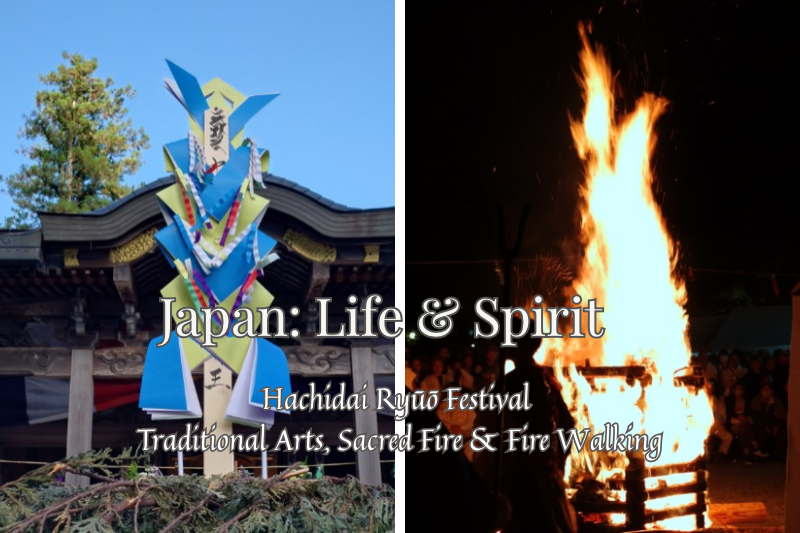
On October 11, 2026, I attended the Hachidai Ryūō Festival (八大龍王大祭) at Ryūsenji Temple in Dorogawa, Tenkawa Village, Nara Prefecture.
Dedicated to the Eight Dragon Kings, this annual autumn festival brings together Buddhist ceremonies, traditional Japanese performing arts, and a remarkable nighttime fire ritual.
Under the clear autumn sky, the temple grounds were filled with colorful decorations, lively performances, and visitors enjoying the festivities. As evening fell, the atmosphere changed dramatically, giving way to the glow of sacred flames against the dark mountain sky.
I also had the opportunity to participate in the fire-walking ritual — an experience I will share later in this article.
Come along as we explore this special day at Ryūsenji, from the lively afternoon celebrations to the sacred fire of the evening.
🐉 The Eight Dragon Kings & the Festival
In Buddhist tradition, the Hachidai Ryūō (八大龍王) are the Eight Great Dragon Kings, powerful beings associated with water, rain, and the protection of Buddhist teachings.
Ryūsenji Temple has a long connection with dragon worship and the sacred waters of Mount Ōmine. Its annual festival honors the Eight Dragon Kings through prayers and traditional ceremonies.
The day’s religious observances begin at 1:00 p.m. with the Daihannya Tendoku Hōyō (大般若転読法要), a Buddhist ceremony involving the ritual reading of the 600-volume Great Perfection of Wisdom Sutra.
Rather than reading every page aloud, monks ceremonially turn and unfold the sutra scrolls or books while chanting prayers. This practice is traditionally associated with blessings, protection, and the removal of misfortune.
The ceremony takes place inside the Hachidai Ryūō Hall, while visitors participate from outside the hall, before the afternoon festivities begin outdoors.
To discover more about Ryūsenji Temple, its sacred waterfalls, and the dragon legends of Mount Ōmine, explore my earlier journey:
🐉 Dragon Path #1 │ Where the Dragons’ Journey Begins — Ryūsenji Temple

🥁 Traditional Performing Arts & Mochi Tossing
At 2:00 p.m., the temple grounds came alive with Hōnō Geinō (奉納芸能) — traditional performances offered as part of the festival.
The afternoon program featured a colorful variety of music, dance, and masked performances:
- Suzu no Mai (鈴の舞) — a traditional dance performance.
- Rigen Taiko (理源太鼓) — powerful Japanese drumming.
- Gyōja Kagura (行者神楽) — a dramatic masked performance connected with mountain ascetic traditions.
- Hyottoko Odori (ひょっとこ踊り) — a lively, humorous folk dance.
- Ryūō Taiko (龍王太鼓) — another energetic taiko performance honoring the Dragon Kings.
From the rhythmic beats of the drums to the expressive movements of the masked dancers, each performance brought a different character to the celebration.
The afternoon festivities concluded with mochi-maki (餅まき), a traditional custom in which small rice cakes are tossed to the gathered crowd. Visitors reached out to catch them, bringing the lively celebrations to a cheerful close.
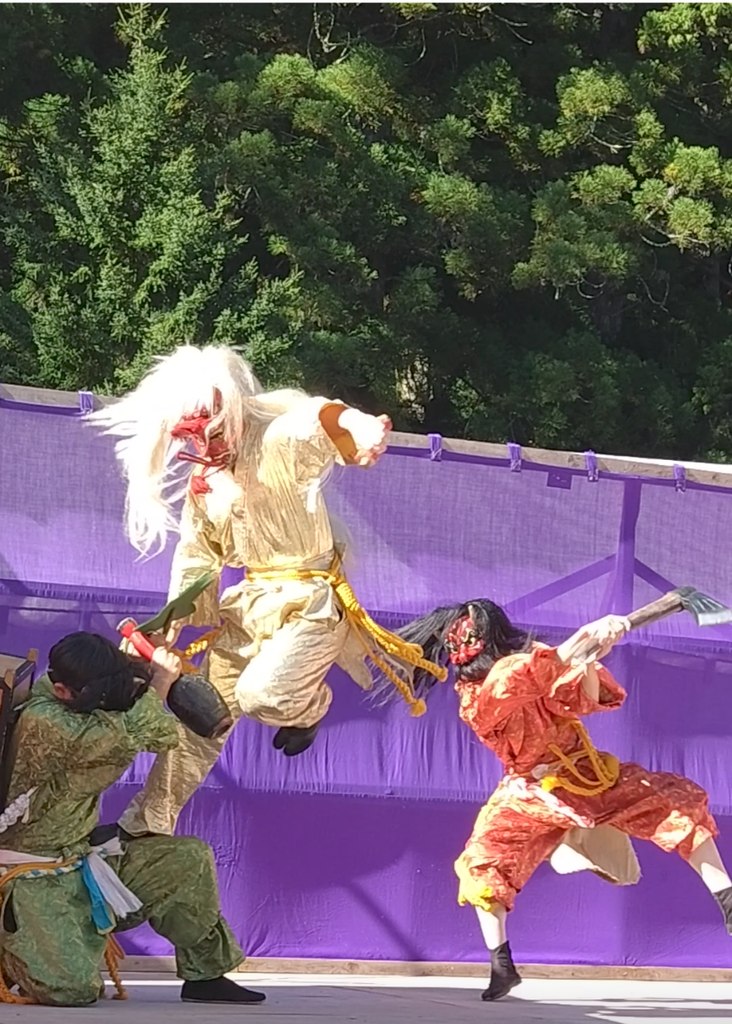
A dramatic masked performance featuring dynamic movements and colorful costumes.

Hyottoko Odori — a humorous folk dance featuring expressive masks and playful movements.
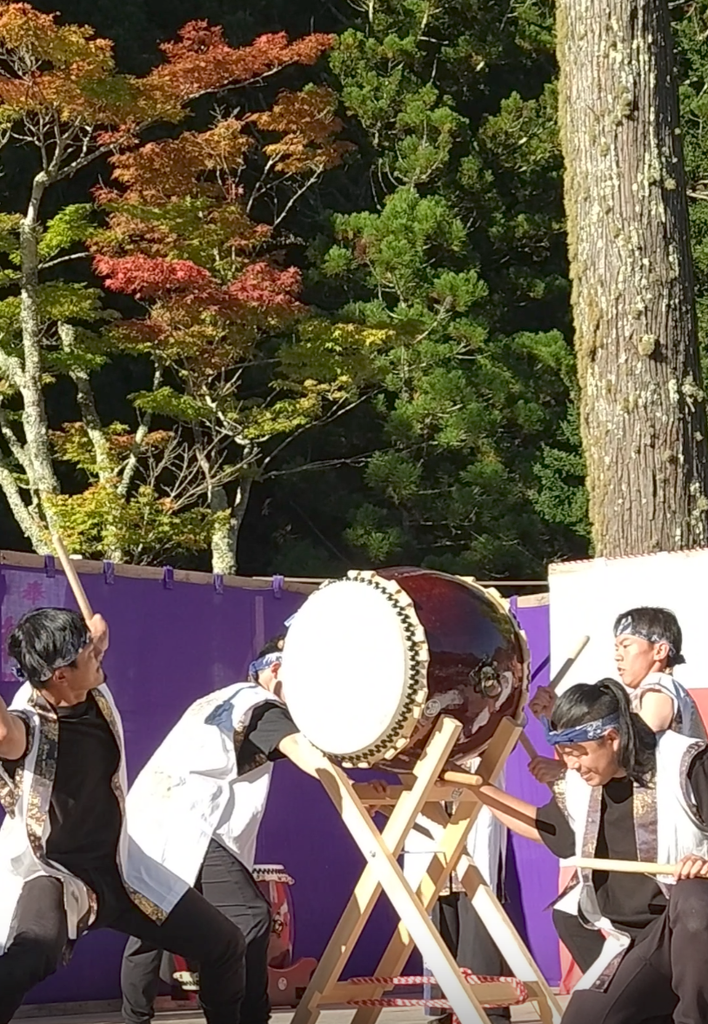
Powerful taiko drumming brings energy to the afternoon celebrations.

A traditional lion dance featuring long flowing costumes and expressive lion heads.
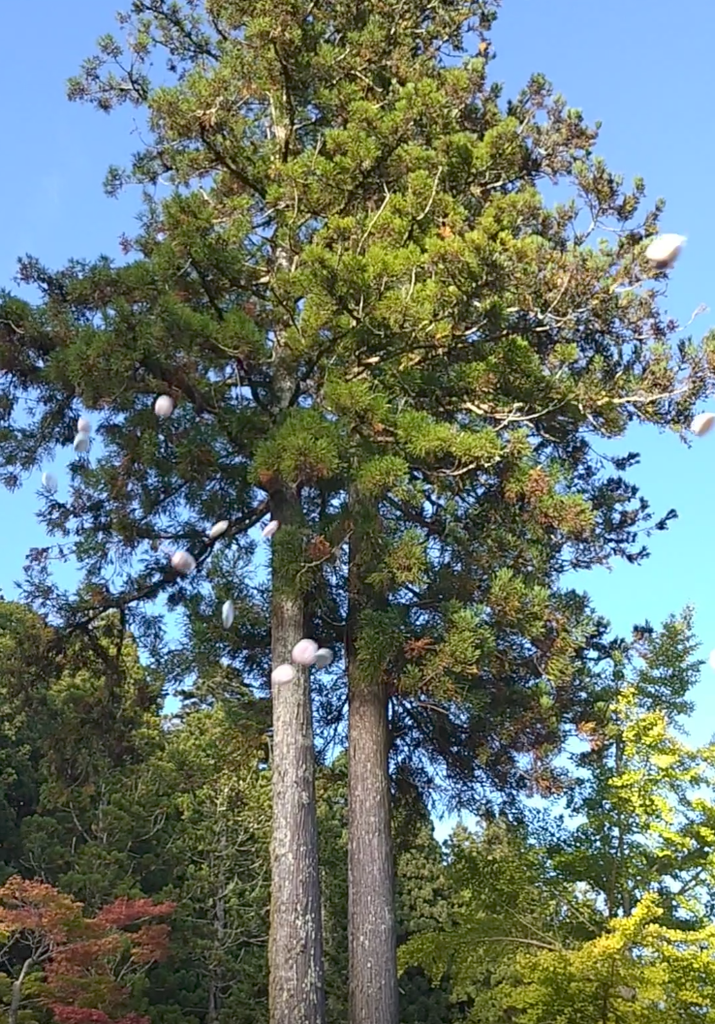
Mochi-maki — small rice cakes flying through the air during the traditional mochi tossing at Ryūsenji Temple.
🔥 The Sacred Fire — Saitō Ōgoma
As darkness settled over the mountains, the festival entered a more solemn and spiritual phase.
At around 7:00 p.m., the Saitō Ōgoma (柴燈大護摩供) began — a traditional outdoor Buddhist fire ritual closely associated with Shugendō, Japan’s mountain ascetic tradition.
During this ceremony, sacred fire is used in prayers for purification, protection, and the removal of obstacles. The flames symbolize the burning away of negative influences and worldly attachments.
As the wooden structure caught fire, thick smoke rose into the night sky. Soon, towering flames illuminated the temple grounds, creating a powerful contrast with the surrounding darkness.
The fire would later become part of the evening’s final practice — Hiwatari (火渡り), or fire walking.
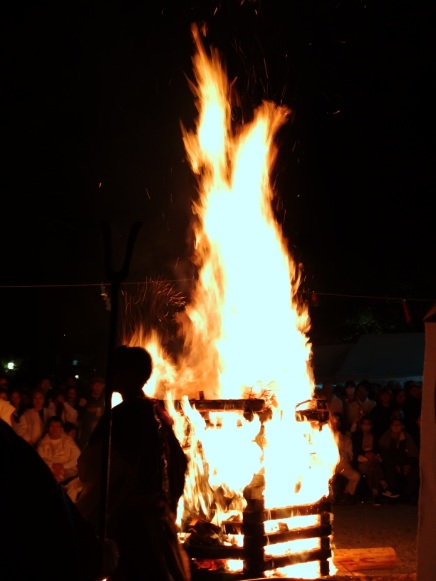
Towering flames rise into the night sky during the Saitō Ōgoma fire ritual at Ryūsenji Temple.
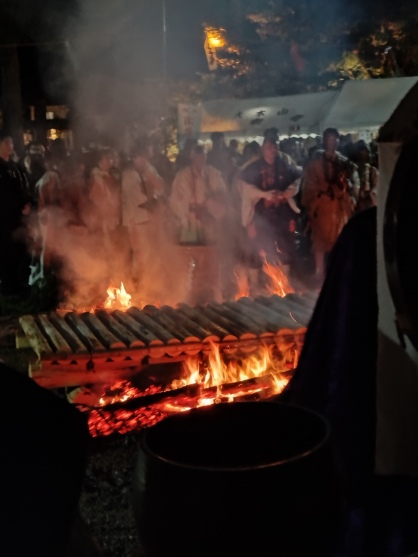
The sacred fire is prepared for the fire-walking ritual that follows.
🎥 Watch on YouTube
Hachidai Ryūō Festival — Sacred Fire Ritual at Ryūsenji Temple
Watch the flames and rising smoke during the nighttime fire ritual at Ryūsenji Temple in Nara. Experience a glimpse of the powerful atmosphere of this sacred autumn festival.
👣 Fire Walking — A Personal Experience
Following the fire ceremony, visitors gathered to participate in Hiwatari (火渡り), a traditional fire-walking practice associated with purification and spiritual blessings.
A long line formed as people waited for their turn. I joined the line somewhere in the second half, and I think I waited for about an hour before finally reaching the fire-walking path.
Before participating, we were instructed to remove our socks, stockings, or tights and walk barefoot, as these materials could catch fire. We were also asked not to take photographs of people during the practice, out of respect for its spiritual nature.
When my turn finally came, I walked across the prepared path barefoot. Surprisingly, I did not feel much heat beneath my feet, maybe because the mountain evening was quite cold.
Temple attendants carefully guided participants at the end of the path. I noticed how gently they assisted elderly visitors and others who needed extra support.
For me, it was a memorable opportunity to experience a traditional spiritual practice firsthand, rather than simply observe it from a distance.
🐉Kaha’s Note
This was my first time attending the Hachidai Ryūō Festival, and every part of the experience was wonderful in its own way.
It was heartwarming to see traditional Japanese performing arts being passed down to younger generations, with children taking part and people of all ages enjoying the celebration together. I sincerely hope these traditions will continue for many years to come.
I could also sense how much the festival depended on the dedication and cooperation of the local community. I felt truly grateful to everyone who helped make this special day possible.
Above all, the nighttime fire ceremony left the deepest impression on me.
As the powerful flames rose into the darkness, they seemed to take the shape of a dragon ascending toward the heavens. It was an extraordinary sight, filled with strength and sacred energy.
For me, it was a night when I felt a profound connection with the Dragon Spirits — a memory I will carry with me for a long time.
🌈 Explore More
Discover the spiritual traditions of Japan’s mountain ascetics and their deep connection with the sacred mountains of Ōmine.
⛰️ Shugendō — Japan’s Mountain Ascetics

Explore the traditional herbal wisdom associated with Shugendō and the mountains of Ōmine.
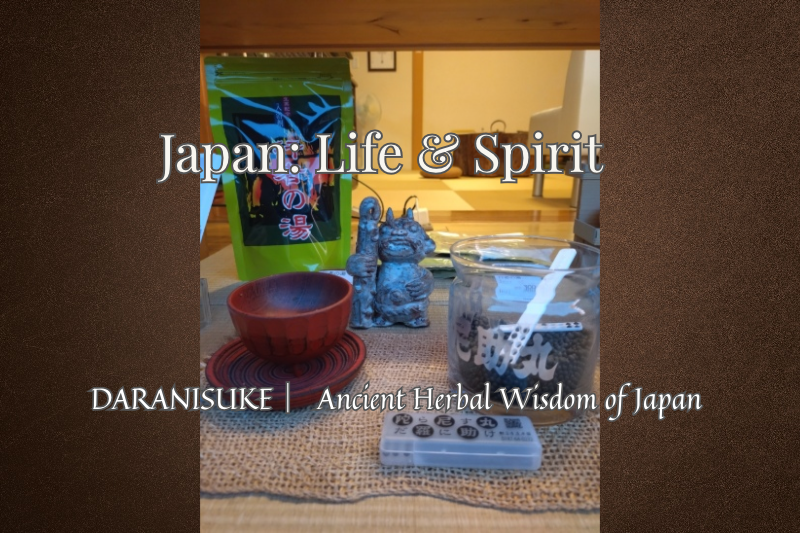
🌿 Daranisuke — Ancient Herbal Wisdom of Japan
For more glimpses of Japan’s sacred places, traditional festivals, and natural beauty, visit Rainbow Awakening on YouTube.
More festival highlights, including traditional performances, will be coming soon. Stay tuned! 🐉🔥
Explore more sacred places, Japanese traditions, nature, and spiritual journeys through Rainbow Awakening.
コメント