
🕊️ Lead-in
As the final night of the year arrives, the sound of temple bells echoes through the stillness of winter.
In Japan, this tradition is known as Joya no Kane—the ringing of a temple bell 108 times to mark the close of one year and the beginning of another. Each chime is said to sweep away a human “bonnō,” or worldly desire, helping us enter the new year with a clear heart.
In this post, I’d like to share the meaning behind Joya no Kane, its quiet power, and how it continues to connect people to something timeless and deeply human—even today.
🔔 A Moment of Sound from Okadera
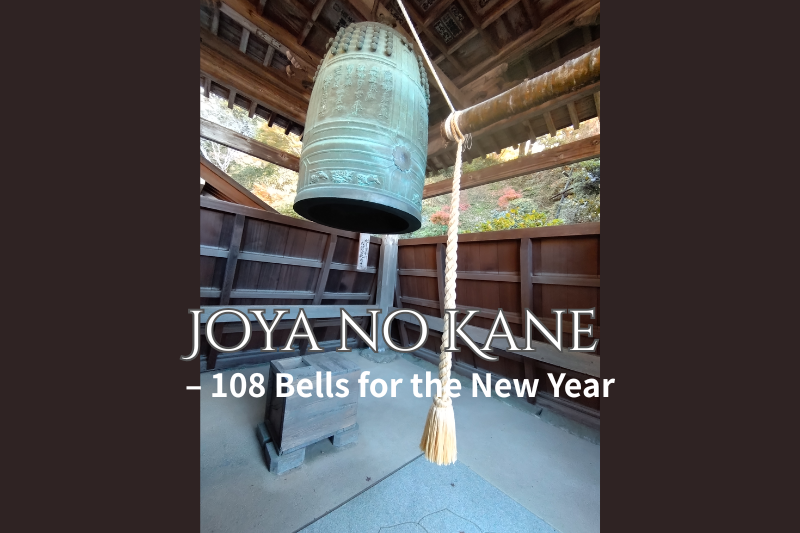
While not recorded on New Year’s Eve, this short video captures the sound of a purification bell at Okadera Temple in Asuka, Nara.
At this temple, anyone can walk up and ring the bell at any time of year, offering a prayer for protection and release. The atmosphere is quiet and welcoming, and the sound itself is deep and grounding—similar in feeling to Joya no Kane.
🔔 What Is Joya no Kane?
In Japan, Joya no Kane (除夜の鐘) refers to the custom of ringing a large temple bell 108 times on the night of December 31st.
This practice is deeply rooted in Buddhist tradition. The number 108 represents the human “bonnō” (煩悩)—worldly desires or attachments that cause suffering. Each chime of the bell is said to release one of these desires, helping us let go of the past year’s burdens and start the new year with a clear, open heart.
The ritual typically begins late at night, with monks and temple visitors taking turns striking the bell. The deep, resonant sound carries through the winter air, creating a moment of shared reflection and stillness.
Some temples allow visitors to ring the bell themselves, while others perform the ritual in quiet ceremony. Even if you don’t attend in person, the sound of the bell can be heard in many neighborhoods—or seen on television—marking the transition into the new year with peaceful resonance.
🪷 Why 108 Bells?
The number 108 may seem unusual at first, but in Buddhist thought, it holds deep symbolic meaning. It represents the total number of human bonnō, or defilements—those inner impulses like anger, greed, ignorance, or attachment that cloud the mind and lead to suffering.
According to traditional teachings, there are six basic senses (sight, sound, smell, taste, touch, and thought), and each can experience things in pleasant, unpleasant, or neutral ways. When multiplied across different perceptions and reactions, the number 108 emerges as a symbolic count of all possible worldly desires that may disturb the heart.
By ringing the bell 108 times on New Year’s Eve, each sound is believed to help release one of these desires. It’s not about perfection or suddenly becoming enlightened—it’s a quiet invitation to reflect, let go, and step into the new year with a little more lightness and clarity.
Even if you don’t count every strike, the steady rhythm of the bell offers a kind of spiritual cleansing—a reminder that the new year is a chance to begin again.
🕰 A Tradition Rooted in History
The practice of ringing temple bells on New Year’s Eve is believed to have started in Japan during the Muromachi period (1336–1573), a time when Buddhist customs began to take deeper root in everyday life.
Originally, the bell ringing was part of Jōdo (Pure Land) or Zen Buddhist temple rituals, performed to purify the heart and mind at the year’s end. Over time, the practice extended beyond monastic life and became a shared tradition among the wider public.
By the Edo period (1603–1868), Joya no Kane had spread throughout Japan. People would visit temples not only to pray for the new year, but also to hear the bell and participate in this symbolic act of cleansing. Even in more modern times, the ritual continues—often adapted to local customs, time constraints, or practical considerations.
During the COVID-19 pandemic, many temples temporarily suspended public bell ringing, or allowed only monks to ring the bell quietly. Yet even then, the sound of Joya no Kane was broadcast on television or social media, showing just how deeply embedded this tradition is in the Japanese sense of time, transition, and renewal.
🏯 Bells Across Japan
As midnight approaches on December 31st, the deep sound of temple bells can be heard across Japan. In cities and rural towns alike, temples open their gates to visitors, offering a moment of stillness before the new year begins.
Each temple has its own way of observing Joya no Kane. In larger cities, well-known temples like Chion-in in Kyoto or Zojoji in Tokyo may draw large crowds. Some temples allow visitors to line up and take turns ringing the bell themselves, while others hold quiet ceremonies where monks ring the bell in solemn rhythm.
If you happen to live near a temple, you may hear the bell’s sound drifting softly through the cold winter air—a grounding reminder of the passing year.
For those at home, NHK’s annual broadcast Yuku Toshi Kuru Toshi shows scenes from temples and shrines across the country, capturing the moment of transition in real time. The program has become a New Year’s tradition itself, watched by millions as they quietly reflect and prepare to welcome the year ahead.
Whether heard in person or through a screen, the sound of Joya no Kane resonates as a shared experience—connecting individuals across space and generations through a single, timeless sound.
🌠 Kaha’s Note
In my own family, New Year’s Eve has always been quiet and simple.
We usually go back to our hometown for the New Year, where we watch Yuku Toshi Kuru Toshi on TV, listen to the sound of temple bells in the distance, and eat toshikoshi soba together. After midnight, we bundle up and walk to a small local shrine for our first visit of the year.
At the shrine, there’s a small tradition of drawing a fortune slip or receiving a simple gift—just something lighthearted to start the year with a smile.
Families gather, children come to visit their grandparents, and the quiet little shrine becomes a warm, familiar place to welcome the new year.
A local monk who visits my mother’s home once told us that at his temple, everyone who comes on New Year’s Eve is invited to ring the bell, so they no longer count exactly 108 times.
They build a fire to keep warm and welcome each person with care—it’s more about the spirit of inclusion and connection than the number itself.
There’s not much in our small countryside town, but maybe that’s what makes it feel so comforting.
Thank you for reading my blog this year—and for watching the videos on YouTube too.
As I visit the shrine this New Year’s, I’ll offer a quiet prayer for your health, happiness, and peace in the year to come.
🏯 A Quiet Moment at Okadera
The bell featured earlier in this post was recorded at Okadera Temple, a peaceful, historic temple in the mountains of Nara.
If you’re curious, here’s a short blog post and video capturing the gentle atmosphere of this sacred place:
🌈 Explore More
A quiet space where everyday life, seasons, and spiritual reflections come together.
Here, I share stories from Japan—nature, traditions, sacred places, and small moments that invite you to pause and reconnect.


コメント