
🍃 Lead-In
Right beside the entrance to my mother’s house stands a bay laurel tree.
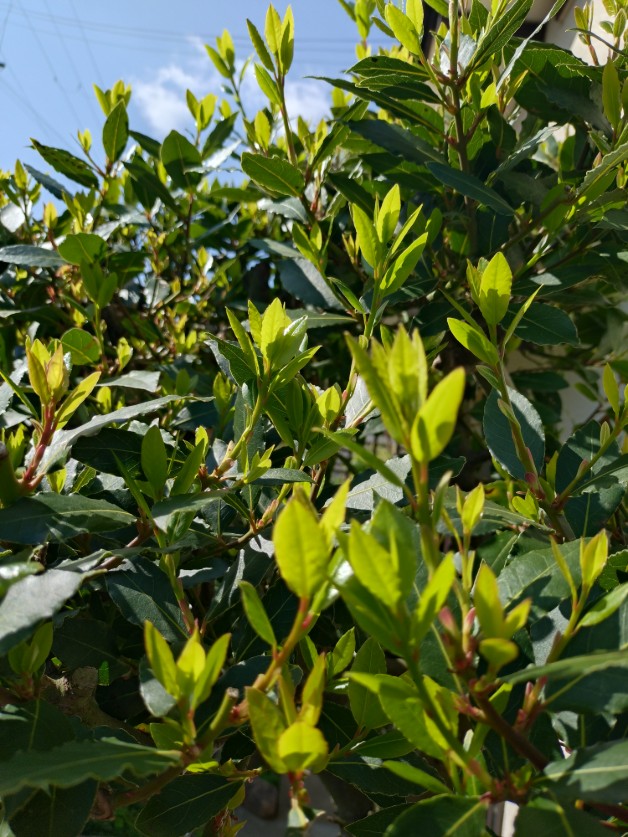
Fresh bay laurel leaves appearing beside older foliage in May
In May, fresh pale green leaves begin to appear among the darker older ones, and the tree quietly changes with the season again.
I probably use bay leaves most often during the colder months, adding them to soups, stews, and slow-cooked meals in the kitchen.
The leaves can be dried and stored for cooking, and some people also infuse them into oils or handmade creams for natural skin care.
It may not be the most noticeable tree in the garden,
but it has always been one of the most useful.
Today, I wanted to share the bay laurel tree growing in our garden and a few simple ways its leaves can be enjoyed in everyday life.
🌱 How to Grow Bay Laurel in Garden or Pot
Bay laurel is a slow-growing tree that can live for many years once established.
The tree beside my mother’s house has been there since I was little,
quietly remaining through the seasons beside the entrance.
⓵ Starting with a Young Tree
Many people begin with a small nursery plant or a young cutting.
Bay laurel can grow in both gardens and large containers as long as the soil drains well.
A place with gentle sunlight and some protection from strong wind usually suits it best.
⓶ Soil, Water, and Seasonal Care
Bay laurel dislikes constantly wet roots, so well-draining soil is important.
Water when the surface soil begins to dry, especially during warmer months.
In colder seasons, growth naturally slows.
The leaves themselves do not always release a strong fragrance immediately,
but when gently torn or crushed between the fingers, their warm herbal scent suddenly appears.
⓷ Pruning and Leaf Harvesting
The tree can be lightly pruned to maintain its shape and encourage fresh growth.
In spring, soft pale green leaves appear beside the older darker ones, giving the tree a gentle layered look.
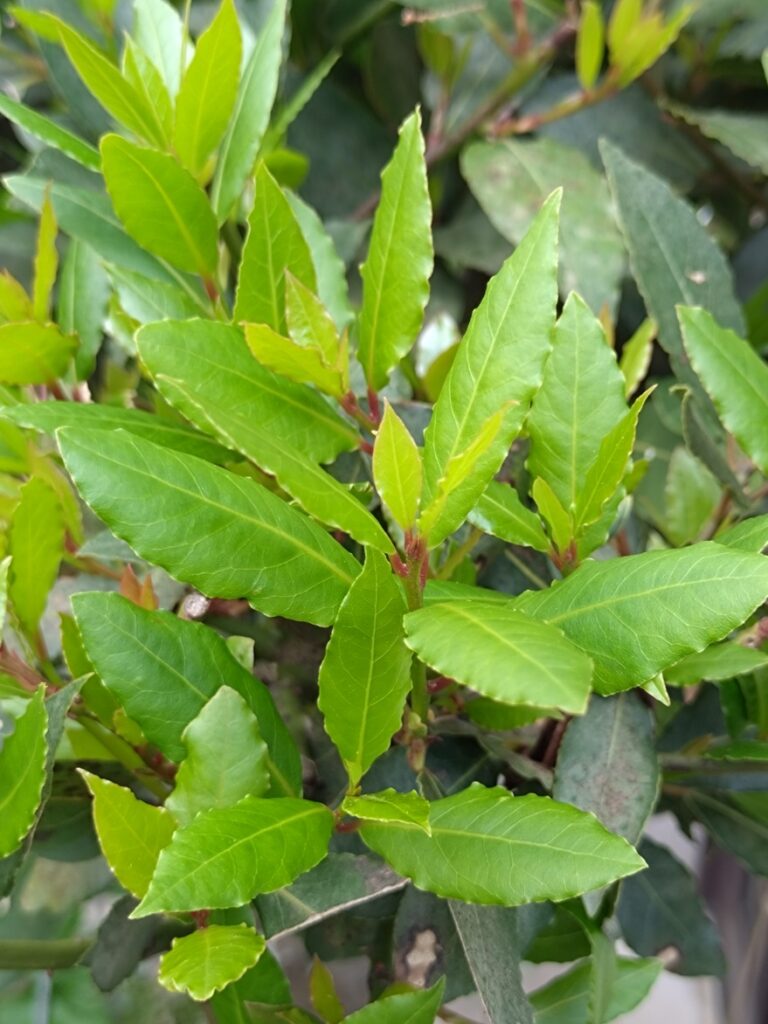
Fresh spring growth on the bay laurel tree
Leaves may be picked fresh when needed or dried slowly for later use in soups, stews, and other slow-cooked dishes.
☀️ Bay Laurel Care Tips: Quick Snapshot
A few simple habits can help bay laurel stay healthy and fragrant through the seasons.
💧 Allow the surface soil to dry slightly before watering again.
🌞 Gentle sunlight is ideal, especially morning light.
✂️ Light pruning helps maintain shape and encourages fresh leaves.
🍃 Crush or tear leaves slightly to release more fragrance while cooking.
🏺 Bay laurel grows well in both gardens and large pots with good drainage.
❄️ Protect young plants from strong winter wind and severe frost if possible.
🌿 Bay Laurel Quick Facts & Background
・Native to the Mediterranean region, but now grown in gardens around the world.
・An evergreen tree with glossy leaves that remain through every season.
・Often used dried in soups, stews, sauces, and slow-cooked dishes.
・Fresh leaves have a softer scent, while dried leaves develop a deeper aroma over time.
・The fragrance becomes stronger when the leaves are torn, crushed, or heated.
・Can be infused into oils or used in handmade creams, soaps, and herbal care.
・Traditionally associated with protection, wisdom, and remembrance in many cultures.
⚠️ A Small Note
The fragrance of bay leaves is usually gentle rather than strong,
slowly blending into soups and stews as they cook.
The leaves themselves are usually removed before eating,
as they remain firm even after cooking.
Sometimes, just a single leaf is enough to completely change the feeling of a meal.
🍲 Simple Uses at Home: Small Ways to Use Bay Laurel
Bay leaves are simple to use and quietly useful in everyday cooking.
① Add one or two dried leaves to soups, stews, or pot-au-feu while simmering.
② Use dried leaves in tomato sauces or slow-cooked dishes for gentle herbal depth.
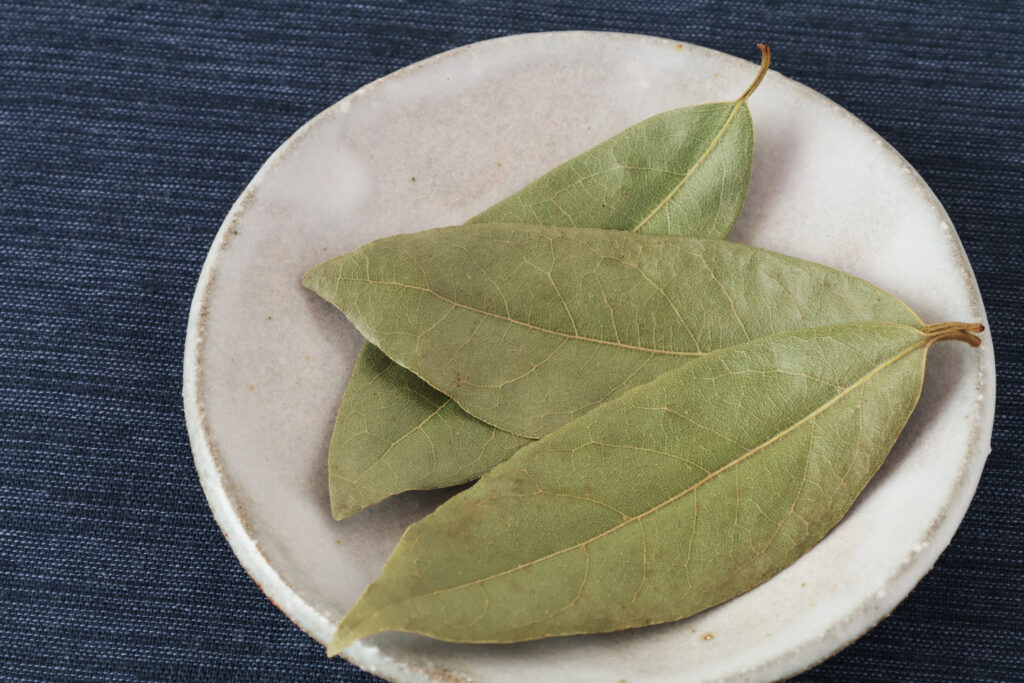
③ Dry fresh leaves naturally and store them in a jar for later use.
④ Some people also infuse bay leaves into oils or handmade creams as part of natural herbal care.
⑤ Even a single leaf can bring a familiar feeling to the kitchen during colder seasons. ⑥ A few dried bay leaves can also be added to bath water for a quiet herbal scent during colder seasons.
*If using bay leaves for skin care or herbal baths, it may be best to test gently first if you have sensitive skin or plant allergies.
🌿 How to Dry Bay Leaves
Fresh bay leaves can be dried naturally at home and stored for later cooking.
Simply rinse the leaves gently if needed and allow them to dry completely first.
After that, place them in a shaded and airy place until the leaves become firm and slightly crisp.
It is said that leaves gathered during the warmer seasons are especially suitable for drying,
when the tree is full and healthy with fresh growth.
Once fully dried, the leaves can be stored in a jar and used gradually through the colder months.
Over time, the fragrance becomes softer,
but the leaves remain useful for many months.
Since there has always been a bay laurel tree beside my mother’s house,
I usually just pick a few leaves whenever needed rather than drying large amounts at once.
🍃 Season, Memory & Bay Laurel
When I was younger, my mother would often dry bay leaves from the garden in small batches and use them in soups, curry, and slow-cooked meals.
I usually use them differently.
When visiting home, I sometimes bring back a few fresh leaves and use them right away while cooking.
The scent feels softer and greener when freshly picked.
Over the past few years, I have also shared some dried bay leaves with friends, and they were surprisingly happy to receive them.
Some mentioned that the fragrance felt gentler and more natural compared to store-bought bay leaves.
This year, I may dry a small batch again to give away as quiet little gifts from the garden.
Recently, I also came across a video introducing bay leaves as part of natural skin care and herbal home treatments.
I have not tried it myself yet,
but perhaps one day, when there is time, I would like to experiment with it too.
⭐ Kaha’s Note
Bay laurel has always blended quietly into the garden,
yet somehow it has remained close to everyday life for as long as I can remember.
A few leaves drying quietly in the garden,
a familiar scent rising gently from soup during colder seasons,
or bringing home a few fresh leaves after visiting family —
small moments like these have slowly become part of my memories too.
Perhaps that is part of the charm of bay laurel.
Small, familiar things often remain with us the longest.
🌈 Explore more
Explore more reflections, seasonal journeys, quiet gardens, and gentle discoveries from Japan. 🔗 Return HOME


コメント