
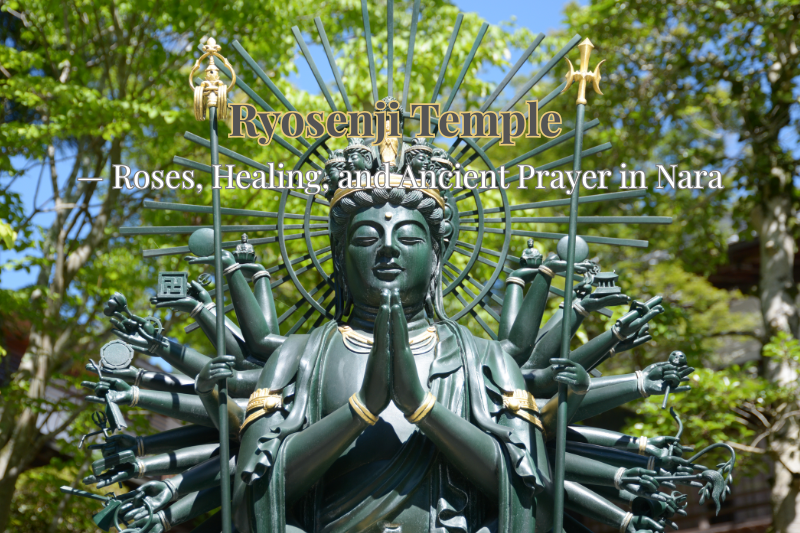
- 🍃 Lead-in
- 🌿 Healing Traditions and the Origins of Ryosenji Temple
- 🌟Emperor Shomu and the Healing Miracle of Yakushi Nyorai
- 🪷 Gyoki, Bodhisena, and the Naming of Ryosenji Temple
- 🌹 Bara-Eshiki — Roses, Prayer, and Sacred Processions
- 🐉 Okunoin Benzaiten and Quiet Signs Along the Mountain Path
- 🌹 Rose Garden
- 🔔 A Bell that Calls Happiness
- 🌟Kaha’s Note
- 🌿 Explore More
🍃 Lead-in
Roses are probably not the first thing many people imagine when thinking of Japanese temples.
Yet Ryosenji Temple (霊山寺) in Nara is known for a remarkable rose garden filled with flowers gathered from around the world.
The garden was created in 1957 by a former head priest who had experienced the hardships of imprisonment in Siberia following the war.
Wishing for peace,
he created the garden as a place where people could find healing, beauty, and comfort.
I first learned about the temple while searching for places to see roses during the season.
The more I discovered about Ryosenji Temple — its healing traditions, Benzaiten enshrined within the mountain, dragon legends, and long spiritual history — the more fascinating it became.
When I finally visited,
the combination of vibrant roses and ancient sacred spaces felt surprisingly natural.
Historic halls, quiet prayer spaces, healing stories, and thousands of blooming roses all seemed to exist together in harmony.
Ryosenji Temple felt not only beautiful,
but deeply impressive in a way that stayed with me long after leaving.
🌿 Healing Traditions and the Origins of Ryosenji Temple
The history of Ryosenji Temple is deeply connected with healing.
The area where the temple now stands was once associated with the powerful Ono family.
According to temple history, Ono no Tobito (小野富人)— said to be the son of Ono no Imoko (小野妹子), the famous envoy to China during the Asuka period — withdrew from political life after the Jinshin War in the 7th century and lived quietly in the Tomi mountains.
During a period of spiritual retreat and prayer at Kumano Hongu,
Tobito is said to have received a vision of Yakushi Nyorai, the Buddha of healing.
Following this revelation,
he built a medicinal herbal bathhouse in the mountains and enshrined Yakushi Nyorai there, offering healing to local people suffering from illness.
Tobito later came to be known as “Hanataka Sennin” and became widely respected for his healing practices and spiritual dedication.
Even today, Ryosenji Temple is known for its yakusō-yu (medicinal herbal baths),
continuing a long tradition of healing connected to the temple.
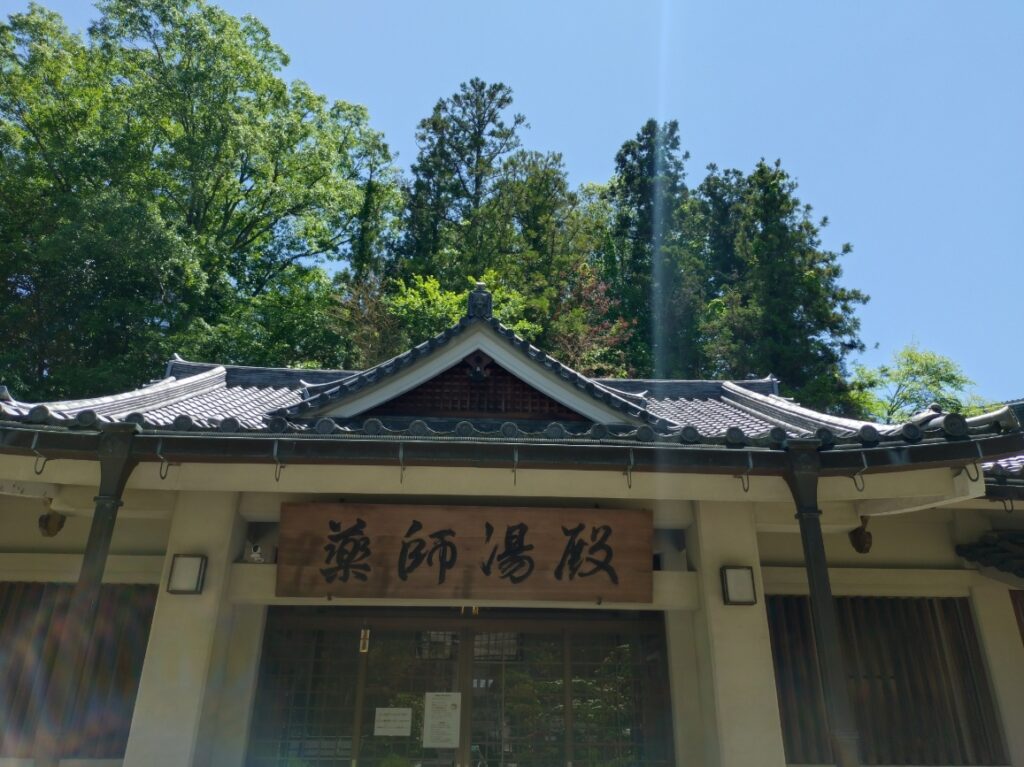

Yakushi Bath Hall at Ryosenji Temple

Signboard about Hanataka Sennin and hte history of Yakushi Bath
🌿 A Quiet Experience with Ryosenji’s Herbal Bath
When I first visited Ryosenji Temple,
I also tried the temple’s traditional yakusō-yu herbal bath.
The fragrance of the herbs was gentle and calming,
and I personally felt that it helped ease the bruising and fatigue I had been carrying at the time.
As the weather had already started becoming warmer,
I could not relax in the bath as slowly or as long as I might have during a cooler season.
Even so, the experience felt deeply soothing after walking through the temple grounds and rose garden.
Wanting to continue enjoying the healing atmosphere at home,
I later purchased several herbal bath packets for myself, my family, and friends.
Even now,
the soft herbal scent still reminds me of Ryosenji Temple’s quiet healing traditions.

Ryosenji Herbal Bath — a small piece of the temple’s healing atmosphere to bring home
🌟Emperor Shomu and the Healing Miracle of Yakushi Nyorai
One of the most important stories connected with Ryosenji Temple is a healing miracle associated with Yakushi Nyorai, the Buddha of healing.
On April 6, 734, a great earthquake struck the capital, and Princess Koken(孝謙) fell ill from shock and emotional distress.
Around that time, Hanataka Sennin appeared in Emperor Shomu’s dream and said,
“If you pray to the Yakushi Buddha of my mountain, she will quickly recover.”
After the monk Gyoki (行基) offered prayers on behalf of the imperial family, the princess’s illness was healed.
Deeply moved by this event,
Emperor Shomu (聖武天皇) ordered the construction of a grand temple hall at Ryosenji.
What began as a quiet mountain healing site connected with Hanataka Sennin gradually developed into a major temple that continues to welcome visitors even today.
🪷 Gyoki, Bodhisena, and the Naming of Ryosenji Temple
Ryosenji Temple later became connected with two important Buddhist figures of the Nara period — Gyoki Bosatsu and the Indian monk Bodhisena.
Gyoki is widely known as one of Japan’s most influential Buddhist monks, remembered not only for his spiritual teachings but also for his efforts to help ordinary people through public works, bridges, roads, and temples.
Bodhisena (菩提僊那: ぼだいせんな) arrived in Japan from India in the 8th century and later became closely connected with the Great Buddha of Nara at Todaiji Temple (東大寺), where he participated in the famous eye-opening ceremony.
According to temple history,
when Bodhisena visited the mountains surrounding the temple, he felt that the landscape resembled Vulture Peak (霊鷲山: りょうじゅせん / Ryōjusen) in India — one of the most sacred places associated with the Buddha’s teachings.
Inspired by this connection,
the temple came to be known as Ryosenji Temple.
Even today,
the presence of Gyoki and Bodhisena remains quietly woven into the temple’s long spiritual history.
🌿 Statues of Gyoki and Bodhisena at Ryosenji Temple
While walking through the temple grounds,
I was surprised to find statues of both Gyoki Bosatsu and the Indian monk Bodhisena.
According to the temple,
the statue of Gyoki was created around the same period as the well-known Gyoki statue near the fountain at Kintetsu Nara Station.
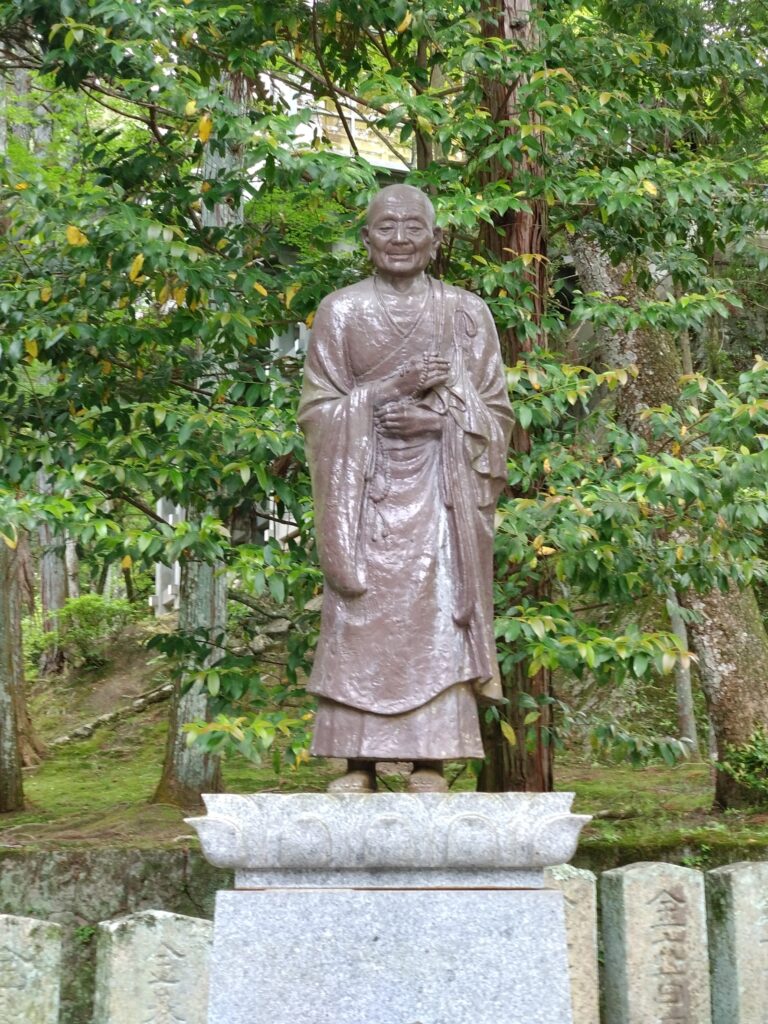
Statue of Gyoki Bosatsu at Ryosenji Temple
Bodhisena’s statue also quietly stands within the temple grounds,
located to the left side facing the main hall.
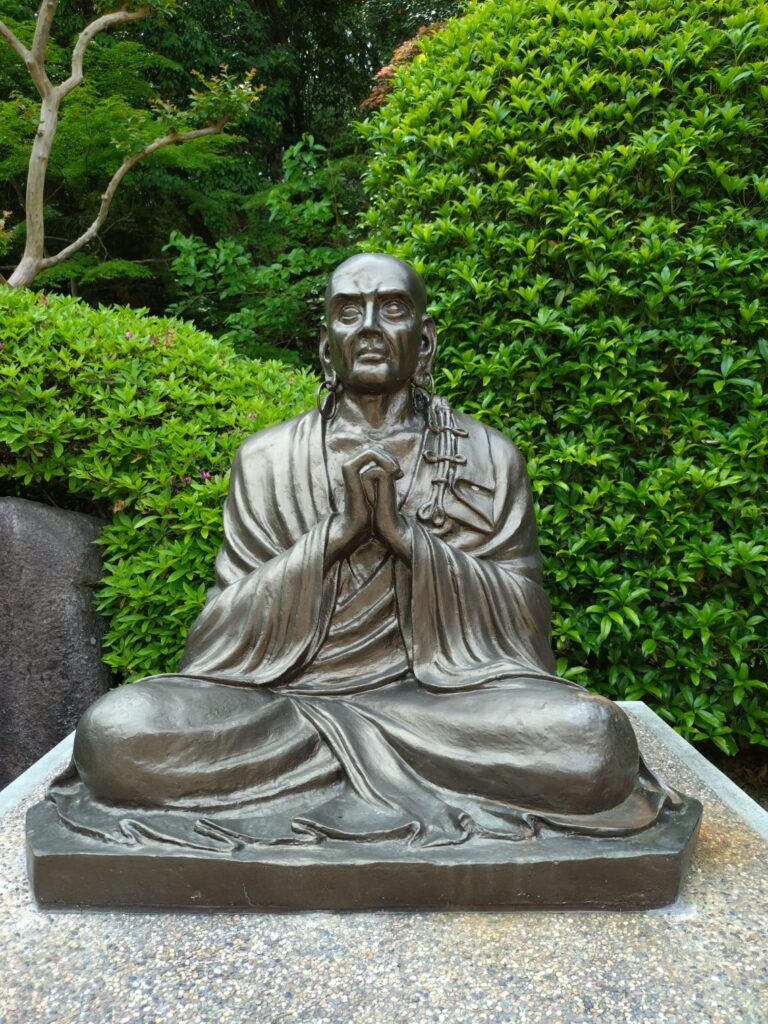
Statue of the Indian monk Bodhisena at Ryosenji Temple
Seeing these figures in person made the temple’s long history feel much more tangible and alive.
During the Bara-Eshiki (Rose Ceremony),
beautiful roses had also been placed beside the statue of Gyoki,
creating a peaceful connection between the temple’s spiritual history and its famous rose garden.
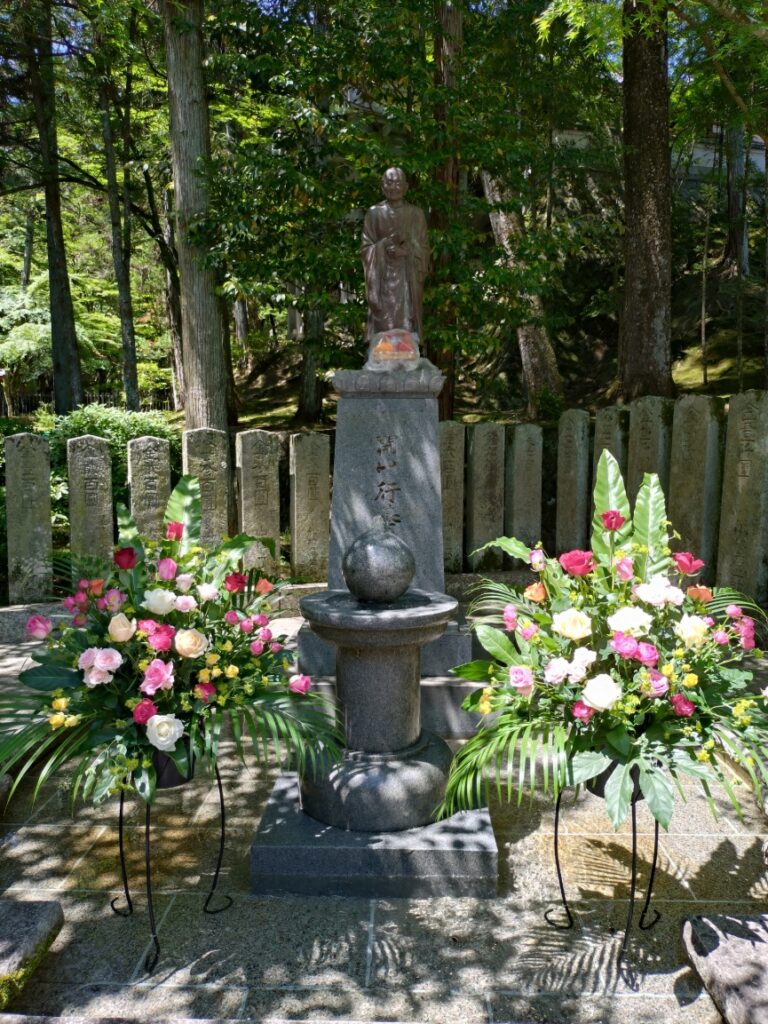
Statue of Gyoki Bosatsu during the Bara-Eshiki ceremony
🌹 Bara-Eshiki — Roses, Prayer, and Sacred Processions
Every May, Ryosenji Temple holds a special ceremony known as Bara-Eshiki (薔薇会式:Rose Ceremony) together with the Eto Matsuri (えと祭り).
This annual event is deeply connected with prayers for peace, healing, and gratitude.
The ceremony begins in the rose garden,
where monks, temple members, and parishioners dressed in traditional robes slowly walk through the grounds while sacred instruments are played.
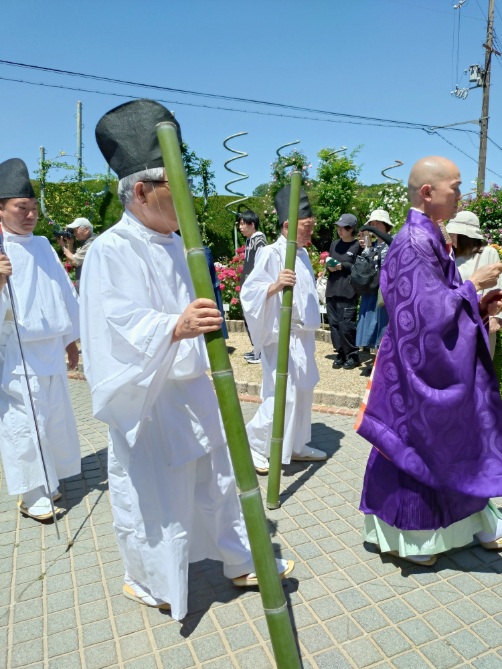
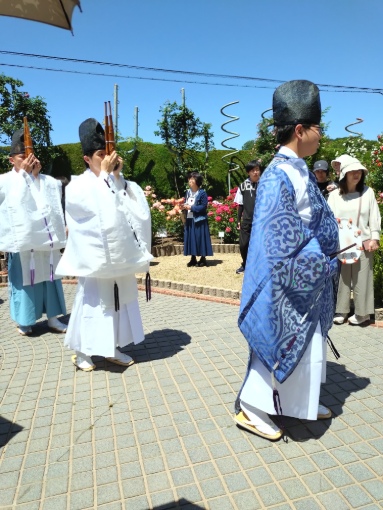
Monks and participants walking through the rose garden during Bara-Eshiki
During the procession,
roses are offered throughout the Hattai Butsu Reijo (八体仏霊場) sacred sites within the temple grounds, together with prayers and ritual offerings.
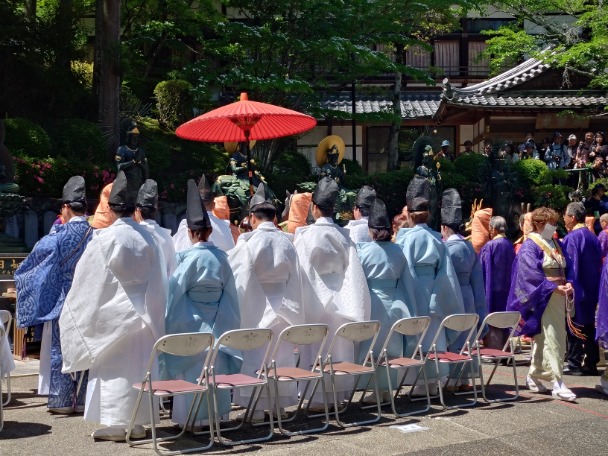
Prayers offered during the sacred Bara-Eshiki ceremony

The rose mikoshi quietly waiting among prayers and ceremony participants
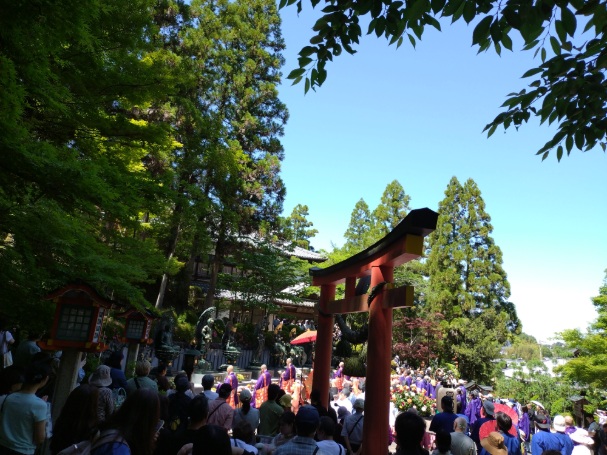
Many people quietly appreciating the ceremony
The procession later continues toward the main hall,
where traditional performances and ceremonial prayers are also held.

The sacred procession slowly moving toward the main hall through the temple grounds
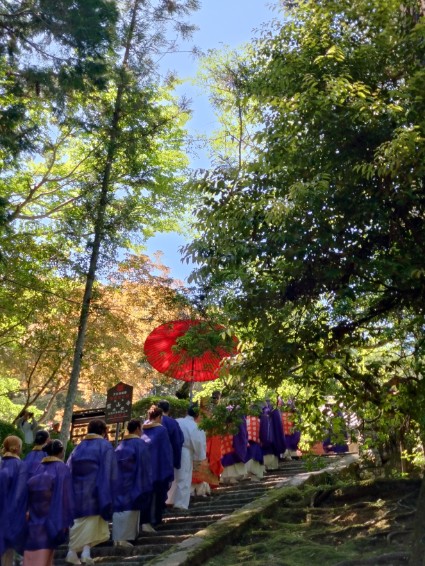
The procession ascending the stone steps beneath the forest trees
Many visitors gather to quietly observe and participate in the atmosphere of the ceremony,
and anyone is welcome to attend.
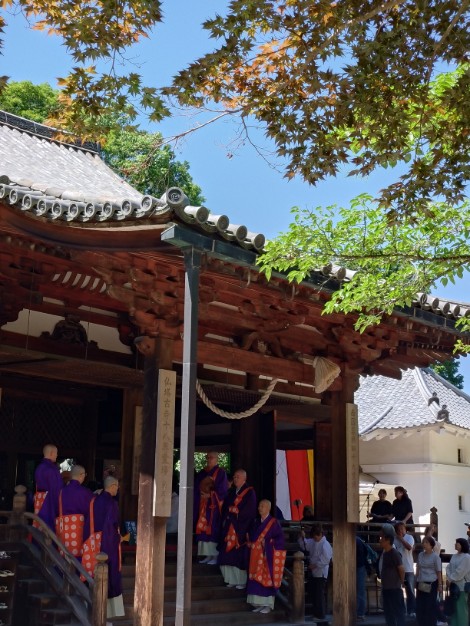
Monks at the main hall

Many people gathered to witness the Rose Ceremony and sacred performances
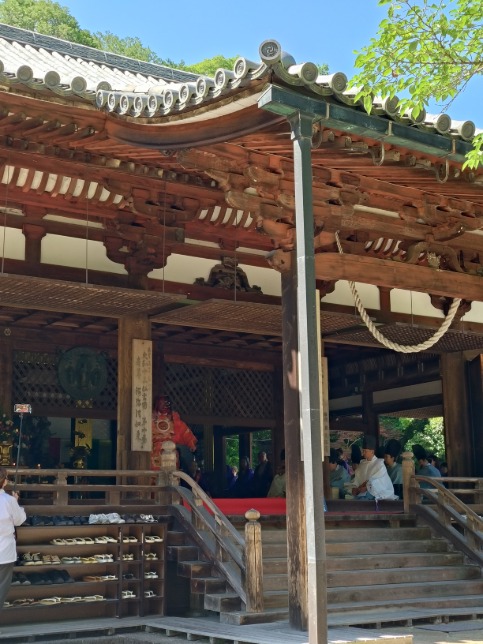
Traditional performance dedicated during the Bara-Eshiki festival
What impressed me most was how naturally the vibrant roses, ancient temple buildings, prayers, music, and surrounding forest all seemed to exist together as one peaceful space.
🎥 Watch the Rose Ceremony
A short video capturing the traditional Rose Ceremony (Barae-shiki) at Ryosenji Temple, featuring traditional costumes, zodiac guardians, Buddhist priests, and prayers for peace.
👉 https://youtube.com/shorts/_WfksoIf_hE
🐉 Okunoin Benzaiten and Quiet Signs Along the Mountain Path
When I first visited the main hall of Ryosenji Temple,
one of the people working at the temple kindly told me that the Okunoin area was known as a powerful spiritual spot where many visitors feel they can receive strong energy.
As Benzaiten is enshrined deep within the mountain,
I had already planned to visit the area.
I was also told that the large cedar trees along the path were especially known for their spiritual atmosphere, so I quietly followed the mountain trail toward the Okunoin.
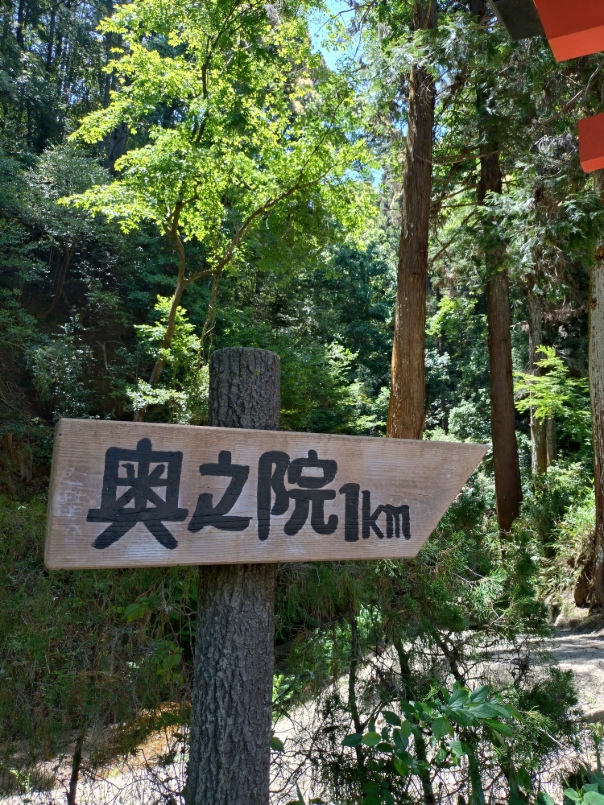
The forest path leading quietly toward Ryosenji Temple’s Okunoin

The torii gate marking the entrance to Okunoin Benzaiten
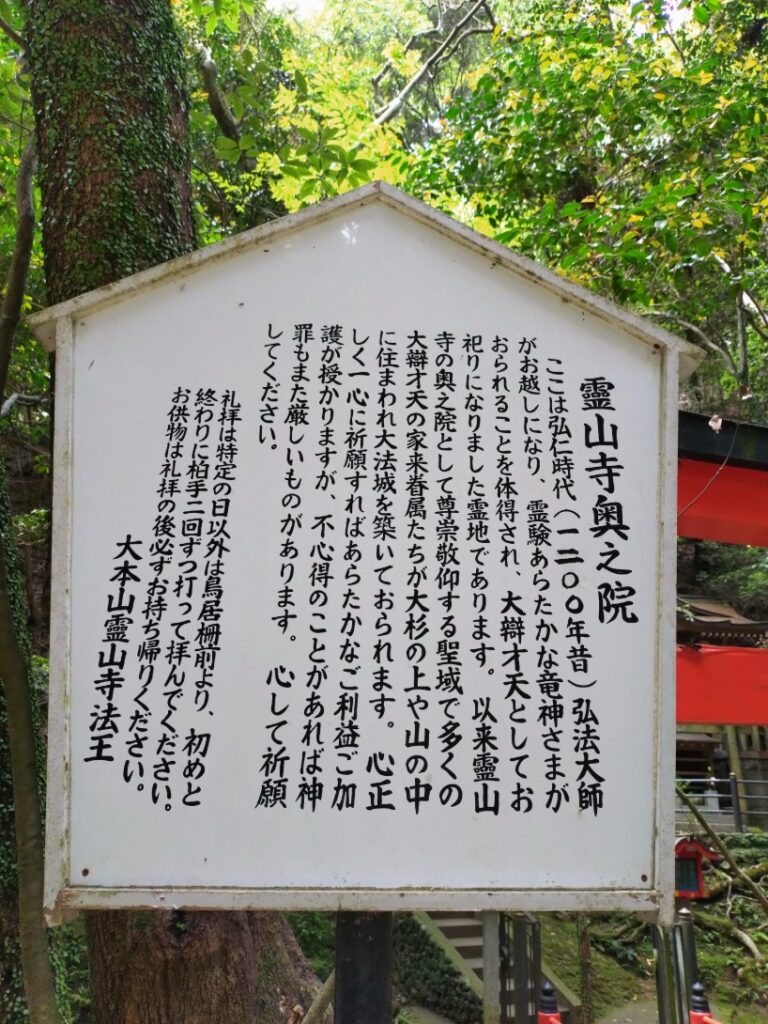
A sign marking the sacred Okunoin area deep within the mountains of Ryosenji Temple

The peaceful atmosphere around the sacred cedar tree and torii gates at Okunoin

Looking up at the towering cedar tree
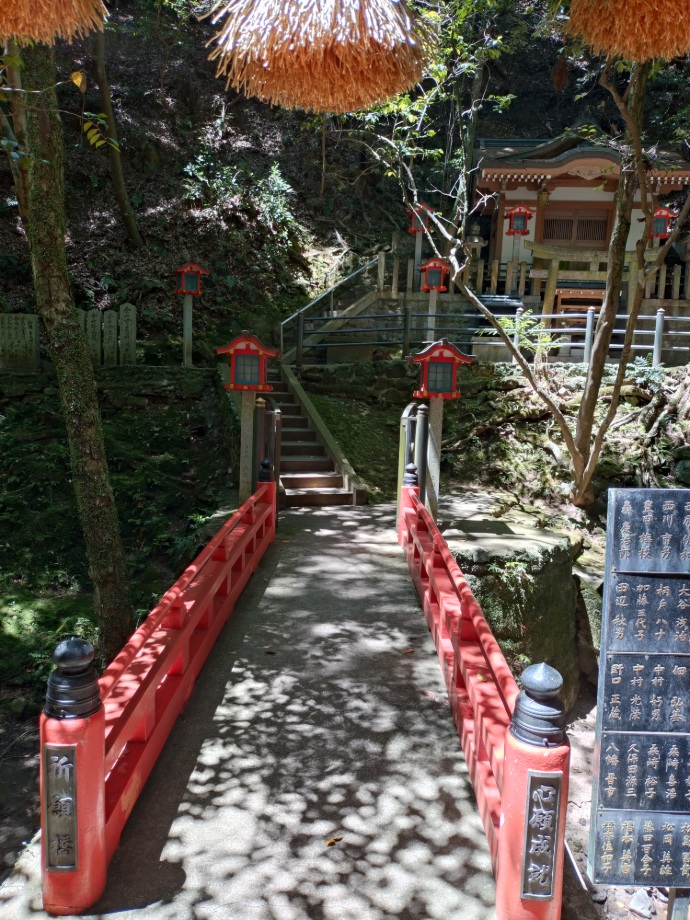
The small bridge leading toward the Okunoin hall
During my first visit,
I noticed a dragonfly while walking toward the mountain path.
Just before passing through the gate, a black butterfly suddenly appeared nearby, which felt strangely symbolic to me.
After offering prayers near the Okunoin,
I later noticed a raven near the sacred area and again along the return path.
During my second visit,
I saw rainbow-colored light near the cedar trees and even encountered a small rainbow-colored lizard nearby.
On the way back,
I also noticed dragonflies and a large white butterfly.
Later, during the Bara-Eshiki ceremony, I saw a black butterfly appear twice again near the main hall.
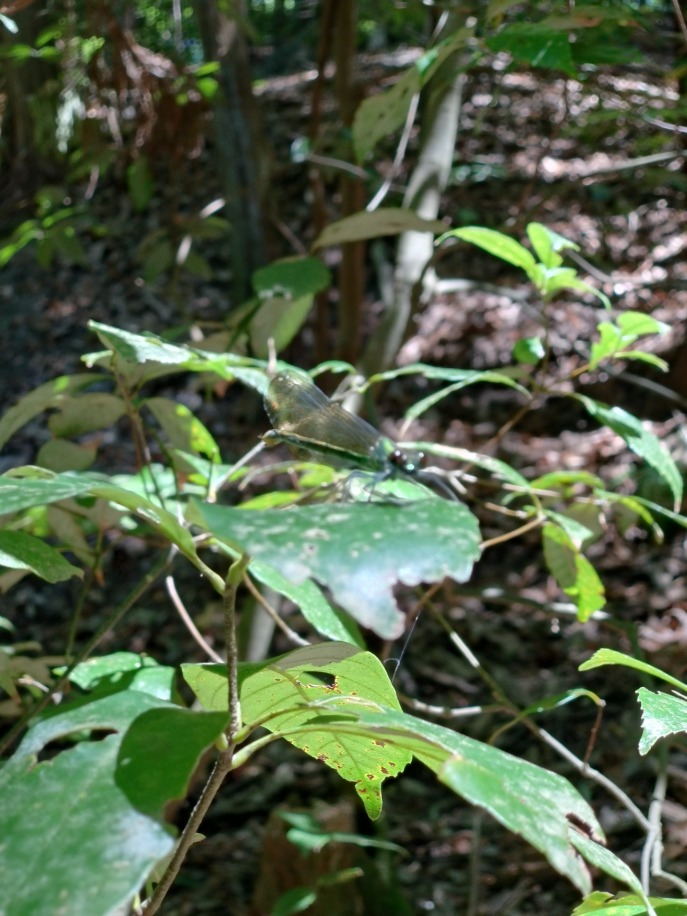
A dragonfly stopping on the leaf
In Japan, butterflies, dragonflies, birds, and unusual natural encounters are sometimes regarded as signs of spiritual welcome or quiet messages from the divine.
Whether coincidence or not,
both visits left me feeling that I had received a deeply meaningful connection within the quiet atmosphere of Ryosenji Temple.
🎥 A short video featuring Benzaiten and the rainbow-colored light at Ryosenji Temple has now been shared on YouTube.
Watch on YouTube:
https://youtube.com/shorts/yXhlVLKbCBg
The small rainbow-colored lizard I unexpectedly encountered near the Okunoin area remains one of the most memorable moments of the visit, and I still hope to share it in a future video update.
If completed,
I will quietly share the update through future “What’s New?” posts, Rainbow Threads updates, or by updating this page later on.
🌹 Rose Garden
According to the garden’s explanation board,
Ryosenji Temple’s rose garden was designed not only as a modern Western-style garden,
but also as a symbolic space reflecting different stages of life and the cycle of human existence.

The rose garden was designed around themes connected with life, reflection, and peace
The garden is divided into areas representing childhood, adulthood, and later years,
with statues, arches, water features, and pathways inviting visitors to quietly reflect while walking among the roses.

“Mother and Child” monument quietly standing within the rose garden
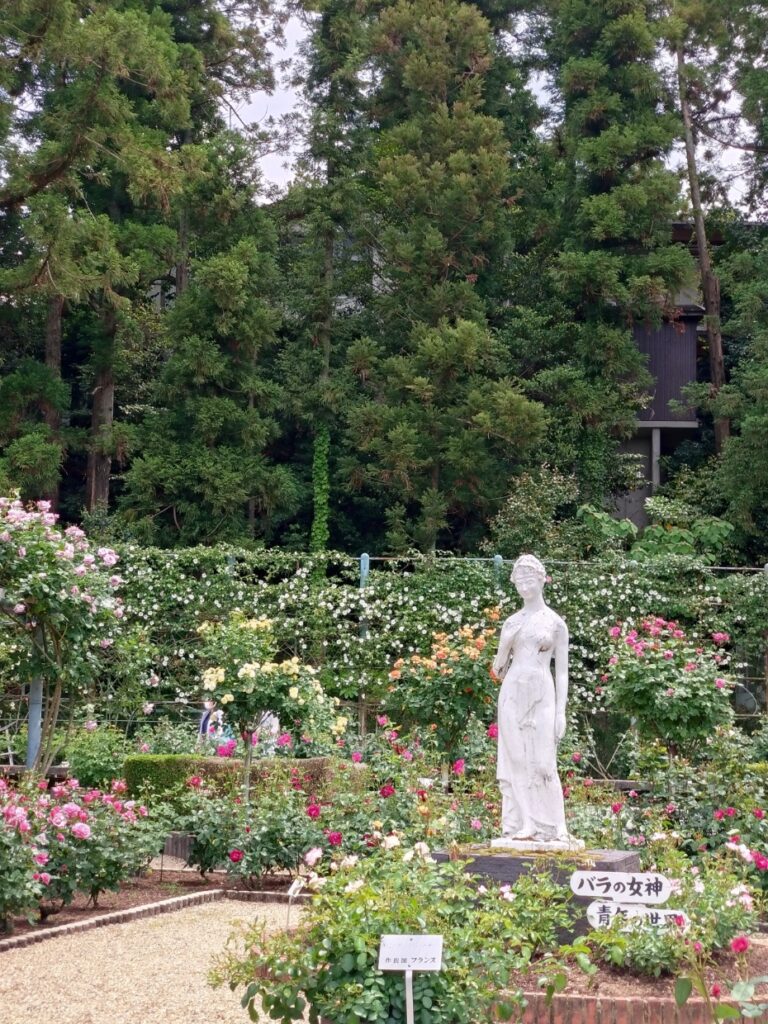

Statue of the “Goddess of Roses” surrounded by flowers from around the world

Heart-shaped roses blooming within the peaceful garden
Although the garden feels bright and welcoming,
there is also a deeper atmosphere quietly woven throughout the space.
One of the roses at the center of the garden is a variety called “Peace,” created in France to commemorate the end of World War II.
Interestingly, the buds of the “Peace” rose carry deeper reddish colors,
while the fully opened flowers gradually become softer shades of cream, yellow, and pale pink.

The “Peace” rose while still in bud form

Fully opened “Peace” roses in soft shades of cream and pink
Another rose that remained in my memory was a variety called “Sarasvati.”

“Sarasvati” rose blooming in Ryosenji Temple’s garden
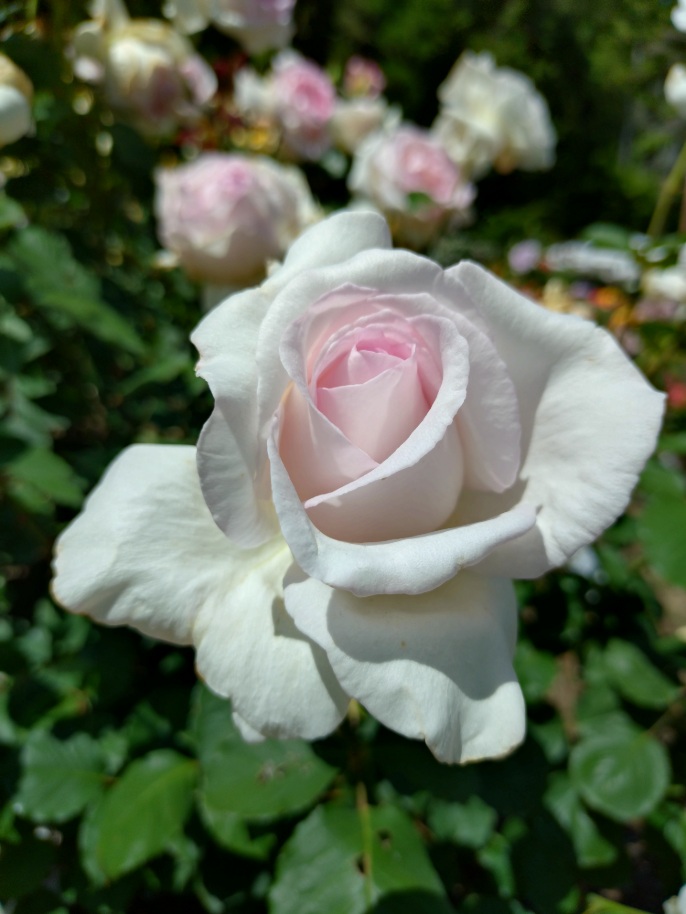
Close view of the delicate “Sarasvati” rose
Because Benzaiten — the Japanese form of Sarasvati (Saraswati) associated with water, music, wisdom, beauty, and flowing inspiration — is also enshrined within the temple grounds,
the name felt especially meaningful while walking through the garden.
🔔 A Bell that Calls Happiness
Throughout the temple grounds,
ancient halls, cedar forests, torii gates, prayer spaces, and roses from many different countries quietly exist side by side.
Visitors are also freely welcome to ring the large bell overlooking the garden,
adding another peaceful moment to the experience.


🌟Kaha’s Note
Although Ryosenji Temple is a historic and ancient temple,
what remained with me most strongly was its welcoming atmosphere.
Rather than feeling distant or closed,
the temple seemed to quietly invite people to slow down, heal, reflect, and share in a wish for peace together.
More than simply a beautiful rose garden,
Ryosenji Temple’s garden quietly reflects the deeper wish for healing, peace, and harmony that inspired its creation.
Surrounded by ancient halls, cedar forests, sacred spaces, and roses gathered from around the world,
the temple continues to offer a peaceful atmosphere where visitors can slow down, reflect, and reconnect with themselves.
I hope many people may have the chance to visit Ryosenji Temple someday,
experience its quiet healing atmosphere,
and perhaps share together in its continuing wish for peace.

🌿 Explore More
Return HOME→8rainbow.work
🎥 Short videos from Ryosenji Temple, including scenes from the Bara-Eshiki ceremony and the Okunoin area, may also be shared on YouTube in the future.
Updates will be added through future “What’s New?” posts, Rainbow Threads updates, or by updating this page later on.

コメント