
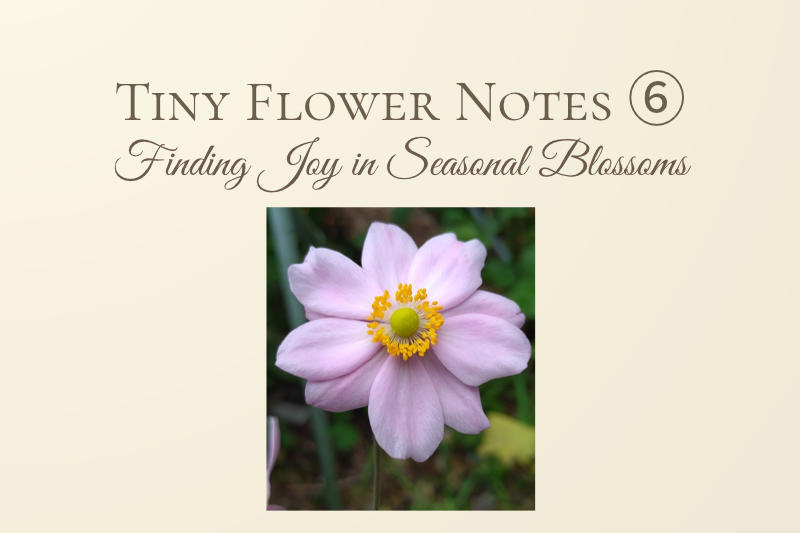
🌟 Lead-in
As autumn deepens, delicate Japanese anemones (Shūmeigiku, 秋明菊) begin to bloom in our garden.
This year, soft pink and pure white blossoms have appeared among the greenery, bringing a gentle touch of color to the changing season.
Some flowers are already fully open, revealing their bright yellow centers, while others are still wrapped in small, rounded buds. Looking closely, I can see how each flower gradually unfolds, taking on a different shape as it grows.
I photographed these flowers at various stages, from tightly closed buds to graceful autumn blossoms.
In this little collection, I’d like to share their quiet transformation — one flower at a time.
🌸 Seasonal Photo Notes
One of the loveliest things about Japanese anemones is watching their petals slowly unfold.
The rounded buds gradually open, revealing layers of soft pink or white petals. As the flowers spread wider, their golden-yellow centers become more prominent.
Even on the same plant, each blossom seems to be at a different stage. Some are just beginning to open, while others are already reaching toward the autumn sunlight.
The following photos capture these small changes, from the earliest buds to fully opened flowers.
📸 Photo Record: From Bud to Bloom
1. The First Buds
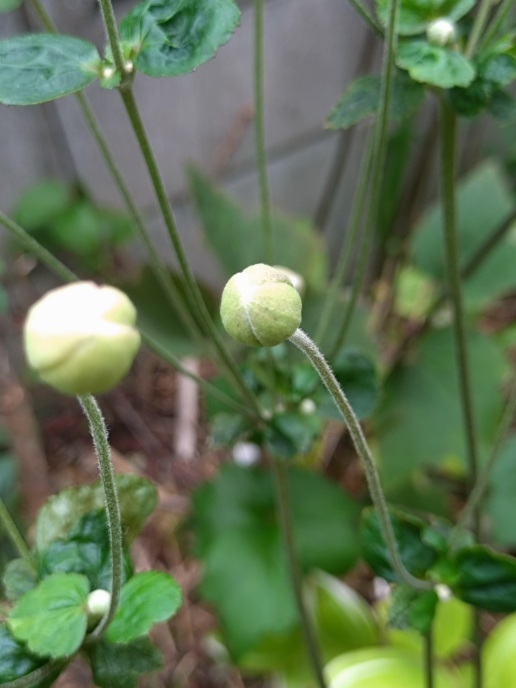
Small, tightly closed buds hold the promise of autumn blossoms.
2. A Touch of Pink
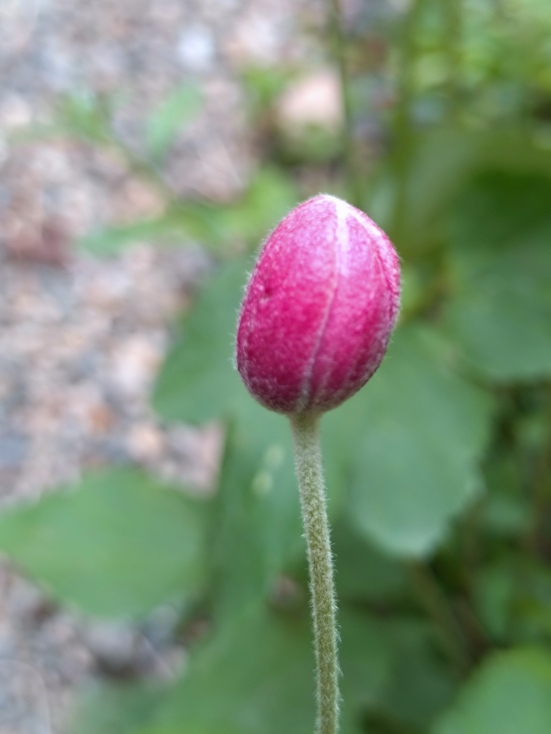
Rounded pink buds begin to swell, preparing to open.
3. The First Petals Unfold
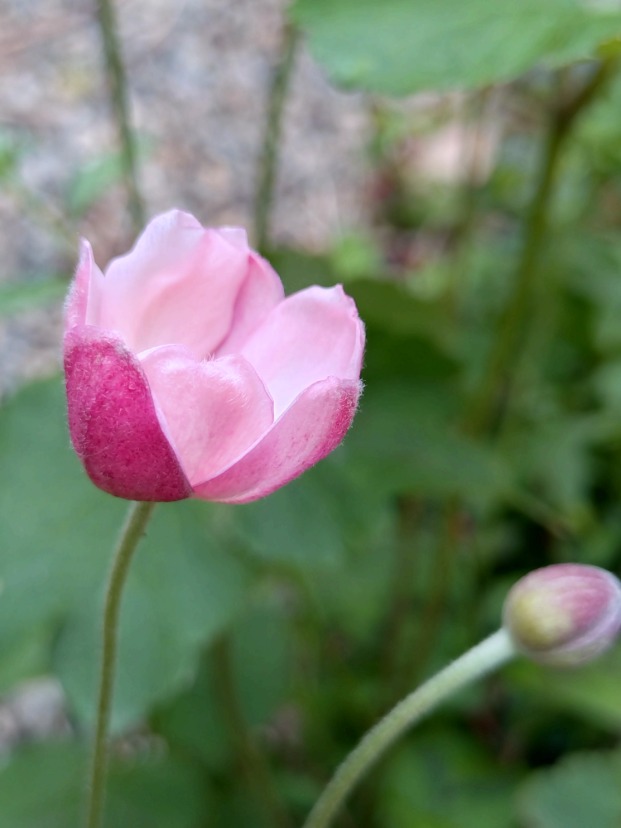
Soft pink petals slowly emerge as the flower begins to open.
4. Opening to the Light
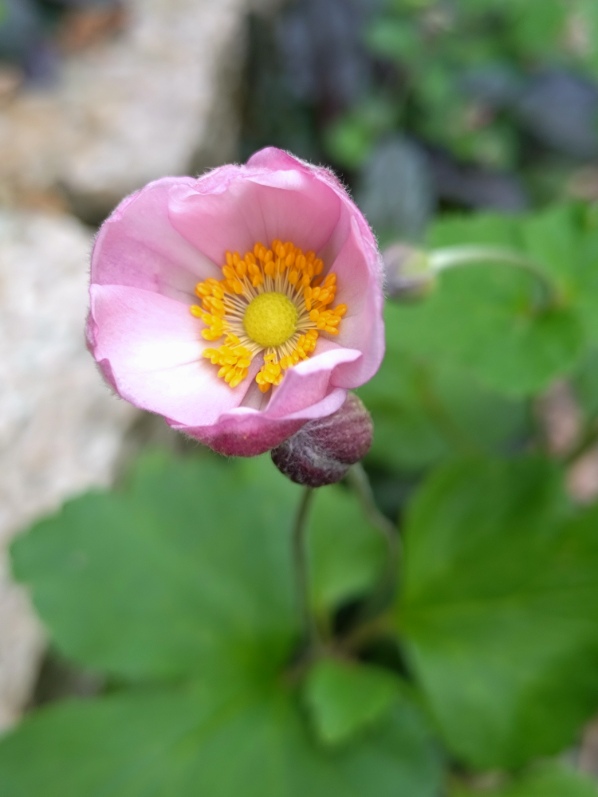
The petals spread wider, revealing the first glimpse of the golden center.
5. A White Blossom Awakens
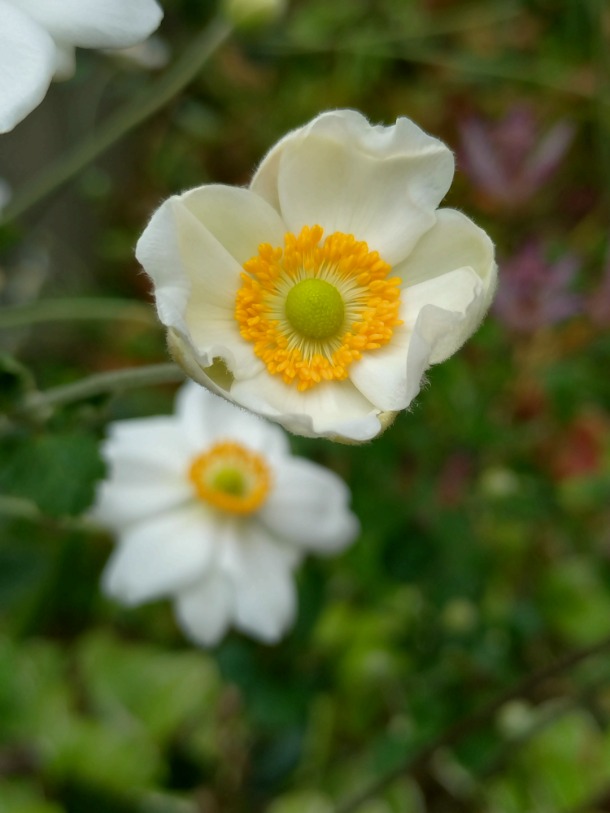
Delicate white petals begin to unfold around the flower’s center.
6. White Anemone in Full Bloom
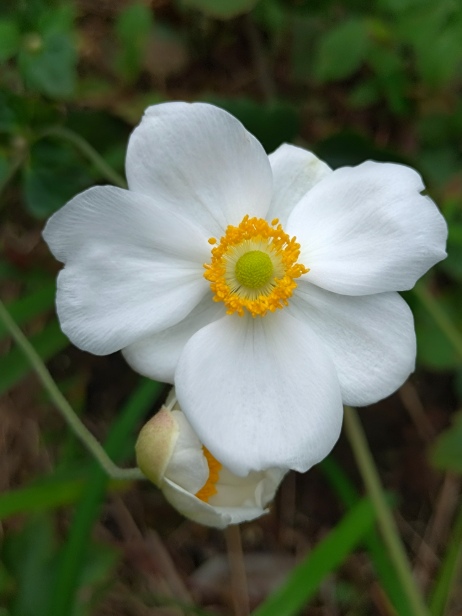
A fully opened white Japanese anemone, its golden center surrounded by graceful petals.
7. Blossoms in the Garden
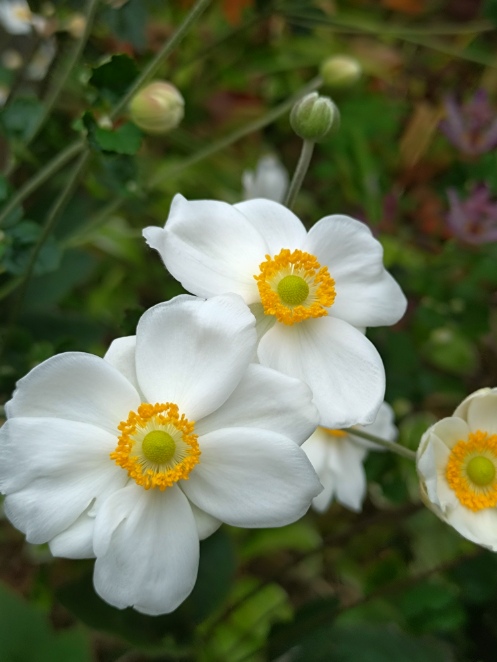
Several white anemones blooming together among the autumn greenery.
8. A Pink Autumn Bloom

A delicate pink Japanese anemone in full bloom, glowing softly against the garden greenery.
🌼 About Shūmeigiku
Despite its Japanese name, Shūmeigiku (秋明菊), this flower is not actually a chrysanthemum. It belongs to the buttercup family (Ranunculaceae) and is commonly known in English as the Japanese anemone.
Although its English name suggests Japan, the flower has its roots in China. It was introduced to Japan centuries ago and gradually became established in gardens and mountain areas.
In China, it has also been known as Qiū Mǔdān (秋牡丹), meaning “Autumn Peony.” This name appears in traditional botanical literature, reflecting the flower’s long history in East Asian plant culture.
The name Autumn Peony was also recorded in Japan’s early eighteenth-century botanical work Yamato Honzō (大和本草) by Kaibara Ekiken.
Another Japanese name is Kibunegiku (貴船菊), or “Kibune Chrysanthemum,” because the flower became especially common around Kibune in the mountains north of Kyoto.
Over time, Shūmeigiku became a familiar autumn flower in Japan, connecting a quiet garden blossom with centuries of botanical history and cultural exchange between China and Japan.
⭐ Kaha’s Note
What I love about these flowers is that they never seem to bloom all at once.
In our garden, some are still waiting in their small buds, while others have already opened to the autumn air. Each day brings a slightly different scene.
The white blossoms have a quiet elegance, while the soft pink ones add a gentle warmth to the greenery.
Photographing them reminded me how much beauty can be found in the small changes we might otherwise overlook.
I hope these flowers will continue to brighten our garden as autumn unfolds — and that I’ll remember to enjoy each stage, not just the moment of full bloom.
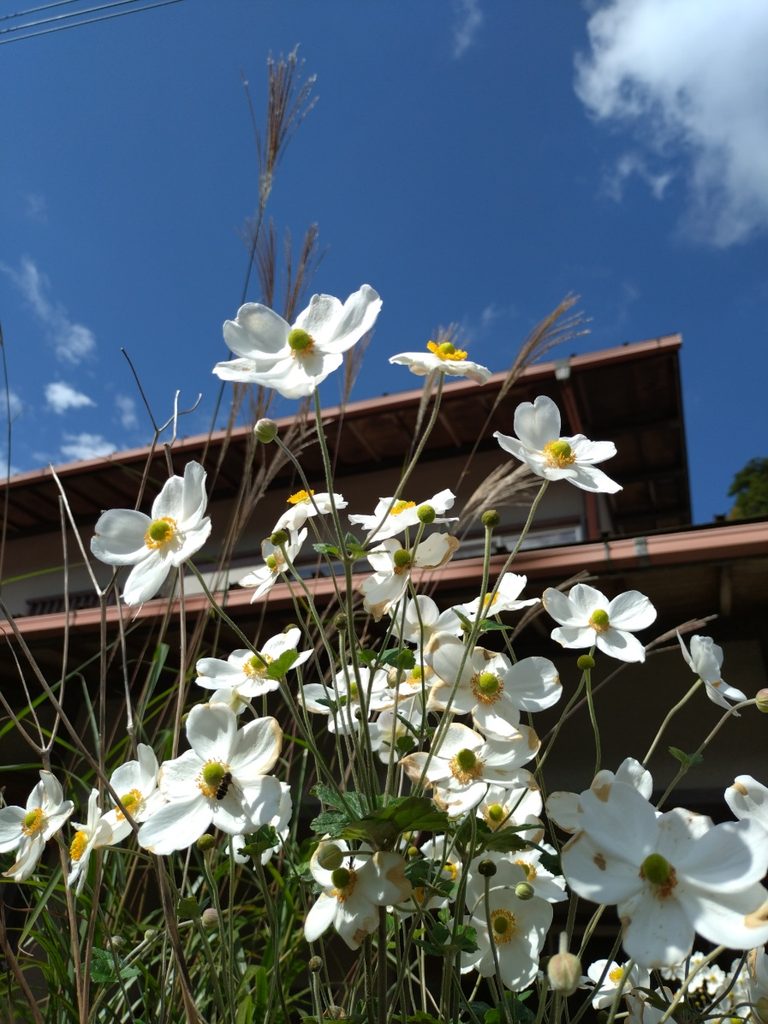
White Japanese anemones blooming beneath the autumn sky in Dorogawa, Tenkawa Village, Nara.
🌈 Explore More
Discover another autumn flower from our garden — the delicate white higanbana, a lovely surprise during the autumn equinox.
Explore more seasonal flowers, quiet garden moments, and everyday beauty from Japan on Rainbow Awakening.

コメント