

🌿Lead-in
Since spring, I’ve been noticing dragonflies more and more often.
They have appeared in different places and in different colors — sometimes only for a moment, and sometimes in a way that made me stop and wonder why I was noticing them so much.
Dragonflies have long held a special place in Japanese culture, connected with the seasons, courage, and victory. Today, they are also sometimes associated with transformation, change, and synchronicity.
But what does it mean when dragonflies keep appearing around you?
In this Spirit Snippet, we’ll explore their place in Japanese tradition, their connection with water and transformation, and some of the meanings associated with different colors and encounters. I’ll also share a few of my own recent dragonfly encounters in Japan.
🪷Dragonflies in Japan
Dragonflies have been a familiar presence in Japan since ancient times, especially around rice fields, rivers, ponds, and other waterside landscapes.
They even appear in an ancient name associated with Japan: Akitsushima (秋津島 / 秋津洲).
The name is linked to a story recorded in the Nihon Shoki, one of Japan’s oldest chronicles. According to the story, Emperor Jimmu (神武天皇) looked out over the land and compared its shape to dragonflies joined together. From this image came the name Akitsushima, with akitsu being an old Japanese word for dragonfly.
This ancient story shows that dragonflies have been part of the Japanese cultural imagination for a very long time.
They are also closely associated with the changing seasons. While dragonflies can be seen from summer onward, red dragonflies (akatombo) are especially familiar as a symbol of late summer and autumn in Japan.
⚔️The “Victory Insect” — Kachimushi
Dragonflies also became powerful symbols in Japan’s warrior culture.
They were known as kachimushi (勝虫) — literally, “victory insects.” Their swift, direct flight, and the traditional image of them always moving forward rather than backward, resonated strongly with warriors. Because of this, dragonflies came to symbolize courage, determination, and victory.
Dragonfly motifs were used on weapons, armor, and horse equipment, where they served as auspicious symbols for warriors heading into battle.
A famous example is Tonbokiri (蜻蛉切), the celebrated spear associated with the samurai Honda Tadakatsu (本多忠勝), one of Tokugawa Ieyasu’s most renowned generals. According to legend, the spear was so sharp that a dragonfly landing on its blade was cut in two — giving the weapon its name, “Dragonfly Cutter.”
The dragonfly therefore became not only a familiar creature in the Japanese landscape, but also a powerful image of moving forward without turning back.
💧 Water, Transformation & Change
A dragonfly begins its life in water.
For most of its life, it lives beneath the surface as an aquatic nymph, known in Japanese as yago (ヤゴ). When the time comes, it climbs out of the water, sheds its old skin, and emerges with wings — beginning an entirely different stage of life in the air.
This remarkable transformation is one reason dragonflies are often associated today with change, transformation, and personal growth.
Their connection with both water and air can also give them a beautiful symbolic quality: moving from one world into another, leaving an old form behind, and entering a new phase.
🕯️Dragonflies and Ancestors
In Japan, dragonflies can also carry associations with ancestors and the spirits of the departed, particularly around the Obon season.
Obon is a time when families welcome and honor the spirits of their ancestors. Because dragonflies are often seen in summer and into early autumn, their appearance can overlap with this season of remembrance.
In some regional traditions and personal beliefs, dragonflies have been regarded as visitors connected with the spirits of ancestors or loved ones who have passed away. For this reason, some people may feel that a dragonfly appearing nearby carries a sense of presence or remembrance.
This is not a single belief shared throughout Japan, nor does every dragonfly traditionally represent an ancestral spirit. Rather, it is one of the ways these familiar seasonal visitors have sometimes been understood — especially when an encounter feels unusually close or memorable.
🎨 Colors, Encounters & Modern Interpretations
Today, dragonfly encounters are sometimes interpreted through their color, with different colors inspiring different symbolic meanings.
These are not fixed meanings from traditional Japanese culture. Many are modern spiritual or symbolic interpretations, and meanings can vary depending on the source, culture, and person. The following are just a few examples.
Black — Black dragonflies are sometimes associated with mystery, intuition, spiritual messages, ancestors, protection, and inner transformation. In Japan, dark-winged dragonflies such as the hagurotonbo (ハグロトンボ) can also evoke associations with ancestors and spirits in some local traditions and beliefs, particularly around the summer Obon season.
Blue — Blue dragonflies are often associated with truth, intuition, clarity, communication, and deeper emotions. Some modern interpretations see their appearance as an invitation to trust your intuition or listen more closely to your inner voice.
Green — Green is commonly connected with growth, renewal, healing, and harmony. With its natural association with plants and new life, a green dragonfly may inspire thoughts of regeneration or entering a new period of growth.
Red — Red dragonflies are sometimes associated with vitality, passion, courage, and taking action. In Japan, red dragonflies — akatombo (赤とんぼ) — also have a strong seasonal association with late summer and autumn, often evoking nostalgia and the changing Japanese landscape.
Yellow / Amber — Yellow or amber-colored dragonflies are sometimes associated in modern interpretations with joy, optimism, abundance, prosperity, and good fortune. Their warm coloring can also inspire associations with sunlight, warmth, and positive change.
These meanings are not a universal symbolic code. They are simply some of the interpretations found in modern spiritual traditions.
And color is only one part of an encounter. Where the dragonfly appears, what happens during the encounter, how close it comes, and whether the experience repeats may all influence how meaningful the moment feels.
✨ When an Encounter Becomes a Synchronicity
Sometimes it is not only the dragonfly’s color that catches our attention, but where and how we encounter it.
Modern spiritual interpretations vary widely, but several themes appear again and again: change, moving forward, good fortune, spiritual support, and paying attention to what is happening in your life.
Here are a few ways an encounter is sometimes interpreted.
⛩️ At a Shrine, Temple, or Sacred Place
An encounter in a place of prayer or spiritual significance may naturally feel especially meaningful. Some people interpret it as a moment of guidance, protection, or encouragement to pay closer attention to their spiritual journey.
🚪 At the Entrance to Your Home
A dragonfly appearing at or entering through a doorway is sometimes interpreted positively — as something beginning to change, efforts beginning to bear fruit, or a new energy entering your life.
🏠 Inside Your Home
Some modern interpretations connect a dragonfly entering the home with support from ancestors or loved ones who have passed away, while others see it more broadly as a sign of positive change or good fortune.
🌿 In Your Garden
An encounter close to home can be interpreted as a positive sign connected with growth, progress, and opportunities developing in everyday life.
🤲 When a Dragonfly Lands on You
Because this is a relatively unusual and intimate encounter, it is often treated as a moment to stop and pay attention. Rather than attaching one fixed prediction to it, you might notice what you were thinking or feeling at that exact moment.
👀 When It Stays Close or Does Not Fly Away
A dragonfly that remains nearby may feel different from one that simply passes by. Some interpretations see this as reassurance or encouragement during a difficult or uncertain period.
🔁 When Dragonflies Keep Appearing
Repeated encounters are often what make people begin to wonder about synchronicity. If dragonflies appear again and again — in different places, at meaningful moments, or during a period of change — the pattern itself may invite you to pause and reflect.
💧 Near Water
Rivers, springs, ponds, and waterfalls are the dragonfly’s natural world. Because its life begins in water before it eventually takes to the air, an encounter beside water can offer a particularly beautiful image of transition, growth, and moving into a new phase.
There is no need to turn every dragonfly into a prediction.
Perhaps the gentler way to approach these encounters is to see them as an invitation to notice: What is changing? What are you moving toward? What deserves your attention right now?
And if an encounter leaves you feeling encouraged, protected, or simply a little more hopeful, perhaps that feeling itself is worth carrying with you.
🪽 My Dragonfly Encounters in Japan
Since spring, dragonflies have appeared again and again during my journeys to sacred places in Japan.
What caught my attention was not only their different colors, but also when and where they appeared, how many appeared, and how they behaved when I approached them.
🖤 Black │ Oi-no-Shimizu, Awaji & Near Fudō Waterfall
I first encountered several dark, almost black dragonflies around Oi-no-Shimizu on Awaji Island. Later, I encountered them again near Fudō Waterfall — and there, too, there were several of them.
Seeing not just one, but many dark dragonflies around these sacred places made the encounters especially memorable.
In both cases, I had followed a sense of calling that brought me to these places. As the dragonflies appeared around me and along the way, I felt almost as though they were welcoming me and guiding me toward the sacred place.
For me, their presence felt like gentle reassurance: You followed the calling and came to the right place.
It also carried a sense of blessing and encouragement to continue the journey.
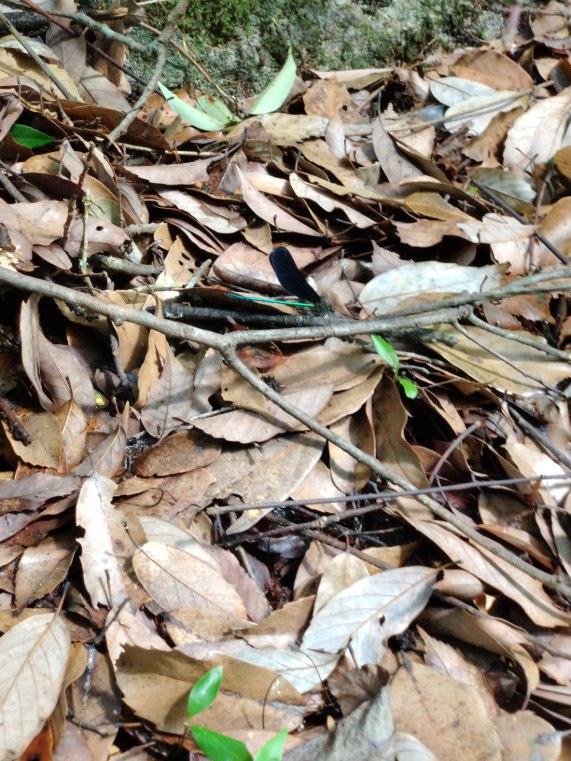
Near Fudō Waterfall
🎥 Watch the Encounters
🌿 Summer Walk with Black Dragonflies │ Fudō Waterfall
Follow a quiet forest path toward a small local waterfall linked to Miyamoto Musashi, one of Japan’s most famous swordsmen. Along the way, black dragonflies quietly appeared beside the path.
🩶 Gray-Blue │ Miwa, Nara
At Miwa in Nara, I encountered a dragonfly that appeared gray-blue to me.
What stayed with me was its timing. It appeared just before or after I visited a sacred place, and remained still even when I moved closer to take photos and videos.
Because it did not immediately fly away, I was able to spend a little time quietly observing it.
Again, I found myself feeling that same gentle sense of welcome and blessing — as though its appearance was quietly acknowledging my visit.
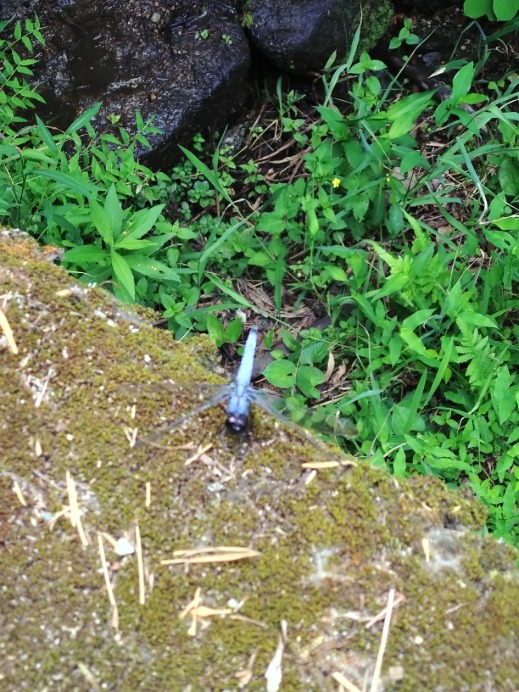
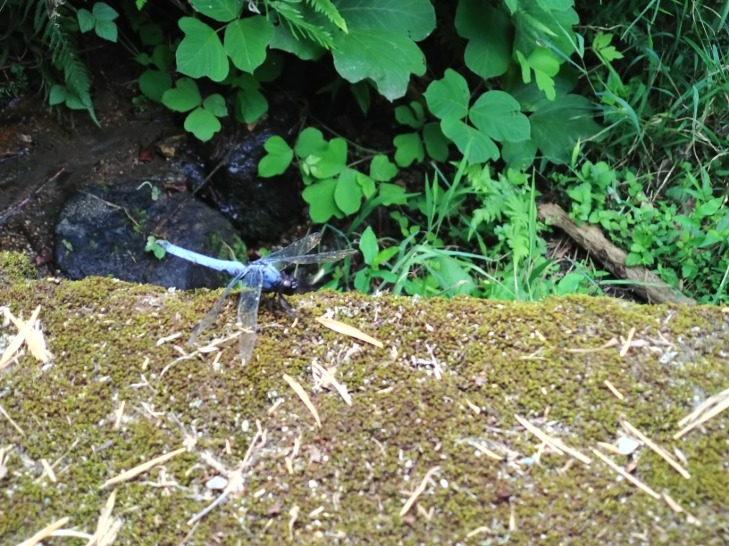
Near Hachidai Ryūō Okami Shrine, Miwa, Nara
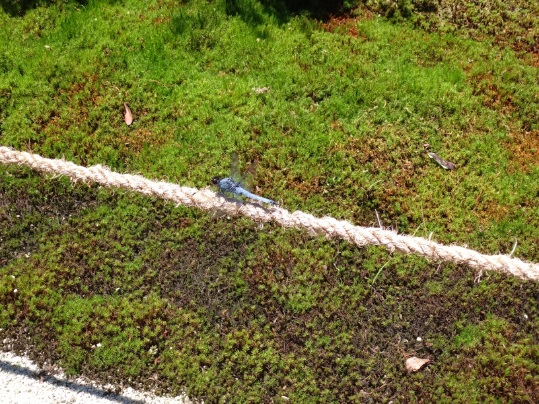
Another blue-gray dragonfly I encountered during a different journey — at Tōfukuji Temple in Kyoto.
🎥 Watch the Encounter
🍃 Nature Walk │ A Dragonfly in Miwa, Nara
A quiet summer moment in Miwa — a blue-gray dragonfly resting near a sacred place, gently moving its wings and staying close as I approached.
💚 Green │ Ryōsenji Temple, Nara
At Ryōsenji Temple in Nara, a place I was visiting for the first time, I encountered a beautiful green dragonfly.
Like the gray-blue dragonfly at Miwa, it remained nearby even when I approached closely to take photos and videos.
Because this happened during my first visit to a new sacred place, the encounter made me think of some of the modern associations with green — growth, renewal, good fortune, and new beginnings.
For me, it felt as though this encounter might represent good fortune and the beginning of a new connection with the place.
None of these experiences tells me with certainty what a dragonfly “means.” But when they appear repeatedly around sacred places, sometimes in numbers, at particular moments, and remain close enough for me to quietly observe them, I cannot help but notice the pattern.
For me, they have become small moments of welcome, guidance, encouragement, and blessing along the journey.
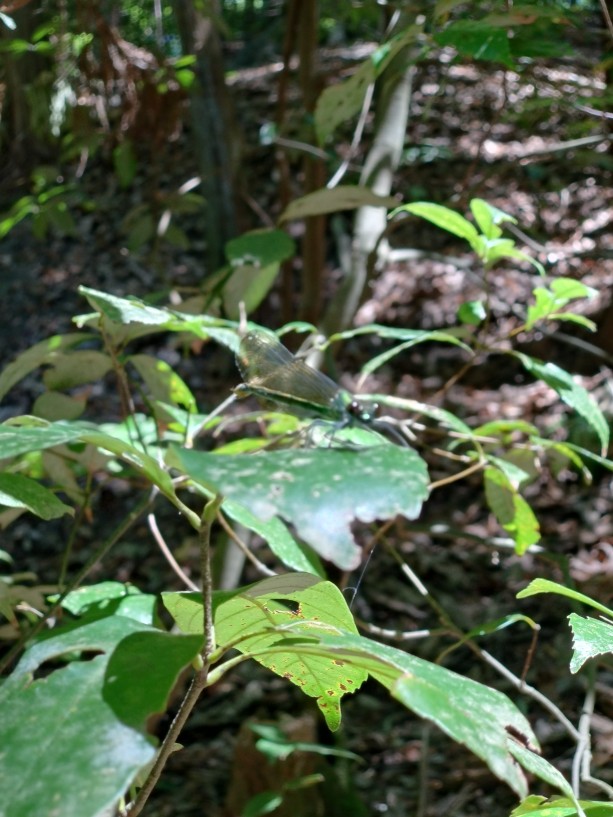
At Ryōsenji Temple, Nara
💙 Kaha’s Note
During these journeys, I encountered dragonflies again and again, especially around sacred places. Some seemed to fly ahead of me along the way, while others remained quietly nearby even when I came close.
Experiencing this so many times made me happy. I began to wonder if, perhaps, they had appeared as little messengers — welcoming me or gently guiding me along the way.
Of course, dragonflies are part of nature. Depending on the season and habitat, encountering the same colors or species may not be unusual at all.
And yet, there was something meaningful to me about finding them in places I had happened to choose to visit — and having them appear in ways that made me stop and notice.
On my recent journey toward Fudō Waterfall, I also saw yellow dragonflies flying nearby. And it was not only dragonflies. Eagles, butterflies, and other creatures appeared during my journeys as well, sometimes making me feel as though many animal spirits had come to greet me.
Some people say that encountering animals or other living creatures at a sacred place can be a sign that you are being welcomed.
Perhaps it is.
Or perhaps being able to notice these small encounters means that, in that moment, we are simply more open and connected to the natural world around us.
Either way, I think there is something beautiful in noticing.
🌈 Explore More
🪶 Follow the Dragonfly to Seirei Falls
Discover Seirei Falls in Nara, a waterfall connected to an ancient Japanese dragonfly legend.


コメント