

🎐Lead-In
During a visit to Futamiura in Ise, I came across a shop filled with colorful Japanese-patterned items, including wind chimes and small gamaguchi purses.
There were also tenugui cloths in traditional Japanese patterns, as well as a corner where visitors could choose Ise Momen cotton fabric to make covers for goshuin books.
It was one of those places where simply looking around was part of the fun.
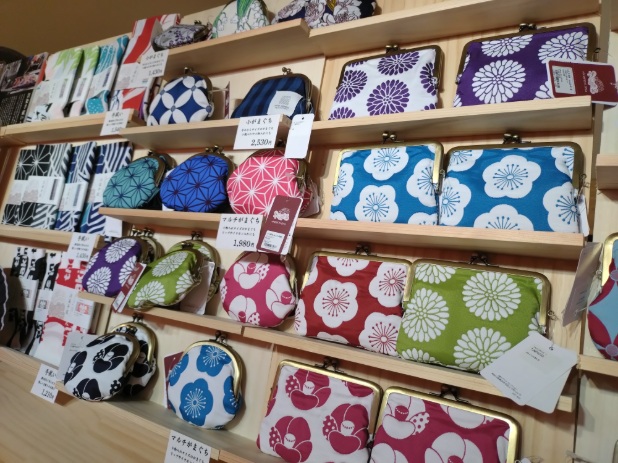
Colorful gamaguchi purses in a variety of traditional Japanese patterns in Futamiura, Ise
I had been looking for something small to carry the earphones I use with my smartphone while traveling — for watching YouTube, joining online conversations, and other little moments on the road.
There were several sizes and shapes, so it took me a little while to decide, but eventually I found one whose shape, colors, and pattern I especially liked.
Gamaguchi purses are easy to find in places such as Kyoto and Nara as well. I already have a small one from Nara that I often use as a coin purse when visiting temples and shrines.
This time, however, I chose one for a completely different purpose.
Today, I would like to share a little about gamaguchi purses and the traditional Japanese patterns that continue to appear on these small everyday items.
👛 What Is a Gamaguchi?
Gamaguchi is a traditional Japanese clasp-style purse or pouch, easily recognized by the two small metal knobs that snap the opening shut.
The name is rather charming.
In Japanese, gama means “toad,” while kuchi means “mouth.” The rounded metal opening was thought to resemble the wide mouth of a toad, giving the purse its familiar name.
Although gamaguchi are often associated with coin purses, today they come in many different sizes and shapes.
Some are tiny enough to hold only a few coins, while larger ones can be used for cosmetics, accessories, glasses, small personal items, or even as compact bags.
They are also made in an enormous variety of fabrics and designs, from simple contemporary styles to colorful textiles featuring traditional Japanese patterns.
That combination of an old-fashioned clasp and modern everyday use may be part of what makes gamaguchi still so appealing today.
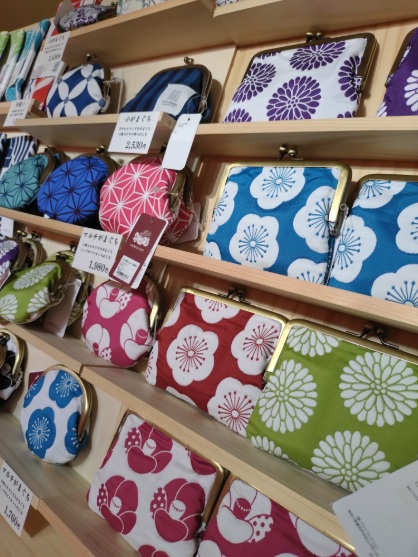
Gamaguchi purses come in many sizes, shapes, colors, and patterns.
🌸 Japanese Traditional Patterns in Everyday Life
Traditional Japanese patterns are still found everywhere in everyday life — on clothing, bags, pouches, tenugui cloths, tableware, and many other familiar objects.
Some are geometric, while others are inspired by flowers, plants, animals, or the changing seasons.
Many of these motifs are more than simply decorative. Over time, particular patterns have come to be associated with wishes for good fortune, longevity, growth, protection, or meaningful connections.
Looking at the gamaguchi purses in Ise, I noticed many familiar motifs among the colorful designs.
Some of the geometric patterns reminded me of those I had previously introduced in my article about tenugui, while several of the purses featured beautiful floral motifs such as plum blossoms and chrysanthemums.
👉Explore more traditional Japanese patterns and the many ways tenugui are used in everyday life:

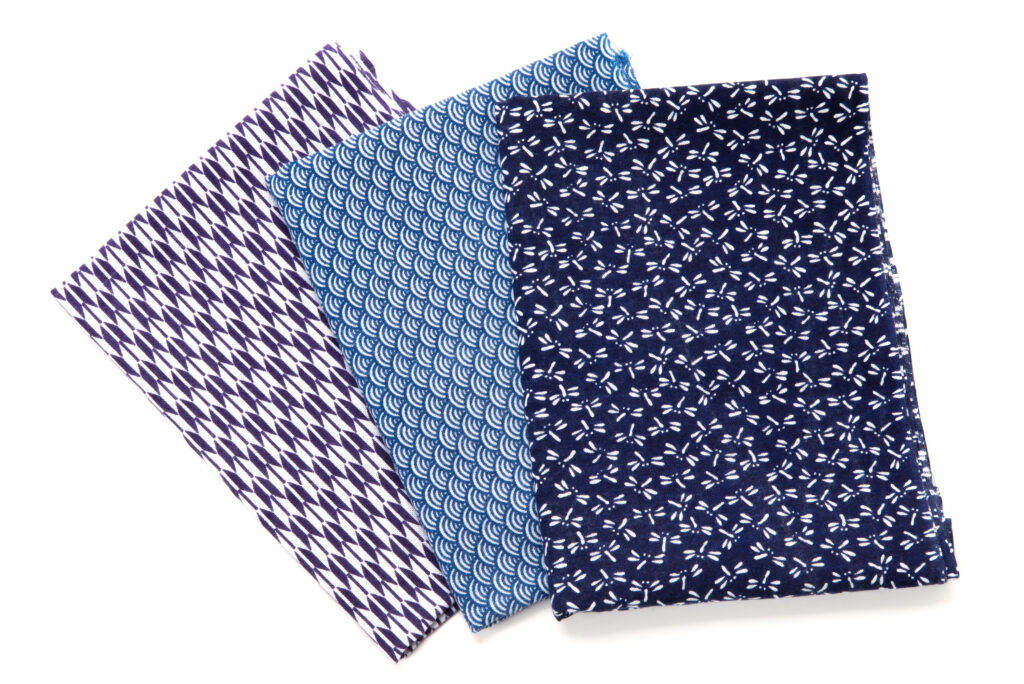
Tenugui cloths featuring traditional Japanese patterns — dragonflies, seigaiha waves, and yagasuri arrow feathers.
🌸 Ume — Plum Blossom
Among the many patterns, the one I eventually chose was ume — the Japanese plum blossom.
Plum blossoms are among the first flowers to bloom while winter still lingers, sometimes opening even during the coldest part of the season.
Because of this, they have long been associated in Japan with resilience, hope, and the coming of spring, and are often regarded as an auspicious motif.
Ume patterns can be found in many forms of traditional Japanese art and everyday life, including paintings, kimono and other textiles, ceramics, lacquerware, and small accessories.
The gamaguchi I chose has a blue-and-white ume pattern. What I especially liked was that the colors are reversed on the two sides — one side has white blossoms against blue, while the other uses the same motif in the opposite color arrangement.
It is a small detail, but it gives each side a slightly different impression and makes the simple design feel especially charming.
I had seen ume patterns many times before, but this combination of the plum blossoms, colors, and shape immediately caught my eye.
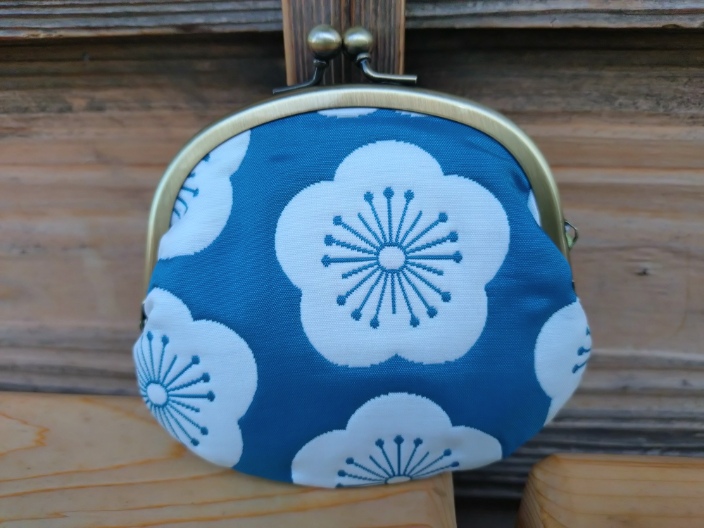
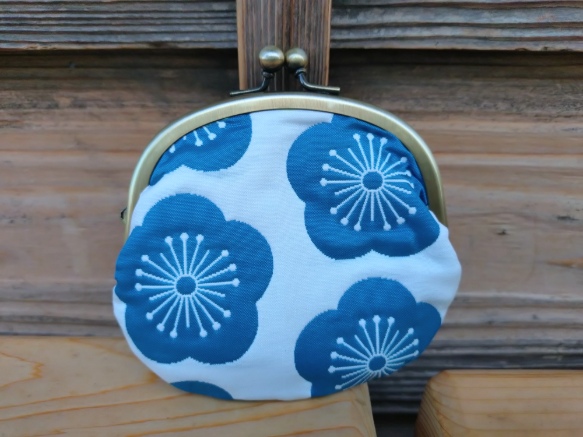
The blue-and-white ume-patterned gamaguchi I chose in Futamiura, Ise — with the colors reversed on each side.
🌼 Other Floral Motifs — Kiku & Tsubaki
Ume is only one of many flowers that have become familiar motifs in Japanese art and everyday objects.
Among the gamaguchi purses I saw in Ise, there were also designs featuring kiku (chrysanthemums) and tsubaki (camellias).
✨ Kiku — Chrysanthemum
The chrysanthemum has a particularly important place among traditional Japanese motifs.
It has long been associated with longevity and good health, and it also has a close connection with the Imperial Family of Japan. The sixteen-petalled chrysanthemum is used as the Imperial crest, while chrysanthemum motifs themselves appear in many different forms throughout Japanese art and design.
During my visits to Ise Jingu, I also noticed the Imperial chrysanthemum crest on the blue ceremonial coverings worn by the sacred horses. The sacred horses of Ise Jingu are presented by the Imperial Household, making the appearance of the chrysanthemum crest here especially meaningful.
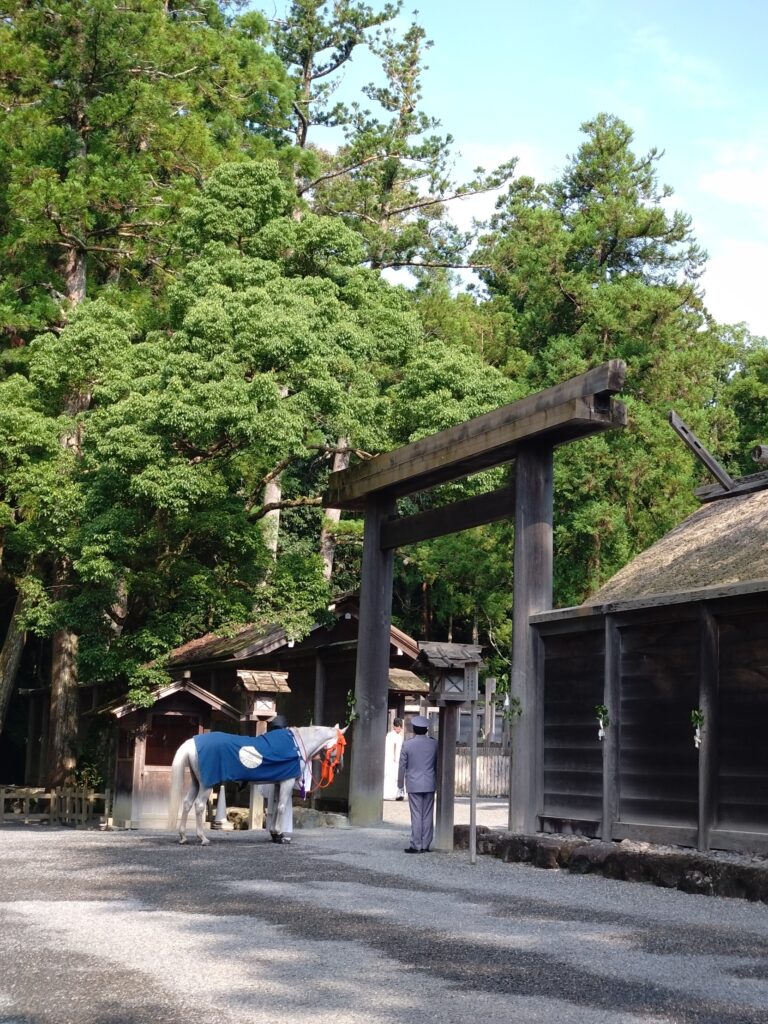
One of the sacred horses at Ise Jingu wearing a blue ceremonial covering with the Imperial chrysanthemum crest.
You can see the ceremonial covering — and its chrysanthemum crest — more clearly in this short video:
From an Imperial symbol and ceremonial design to textiles and small everyday accessories, kiku can be found in surprisingly varied places in Japan.
🌟 Tsubaki — Camellia
Tsubaki, or Japanese camellia, is another familiar floral motif in Japan.
Camellias remain evergreen through the colder months and bloom from winter into spring, bringing color to the landscape when many other plants are still quiet.
The flower also appears in Japanese tea culture, where camellias are often appreciated as seasonal flowers in the tea room.
The name may also be familiar to visitors interested in Japanese shrines. Tsubaki Grand Shrine (Tsubaki Okami Yashiro) in Mie is dedicated to Sarutahiko Okami, while nearby Tsubakigishi Jinja within the shrine grounds enshrines Ame-no-Uzume-no-Mikoto.
Camellia motifs can be found on textiles, ceramics, accessories, and many other objects, offering another example of how seasonal flowers continue to appear throughout Japanese culture and everyday life.
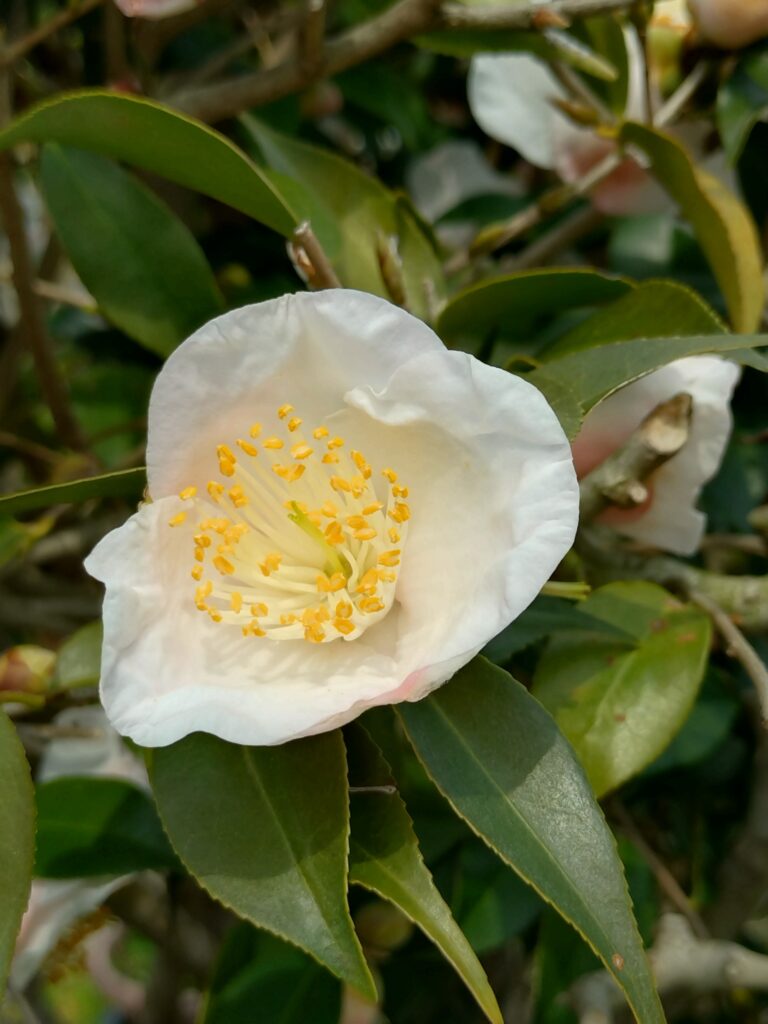
Japanese camellia (tsubaki) — a familiar winter-to-spring flower in Japan and a motif often seen in traditional Japanese design.
These are only a few examples of the many traditional patterns still found on everyday objects in Japan.
For more patterns and their meanings, you can also explore the earlier tenugui article above.
🎒 More Than a Coin Purse
Although gamaguchi are often used as coin purses, their wide opening and simple shape make them useful for many other small things as well.
Depending on the size, they can be used to carry lipstick, a small mirror, accessories, medicine, a personal seal (hanko), sewing items, earphones, or other little things that can easily disappear inside a larger bag.
For me, this one was just the right size for the earphones I use with my smartphone while traveling.
The wide clasp makes it easy to see what is inside, and I like that I can quickly take them out when I want to watch something or join an online conversation while away from home.
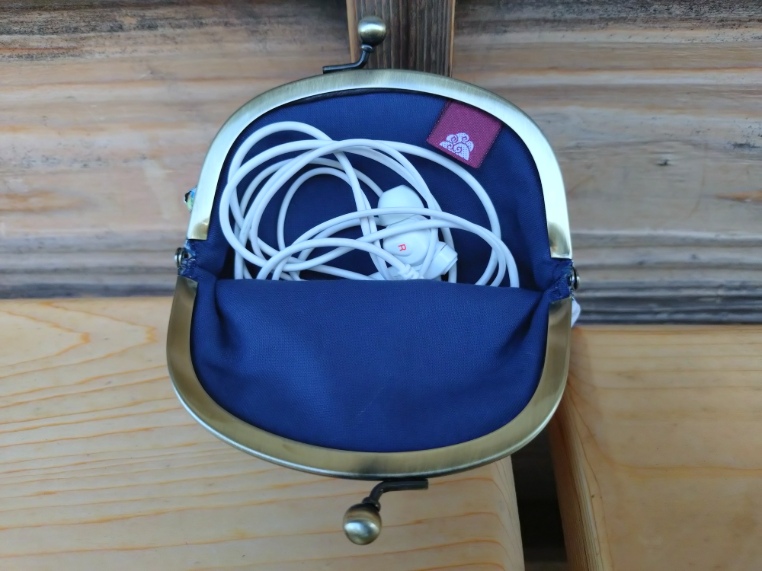
My gamaguchi used as a small travel pouch for smartphone earphones.
Traditionally familiar, but still practical for modern everyday life — perhaps that is another reason gamaguchi continue to be so enjoyable to use.
🏮 A Little More to Explore at Futamiura
If you visit Futami Okitama Shrine from the Ise Meotoiwa Meoto Yokocho side, it is worth allowing a little extra time to look around the shopping area.
When I visited in summer, the interior was filled with glowing lanterns and had a wonderfully festive seasonal atmosphere.
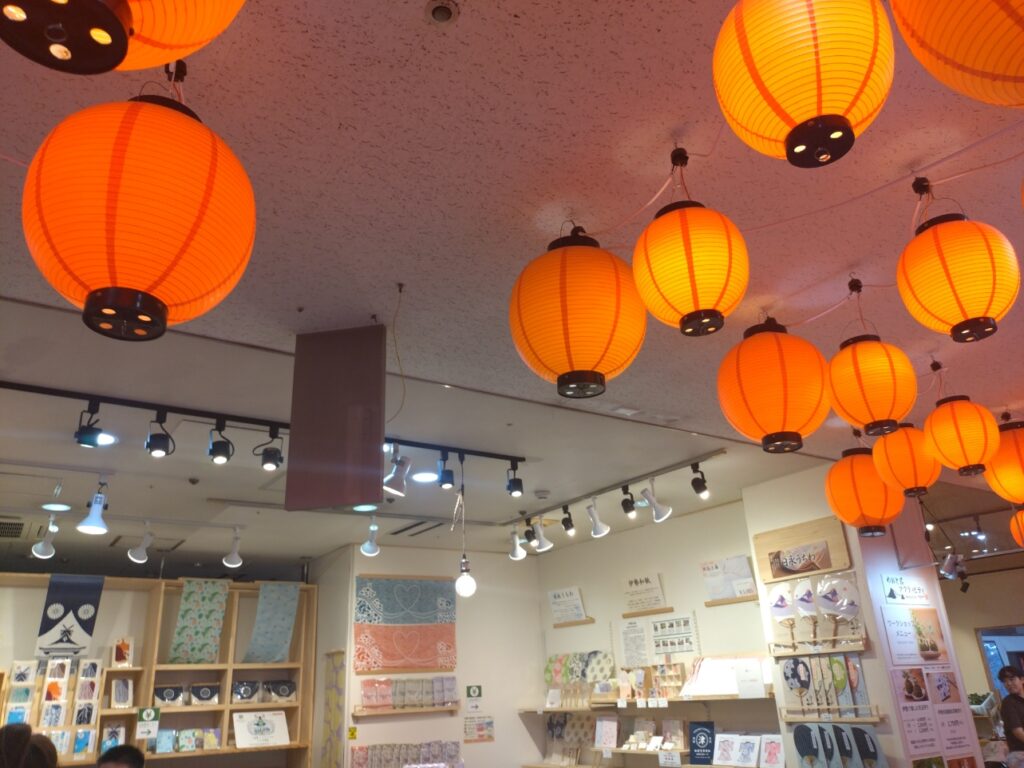
Summer lanterns inside Ise Meotoiwa Meoto Yokocho
Beyond the shops selling local specialties and souvenirs, I also found displays related to the history of Meoto Iwa, including old ukiyo-e images and exhibits connected to the sacred rocks and their large shimenawa rope.
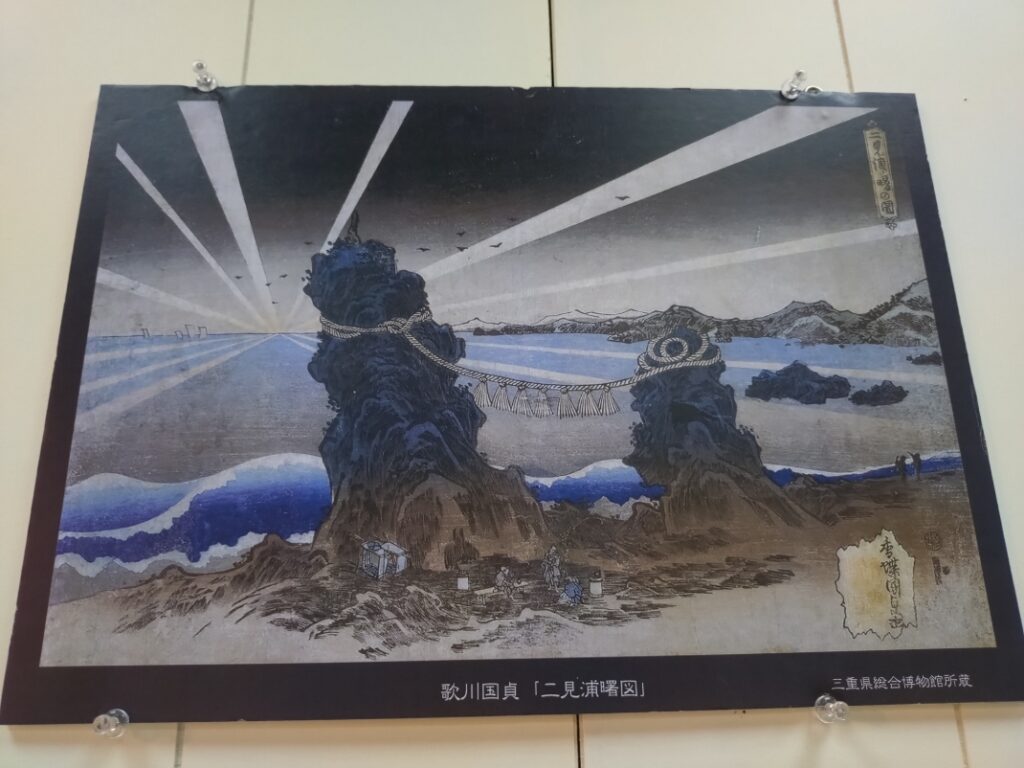
Meoto Iwa depicted in a historic ukiyo-e print displayed at Ise Meotoiwa Meoto Yokocho.
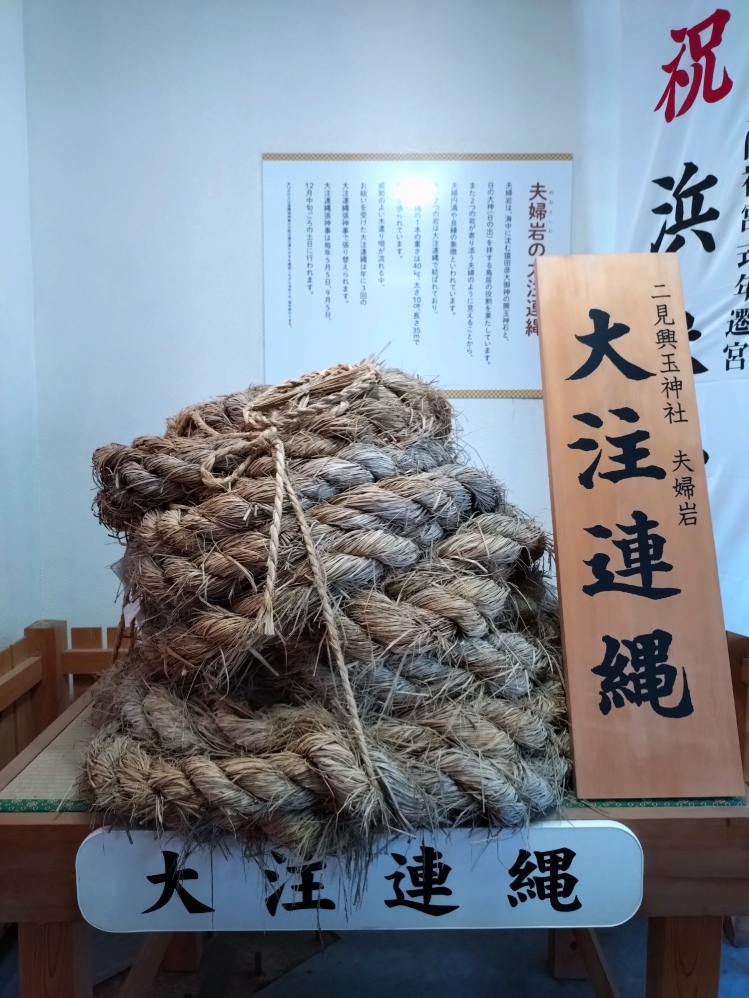
An exhibit of the large shimenawa rope associated with Meoto Iwa.
There were also hands-on and creative corners where visitors could choose Japanese fabrics for items such as goshuin book covers, as well as small plants and other things to take home.
I spent quite a while simply wandering around and looking at everything — and also stopped for a seafood rice bowl while I was there.
Futami Okitama Shrine can be approached from another direction as well, but if your route takes you through the Meoto Yokocho side, the shops and displays add another small layer of discovery to a visit to Futamiura.
🌿 Kaha’s Note
Finding something connected to the place I am visiting is one of the small pleasures of traveling.
And when I learn a little about the local history, traditions, and culture along the way, I feel that the experience becomes even more meaningful.
Now, whenever I see this small gamaguchi, it brings back memories of summer in Futamiura — the colorful shops, glowing lanterns, and time spent exploring near Meoto Iwa.
It has become one of my favorite little things to carry with me. 😊
🌈 Explore More
Want to discover more about Futamiura?
Explore the sacred shore, Meoto Iwa, Futami Okitama Shrine, and the old tradition of Hama-sangu — a coastal visit once made before continuing the pilgrimage to Ise Jingu.

Explore more reflections, seasonal journeys, and gentle discoveries from Japan.


コメント