

☀️Lead-in
In Japan, fabric items like handkerchiefs, tenugui (Japanese hand towels), and furoshiki (wrapping cloths) are often used in creative, functional ways — all from a single piece of cloth.
This time, I’d love to share some fun facts about tenugui and a few simple ways to use them.
Especially in summer, you’ll see them featured in more stores — sometimes with displays showing unique wrapping ideas.
When I visited Kyoto recently, I found a lovely shop offering everything from traditional to modern patterns, and I saw many international visitors shopping for them.
You can even find tenugui in 100-yen shops, making them affordable, lightweight, and practical souvenirs.
I actually bought the light green tenugui (the one on the left in the photo) several years ago during a trip to Tokyo. I saw a display at Tokyu Hands and just couldn’t resist.
Now, whenever I use it, it brings back fun memories with friends — adding a little joy to my daily life.

These tenugui feature traditional patterns like seigaiha (blue ocean waves), asanoha (hemp leaf), and more — timeless designs that continue to charm people today.
🕰️ A Glimpse into Tenugui’s History
Tenugui have a long, layered history that reflects both sacred use and popular culture. Their origins can be traced back to the Nara period, where silk and hemp versions were used in temples and Shinto rituals—likely for cleaning statues or sacred objects.
In the Heian period, textiles remained expensive and rare, so tenugui continued to be the privilege of the upper classes, used in ceremonial or ritual contexts.
It was only around 400 years ago, during the Edo period, that tenugui became accessible to ordinary people. With the widespread availability of cotton, tenugui evolved into an everyday essential for wiping, wrapping, and even as fashion accessories.
Tenugui have been part of daily life since the Edo period, often seen in ukiyo-e woodblock prints like this one.
In this classic image, a woman is holding what appears to be a tenugui. These cloths were used by people of all classes—often for wiping sweat or drying after a bath.

✳️ Timeless Patterns and Modern Designs
Tenugui are more than just practical — they’re also full of visual charm.
From bold geometric prints to delicate seasonal illustrations, the designs often reflect aspects of Japanese culture, nature, or daily life.
Many traditional patterns carry symbolic meanings passed down through generations.
Some of the most recognizable ones include:
- Seigaiha (blue ocean waves): peace and good fortune
- Asanoha (hemp leaf): growth and protection
- Shippo (seven treasures): harmony and connection
- Ichimatsu (checkerboard): balance and continuity
- Kikko (tortoise shell): longevity
These designs are more than decorative — they express cultural values and personal wishes for health, stability, or success.
Some people choose tenugui based on the season, their mood, or favorite colors. Others hang them on walls like art, or use them as decorations during holidays and festivals.
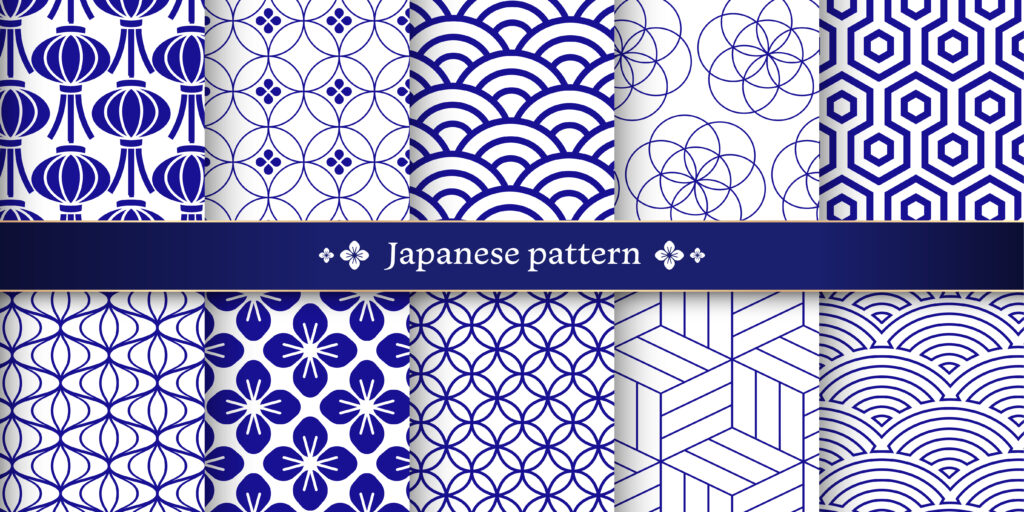
A mix of traditional and modern tenugui designs.
Some, like seigaiha (waves) and shippo (seven treasures), are clearly rooted in tradition.
Others may be modern interpretations or variations inspired by historical motifs.
Traditional Japanese patterns — each design carries special meanings, often more than one.
This richness allows the same motif to represent different wishes or values depending on context.
Top row (left to right):
① Chōchin (Lantern): celebration, prosperity
② Shippo (Seven Treasures): harmony, wealth
③ Seigaiha (Waves): peace, endless happiness
④ (Not clearly identifiable — possibly a modern variation)
⑤ Kikko (Tortoise Shell): longevity, good fortune
Bottom row (left to right):
⑥ (Likely a modern or stylized motif)
⑦ Ume (Plum Blossom): resilience, vitality
⑧ Shippo (Seven Treasures): harmony, wealth
⑨ (Modern variation or simplified pattern)
⑩ Seigaiha variant: stylized ocean waves
🎥 Recommended Short Video: See Tenugui in Action ← ⭐
If you’re curious to see how tenugui are made and used today, there’s a short video titled
“Endlessly Useful – Tenugui Towels (Nov.2020)” that offers a quick yet insightful look.
The video features a native English speaker explaining the history and cultural relevance of tenugui, along with behind-the-scenes footage from a traditional workshop that has been in business for over 150 years. Please watch it on YouTube!
📺 Endlessly useful – Tenugui Towels
Watch it here:
🔗 https://youtube.com/watch?v=E02he3onElw&si=1M_CyGBjZqr64EES
🎁How to Use Tenugui
Here are a few simple and creative ways to use tenugui in daily life — no sewing required!

Two colorful tenugui cloths spread on the table — simple, versatile, and full of charm. The one on the left is from a 100-yen shop!
① Wrap a Bottle
Tenugui are the perfect size to wrap a water bottle or thermos. Just a few folds and knots can turn a plain bottle into something charming and easy to carry.
It’s also great for keeping your hands dry or protecting the bottle from condensation.

A tenugui can be used to wrap a bottle and easily attach it to your bag. No sewing, no plastic — just a knot and go!
② Cover a Tissue Box
One of the easiest ways to use tenugui is to drape it over a tissue box.
You can fold it and tie the corners for a neat, decorative look.
It’s an easy way to add a touch of color or pattern to any room.

These tissue covers are made by wrapping with a tenugui cloth —no sewing required. Just fold and tie!
With playful patterns and seasonal colors, they instantly brighten up any room.
③ Seasonal Wrap for Kimono Dining
I often carry a tenugui with me when I go out in kimono, especially when dining.
It helps keep my kimono clean during meals, and it’s lightweight and easy to fold into a small bag.
Some tenugui come in fun seasonal designs — like Santa Claus or New Year’s motifs — which makes them enjoyable to use throughout the year.
Many people also hang them as wall art or tapestries to bring a touch of the season into their space.
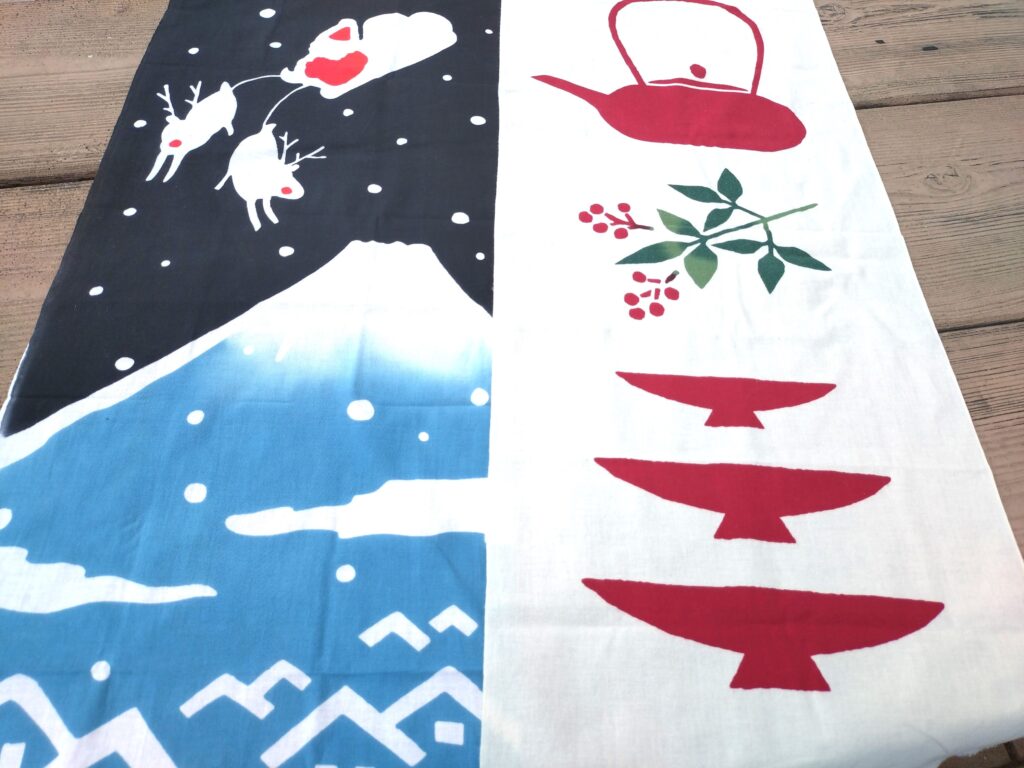
Seasonal tenugui like these — with Christmas and New Year motifs — are fun to use or display during the season.
④ Reusable Gift Wrap
Instead of using paper, tenugui can be a lovely alternative for wrapping gifts.
It’s not only more sustainable but also adds a thoughtful, personal touch to any present.
The recipient can reuse the cloth in their own way, making it a gift that keeps on giving.
Here’s a tenugui wrapping idea from the front and top — no scissors or sewing, just fold and tie for a charming pouch.
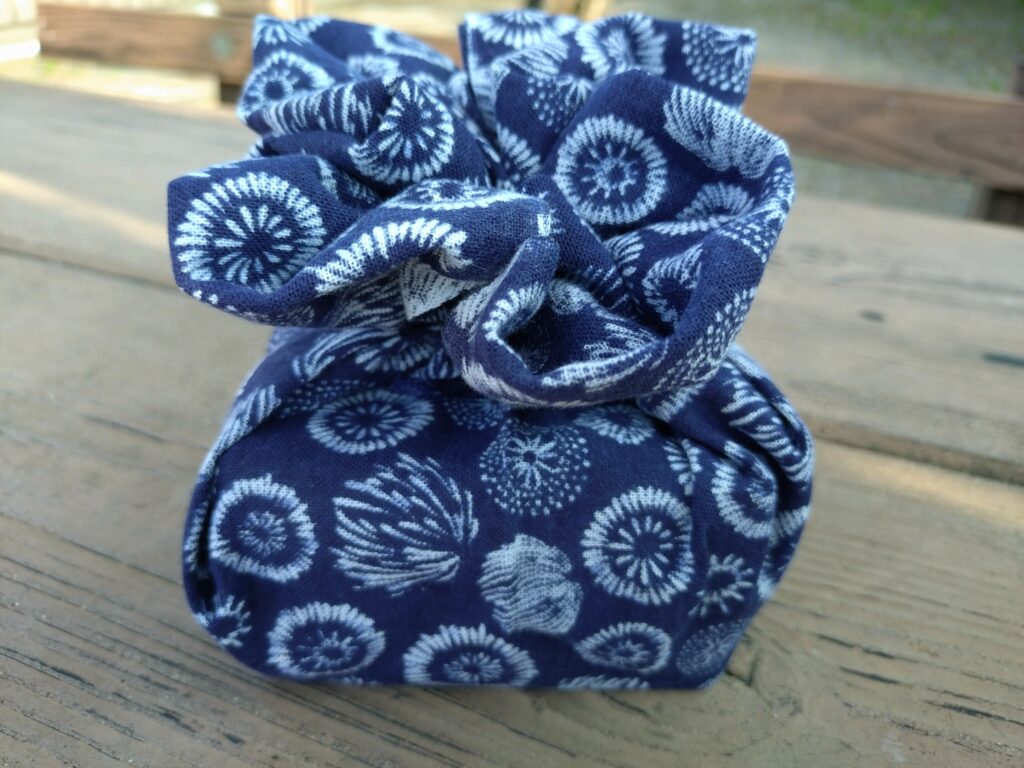

🧶 Try It Yourself – No Sewing Needed
Curious to try one of these ideas yourself?
All of the examples you’ve seen here were made with just a few simple folds and knots — no scissors, no sewing required.
Over on Creative Seeds (Coming up soon!), I will share step-by-step photos and tips on how to wrap bottles, cover tissue boxes, or even create reusable gift wrap using tenugui.
Whether you’re new to this or just looking for fresh inspiration, it’s easy, fun, and surprisingly relaxing.
🎐Kaha’s Note
Tenugui may look simple at first glance — just a piece of cotton cloth — but within that simplicity lies creativity, tradition, and endless charm.
Whether you use it to wrap a gift, decorate your space, or carry something small, each fold and knot can add a bit of beauty and intention to your day.
It’s a way to slow down, enjoy textures and patterns, and perhaps connect with a piece of Japanese culture in a personal way.
I hope this post gives you some ideas to start exploring tenugui in your own way.
Even just one cloth can open up many possibilities — practical, playful, and meaningful.
Try one — fold it, tie it.
I hope it brings a little joy and beauty to your everyday moments.
🔗 Explore more:
If you’re curious about more ways to bring everyday beauty into your life,
take a look around the rest of the site.🌈

コメント