

⛰️Lead-in
Nestled among the mountains of Yoshino, Niu Kawakami Shrine – Shimosha (丹生川上神社下社) is one of the three sacred shrines that together preserve the ancient tradition of Niu Kawakami Shrine.

The vibrant vermilion torii marks the entrance to Niu Kawakami Shrine – Shimosha, inviting visitors into a sacred world shaped by mountains, water, and ancient prayer.

The shrine rises quietly beneath towering cedar trees, surrounded by the mountains that have protected this sacred place for centuries.
According to the shrine’s tradition, it was founded by Emperor Tenmu (天武天皇) around A.D. 675 as the spiritual guardian of Yoshino. For more than 1,350 years, it has been a place where people have offered prayers for rain, abundant harvests, and harmony with nature.
In 927, the shrine was recognized as a Myōjin Taisha in the Engishiki (The Procedures of the Engi Era), where it was listed among Japan’s most spiritually significant shrines. Later, during the Heian period, it became one of the Twenty-Two Shrines (Nijūni-sha), an elite group of shrines that received imperial offerings for prayers for rain, peace, abundant harvests, and the well-being of the nation.
Today, Kamisha(上社), Nakasha(中社), and Shimosha(下社) together continue the ancient tradition of Niu Kawakami Shrine(丹生川上神社). While each shrine preserves its own unique history and character, they are united by a shared devotion to Japan’s ancient water deities and the sacred waters that sustain life.
This journey begins at Shimosha, where centuries of prayer, dragon worship, and the quiet spirit of living water continue to flow.
🐉 Dragon Presence
In Japanese tradition, dragons are deeply connected with water. They are believed to dwell in rivers, waterfalls, lakes, and clouds, governing the rain and the natural cycles that sustain all life. Because water has always been essential to agriculture and daily life, dragon deities have long been revered throughout Japan as guardians of this precious gift.
Today, Niu Kawakami Shrine – Shimosha enshrines Kuraokami-no-Kami (闇龗神), one of Japan’s ancient dragon deities associated with water, rain, and the life-giving forces of nature.
In Japan’s oldest chronicles, the deity’s name is written in two different ways. The Nihon Shoki uses the character 龗, while the Kojiki records the same name as 淤加美. Both are read “Okami” and refer to the ancient dragon deity associated with water. During my visits to sacred sites across Japan, I have encountered both forms of the name. Here at Niu Kawakami Shrine – Shimosha, however, the deity’s name is written using the ancient character 龗.
According to the shrine’s history, however, Takaokami-no-Kami (高龗神) was worshipped here until the Meiji period, before Kuraokami-no-Kami became the present enshrined deity.
The names themselves are often interpreted to reflect different aspects of water. “Taka” (高, “high”) is associated with mountaintops, while “Kura” (闇, “dark” or “hidden”) is associated with deep valleys. In Japanese mythology, Kuraokami-no-Kami and Takaokami-no-Kami are sometimes regarded as the same dragon deity, while in other traditions they are considered separate deities. These different interpretations beautifully reflect the rich and layered nature of Japan’s ancient water worship.
During my research, I also came across descriptions in which Okami-no-Kami is portrayed not only as a majestic dragon, but sometimes as a beautiful shrine maiden. Whether these images come from mythology, local tradition, or later artistic interpretation, they express the mysterious and ever-changing presence of this ancient water deity.
Even today, the dragon’s presence can still be felt throughout the shrine in many quiet ways. Among them are the shrine’s two beloved sacred horses… Their story is one of the shrine’s most memorable traditions and deserves a closer look in the next section.
📜 Local Lore
Beyond its long history, Niu Kawakami Shrine – Shimosha is a place where history and mystery quietly intertwine. Some stories are preserved in ancient records, while others continue to be shared through the voices of those who care for the shrine today. During my visit, I was fortunate to hear several of these stories from the chief priest, revealing a side of the shrine that few visitors ever encounter.
🤍 Sacred Horses of Niu Kawakami Shrine
For centuries, horses played an essential role in the worship of the water deity at Niu Kawakami Shrine. Ancient records tell us that black horses were offered when people prayed for rain, while white horses were dedicated when they prayed for clear skies after long periods of rain. This ancient practice is also regarded as one of the origins of ema, the wooden votive plaques found at shrines throughout Japan.
The tradition of offering sacred horses came to an end during the turmoil of the Ōnin War (1467–1477) and remained absent for more than 560 years.
In 2012, following the Great East Japan Earthquake and the Kii Peninsula Floods, the Shimba Kenshō Ceremony (Sacred Horse Offering Ceremony) was revived as a prayer for recovery, remembrance, and the continuation of one of the shrine’s oldest traditions.
Today, visitors can still meet the shrine’s beloved sacred horses—Hakuryū (White Dragon) and Kokuryū (Black Dragon)—who continue this living tradition.
📜 The Lost Chronicle
One of the shrine’s most intriguing treasures is the Niu Kawakami Shrine Chronicle (丹生川上神社記).
According to the shrine, this historic chronicle mysteriously disappeared for a period of time before being found again. Today, it is carefully preserved in a wooden box within the shrine.
The chief priest shared with me a passage from the chronicle. As I understood his explanation, it speaks of a future time when one of great wisdom and power is destined to appear, awakening the deity who now rests in silence so that it may once again fulfill its sacred role.
The shrine’s pamphlet expresses a similar idea in slightly different words. It describes a time when strength will once again return to this sacred land, and the sleeping deity will awaken. It also suggests that this may be understood as the time when Japan once again needs the deity of Niu.
Whether these two descriptions refer to the same message, I cannot say with certainty. Yet they seem to point toward the same quiet hope—that one day the deity, now resting in silence, will awaken once more and fulfill its sacred purpose.
⛩️ Three Shrines, One Sacred Tradition
The history of Niu Kawakami Shrine is unlike that of most shrines in Japan.
For many years, scholars debated the original location of the ancient shrine. Today, Shimosha, Nakasha, and Kamisha are honored together as the three shrines of Niu Kawakami Shrine.
Rather than standing apart, they are now revered together as one sacred tradition.
✨ Sacred Highlights
🤍 Hakuryū & Kokuryū — The Sacred Horses

Today, the shrine is home to two beloved sacred horses, Hakuryū 白龍 (White Dragon) and Kokuryū 黒龍 (Black Dragon), both named in honor of the shrine’s dragon deity. Hakuryū is a sturdy Hokkaido native horse, while the much smaller Kokuryū is a miniature horse—two very different characters continuing a centuries-old sacred tradition.
🎥 Watch on YouTube🐴
🤍A Sacred White Horse 🔗 https://youtube.com/shorts/t5Z5YhEit3Q
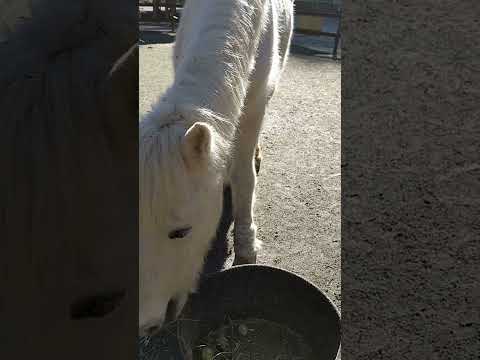
A peaceful glimpse of Hakuryū, the sacred white horse of Niu Kawakami Shrine – Shimosha.
🤍🖤Divine Rest of the Sacred Horses 🔗 https://youtube.com/shorts/kIUNO03wD5k

A gentle moment of rest with the shrine’s sacred horses.
🖤Sacred Black Horse 🔗https://youtube.com/shorts/2r_YcE6bD54

Meet Kokuryū, the small black sacred horse with a very different presence from Hakuryū.
🖤Sacred Black Horse Walking in Silence 🔗 https://youtube.com/shorts/lJYHVP4VQSU

A brief glimpse of Kokuryū walking through the shrine grounds.
💧 Hitogata Water Purification
One of the quiet traditions still practiced at Niu Kawakami Shrine is Hitogata Purification. Following the chief priest’s guidance, I gently held the hitogata, brushed it over my shoulders, breathed softly onto it, and finally released it into the sacred water. Watching the paper gradually dissolve and disappear into the stream made the ritual feel both peaceful and deeply symbolic.
🎥 Watch on YouTube👤
💧 Hitogata Water Purification🔗 https://youtu.be/kVZenQM96nY

A quiet glimpse of the Hitogata Water Purification ritual at Niu Kawakami Shrine (Shimosha). As the paper figure slowly dissolves into the sacred water, it symbolizes purification and a new beginning.
🐂🐸 The Ushi Stone & the Frog Stone


Within the shrine grounds stand two unusual sacred stones: the Ushi Stone and the Frog Stone. The Japanese word ushi (牛) simply means “cattle” and does not distinguish between male and female. According to the shrine, these two stones represent two contrasting yet complementary qualities—stillness and movement.
The Ushi Stone symbolizes patience, perseverance, and quiet inner strength. It reminds us to remain calm and thoughtful when facing life’s important decisions. The sign also suggests gently stroking the stone three times—a simple gesture that may bring unexpected good fortune.
The Frog Stone, by contrast, represents quick action, vitality, and decisive judgment. It reminds us that there are moments when hesitation must give way to courage and swift action. In Japanese, the word kaeru means both “frog” (蛙) and “to return” (帰る). Because of this wordplay, frogs are also regarded as symbols of safe returns, good fortune, and the hope that happiness or prosperity will come back to you.
Together, these two stones quietly invite visitors to seek balance—knowing when to move forward with determination and when to pause, reflect, and trust the right moment.
🎥 Watch on YouTube
🐂🐸The Ushi Stone & the Frog Stone 🔗 https://youtube.com/shorts/3OCEB4k7yac

A glimpse of two sacred stones, each representing a different way of facing life’s important decisions.
🌳 Sacred Keyaki Tree


The Sacred Keyaki Tree stands to the left of the main sanctuary.
This magnificent keyaki (Japanese zelkova) has stood at Niu Kawakami Shrine for an estimated 500 years. Rising to approximately 30 meters in height with a trunk measuring about 4.5 meters in circumference, it has long been regarded as a sacred tree where the divine is believed to dwell.
Standing beneath its towering branches, visitors are invited to pause, offer a quiet prayer, and simply take in the peaceful presence of this sacred tree.
🧵Hidden Threads — The Hidden Stairway
Another story is hidden behind the main sanctuary.
A long wooden stairway leads toward an even more sacred area of the shrine. It is opened to the public only once each year during a special annual event in June, and I have not yet had the opportunity to climb it myself.
Several years ago, restoration work began because the stairway appeared not to be perfectly straight. However, as the structure was carefully examined, the people involved in the restoration gradually realized that this was no simple construction error.
Further investigation revealed that the slight offset had been intentional. During the restoration, traces of an older stone staircase were also discovered beneath the present wooden one, carefully preserved rather than removed.

Excerpt from a newsletter published by Niu Kawakami Shrine, showing historic photographs of the original stone stairway.
The chief priest explained that the alignment of the stairway points toward Ongami Island (御神島), a sacred island in the Sea of Japan associated with the shrine’s dragon deity. According to him, the north–south alignment between the shrine and the island has virtually no deviation.
He also shared one final detail that has stayed with me ever since. According to the chief priest, Kifune Shrine (貴船神社) in Kyoto, dedicated to Takaokami-no-Kami (高龗神), lies along the same north–south line that connects Niu Kawakami Shrine and Okami Island. He also explained that, in this tradition, the southern direction is associated with the horse, adding another quiet layer of meaning to the shrine’s sacred horses.
As I listened, I found myself wondering how people long before the age of modern surveying could recognize and preserve such remarkable relationships between distant sacred places.
Whether these connections were intentionally created, carefully preserved through the centuries, or simply reflect traditions whose origins have faded with time, I cannot say. Yet standing there and listening to these stories, I couldn’t help feeling that these sacred places may have been connected for far longer than we can fully understand.

The Sacred Stairway
Leading quietly toward a place of prayer.
🎥 Watch on YouTube
🪜The Sacred Stairway🔗 https://youtube.com/shorts/wOEGEIL8e-8

One of the shrine’s most intriguing places.
🐎Kaha’s Whisper
For many years, I passed Niu Kawakami Shrine – Shimosha on the bus whenever I traveled to Tenkawa Benzaiten. Each time, the sign reading “Japan’s Oldest Water Deity” caught my attention. Yet because of the limited bus service, I always found myself continuing on without getting off.
Then, during the Year of the Dragon, I finally felt it was time to answer that quiet invitation.
That decision became the beginning of a journey through Shimosha, Nakasha, and Kamisha. Although each shrine has its own atmosphere, together they left me with a feeling that is difficult to put into words.
At Shimosha, I met the shrine’s beautiful sacred white horse. Later, when I looked back at my photographs, I noticed delicate orbs of light surrounding him. Whether they were simply reflections of light or something more, I cannot say. I also still remember the gentle breeze that suddenly surrounded me as I sat beneath the sacred stairway. Together, these became some of the most unforgettable moments of my visit.
Although it was my first visit, everything felt strangely familiar—as though some part of me had been longing to come here for a long time.
Since then, I have returned several times, and each visit has deepened my connection with this sacred place. During my most recent visit, I felt especially close to the shrine’s sacred horses. Kokuryū suddenly flopped onto his back and happily wriggled from side to side, much like a dog asking for a belly rub. Perhaps he was simply scratching an itch—as animals sometimes do—but it made me smile. Hakuryū, meanwhile, walked right up to me and stood peacefully beside me for a while. Those gentle encounters became the greatest gift of this journey.
Every visit leaves me feeling refreshed, grateful, and quietly saying,
“I’ll be back.”
Perhaps that is because some sacred places speak to your heart long before you understand why.
The Dragon Path continues…
In the next chapters, we’ll explore Nakasha and Kamisha, and follow the hidden threads that connect Kifune Shrine, Ongami Island, and the ancient traditions of Japan’s dragon and water worship.

Hakuryū, until we meet again. 🤍
🌈 Follow the Woven Threads
More stories continue to unfold through Dragon Path, Divine Thread, and Japan: Life & Spirit—each revealing another thread in Japan’s sacred landscape.
🐉 New to Dragon Path?
If you haven’t read Dragon Path #1, your journey begins here:
🔗 Dragon Path #1 │ Where the Dragon’s Journey Begins – Ryusenji Temple
🌿 Begin the Journey to the Kami
Before exploring Japan’s sacred places, discover the world of the kami—the spiritual beings at the heart of Shinto and the ancient relationship between nature and the divine.
🔗 Introduction to the Kami – Part 1
🔗 Introduction to the Kami – Part 2: A Journey to the Kami and the Sacred Land
🤍 Meet the Sacred Horses of Ise Jingū
Sacred horses have long served as divine messengers in Shinto tradition. Discover the story of Shinme (Sacred Horses) at Ise Jingū, where they continue an ancient tradition connecting people and the kami.


コメント