

🍵 Lead-in
In Japan, a bowl of matcha is often accompanied by a small sweet. Sometimes it is soft and beautifully shaped like a flower or a seasonal motif; at other times, it is a tiny, delicate dry sweet called ohigashi (お干菓子).
These little sweets may reflect the season, the place, or simply add a touch of color to a quiet tea break. From fresh green maple leaves in summer to a tiny deer inspired by Nara, even the smallest sweet can carry a little piece of Japan.
Recently, I brought home some colorful ohigashi and enjoyed them with matcha. So today, I’d like to introduce these charming Japanese sweets—and share a little of how we enjoy them in everyday life.
🍡 Japanese Sweets and Tea
Traditional Japanese sweets are known as wagashi (和菓子). They come in many different forms, from soft sweets made with ingredients such as sweet bean paste to small, delicate dry sweets made with sugar and other traditional ingredients.
In the Japanese tea ceremony, two familiar categories of sweets are omogashi (主菓子) and higashi (干菓子), often politely called ohigashi (お干菓子).
Omogashi are moist sweets, such as namagashi and manju. Many are beautifully shaped or decorated to reflect flowers, plants, and other seasonal motifs.
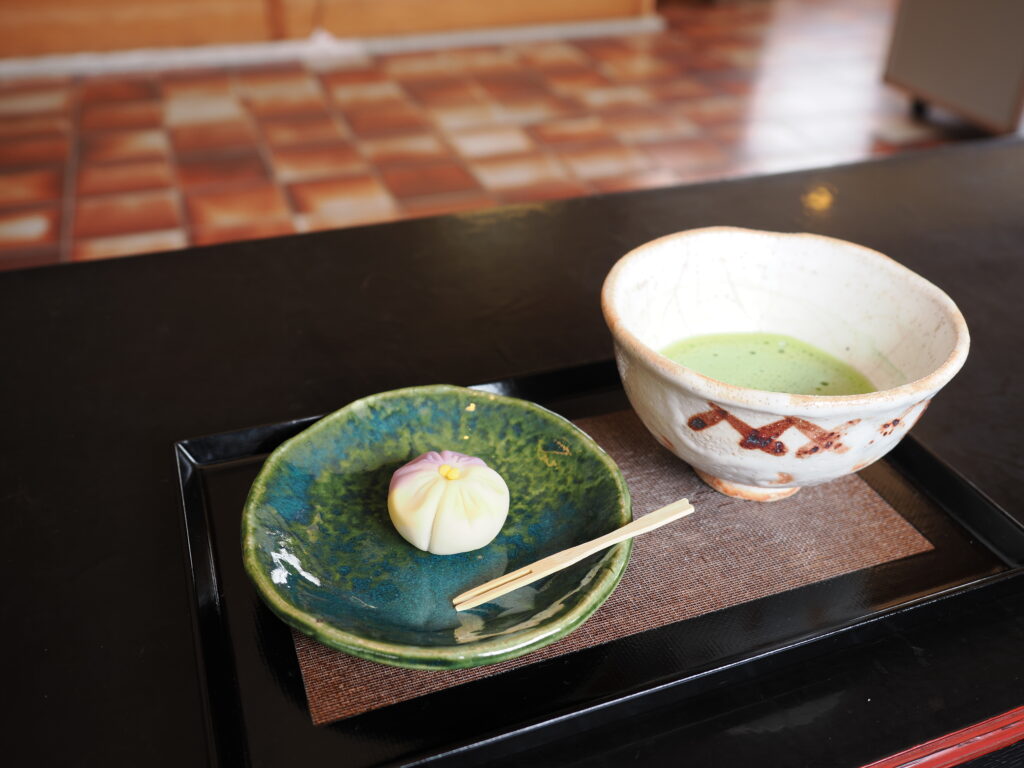
Omogashi and matcha in a casual tea setting. In a formal tea gathering, sweets are often presented differently, such as on kaishi paper.
Ohigashi, on the other hand, contain much less moisture. Rakugan and sweets made with wasanbon sugar are well-known examples, although they come in many different ingredients, shapes, colors, and styles.
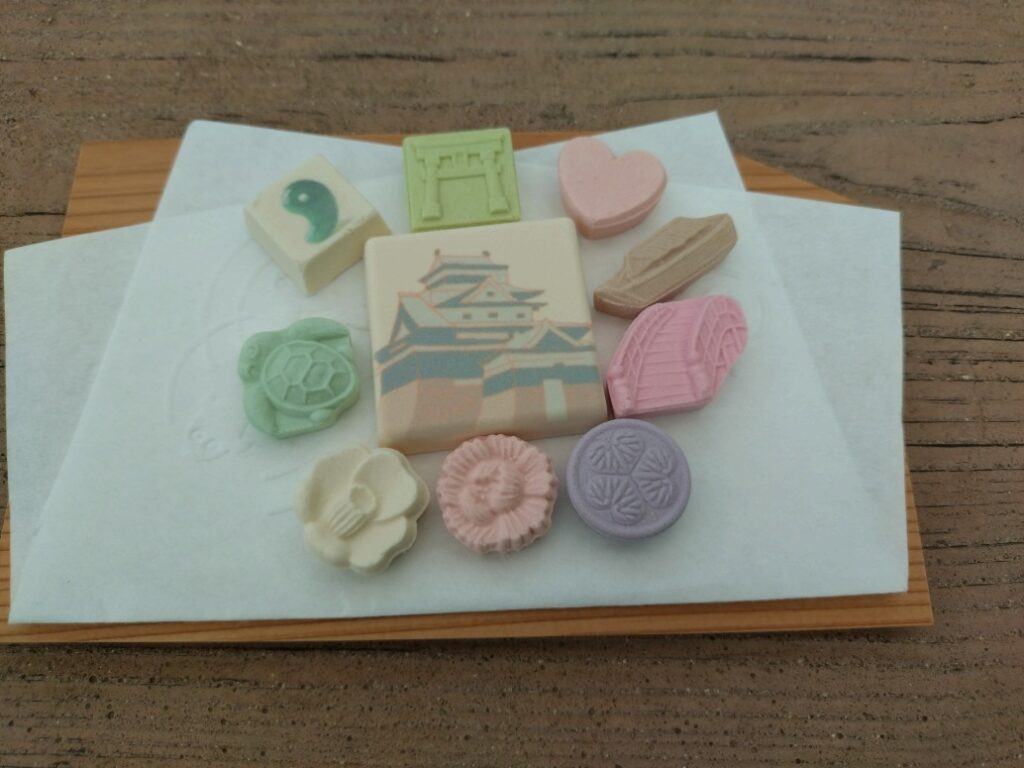
A colorful assortment of ohigashi with a variety of traditional and playful motifs.
Which sweets are served can vary depending on the type of tea gathering and the occasion.
The Japanese tea ceremony has its own traditions and etiquette surrounding how sweets and tea are served and enjoyed. But in everyday life, matcha can be enjoyed much more casually. You can simply choose a wagashi you like, prepare a bowl of matcha at home, and enjoy a quiet tea break.
🌿 Tiny Sweets That Reflect the Seasons
One of the charms of ohigashi is their beautiful variety of shapes and colors. Many are inspired by nature and change with the seasons—flowers, leaves, water, snow, and other small signs of the passing year.
The ohigashi I recently brought home included fresh green maple leaves, along with delicate pastel-colored sweets with swirling patterns. Their soft greens, blues, whites, and pinks felt especially refreshing in the heat of summer.
Even the kaishi paper beneath the sweets can carry seasonal designs. The one I used here is decorated with goldfish and swirling water, another little touch of summer. 🐟🌊
In Japan, enjoying the seasons is not limited to gardens or landscapes. Sometimes, a hint of the season appears in something as small as a sweet—or even in the paper beneath it.
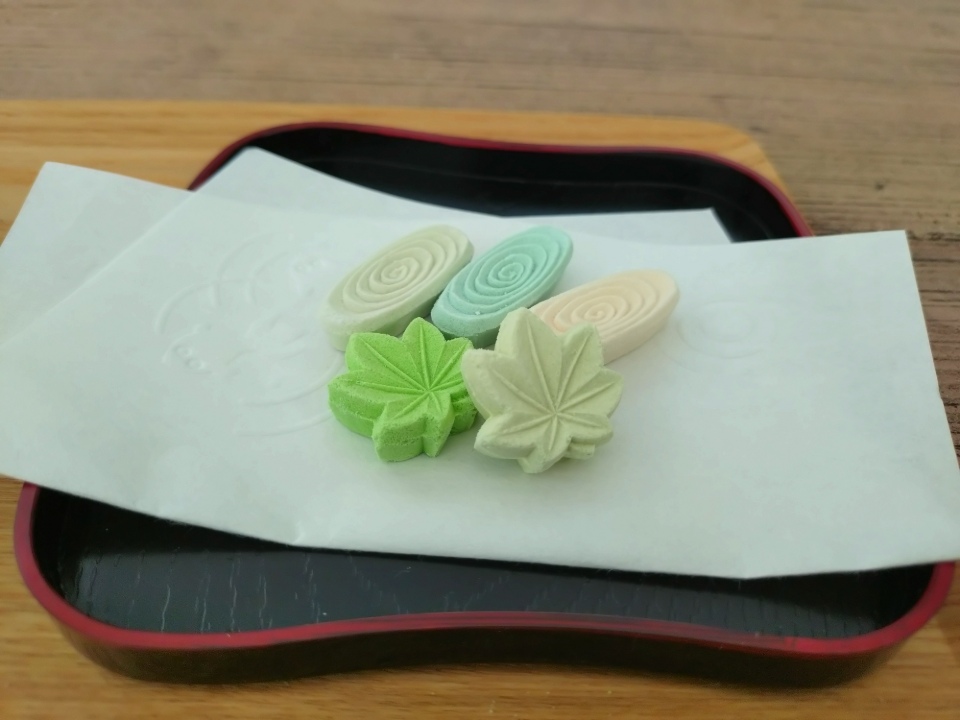
Colorful ohigashi with seasonal motifs, arranged on kaishi paper decorated with goldfish and swirling water.
🦌 A Little Taste of Nara
Ohigashi can reflect not only the seasons, but also the character of a place.
In Nara, deer are everywhere—not only in the parks and around temples and shrines, but also in local sweets, souvenirs, and small designs inspired by the city.
Recently, I found these charming round ohigashi embossed with deer motifs in Nara. Made with kuzu (kudzu starch), kinako (roasted soybean flour), and sugar, they had a gentle sweetness that wasn’t overpowering.
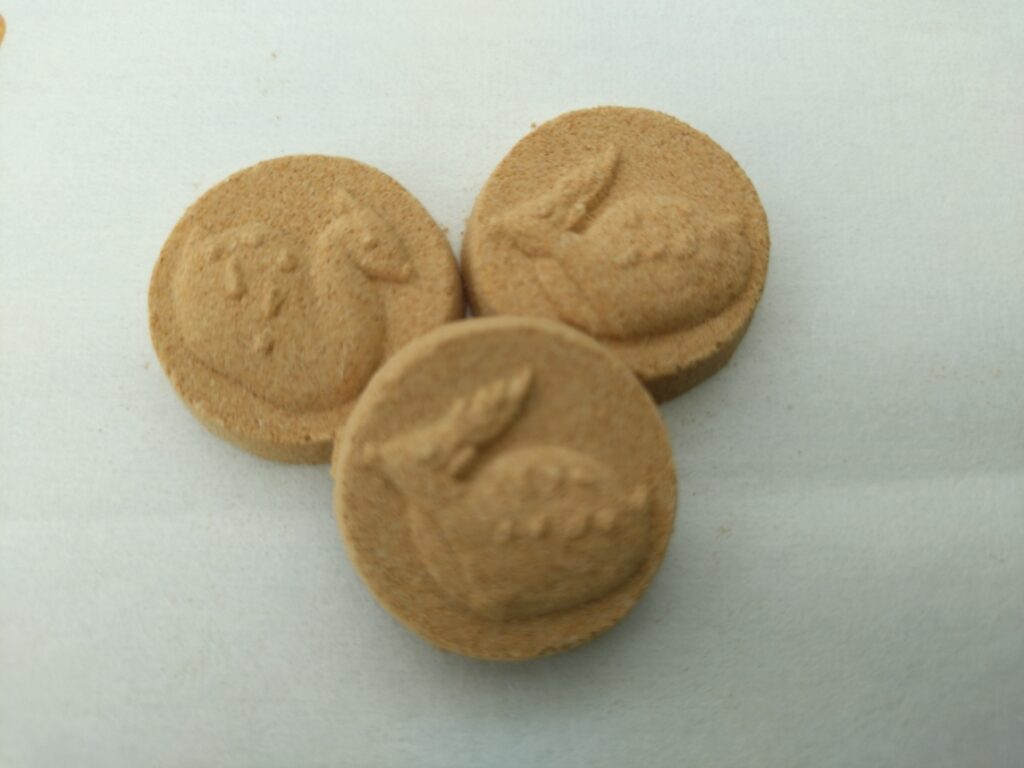
Round ohigashi embossed with deer motifs, found in Nara.
🎆 Enjoying Matcha at Home
You don’t need a formal tea gathering to enjoy matcha and Japanese sweets. Sometimes, it can simply be a quiet moment at home.
One summer afternoon, I prepared a bowl of matcha for my mother and chose one of my favorite glass tea bowls, with a colorful summer fireworks pattern. I arranged some of the ohigashi on a small tray for the two of us to share.
It had been a while since I had prepared matcha, so I wasn’t able to whisk it quite as beautifully as I had hoped. But my mother was happy with it, and that made me happy too. We enjoyed our little tea break together.
For me, this is another lovely way to enjoy Japanese seasonal traditions—not only at a formal tea gathering, but also in small, everyday moments at home.
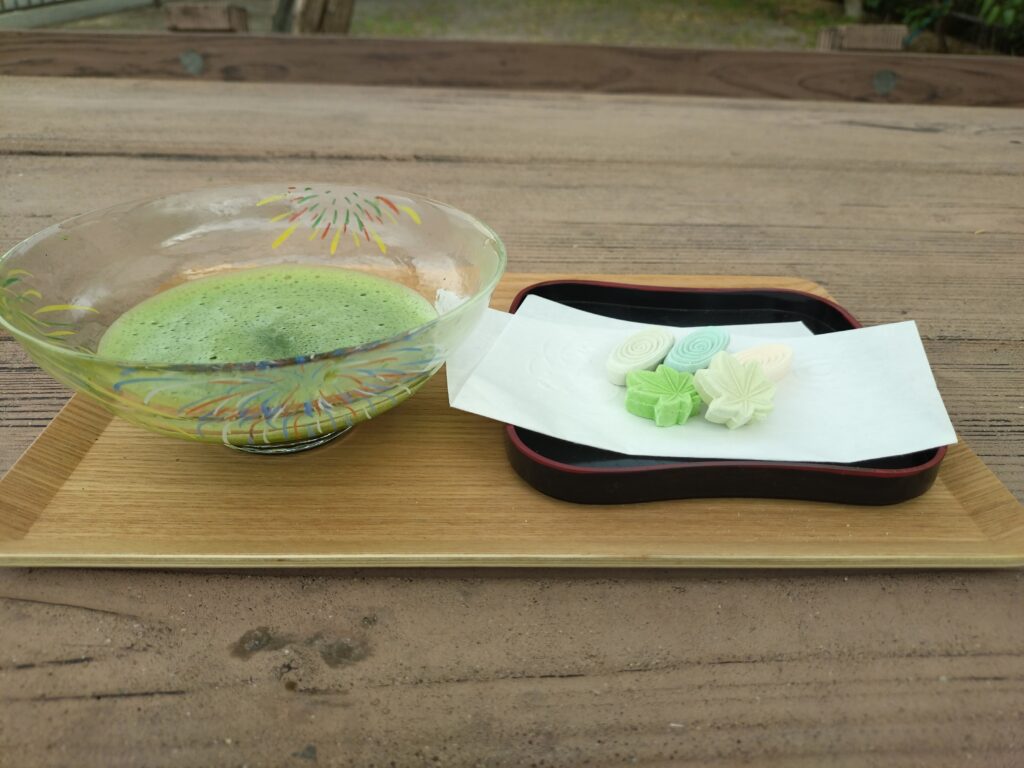
A summer tea break at home—matcha in a glass tea bowl with a fireworks pattern, with colorful ohigashi to share.
🪽 Kaha’s Note
One of the things I love about Japanese sweets is the care taken to reflect the seasons through their colors, shapes, and motifs. They are something to enjoy not only through taste, but also with the eyes.
Bringing seasonal touches into everyday life—whether through sweets, tableware, or even a small piece of kaishi paper—is one of the simple pleasures of living with the seasons in Japan. There is something special about choosing and enjoying things that belong only to that particular time of year.
Perhaps that is part of the beauty of Japanese seasonal living: noticing the season in small, everyday details, and enjoying them while they are here.
🌈 Explore More
Discover more stories about Japanese culture, sacred places, seasonal living, and everyday discoveries across the blog.

コメント