

📝Lead-in
In Japan, temples are often places not only of prayer but of deep healing — spiritual and emotional.
One such temple is Daian-ji in Nara, which has long been known for prayers against illness — especially cancer.
When I visited, it happened to be January 23rd, the day of the temple’s annual event called the Sasazake Festival, held for healing and protection.
Although I arrived later in the day and the main activities had finished, the temple grounds were calm and open — filled with a quiet sense of presence.
What caught my attention most were the dozens of small daruma dolls placed throughout the grounds — tucked between stones, sitting on ledges, gathered near altars.
These round, red figures are often seen across Japan, each one representing a prayer or personal wish.
In this article, I’ll share a gentle introduction to Daian-ji, its tradition of healing prayers, the meaning of daruma, and the unique ritual of sasazake — sacred sake served in bamboo.
It’s a story of quiet strength, hope, and the subtle beauty of Japanese spiritual culture.
🌿Daian-ji – A Temple of Healing and Quiet Strength
Tucked away in a quiet part of Nara, Daian-ji is a temple that offers a sense of presence, history, and healing. One of the oldest temples in the region, Daian-ji dates back to the 7th century and was once a major center of Buddhist learning. Today, it is especially known for a unique spiritual tradition: prayers for protection against illness — especially cancer.
In Japan, this is called “gan fūji” (がん封じ)— a form of healing prayer offered at certain temples believed to have a special connection to health and protection against cancer. Daian-ji is one of the most well-known of these, and many visitors come here with hopes of recovery, prevention, or simply to find strength during uncertain times.
Each year on January 23rd, Daian-ji holds a special event known as the Sasazake Festival (笹酒祭り), where people gather to receive blessings and drink warm sake served in bamboo — a symbolic act meant to purify and protect.
When I visited in the afternoon, the main event had already finished. There were a few people waiting at the shuttle bus area, and the atmosphere was calm but quietly active — more visitors than usual, but not crowded. It felt like a gentle celebration, where the presence of others added warmth without overwhelming the space.
Outside of this special day, Daian-ji is even quieter — a place where people come to pray, reflect, and leave small offerings of hope.
What makes Daian-ji special is not just its spiritual focus, but the atmosphere it holds. The temple grounds are spacious but gentle — filled with trees, mossy stones, quiet halls, and small signs guiding visitors through sacred paths. One path is called “Inochi no Komichi” (いのちの小径) — the “Path of Life” — a walkway designed to support reflection on health, healing, and the sacredness of life itself.
Along one of the temple’s paths is a small, meaningful site called “Miruku‑zuka” (みるく塚) — a mound dedicated to prayers for the prevention and healing of breast cancer. According to temple guidance, it was established by someone who overcame the illness and wished to express gratitude. Visitors often gently touch the stone as they pray, honoring both personal hopes and the temple’s long tradition of healing.
Daian-ji doesn’t ask for much. There’s no pressure to perform rituals. Instead, it offers space — both physically and emotionally — for people to bring their thoughts, their worries, and their hopes.
Whether you are there for the annual festival or simply walking through on a quiet afternoon, Daian-ji holds something timeless: the gentle strength of a place where healing is not dramatic, but deeply human.

Inochi no Komichi (いのちの小径) – The “Path of Life” at Daian-ji Temple, inviting quiet reflection and healing prayers.
🎯The Spirit of Daruma – Prayers with Eyes Open
At Daian-ji, I was gently surprised by the presence of dozens of small daruma dolls scattered throughout the temple grounds.
They appeared in many places — on stone lanterns, along walkways, near bamboo plants, and on temple steps. Some sat alone, while others were gathered in little groups. They weren’t placed as part of an official display, yet they felt like they belonged.
These dolls are part of what’s called daruma omikuji (だるまおみくじ) — small red figures with fortunes inside. Visitors can receive one at the temple and, while they’re meant to be taken home, many people choose to leave them behind. Over time, this has created a unique landscape of quiet wishes spread throughout the grounds.
I didn’t know exactly who had placed them — whether they were left by individuals or arranged by temple staff — but their presence was striking. The feeling wasn’t one of disorder, but of gentle presence. The daruma didn’t seem random. Instead, they felt like part of the temple’s spirit — small companions to the prayers offered here.
In Japanese tradition, daruma are symbols of perseverance. When making a wish, it is common to color in one eye and complete the second when the wish is fulfilled.
However, at Daian-ji, the daruma often already have both eyes painted from the beginning. Rather than waiting for a specific wish to come true, these figures seem to carry a prayer already formed — a collective expression of hope and healing.
In this sacred space, where prayers for recovery and peace are deeply woven into the temple’s atmosphere, the daruma become more than individual symbols — they become part of a shared, quiet tapestry of intention.
🎋Sasazake and the Bamboo Spirit
One of the most distinctive traditions at Daian‑ji is the Sasazake Festival (笹酒祭り), held every January 23rd. This annual event — officially known as Kōnin‑e (Cancer Prevention Sasazake Festival) — includes prayers for health and protection against illness, especially cancer, and the offering of warm sake served in bamboo cups.
But the ritual is not limited to winter. A second Sasazake ceremony is held in summer, on June 17th, as a day of giving thanks to bamboo itself. In this version of the ritual, the focus is not only on healing, but also on expressing gratitude to the natural world — especially the role of bamboo as a sacred vessel that carries blessings.
Through both festivals, the act of drinking sake from bamboo becomes a quiet symbol: of seasonal change, of prayer, and of the human relationship with the natural world. Whether in winter’s stillness or summer’s growth, the ritual reflects a deep respect for life and renewal.

The tradition is rooted in a story about Emperor Kōnin, who is said to have once warmed sake in a bamboo stalk at Daian‑ji’s grove — and later lived a long, healthy life. In his memory, the temple continues this custom, and on the day of the festival, visitors may receive sacred sake poured from bamboo as part of the ritual.

Emperor Kōnin (imagined portrait)
Image from Wikipedia / Creative Commons
I visited Daian‑ji in the later part of the day, after the main event had finished. Although I didn’t witness the pouring itself, the story and tradition linger in the quiet air afterglow — a space that had welcomed prayers just hours before.
Even without crowds or ceremony, the temple held a sense of continuity. The story of the bamboo sake, and the spirit behind it, remained present in the air — a subtle invitation to reflect on the bond between nature, tradition, and the human wish for healing.
📷 Visual Section: Daruma Across the Grounds
A quiet walk through Daian-ji reveals daruma in unexpected places — nestled on rocks, lined on signs, and resting near sacred structures. Each one seems to hold a wish, a prayer, or a quiet presence of someone who passed through.

Daruma gathered on an old tree stump, nestled into bark and pine needles.
A natural altar — weathered, quiet, and full of unseen wishes.


Red and gold daruma lined up near a quiet water basin.
Their presence, though simple, brings color and curiosity to the temple’s stillness.

Daruma lined up over and under omikuji — folded paper fortunes.
The repetition of prayers, hopes, and figures creates a powerful visual rhythm.

Daruma placed gently on a stone monument.
Resting quietly above carved stone, the figures seem to watch over the temple grounds with silent wishes.

Along stone lanterns and garden features
Some sit atop old lanterns or natural rock formations, as though watching over the temple pathways. They become part of the landscape, blending ritual with the ordinary architecture of the temple.
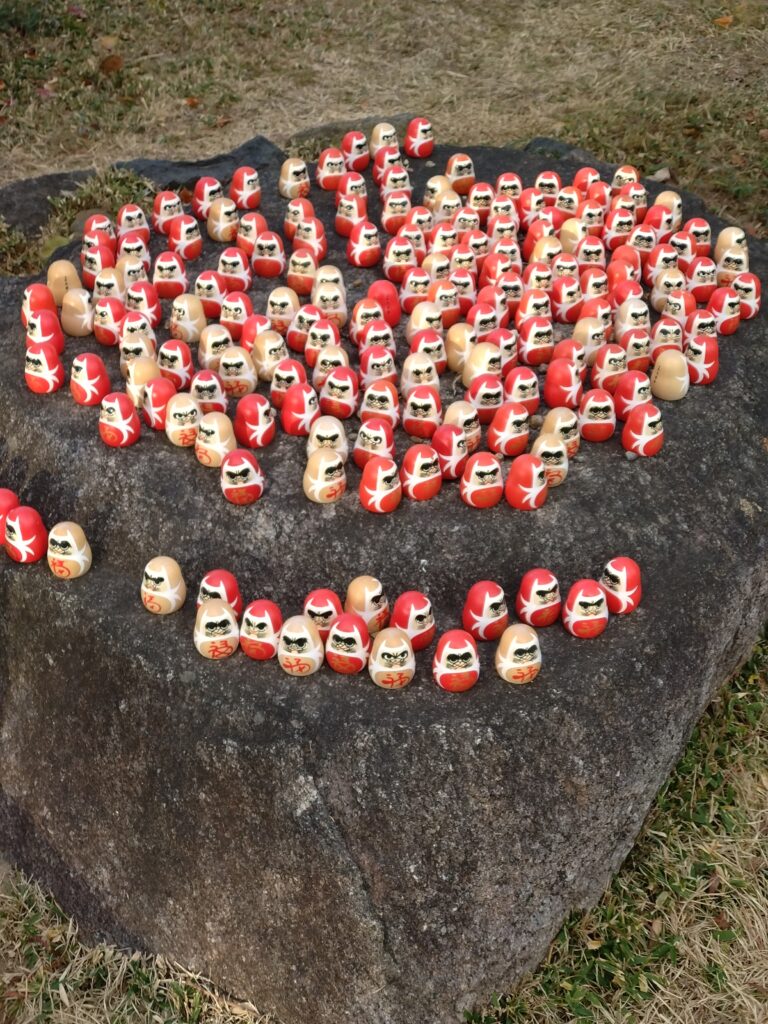
Hundreds of daruma placed with prayer.
Each small figure represents a hope — for healing, for protection, or simply for strength. Together, they form a quiet community of wishes.

Rows of daruma quietly lining the temple’s main hall.
Each figure carries a silent wish — part of a larger prayer for healing and peace.
🧘♀️Kaha’s Note
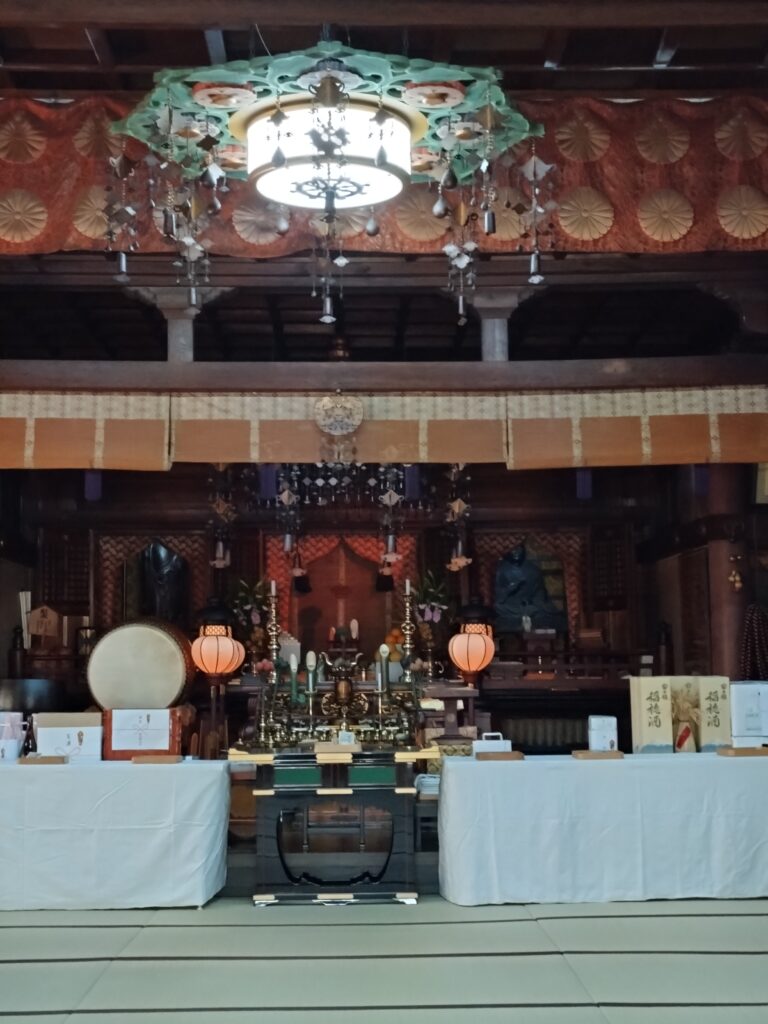
Inside the main hall of Daian-ji.
The altar is adorned with offerings, candles, and sacred implements, creating a serene space where prayers for healing and peace are quietly offered.
As I walked through the quiet temple grounds of Daian‑ji, something quiet yet profound stayed with me long after I left. Beyond the ritual of the festival, beyond each little daruma placed with intention, there was a gentle sense of presence — in stone, in moss, in the simple landscape of a temple garden.
Many visitors come here with specific prayers — for healing, for peace, for protection against illness. But what I noticed most was not a particular wish or moment, but the continuity of care — how one person’s hope becomes part of a wide, shared tapestry.
The rows of small daruma, resting side by side on stones and lanterns, did not seem lonely or forgotten. Instead, they formed a quiet chorus of wishes — each one placed with intention, each one adding a little more warmth to this sacred space.
In Japan, places like Daian‑ji are not just monuments of history or culture. They are living places of reflection, where individuals bring both their struggles and their quiet hope. Whether through whispered prayer or a simple moment of stillness before a shrine, the act of being present — of showing up with sincerity — becomes its own offering.
When we allow ourselves to pause, to look around, and to breathe in a moment of calm, we participate in something larger than ourselves. Healing is not always dramatic. Sometimes it is quiet. Sometimes it is simply the willingness to be present with what is.
I hope these stories and images bring you a sense of peace — a reminder that in the stillness of stone, in the gathered presence of small figures, and in the quiet rhythm of daily life, there is room for hope, reflection, and renewal.
🌈 Explore More
Would you like to explore more gentle stories of Japan’s spiritual traditions, seasonal reflections, and everyday moments of beauty?
🔗 Return HOME to Rainbow Awakening
Discover quiet stories from Japan — reflections on nature, healing, cultural traditions, and soulful living.


コメント