
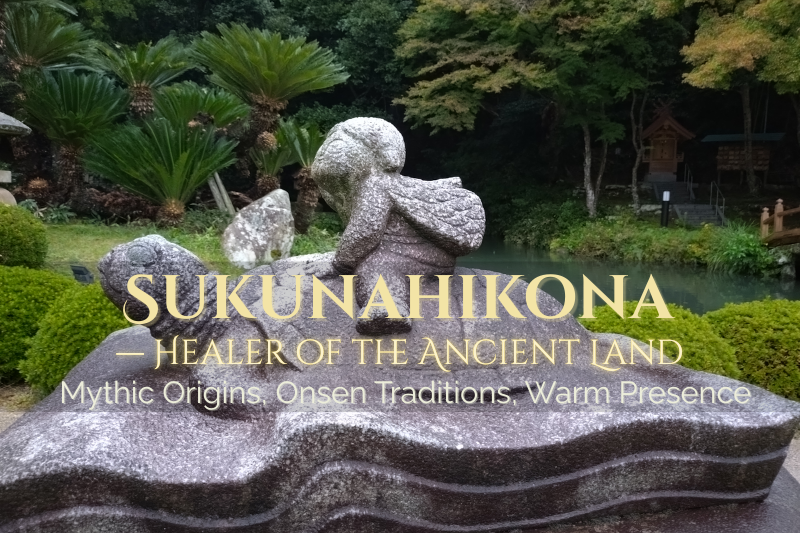
- 🌟Lead-in
- 🌿 Who Is Sukunahikona?
- 🌟 A Well-Known Tale About His Healing Power
- ♨️ From Mythic Healing to Everyday Onsen Culture
- 💖Prayers & Blessings Today — How People Honor Him Now
- ✅ Where You Can Find Him — Shrines, Hot Springs, and Sacred Places
- 🌿 A Living Sacred Portal — A Healing Waterfall in Izumo
- 🌿 Kaha’s Note
- 🌈 Explore More
🌟Lead-in
Sukunahikona-no-Mikoto is a very small god —
so small he is said to fit in the palm of a hand.
And yet, he is one of the most powerful and mysterious deities in Japanese mythology.
Ancient texts say he came from another dimension,
a place known as Tokoyo — a timeless otherworld beyond the sea.
He arrived without warning, offered knowledge and healing,
and then returned to that hidden realm just as mysteriously.
A small, brilliant presence that appears only when needed —
and vanishes the moment his role is complete.
🌿 Who Is Sukunahikona?
Sukunahikona-no-Mikoto is one of Japan’s most mysterious deities —
a small, yet immensely powerful god associated with healing, medicine, protection, and the quiet guidance of the land.
Ancient texts say he did not originate in this world.
It is said that he arrived from another dimension or heavenly realm, appearing suddenly beside a sacred shore…
and just as mysteriously, disappearing once his work was complete.
This ephemeral nature makes him one of the most intriguing figures in Japan’s mythology.
Though small in form, he possessed extraordinary wisdom and spiritual mastery.
He is even believed to be the inspiration for Japan’s beloved folktale Issun-bōshi,
the tiny hero who overcomes great challenges with courage and divine blessing.
⭐ His Role in Japan’s Mythic History
Sukunahikona plays a vital role in the creation and organization of Japan.
He appears as a divine healer, a master of herbs and medicine,
and a guide who teaches people how to live in harmony with nature.
Most importantly, he works side by side with Ōkuninushi-no-Mikoto,
the great deity of nation-building.
Together, they traveled across the land — healing, purifying, and shaping the foundations of life in Japan.
If you want to explore Ōkuninushi’s dramatic and beautiful journey in more detail,
you can read it here →
🔗 Divine Thread 9-2 – Beloved by Many, Tested by Fate: Ōkuninushi’s Journey
https://8rainbow.work/%f0%9f%a7%b5divine-thread-9-2-beloved-by-many-tested-by-fate-okuninushis-journey/
⭐ His Divine Origin
According to traditional mythology, Sukunahikona is said to be born from the Three Primordial Kami (Zōka Sanshin) —
the highest, most transcendent creators of the universe.
To learn more about these cosmic origins and the beginning of the Divine Thread series,
you can visit this introduction →
🔗 Divine Thread Pre-#1 – The Dawn Beyond Heaven and Earth
https://8rainbow.work/%f0%9f%8c%bf-divine-thread-pre%e2%80%911-part-1/
🌟 A Well-Known Tale About His Healing Power
There is a famous story that highlights Sukunahikona’s unique gift for healing.
When Ōkuninushi-no-Mikoto—his partner in building and shaping the land—fell ill,
Sukunahikona revealed the presence of medicinal hot springs hidden in the mountains.
These sacred waters restored Ōkuninushi’s strength and became one of the earliest stories connecting divine wisdom with natural healing.
This gentle, precise kind of help is one of Sukunahikona’s signatures:
he doesn’t move mountains—he restores people.
♨️ From Mythic Healing to Everyday Onsen Culture
The story of Sukunahikona guiding Ōkuninushi to healing waters may feel mythic,
but it reflects something that continues quietly in Japan today.
Hot springs are not only sacred—they are a part of ordinary life.
Even people who know nothing about the gods grow up hearing things like:
“This onsen is good for your skin,”
“That spring helps with sore muscles,”
“Those waters warm you from the inside.”
Each region has its own spring with its own minerals, its own reputation,
its own small promise of feeling “a little better” afterward.
People visit onsen for reasons that are very down-to-earth:
- easing fatigue after work
- soothing pain from cold weather
- improving circulation
- finding a moment of peace in warm, quiet water
It’s not unusual for families, hikers, travelers, and elderly people to soak simply because
the body relaxes, and the heart feels lighter.
When seen this way, the old story of Sukunahikona becomes symbolic rather than literal —
a reminder that healing often begins with warmth, rest, and places where nature supports us without effort.
The myth lives on not because people remember it,
but because the experience of healing in warm water is something
everyone can feel, no matter what they believe.
Unlike deities known for overwhelming power,
Sukunahikona is revered for his wisdom, healing insight, and precise guidance.
He is the kind of god who understands the body, the land, and the subtle balance between them —
a master of remedies, herbs, hot springs, and the quiet art of restoring harmony.
Many traditions also describe him as playful and warm-hearted,
a deity with a touch of humor who brings comfort as naturally as he brings knowledge.
Because of this, people see him not simply as a “small god,”
but as a wise healer whose presence feels reassuring, friendly, and unexpectedly powerful.
💖Prayers & Blessings Today — How People Honor Him Now
Sukunahikona is still honored today as a deity of healing, medicine, wisdom, and balance.
People visit his shrines or offer prayers to him when they need:
- recovery from illness or fatigue
- guidance in medical, herbal, or caregiving work
- mental and emotional stability
- protection for health and daily life
- clarity and wise decision-making
Because he understands the human body, remedies, and the subtle harmony between nature and people,
many see him as a trustworthy, knowledgeable, and warm-hearted helper.
Some traditions even describe him as slightly playful and humorous—
a god whose presence brings both healing and comfort.
✅ Where You Can Find Him — Shrines, Hot Springs, and Sacred Places
Sukunahikona is honored across Japan,
sometimes in large shrines and sometimes in quiet, hidden sanctuaries.
Here are a few meaningful locations connected to him or to the traditions that cherish his healing wisdom.
• Miwa — A Sacred Beginning
The Miwa region has deep ancient ties to healing, power, and natural springs.
While Ōmiwa Shrine is primarily dedicated to Ōmononushi,
the broader area is rich with the kind of spiritual resonance often associated with Sukunahikona’s influence.
If you’d like to explore more about the spiritual heritage of this region, see:
👉 🔗 Divine Thread #4 — Divine Union at Mount Miwa: A Shamanic Princess, a Serpent God, and the Springs of Power
https://8rainbow.work/%f0%9f%a7%b5-divine-thread-4-divine-union-at-mount-miwa-a-shamanic-princess-a-serpent-god-and-the-springs-of-power/
The stillness here feels like a place where a small, wise spirit might pause,
quietly offering its presence to those who listen.
• Izumo — Where the Gods Hold Sacred Council
Izumo is deeply intertwined with the myths of Ōkuninushi and all the deities associated with the shaping of Japan.
Many local traditions connect the idea of healing waters and sacred presence with this ancient land.
For more on this profound spiritual landscape, see:
👉 🔗 Divine Thread #9-1 — Izumo: Where the Gods and Goddesses Hold Sacred Council
https://8rainbow.work/%f0%9f%a7%b5divine-thread-9-1-izumo-where-the-gods-and-goddesses-hold-sacred-council/
Izumo remains one of the places where the partnership between Sukunahikona and Ōkuninushi still feels alive,
echoing through myth, ritual, and the sacred sites themselves.
• Sukunahikona Shrine — Shinnō-san (Osaka)
One of the most important centers of devotion to Sukunahikona is Shinnō-san in Osaka, also known as Sukunahikona Shrine.
It sits in the historic pharmaceutical district of Nishi-Dōjima, a perfect home for a god associated with medicine and healing.
Here, visitors commonly pray for:
- health and recovery
- safe practice in medicine and caregiving
- protection from illness
- wisdom in life and work
In addition, this shrine is well known for its pet blessings —
a wonderful reason to visit with a beloved animal companion someday.
For official English information, see:
👉 https://www.sinnosan.jp/english/?welcome=hide
• Dōgo Onsen (Ehime) — A Hot Spring I Hope to Visit Someday
One of Japan’s oldest and most famous hot springs, Dōgo Onsen has long been associated with healing water and healing traditions.
Many people believe that the spirit of onsen culture — the warmth, rest, and physical restoration it brings — echoes the kind of healing Sukunahikona represents.
I hope to visit it someday,
to feel the ancient warmth that has soothed countless travelers for over a thousand years.
🌿 A Living Sacred Portal — A Healing Waterfall in Izumo
In Izumo, I once filmed a quiet waterfall within the grounds of Izumokyō,
a shrine-like spiritual sanctuary located near Izumo Taisha.
It was just after the rain.
The air was still, the water moved gently,
and the whole place carried a soft, calming presence —
the kind of peaceful atmosphere often associated with Sukunahikona’s healing nature.
👉 Watch the short clip here→https://youtube.com/shorts/HtbebOL7mrQ
There was nothing dramatic — just water, stone, trees, and a quiet moment of clarity.
Yet that simplicity made it feel like a small blessing,
as if a gentle deity had passed by and left a trace of warmth in the air.
🌿 Kaha’s Note
A few years ago, during a business trip, I stayed at a hotel with a quiet, secluded hot spring.
One evening, as I slipped into the warm outdoor bath, something unexpected happened.
From my left side, I felt a gentle presence —
a large, warm orb of light, soft yet unmistakably alive.
It wasn’t something I saw with my eyes, but something I felt deeply.
A calm, radiant warmth wrapped around me, relaxing both my body and my heart.
At the time, I didn’t know what it was.
I simply felt held, comforted, and quietly healed.
But now, looking back after visiting Miwa for many years
and learning more about Sukunahikona-no-Mikoto,
I feel certain that this warm presence was him.
A small god with great healing power —
arriving gently, without announcement,
and offering exactly what is needed.
Since then, I’ve often felt his guidance in subtle ways:
through intuition, sudden clarity, small helpful ideas,
and a quiet feeling that I’m being supported from the unseen world.
For me, Sukunahikona is not just a mythic figure.
He is a wise, warm-hearted companion who brings healing, insight,
and a kind of comfort that feels both ancient and personal.
And this year, while visiting Saidaiji,
I experienced something that felt like another gentle nudge from him.
After stepping outside and noticing a soft ray of light to my left,
I found myself drawn toward a small roadside shrine I had never truly looked at before.
When I read the plaque, I realized — it was dedicated to Sukunahikona-no-Mikoto.
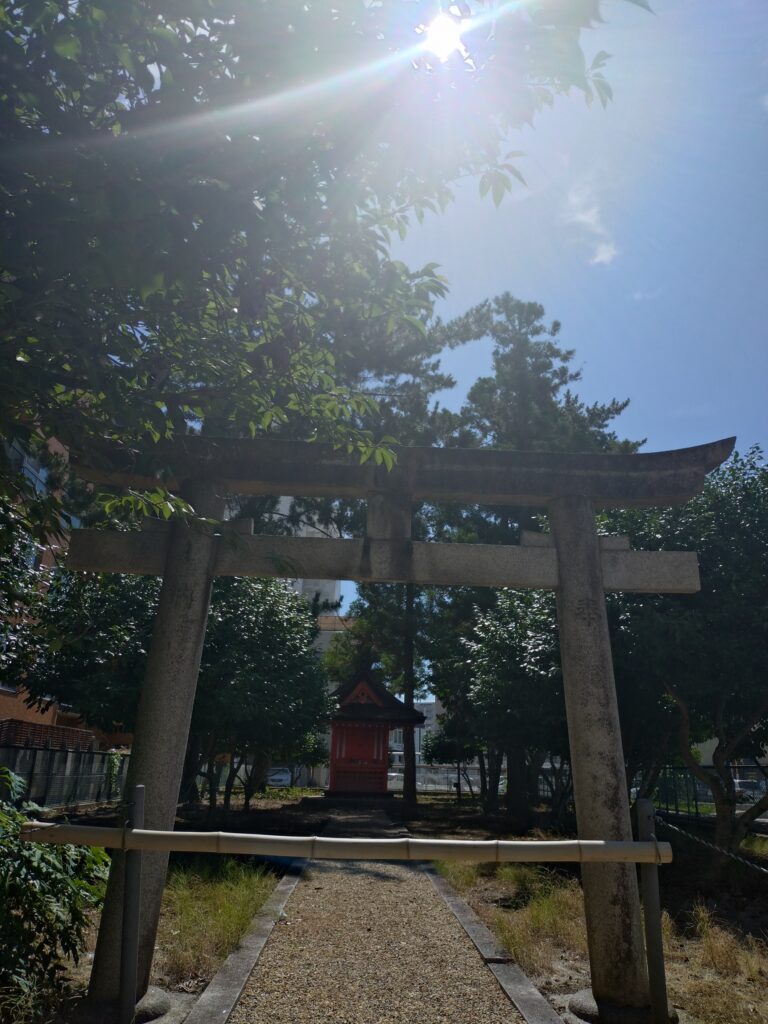
A small roadside shrine across from Saidaiji, where a soft ray of light drew my attention —
and led me to discover that it was dedicated to Sukunahikona-no-Mikoto.
It felt like a quiet way of saying,
“I’m here.”
Not dramatic, not overwhelming —
but unmistakably present.
When he comes, there is a certain rightness,
a feeling that something wise and benevolent has stepped just a little closer.
For me, Sukunahikona is not only a deity of myth —
he is a warm, intelligent companion
whose presence brings healing, clarity, and a deep sense of being gently watched over.
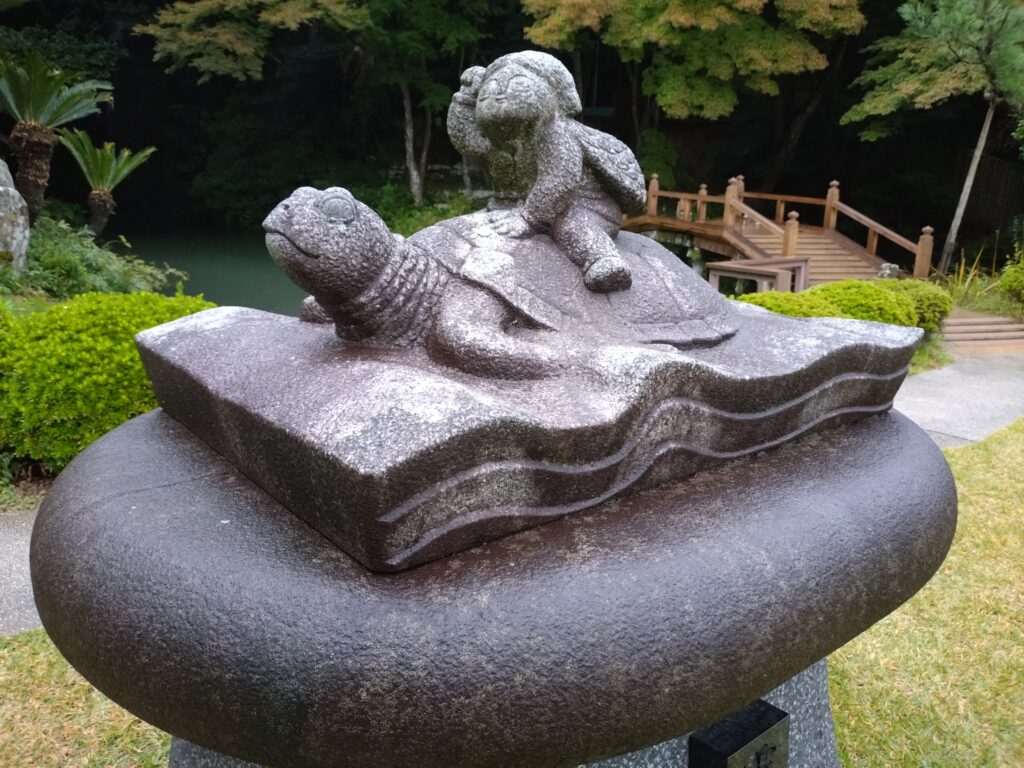
A charming stone sculpture of Sukunahikona riding a turtle — a beloved symbol of wisdom and resilience in Izumo.

The small water shrine in Izumo dedicated to Sukunahikona-no-Mikoto, with the gentle “Kame-no-O Falls” flowing nearby.

Kame-no-O Falls in Izumo — a quiet healing place where water, stone, and air hold a peaceful presence.
🌈 Explore More
If you’d like to explore more sacred places, quiet moments,
and the stories woven through Japan’s spiritual landscape,
you can return to the main page here:
👉 Return HOME to Rainbow Awakening
https://8rainbow.work/
For a collection of films capturing sacred waters, ancient stones,
and light-filled journeys across Japan,
you can also explore the Rainbow Threads index from the homepage.


コメント