
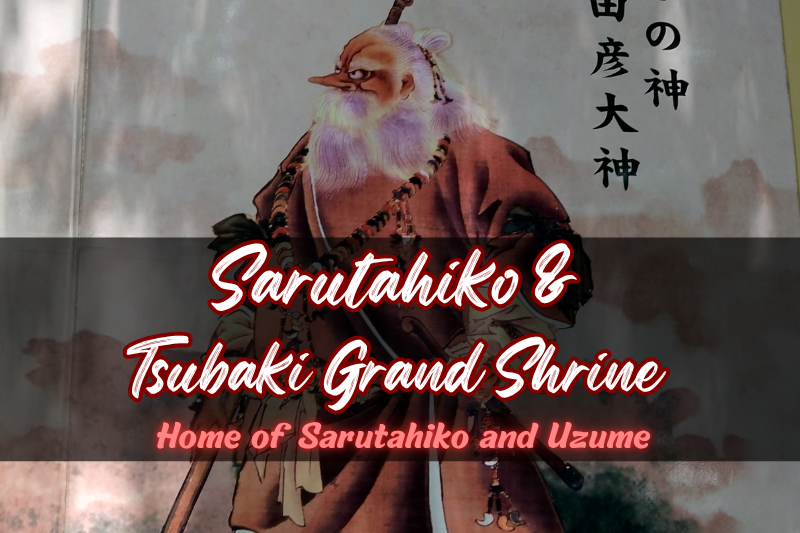
🍃Lead-in
After visiting Ise Jingu in past years—and stopping at Sarutahiko Shrine in Ise City several times—this summer I finally made my way to Tsubaki Grand Shrine (椿大神社, Tsubaki Ōkami Yashiro — Tsubaki meaning “Camellia” in Japanese) in Suzuka, Mie Prefecture. Known as the Ichinomiya of Ise Province and the head shrine of over 2,000 Sarutahiko shrines across Japan, it enshrines Sarutahiko Ōkami, Ame-no-Uzume-no-Mikoto, and other revered deities.

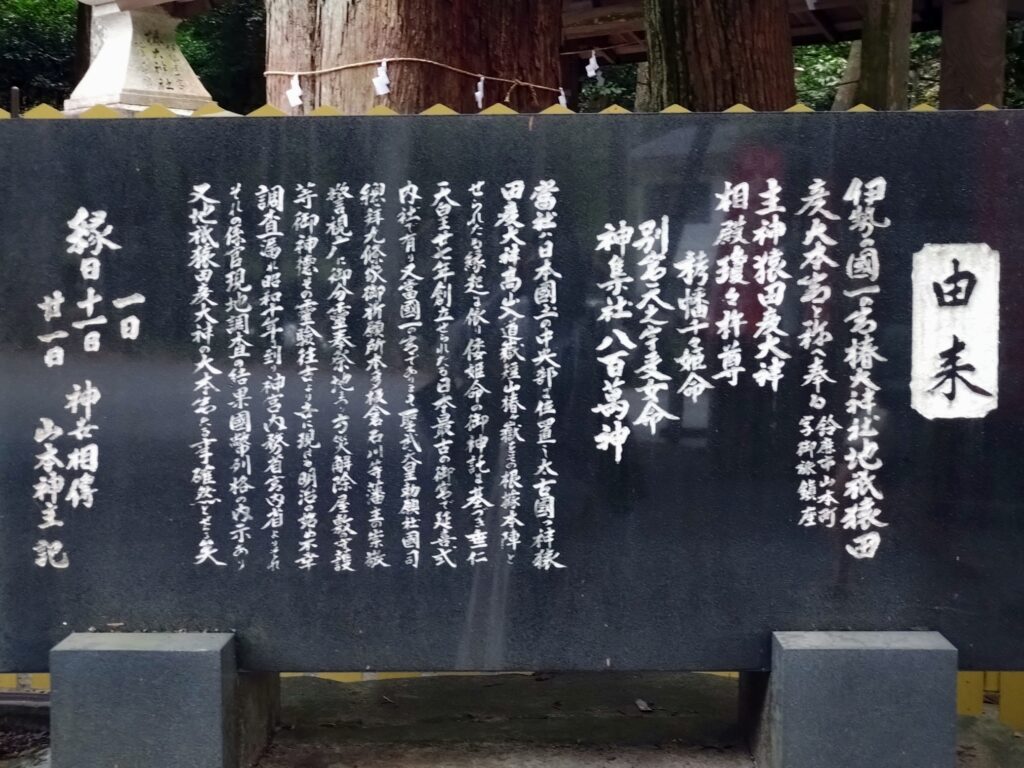
Stone monument at the entrance of Tsubaki Grand Shrine (椿大神社) — marking the gateway to Japan’s oldest Sarutahiko shrine.
According to tradition, in 3 BC, by divine oracle received by Princess Yamatohime-no-Mikoto (倭姫命),who is also associated with the establishment of Ise Jingu, the shrine was built at the foot of Mt. Takayama and Mt. Chikayama, before the sacred Mifune-Iwakura. During the reign of Emperor Nintoku, a sacred dream revealed the name “Tsubaki” (椿, camellia), which has been used ever since. In the early Shōwa period (late 1920s to mid-1930s), a government investigation confirmed it as the grand head shrine for all Sarutahiko shrines nationwide.

⛩️Enshrined Deities
Sarutahiko Ōkami – Main deity of guidance and protection
Ame-no-Uzume-no-Mikoto – Goddess of joy and performing arts
Konohanasakuya-hime – Goddess of blossoms and safe childbirth (Ninigi’s wife, Goddess of Mt. Fuji)
Ninigi-no-Mikoto – Grandson of Amaterasu, the Sun Goddess
Takuhatachihime-no-Mikoto – Mother of Ninigi
Yaoyorozu no Kami – Countless Deities of nature and spirit
👺 Sarutahiko – Guardian at the Crossroads

There are several versions of this scene in Japan’s ancient mythology, but one well-known tradition remembers Sarutahiko Ōkami (猿田彦大神) as the towering deity of guidance who welcomed the heavenly descent. When Ninigi-no-Mikoto, grandson of the sun goddess Amaterasu, came down from the High Plain of Heaven (Takamagahara), Sarutahiko went out to meet him along the heavenly path—at a place where the road divided and travelers could easily lose their way.
It was here that Sarutahiko met Ame-no-Uzume-no-Mikoto (天之鈿女命), a fateful encounter that would lead to their union as husband and wife (See Divine Thread #5: Uzume).
His eyes were said to gleam like mirrors, his nose extended over seven inches, and his presence radiated a brilliant light. Recognizing Ninigi’s divine mission, Sarutahiko guided the heavenly procession safely through the earthly realm.
From this legend, he became the kami of guidance, standing watch over travelers, offering direction at life’s crossroads, and granting blessings for safe journeys, successful endeavors, and protection from misfortune.
🐸 A Sacred Encounter at Tsubaki Grand Shrine
Sarutahiko Ōkami is often associated with frogs (kaeru in Japanese, a word that also means “to return”), perhaps due to their link with water, travel, and safe return—a reflection of his role as the kami of guidance. In some traditions, he is also regarded as the archetype for the Tengu, the long-nosed mountain spirits of later Japanese folklore. Even today, his legendary meeting with Ame-no-Uzume-no-Mikoto is performed in Kyushu’s kagura dances, keeping the myth alive in living tradition.
When I visited Tsubaki Grand Shrine on a weekday, I was surprised to find many visitors. The atmosphere was deeply sacred yet warmly welcoming, and the expansive grounds were dotted with several smaller shrines. At Uzume-no-Miya, a waterfall known as Kanae-no-Taki flows vigorously beside the shrine. Unlike the larger Kinryū Myōjin waterfall (which is off-limits), visitors here can touch the water. I watched people purifying stones and bracelets in the clear, fast-flowing water of the waterfall—despite the “Beware of Poisonous Snakes” sign nearby—and managed to cleanse two stones of my own.
While exploring the shrine dedicated to Ame-no-Uzume, I paused at the Happiness Sphere and the Fan Monument, feeling a strong, lively radiance of light and a sense of blessing. During my prayer, a small lizard appeared, followed by insects. At the chozuya (water basin) at the entrance, a black butterfly had passed by—I have already shared this story in another post (See Divine Thread #5: Uzume in the blog). All these encounters reminded me of the belief that meeting living creatures at sacred sites is a sign of good fortune.
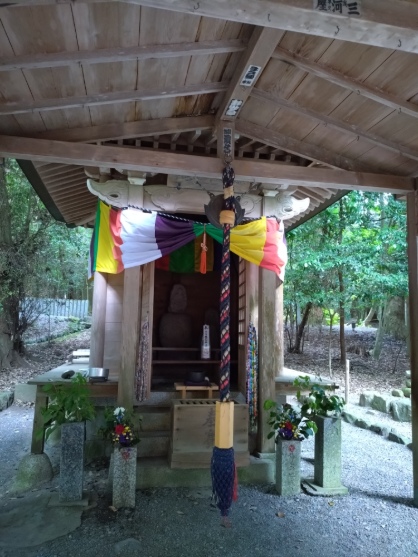
At one point, I nearly walked past a small Jizō statue without noticing. Just as I was about to pass, a breeze stirred the air, prompting me to turn back. (More on this rare image in the Highlights section.)
Throughout the grounds, I noticed more frog statues—a symbolic nod to Sarutahiko’s messengers. Nearby, high school students—likely from the archery club—were practicing kyūdō. There is also a traditional tea house donated by business leader Konosuke Matsushita, where visitors can enjoy matcha and sweets, made with the shrine’s pure water. Though I only peeked inside this time, I hope to return someday for a full experience, especially during one of the shrine’s grand annual festivals, when the grounds come alive with music, lion dances, and ceremony.
⛩️ Shrine Highlights
💧 Uzume-no-Miya & Kanae-no-Taki
Dedicated to Ame-no-Uzume-no-Mikoto, this small shrine stands beside the vigorous flow of Kanae-no-Taki.Visitors can touch the water here—a rare opportunity at the shrine—using it to purify stones, amulets, and bracelets. The name “Kanae” evokes the idea of wishes being fulfilled, adding a gentle layer of meaning to the cleansing ritual.


🙏 Healing Jizō
A rare Jizō statue from the late Heian period, wearing a crown—a feature seldom seen. It is enshrined with two other Jizō images and is revered for healing ailments of the head, eyes, ears, nose, brain, and teeth. Many visitors from across Japan come here to pray for recovery and protection.
🎐 Fan Monument (Ōgi-zuka)
Fans used in rituals, dances, and performances have long been regarded as sacred objects that invite the presence of the gods, serving as a source of inspiration for those pursuing the arts. In the path of artistic mastery, the fan is considered essential. Just as the way of the arts has no end, this monument was built to express gratitude and to honor the spirits of these fans. Worshippers bring their old fans here as an offering of thanks, then pray with new fans in hand for continued improvement and success in their craft.

🔮 Happiness Sphere
Known as a charm for matchmaking, marital harmony, and inviting good fortune, this polished sphere is gently stroked three times while reciting the phrase harai tamae, kiyome tamae, rokkon shōjō (“Purify my body, purify my spirit, and may my six senses be purified”) three times. Worshippers make their prayer with the belief that this act will invite happiness into their lives and help their heartfelt wishes come true.

🐸 Frog Statues & Symbolism
Scattered throughout the grounds are frog statues, symbolic messengers of Sarutahiko Ōkami. The Japanese word for frog, kaeru, also means “to return,” making them charms for safe journeys, the return of good fortune, and reunion with loved ones.


🏮 Shichifukujin – The Seven Lucky Gods
Within the shrine grounds, you can find statues of two of Japan’s Seven Lucky Gods, each believed to grant different blessings. (See Japan: Life & Spirit #3 for full explanation on Japan’s Seven Lucky Gods)
- Daikokuten (大黒天) – Associated with 招福開運 (inviting good fortune and opening the way to success) and 五穀豊穣 (abundant harvests), Daikokuten is often depicted with a mallet and rice bales, symbolizing prosperity and nourishment.
- Ebisu (恵比須神) – Known for blessings of 航海安全 (safe voyages), 商売繁盛 (thriving business), and 敬愛富財 (respected wealth), Ebisu is depicted holding a fishing rod and a sea bream, representing both good luck and bountiful catch.
You can find statues of two of Japan’s Seven Lucky Gods here. Coincidentally, my mother also has a combined statue of these two deities displayed in her home—a common pairing believed to bring both prosperity and safety.

🏯 Other Notable Spots
Path of Torii Gates — A serene avenue lined with tall cedar trees and multiple torii gates, leading visitors deeper into the spiritual heart of the shrine. The shifting sunlight through the leaves creates a mystical, ever-changing atmosphere.

Ryūja Shrine — Just beside Uzume-no-miya and near the waterfall stands the Ryūja-sha (龍蛇社), dedicated to the Dragon and Serpent deities.
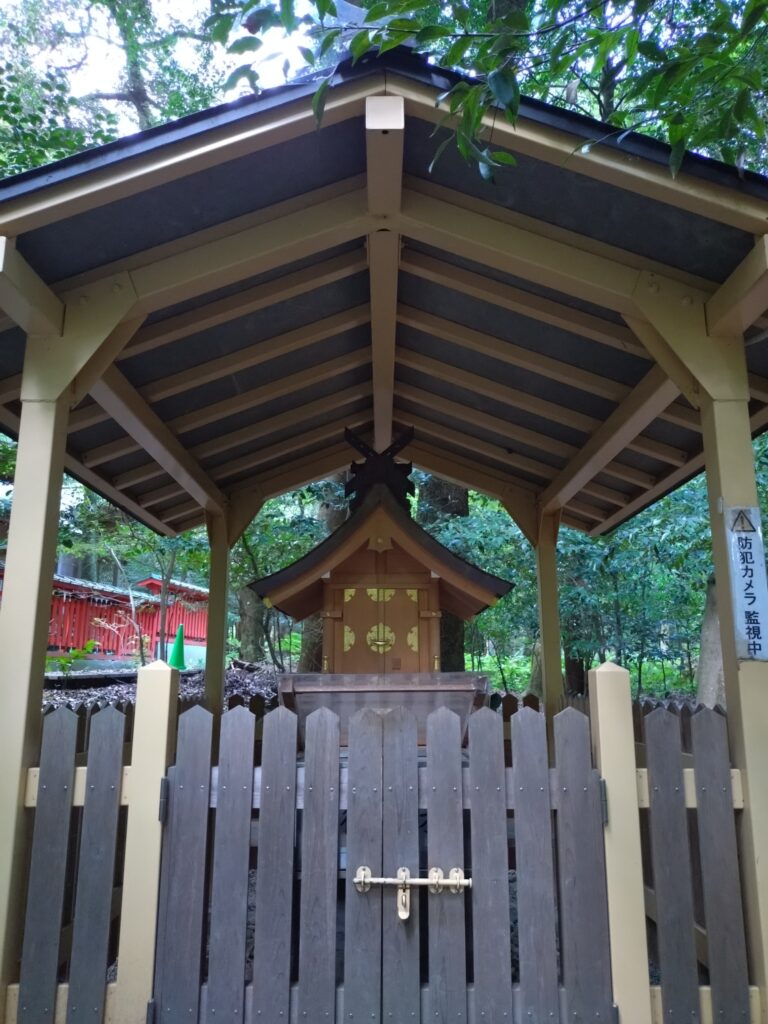
Ryūja Shrine Sign — This sign explains the enshrined deities: the Dragon God (龍神) associated with water protection and the Snake God (蛇神) linked to protection from earth-related calamities, as well as prosperity and health. Together, they embody the cycles of life, death, and rebirth.

🕊Kaha’s Note
At Tsubaki Grand Shrine, many magical moments unfolded—glimpses of nature’s vitality and a deep sense of sacred energy. I left feeling truly renewed.
There is something truly enchanting about frogs. On a previous trip, I saw one just outside my hotel—it jumped right in front of me out of nowhere.

At the time, I thought the connection was something entirely different… but now, I wonder if it might have been Sarutahiko Ōkami’s messenger all along. This is another mystery that will unfold…
🌟 Coming August 12th…
On August 12th at 9 PM (JST), I’ll be sharing a Special Lions Gate Message from Ame no Uzume no Mikoto and Sarutahiko no Ōkami — a rare blessing from the Divine Couple.
It’s a powerful message that came through the Oracle Dragons, and I believe it will reach you right on time.
If you have missed it, don’t worry — if you have found it, now may be your timing!
🔗Now available:
👉 Rainbow Awakening Messages│A Message from the Divine: A special Lionsgate Message from the Sun Goddess, Amaterasu
A powerful message of protection and healing filled with wisdom
👉 Rituals and Reverences #3│Scented Vessels and Incense Rituals Exploring simple, creative ways to burn incense with intention.
🌈Explore More:
Want to explore more places and stories in Japan?
👉 [Return to the main page](https://8rainbow.work)


コメント