
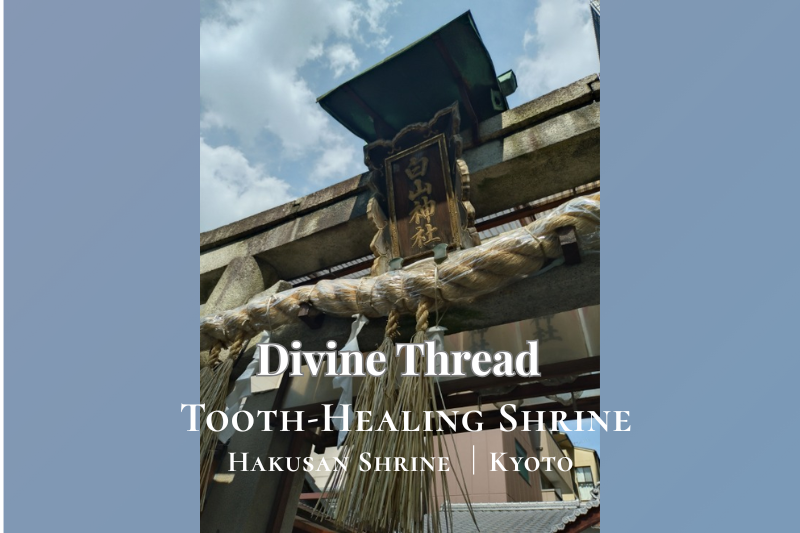
🌿Lead-in
Have you ever heard of a shrine dedicated to healthy teeth?
Japan is home to countless shrines where people pray for good health, recovery from illness, and protection in daily life. But a shrine specifically associated with tooth healing is something quite unusual.
Earlier this spring, I happened to learn about one by chance. A little while later, several of my teeth began to ache. At first, I thought it might simply be tiredness and decided to wait, but the discomfort didn’t go away, so I visited the dentist.
Of course, proper dental treatment is the most important step. Still, I remembered the tooth-healing shrine I had heard about and thought that, even if only for peace of mind, I would like to offer a quiet prayer for a smooth recovery.
While searching for a similar shrine in Kyoto, I discovered Hakusan Shrine. Then I noticed that Kukurihime no Mikoto was enshrined there—a deity I had encountered before during my visits to other sacred places. At that moment, I felt, “This is the place.”
Today, I’d like to introduce this small but quietly cherished shrine in the heart of Kyoto.
⛩️ A Small Shrine in the Heart of Kyoto
Just a two-minute walk from Kyoto Shiyakusho-mae Station, Hakusan Shrine (白山神社) stands quietly among the busy streets of central Kyoto.
Although the shrine grounds are quite small, they are beautifully maintained.
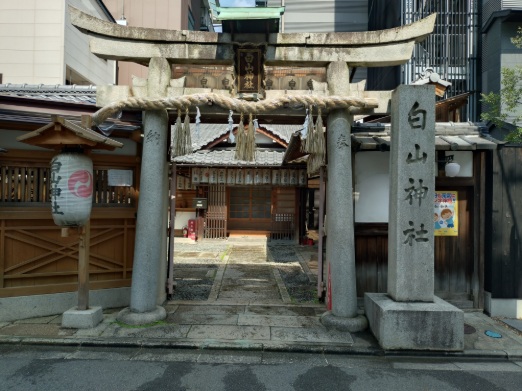
Hakusan Shrine stands quietly in the heart of Kyoto, just a short walk from Kyoto Shiyakusho-mae Station. Though modest in size, it has preserved centuries of faith and tradition.
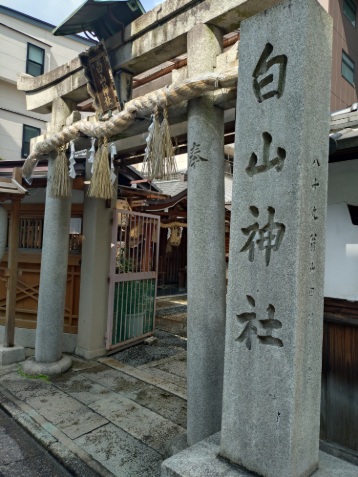
A simple torii gate welcomes visitors into a peaceful sanctuary, where the busy streets of Kyoto quickly fade into the background.
Stepping beneath the torii, I found a calm and welcoming space tucked away within the city.
Today, many people visit Hakusan Shrine to pray for healthy teeth, a smooth dental treatment, and good oral health. Yet behind this quiet shrine lies a history that stretches back nearly 850 years.
🏔️ A Shrine with Roots in Hakusan Faith
According to the shrine’s tradition, the origins of Hakusan Shrine date back to 1177.
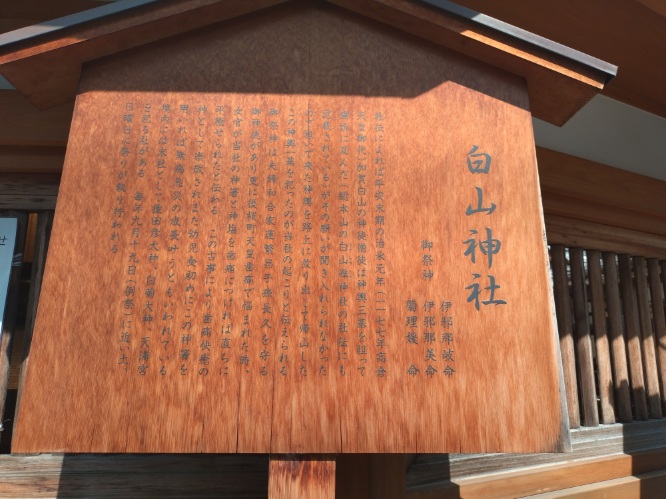
Hakusan Shrine has preserved the faith of Mount Hakusan in Kyoto ever since.
It is said that three sacred mikoshi associated with Hakusan Gongen in Kaga Province were brought to Kyoto. On their journey back, one of the mikoshi was left behind near the present site of the shrine. Local residents later built a small sanctuary to enshrine it, and this is said to mark the beginning of Hakusan Shrine.
The shrine takes its name from Mount Hakusan, one of Japan’s most sacred mountains, and continues to preserve the tradition of Hakusan worship in the heart of Kyoto.
Today, Hakusan Shrine enshrines Izanagi no Mikoto (伊邪那岐命), Izanami no Mikoto (伊邪那美命), and Kukurihime no Mikoto (菊理媛命), the principal deity of Hakusan worship.
Together, these deities are traditionally associated with restoring harmony in relationships, blessing happy marriages, supporting family prosperity, and watching over future generations.
🦷 The Legend of Tooth Healing
How did Hakusan Shrine become known as a shrine dedicated to healthy teeth? According to local tradition, the answer lies in a story that has been passed down since the Edo period.
It is said that Empress Go-Sakuramachi(後桜町天皇), the last reigning empress in Japanese history, once suffered from a toothache. A court attendant brought sacred chopsticks and sacred salt from Hakusan Shrine to the Imperial Palace. After the sacred salt was applied to the aching tooth, the pain was said to have disappeared. From that time on, Hakusan Shrine became known as a place where people pray for healthy teeth and relief from toothache.
Today, this tradition continues. Many people still visit the shrine to pray that a toothache will not become worse, while others come before or during dental treatment, hoping for a smooth recovery or successful treatment.
🦊👺Other Sacred Deities Within the Shrine
Although Hakusan Shrine is dedicated to the deities of Hakusan worship, I also noticed another small sanctuary within the grounds.
The plaque above it bears the names Sarutahiko Ōkami, Shiragiku Ōkami, and Tenmangū, showing that several traditions of worship continue side by side within this compact shrine.
Even in a small space, Hakusan Shrine reflects the rich layers of Japanese faith, where different deities are quietly honored together.
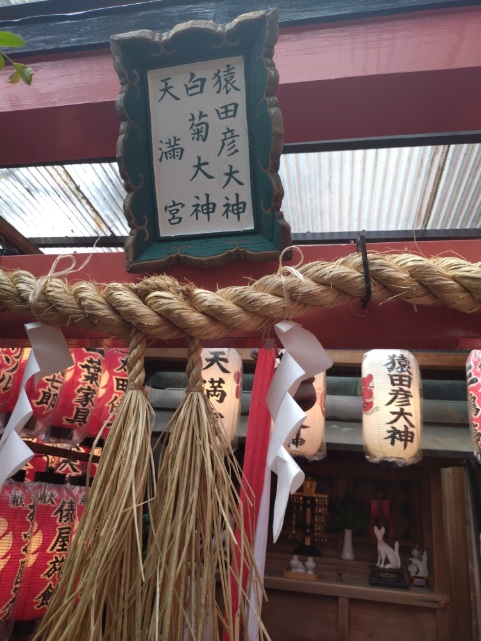
The plaque above the sanctuary bears the names of Sarutahiko Ōkami, Shiragiku Ōkami, and Tenmangū.
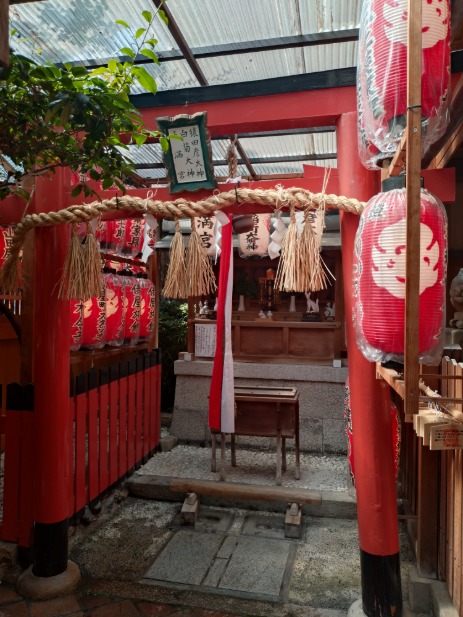
A small sanctuary quietly tucked within the shrine grounds.
I was also told that Shiragiku Ōkami was invited here from one of the auxiliary shrines of Fushimi Inari Taisha. Having visited Fushimi Inari only recently, it felt like another quiet thread connecting two sacred places.
🥢A Pair of Long-Life Chopsticks
Before leaving the shrine, I noticed a pair of Long-Life Chopsticks (Chōju-bashi) among the shrine’s sacred items.
According to the information at the shrine, these chopsticks are associated with prayers for health, longevity, and the happiness of one’s family. They are also used during Okuizome, a traditional Japanese ceremony celebrating a baby’s first symbolic meal and offering wishes for good health and healthy growth.
I decided to bring a pair home as a quiet reminder to appreciate everyday health. Sometimes, a small keepsake from a meaningful place can gently remind us of what truly matters.
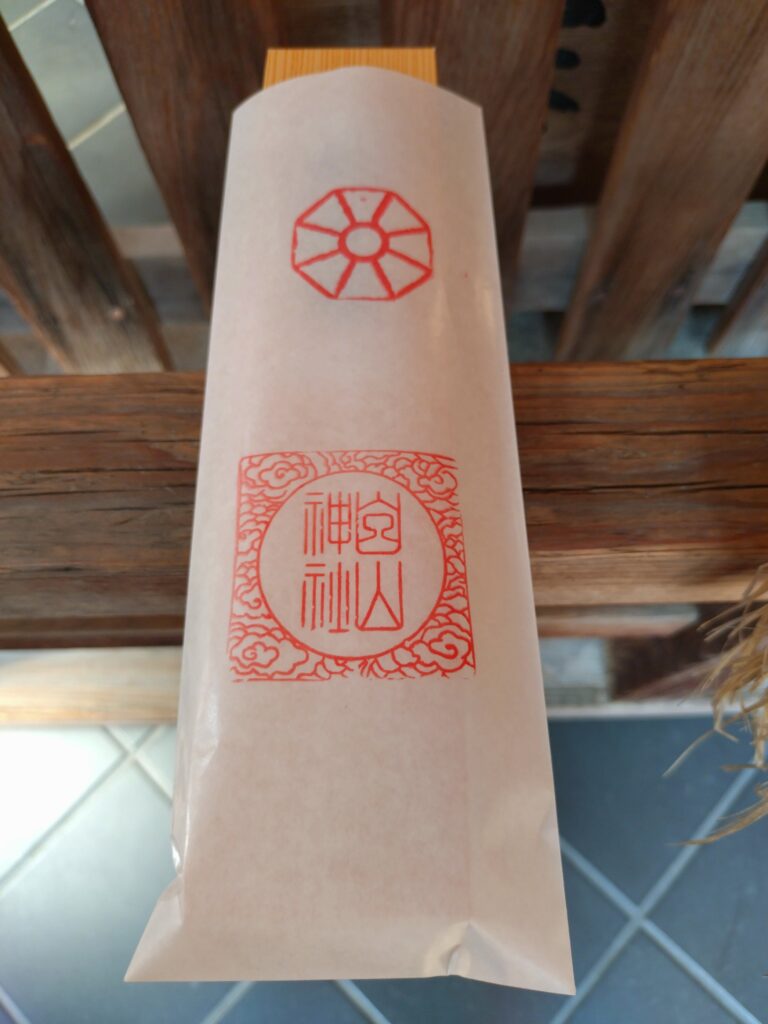
Before taking them home, I quietly offered the Long-Life Chopsticks once more before the shrine, together with a final prayer for healing and good health.
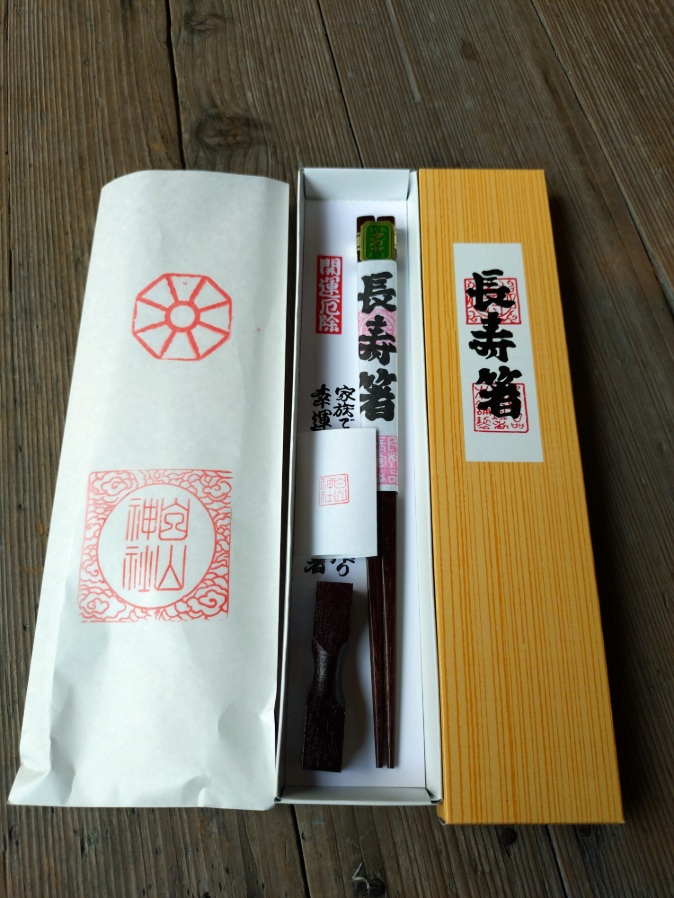
A pair of Long-Life Chopsticks, traditionally associated with prayers for health, longevity, and family well-being.
💙Kaha’s Note
Before this visit, I was fortunate to be introduced to a dentist with an excellent reputation by someone I know. Looking back, I feel that perhaps the blessings had already begun before I even arrived at Hakusan Shrine.
Since bringing the Long-Life Chopsticks home, I have been using them every day together with the chopstick rest I received at the shrine. Each meal has become a gentle reminder to take better care of my health, and I like to believe that healing is already taking place, one small step at a time.
As for Kukurihime no Mikoto, I have a feeling our paths will cross again. Perhaps I’ll share more about her in a future Divine Thread.
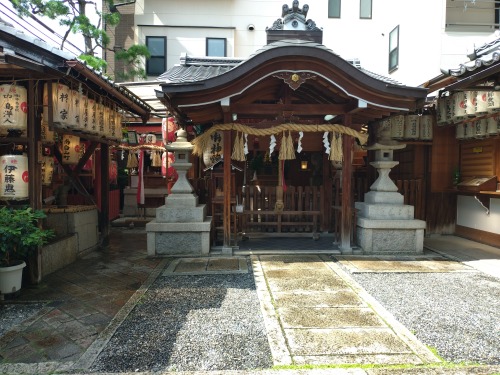
Before leaving, I sat quietly for a while, taking in the peaceful atmosphere of this small shrine in the heart of Kyoto.
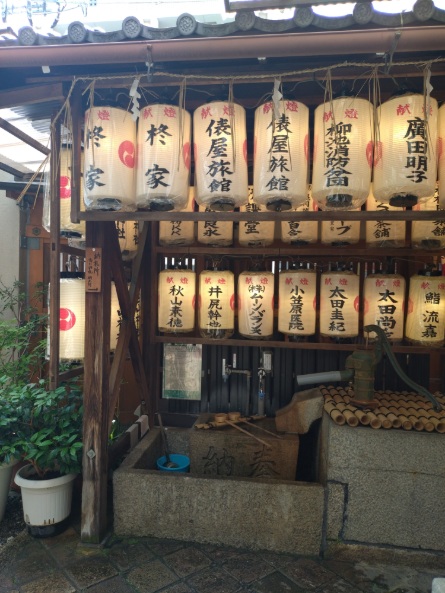
Even the lanterns quietly reflected the warmth of the local community that has supported this shrine for generations.
I hope Hakusan Shrine will continue to be a place where people can quietly bring their hopes for healing, healthy teeth, and everyday well-being.
🌈 Explore More
Rainbow Awakening shares quiet journeys through Japan’s sacred places, seasonal beauty, traditional culture, and the small encounters that make each path meaningful.
Explore more stories and continue following the woven threads below.

コメント