
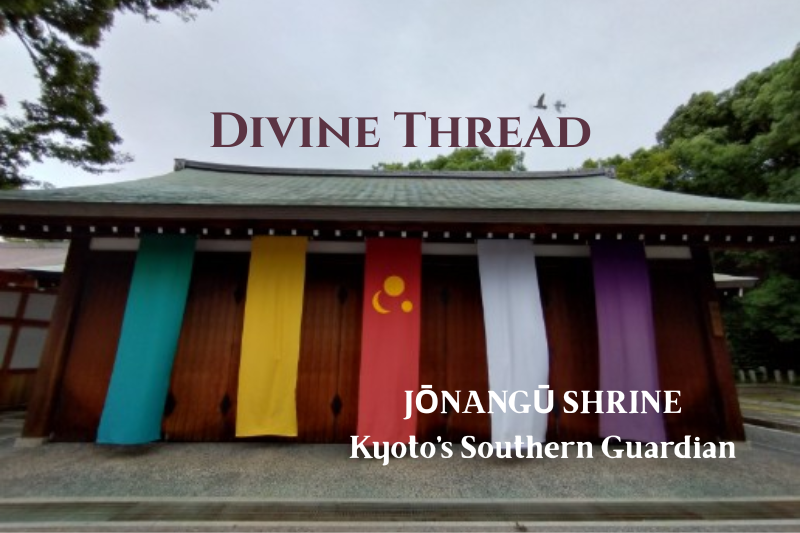
🍀 Lead-in
I first came to Jōnangū Shrine for its autumn flowers and the graceful chrysanthemum dance. But as I walked through the grounds, I discovered another side of the shrine: a place shaped by the history of Kyoto, prayers for safe journeys, and a spring with an old healing story.
Founded, according to shrine tradition, to watch over the new capital of Heian-kyō, Jōnangū enshrines three deities. Its unusual crest brings together the sun, the moon, and a single star.
Let’s begin at the shrine gates and explore the stories behind this guardian of Kyoto’s south.
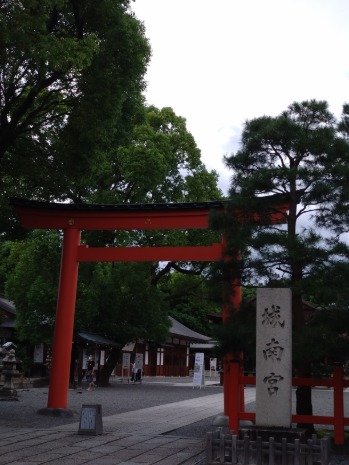
Entering Jōnangū Shrine — Guardian of Kyoto’s Southern Gate
⛩️ Three Deities Watching Over the Capital
Jōnangū means “the shrine south of the capital.” According to shrine tradition, it was founded when Japan’s capital moved to Heian-kyō in 794, with prayers for the peace of the new city and the protection of the country.
Three deities are enshrined here: Kuninotokotachi no Mikoto (国常立尊), Yachihoko no Kami (八千矛神), and Okinagatarashihime no Mikoto (息長帯日売尊). Yachihoko is another name for Ōkuninushi, while Okinagatarashihime is also known as Empress Jingū.
Together, they are revered as Jōnan Ōkami (城南大神). Walking beneath the vermilion torii, I began to see the shrine as more than a beautiful garden: it is a place whose story reaches back to the beginnings of Kyoto.

Beyond the Torii — Toward Jōnangū Shrine
☀️🌙⭐ The Sun, Moon and a Star
A striking red banner at Jōnangū displays the shrine’s Sankō crest (三光の御神紋). Its three shapes represent the sun, the moon, and a single star.
According to the shrine, the crest comes from the banner flown on the boat of Empress Jingū, one of Jōnangū’s three enshrined deities. Together, these lights of the sky symbolize the shrine’s protection extending through both day and night.
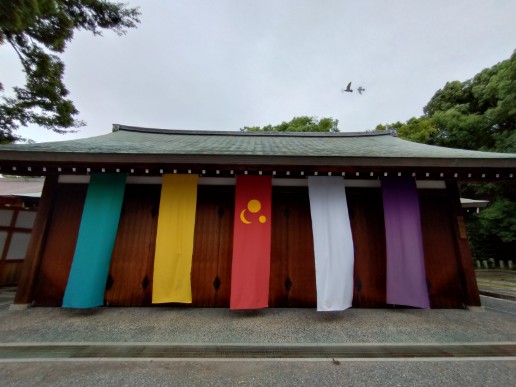
The Sankō Crest Among the Shrine’s Colorful Banners
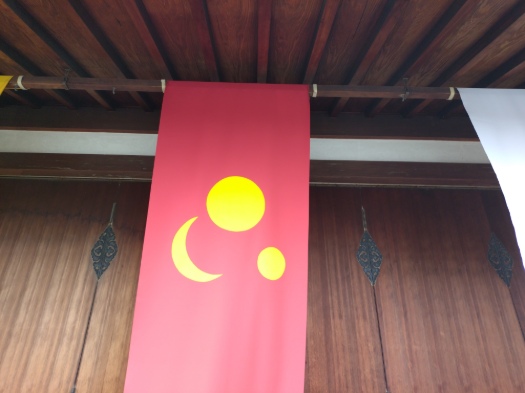
A Closer Look at the Sun, Moon and Star
🧭 Hōyoke — Prayers for a Safe Journey
Jōnangū is known as a shrine of hōyoke (方除), or protection from misfortune associated with directions.
In the late Heian period, people sometimes practiced katatagae (方違え): if a destination lay in a direction considered unlucky, they would first travel elsewhere and stay overnight before continuing their journey. The nearby Jōnan Imperial Villa served as one such place to stay. It was also a departure point for imperial pilgrimages to Kumano, where travelers prayed for safety before setting out.
Today, people continue to visit Jōnangū to pray for protection during travel, a move, or construction work. The centuries have changed how people journey, but the wish to arrive safely feels familiar.
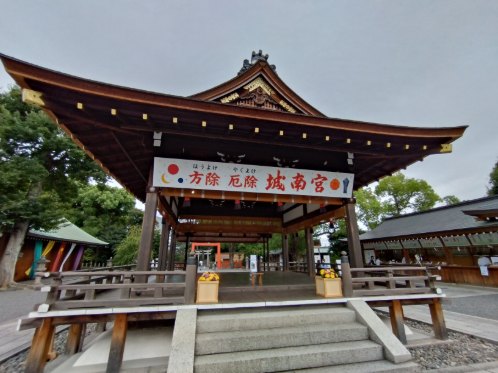
The Kaguraden at Jōnangū, Where Miko Kagura Is Performed
🏯 Echoes of the Jōnan Imperial Villa
In the late Heian period, retired emperors Shirakawa and Toba built Jōnan Rikyu, also known as Toba Rikyu, around the shrine. Jōnangū became the guardian of this vast imperial villa.
The villa was more than a residence. It became a center of political and cultural life, hosting poetry gatherings, elegant celebrations, and boat excursions. Standing on the shrine grounds today, it takes some imagination to picture the scale and splendor of that earlier world.

A Stone Marker for Jōnan Rikyu Beneath the Pine Trees
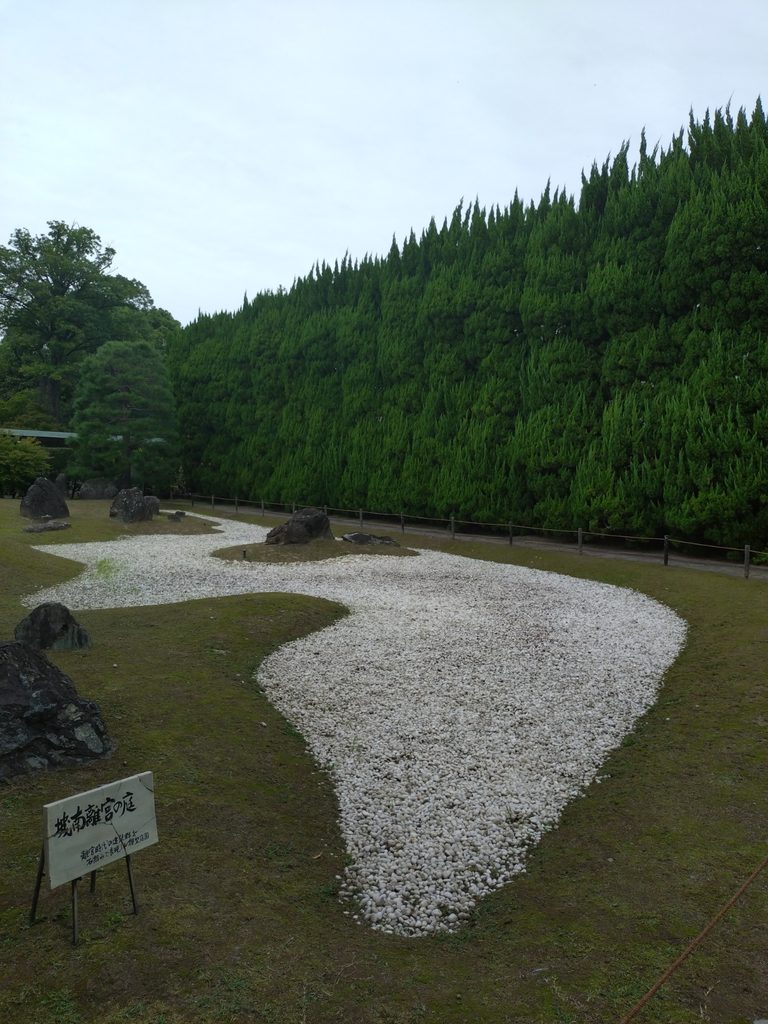
Jōnan Rikyu Garden — A Landscape Evoking the Imperial Villa
🌿 Walking Through the Garden of The Tale of Genji
From the Jōnan Imperial Villa, the story continues into Jōnangū’s garden. Known as the Garden of The Tale of Genji (Genji Monogatari Hana no Niwa), it brings together plants mentioned in the classic novel with ponds and flowing water.
As I followed the paths, the garden kept changing around me: flowers beside the pond, grasses reflected in the water, and small details waiting at the edge of the stream. Fan-shaped signs introduced some of the plants and their connections to the story.
It was a lovely place to slow down and notice the season, one turn at a time.
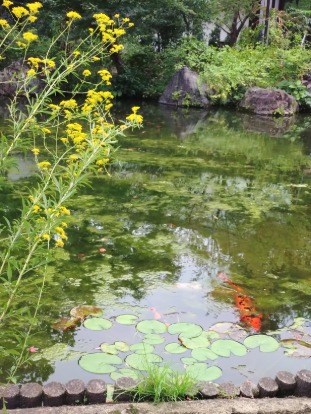
Flowers and Koi Beside the Garden Pond
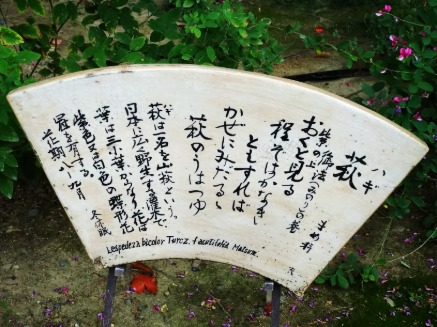
Fan-shaped signs throughout the garden introduce its plants and flowers.
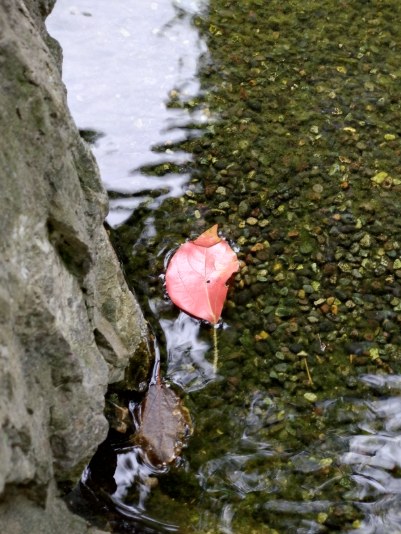
A Fallen Leaf in the Flowing Water
🌸 See More from This Visit
For a glimpse of the flowers, pines, and ponds from this visit, look for “A Glimpse of Autumn at Jōnangū Shrine” on my Instagram page.
💧 Kikusui Wakamizu — A Spring with a Healing Story
At Jōnangū’s chōzuya (手水舎), where visitors purify their hands before worship, flows a spring called Kikusui Wakamizu (菊水若水).
The sign beside the spring tells of the retired Emperor Reigen, whose toothache is said to have gone away after he drank the water. It also describes people coming to the shrine in the belief that the water could help those who were ill.
A tradition of taking the water home after praying has also been passed down. On my visit, a sign directed anyone wishing to collect water to go around to the back of the chōzuya.
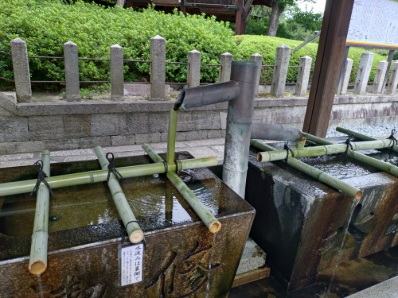
Kikusui Wakamizu Flowing at the Shrine’s chōzuya
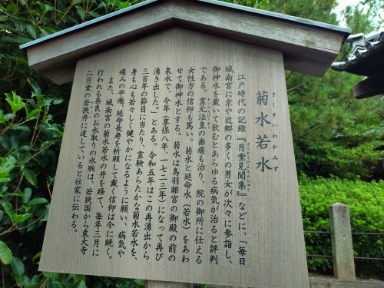
The Story of Kikusui Wakamizu
💗 Kaha’s Note
I came to Jōnangū to see the chrysanthemums and the miko dance. As I walked on, the shrine revealed more of its story: three deities once invoked to protect the new capital, a crest of the sun, moon and star, and a spring that people have long visited with prayers for healing.
The flowers first drew me here. The history and Kikusui Wakamizu gave me more to think about on my way home.
🌈 Explore More
Jōnangū has another story to share. Continue with the autumn flowers and chrysanthemum dance I encountered on this visit.
🏵️ Seasonal Gallery #2 │ Autumn Flowers & Sacred Dance at Jōnangū Shrine
Explore photographs of the miko kagura, chrysanthemums, and four of Japan’s Seven Flowers of Autumn.
🎥 Watch the Miko Dance
See moments from both the fan dance and the bell dance in this short video.
At Rainbow Awakening, I share journeys through Japan’s sacred places, seasonal traditions, and the small discoveries found along the way.
🔗 Return HOME


コメント