
🌿 Lead-in
When people come to visit Naikū,
many seem to head toward a single destination—
the Shōgū, the main sanctuary where Amaterasu Ōmikami is enshrined.
Even knowing that there are other sacred places within the grounds,
some walk directly toward the center, eager to approach the Sun Goddess.
There is nothing wrong with that.
The heart naturally draws us forward.
And yet, Naikū is not defined by one structure alone.
Prayer here does not gather at a single point.
It unfolds in layers—
around the center,
beside the path,
within wind and stone.
The divine does not stand in isolation.
It exists in relationship.
And in Naikū, that relationship unfolds in layers.
🌲Shōgū (正宮) — The Sacred Sanctuary
At the heart of Naikū stands the Shōgū,
where Amaterasu Ōmikami is revered in her gentle aspect, often described as Nigimitama (和魂)—the peaceful, harmonious spirit.
Visitors ascend the stone steps and bow before offering prayer.
Standing directly before the sanctuary, a white curtain hangs, softening what lies beyond.
The structure itself is not entirely hidden.
If one shifts slightly to the side, the wooden buildings can be seen.
Yet from the center, the view remains veiled.
When the wind stirs, the curtain may lift for a brief moment—
never fully, never for long.
The divine is not fully revealed.
It is approached with reverence.
A guide once told me that here, there is no need to state one’s name or address.
In the presence of Amaterasu Ōmikami, one feels already known.
Prayer begins with gratitude.
If a request follows, it is said to begin with the well-being of the world,
the peace of the nation,
and only then, one’s personal hopes.
Some believe that personal wishes are better offered at one of the Betsugu—
the subsidiary shrines within the grounds.
Each person carries their own way.
As for me, I begin with thanks.
I pray for the earth and for humanity as a whole,
and bring my personal wishes to Aramatsuri-no-miyaーanother of her shrines.
Those who choose to make a formal offering may step slightly closer,
standing with deeper intention.
Yet the innermost space remains reserved for those who serve here.
I like to come early in the morning,
when there are fewer people and the air feels especially clear.
Even from a distance, I feel connected to the Goddess.
And when the wind rises and lifts the veil high,
I feel welcomed—
as if, for a brief moment,
something has quietly answered.
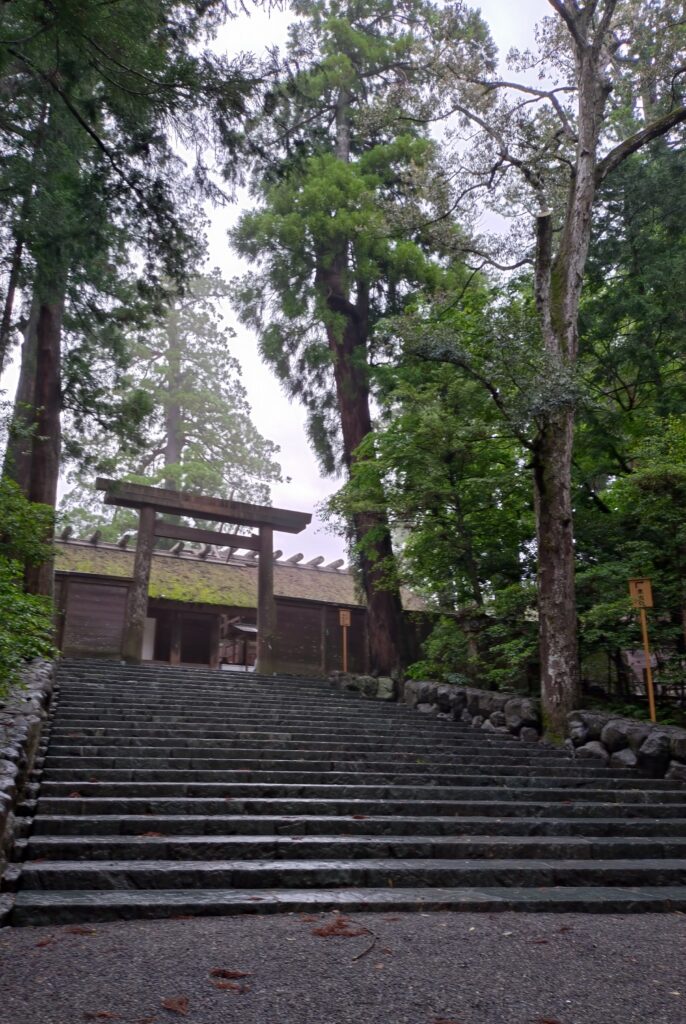
The Shōgū within the forest.
Approach begins long before the steps.
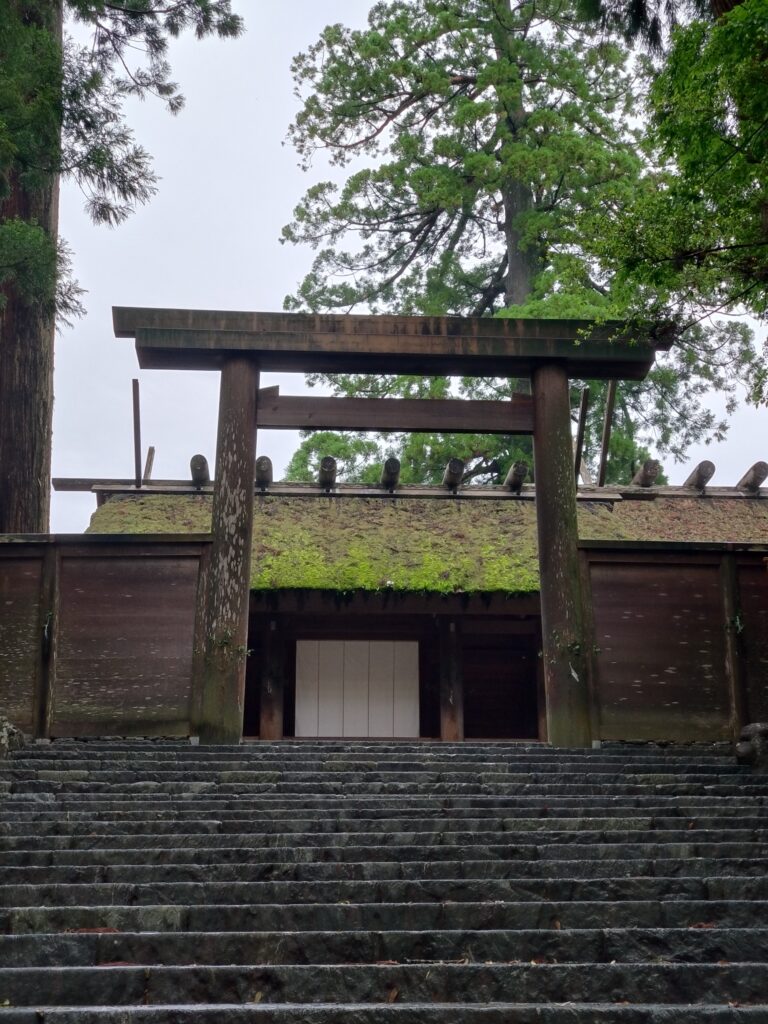
From the foot of the stone steps.
Near, yet never fully revealed.
🌳Aramatsuri-no-miya (荒祭宮)— The Inner Sanctuary
A little apart from the Shōgū,
beyond the main path and slightly removed from the steady flow of visitors,
stands Aramatsuri-no-miya.
There are fewer people here.
One can take time.
Prayer does not feel rushed.
If the Shōgū feels bright and expansive—
filled with upward light—
this place feels closer to the earth.
Grounded. Steady. Strong.
Here, Amaterasu is honored in her Aramitama (荒御魂)—
the dynamic, initiating aspect of her spirit.
The word ara does not imply anger.
Rather, it refers to a force that manifests—
the energy that protects, acts, and brings things into motion.
For this reason, many visit this shrine
when they seek strength to begin something new
or resolve to move forward through change.
This sanctuary may appear modest in scale,
yet its significance has long been profound.
Even today, one of the most important rites of Ise—
the Kanmisosai (神御衣祭)—
is performed only at the Shōgū and here at Aramatsuri-no-miya.
In this ceremony, sacred garments known as kan-miso (神御衣) are offered to Amaterasu.
Each year, on May 14 and October 14,
the garments are presented at the Shōgū (Kōtai Jingū)
and at Aramatsuri-no-miya,
the First Betsugū where the Aramitama of Amaterasu is enshrined.
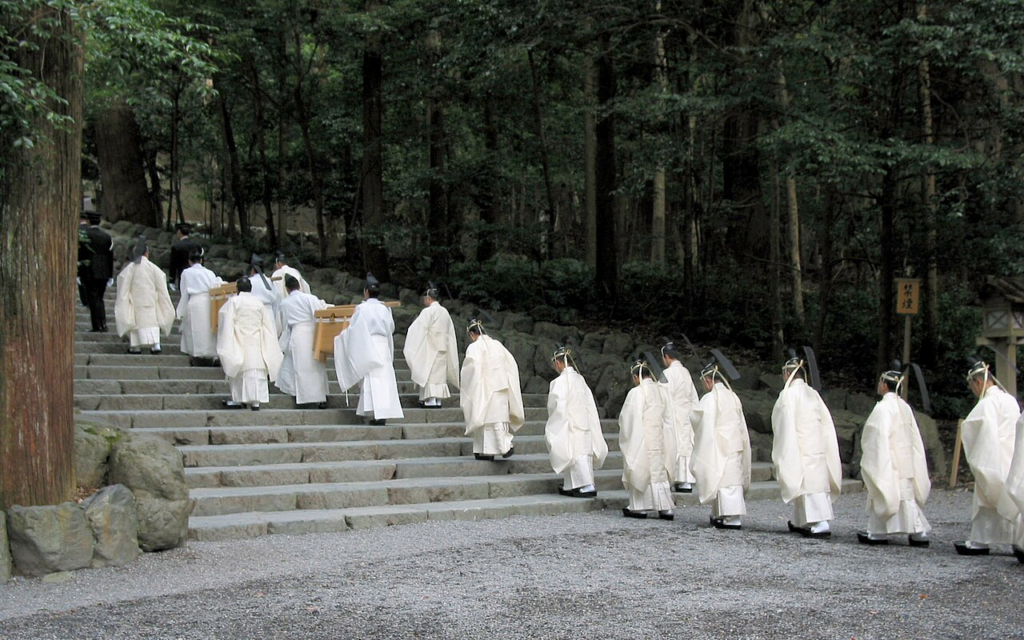
Kanmisosai at Naikū / Aramatsuri-no-miya
Photo licensed under CC BY-SA / CC BY 2.1 JP — image by Tawashi2006 / Wikimedia Commons
In preparation for these offerings,
silk called nigatae (和妙) and hemp called aratae (荒妙)
are ritually woven and offered.
The sacred garments themselves are not publicly displayed,
and photographs of the actual cloth are rarely released. Their preparation and offering remain largely unseen.
This rite is directed only to Amaterasu Ōmikami—
not to the deities of the Outer Shrine or the other subsidiary shrines.
Though sometimes described today as a seasonal “change of garments,”
its original meaning runs deeper.
By offering newly prepared sacred materials,
the rite expresses a wish
that the divine vitality of Amaterasu
may be further strengthened and renewed.
That Aramatsuri-no-miya shares this rite with the Shōgū
shows that this small sanctuary is not secondary—
but integral to the living heart of Naikū.
And yet, it remains quiet.
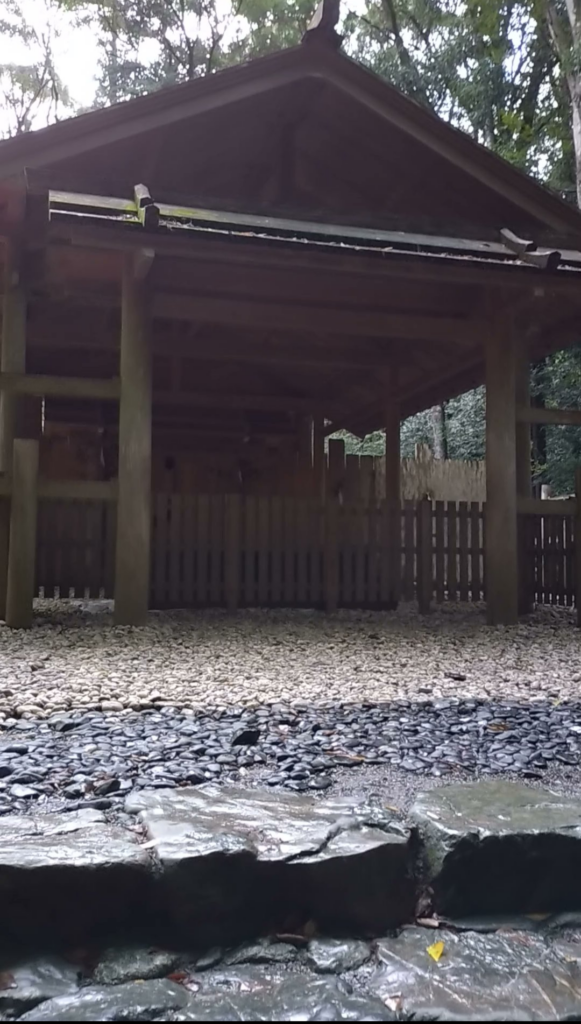
Aramatsuri-no-miya, the First Betsugū of Naikū.
Small in scale, vast in presence.
A small stream flows nearby.
With fewer footsteps passing through,
the forest feels closer.
If the Shōgū opens toward the sky,
Aramatsuri-no-miya gathers inward.
Light and motion.
Expansion and grounding.
The vast and the intimate—
held in quiet oneness.
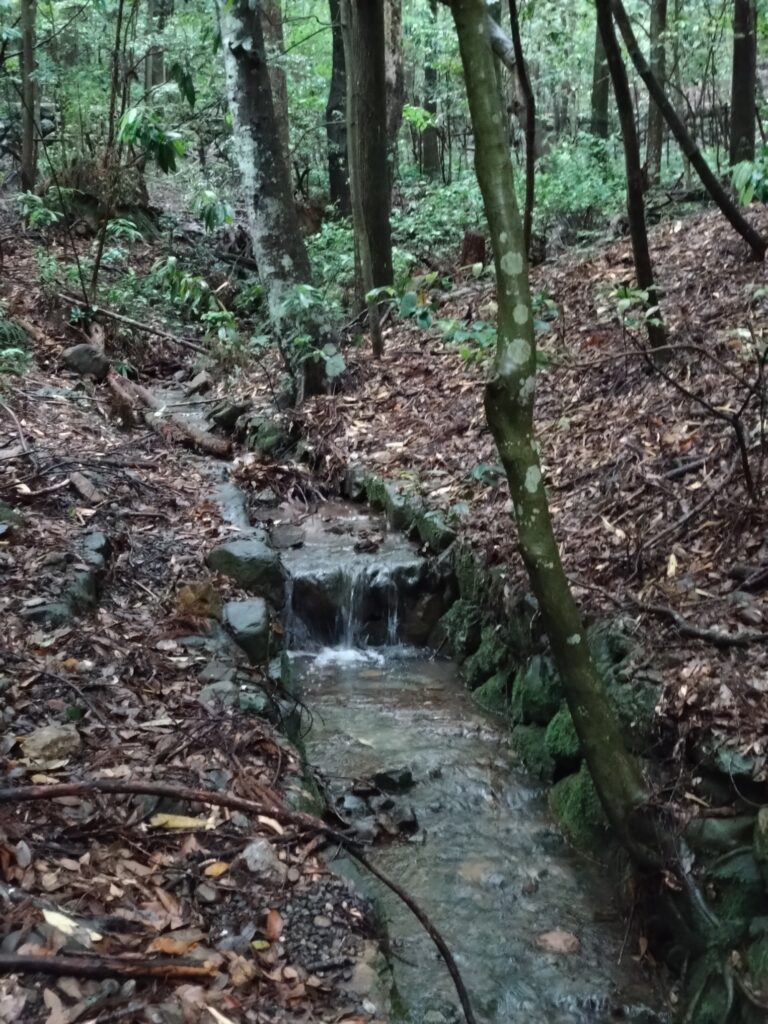
A small stream beside Aramatsuri-no-miya.
Water and earth in quiet conversation.
🌟 Kazahinomi-no-miya (風日祈宮) — The Presence in Wind and Rain
A little beyond the central sanctuaries,
across the quiet Kazahinomi-no-miya Bridge,
stands Kazahinomi-no-miya (風日祈宮).
Here are enshrined
Shinatsuhiko-no-mikoto (級長津彦命)
and
Shinatobe-no-mikoto (級長戸辺命)—
deities who govern wind and rain,
children of Izanagi-no-mikoto (伊弉諾尊).
Wind and rain work in balance—
bringing nourishment,
yet reminding us of power beyond control.
In an agrarian culture,
such forces were never secondary.
They shaped harvests, survival, and gratitude.
For this reason, these deities have long been honored
with rites conducted in the same careful manner
as those of the main sanctuary.
Both deities are described simply as gods of wind and rain.
Traditional sources do not clearly divide their roles.
However, the name Shinatsuhiko carries the masculine suffix “-hiko,”
while Shinatobe may reflect a feminine form.
For this reason, they are sometimes understood as a paired presence—
a balance of complementary forces within wind and rain.
Historically, in the late 13th century,
when foreign fleets approached Japan’s shores,
a great storm arose.
This wind later came to be remembered as kamikaze—
a “divine wind.”
In gratitude for what was perceived as protection,
the shrine was elevated in status in 1293.
Yet beyond recorded history,
there is another way people speak of wind.
Some say the deities travel upon it.
Also, at times in Japan,
when rain begins though the sky was clear,
or sunlight breaks suddenly through falling drops,
it is said that the divine presence has drawn near—
a sign of welcome.
Standing in sacred places,
one may feel a current of air
that was not there a moment before—
leaves tremble, grasses bow,
skin registers something unseen.
Perhaps wind and rain
are not only natural phenomena,
but gentle ways
through which the divine makes itself known.
The deities here help me sense the sacred in motion —
through wind, through rain,
and through the subtle movements of presence.
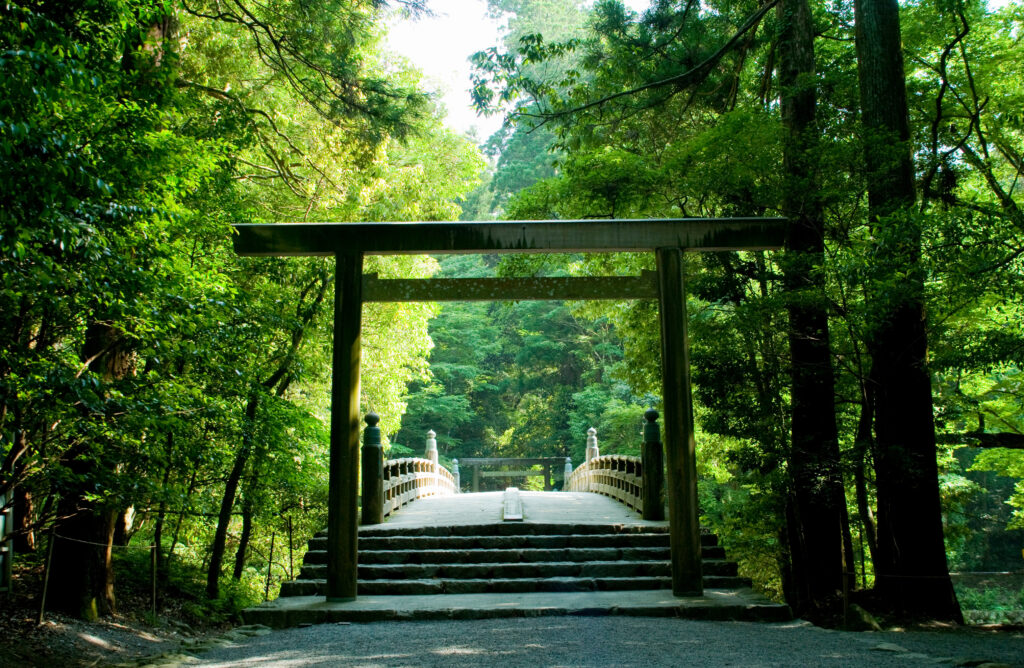
Kazahinomi-no-miya Bridge, or Isuzu Bridge —
Crossing toward the shrine of wind and rain.
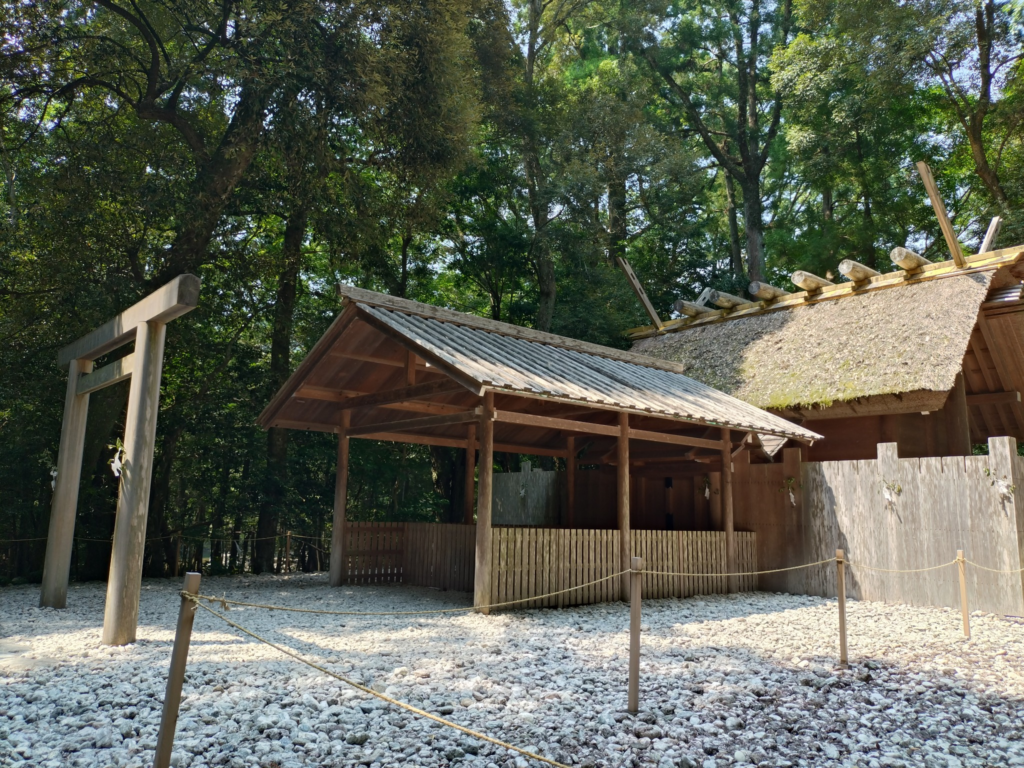
Kazahinomi-no-miya —
Where the unseen moves quietly, yet unmistakably.
🎥 Watch the living presence in motion
A sudden rain within the sacred grounds of Naikū —
felt not in stillness, but through wind and water:
👉 Watch on YouTube ▶️ 【Spiritual Japan】Rain of Blessing at Ise Jingu ☔️ │ Rain Sounds & ASMR │ Sacred Portal │ Mie
🪨 Boundaries Once Kept — The Monk’s Distance
Before reaching the deepest sanctuaries,
there are spaces that hold memory.
Today, anyone may walk the grounds of Naikū.
The forest welcomes quietly.
And yet, in earlier centuries,
there were those who could not proceed all the way to the Shōgū.
Buddhist monks were once restricted from entering the most sacred precincts.
This was not hostility.
It was a matter of purity — kegare (穢れ).
In Shinto understanding,
kegare does not mean “sin.”
It refers to conditions associated with death, suffering, or certain ritual states —
energies that require cleansing before approaching the kami.
Buddhist monks, whose lives often involved funerary rites,
were considered to carry such ritual impurity.
So they would stop at a distance.
They prayed from afar.
A guide once told me — almost humorously —
that there was even a wig shop near the shrine.
Some monks, longing to approach more closely,
would disguise themselves in order to pass further inside.
The story was told as fact,
yet with a smile —
as if devotion sometimes finds creative ways
to move closer to what it loves.
There was even a well-known monk who lamented this separation —
singing of longing to draw near,
yet knowing he was not permitted.
Desire and distance.
Devotion and boundary.
Even in exclusion,
there was reverence.
Standing in that clearing,
I imagine those who once waited there—
so close to the center,
and yet held at the threshold.
Longing has its own kind of prayer.
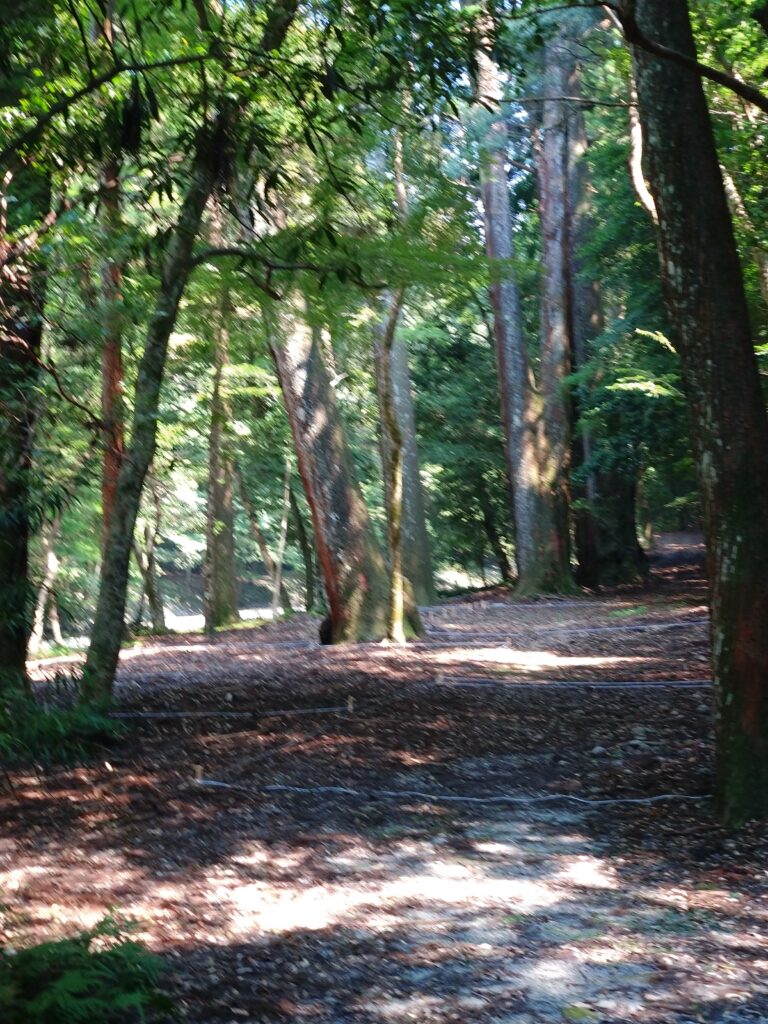
A quiet clearing near Kazahinomiya Bridge—
a place where some once paused,
so near, yet unable to go further.
🪨 Shishin (四至神) — Guardians of the Sacred Ground
On the eastern side of the inner grounds,
there is a place many visitors pass
without noticing.
No grand structure marks it.
No enclosing fence.
Only stone.
This is Shishin (四至神) —
the deities who protect the sacred ground of the shrine.
The word shishi refers to the four directions
that define the invisible limits of the shrine’s holy space.
They protect the perimeter of the divine realm.
There is no shrine building here,
no ornament,
nothing that draws the eye.
And yet,
they are approached with the same reverence.
Originally, such guardian deities were enshrined
in different places throughout the sacred grounds.
In later centuries,
they were gathered and established here.
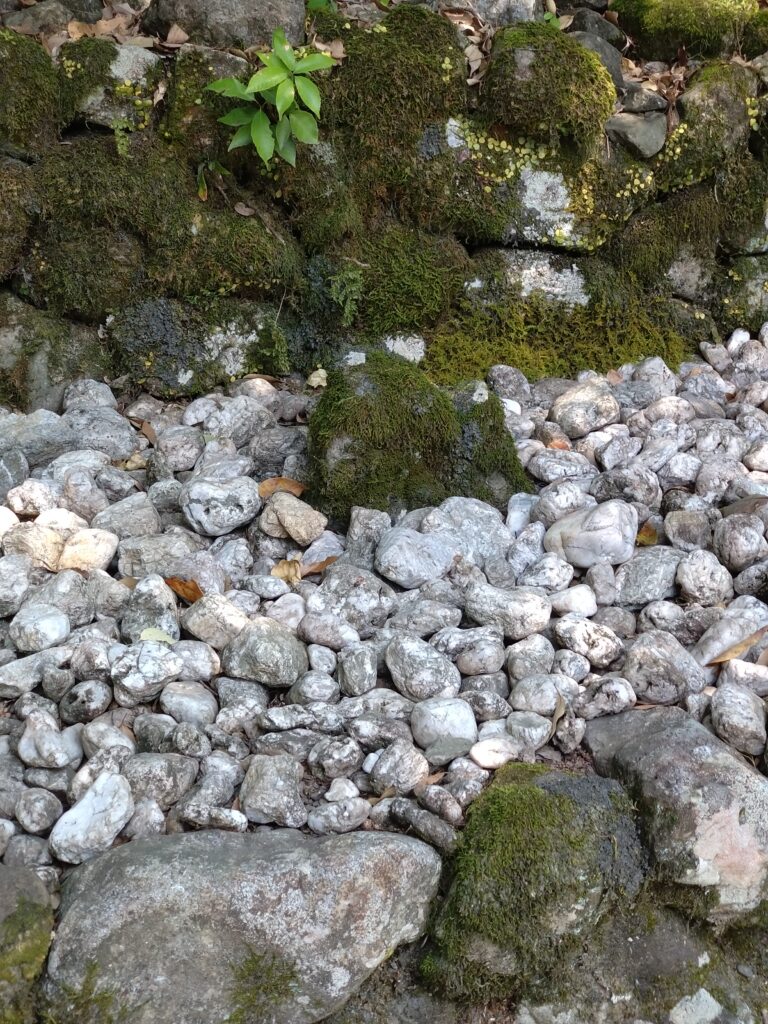
Quiet protectors of this sacred ground.
Small.
Unassuming.
Easily overlooked.
And yet,
what protects this sacred land
often remains unseen.
We cannot underestimate what appears small.
Everything can become a point of divine connection —
holding a power beyond measure.
The sacred is not only in what rises high,
but in what remains almost hidden.
🍃Kaha’s Note— A Day Woven in Presence
Before leaving Naikū,
I often find myself lingering.
A day spent within these vast, nature-filled grounds
offers more than a single point of prayer.
There are camellias in bloom,
cedar trees rising tall,
fallen leaves soft underfoot.
Ponds and rivers.
Birdsong.
Moss-covered stones.
Ancient trees.
Wind moving through branches.
Rain that begins without warning.
The sacred horse standing quietly in the stable.
Sunlight at dawn.
Clouds at dusk.
Everything feels connected.
Even when returning to the same place,
it is never the same.
Each visit carries the feeling of ichi-go ichi-e —
a once-in-a-lifetime encounter.
And in that shifting moment,
the presence of the divine
becomes something steady within the heart.
Everything feels connected.
Not arranged in hierarchy,
but woven together.
The divine does not stand alone.
It lives in relationship—
with other deities,
with the land and the living world,
with time,
and with those who come to pray—
and with me.
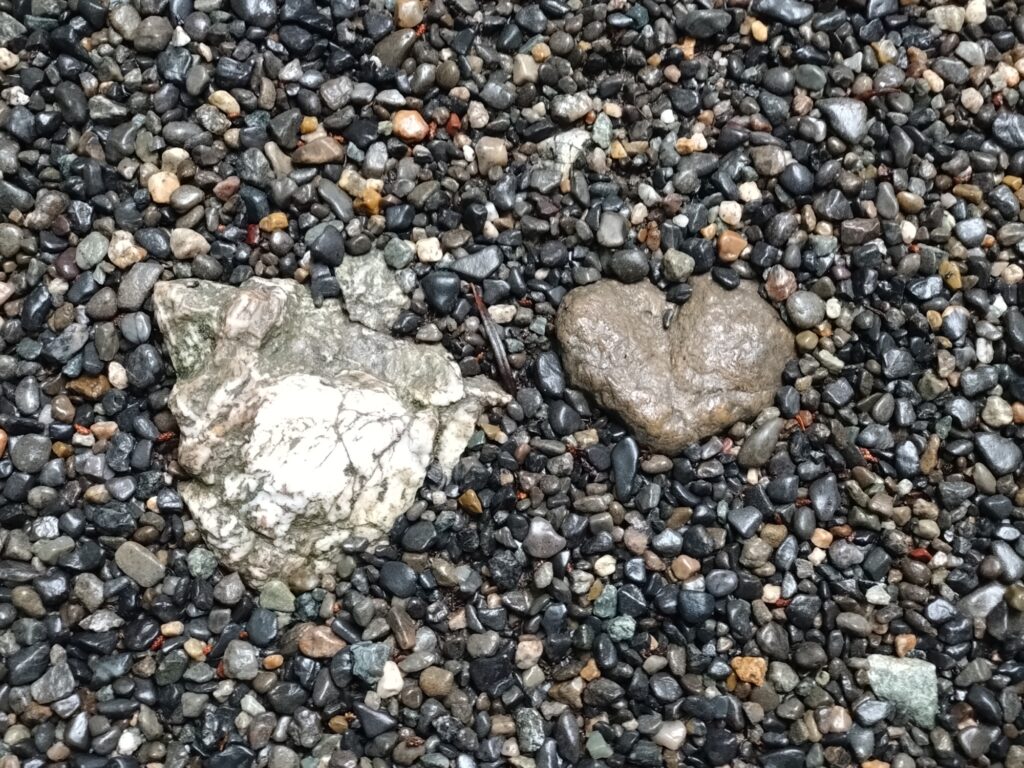
A small stone I noticed along the path —
shaped like a heart.
🌈Explore More
If you felt the living presences within Naikū,
you may also wish to experience other sacred moments of the Inner Shrine:
– The Sacred Bow of the Divine Horse
🔗 https://youtube.com/shorts/7kOsh9BnDRY
– Sacred Horse at the Stable (Naikū)
🔗 https://youtube.com/shorts/2qQNJkoZiO4
– Approaching the Shōgū at Naikū
🔗 https://youtube.com/shorts/SQsmshvLHJ8
– Sacred Dawn at Naikū
🔗 https://youtube.com/shorts/X-olEsIh8rk
Each moment reveals a different form of living presence —
through stillness, movement, light, and life within the sacred grounds of Ise.


コメント