
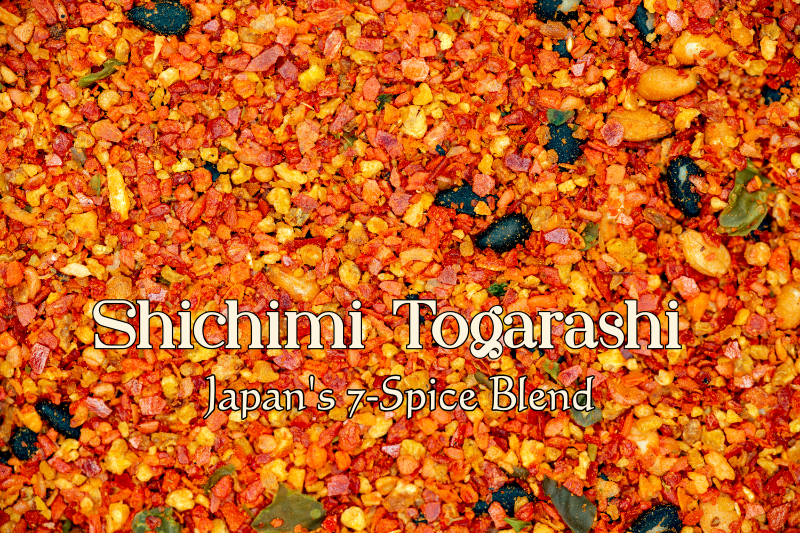
Exploring the history, varieties, and modern uses of Japan’s iconic 7-spice blend
✨ Lead-in
From smoky broths to quiet cups of soup on winter mornings, shichimi togarashi (七味唐辛子) has seasoned Japanese life for centuries. Often called “seven-spice” or “Japanese chili blend,” it combines more than heat. Its complexity lies in the way it carries aroma, balance, and place—a blend shaped by time, tradition, and local hands.
This article follows shichimi’s path from Edo street corners to contemporary kitchens, tracing how a once-medical mixture has become a quiet staple of Japanese flavor.
🧂 Origins of Shichimi
Shichimi togarashi is said to have been first blended by herbal apothecaries in Edo (now Tokyo) during the 17th century. Originally created not as a condiment but as a health-supporting mixture, it combined warming spices and fragrant herbs meant to stimulate the body during colder seasons.
Temple towns such as Asakusa played a central role in its spread. Street vendors outside shrines sold shichimi alongside grilled snacks and soba noodles, making it a familiar flavor on city streets.
While each maker guarded their exact recipe, the core idea remained the same: a layered blend of ingredients offering both stimulation and depth.
🍃 Composition and Regional Variations
Shichimi is not a fixed recipe but a style of blending. The traditional seven ingredients may include:
- Red chili pepper for heat
- Sanshō (Japanese pepper) for citrus-like aroma and tingle
- Dried citrus peel for brightness
- Roasted sesame seeds for nutty depth
- Hemp seeds, nori, or poppy seeds for texture and flavor
In Kyoto, shichimi blends often emphasize sanshō, creating a cooler, more aromatic profile.
In Nagano, sesame comes forward, adding body and warmth.
Urban shops in Tokyo favor spicier, sharper combinations, reflecting the city’s quick pace.
The result is that each region—and often each shop—tells a slightly different story through its spice.
🍲 Shichimi in Japanese Cooking
Today, shichimi is most commonly used as a finishing spice. While it’s often added to hot soba or udon, some also sprinkle it into miso soup or even light broths like nyumen.
Its use, however, is never fixed—it depends on the dish, the season, and the person holding the spoon.
It brings lift to grilled fish, balance to rich broths, and edge to simple rice dishes. Some home cooks mix it into salad dressings, while others add a pinch to butter or mayonnaise for a modern accent.
The role of shichimi is rarely dominant—but it is always transformative. Its quiet intensity changes the texture of heat and the perception of taste.
In many Japanese homes and restaurants, shichimi is sprinkled over hot soba or udon just before eating. Some prefer it lightly—to lift the aroma—while others add a bit more for spiciness.
It is also not uncommon to stir a slight dust into miso soup, allowing the spice to mingle with the mild broth.
For those who enjoy rice dishes like donburi or grilled fish, a final dash can bring out citrus notes and balance richer flavors.
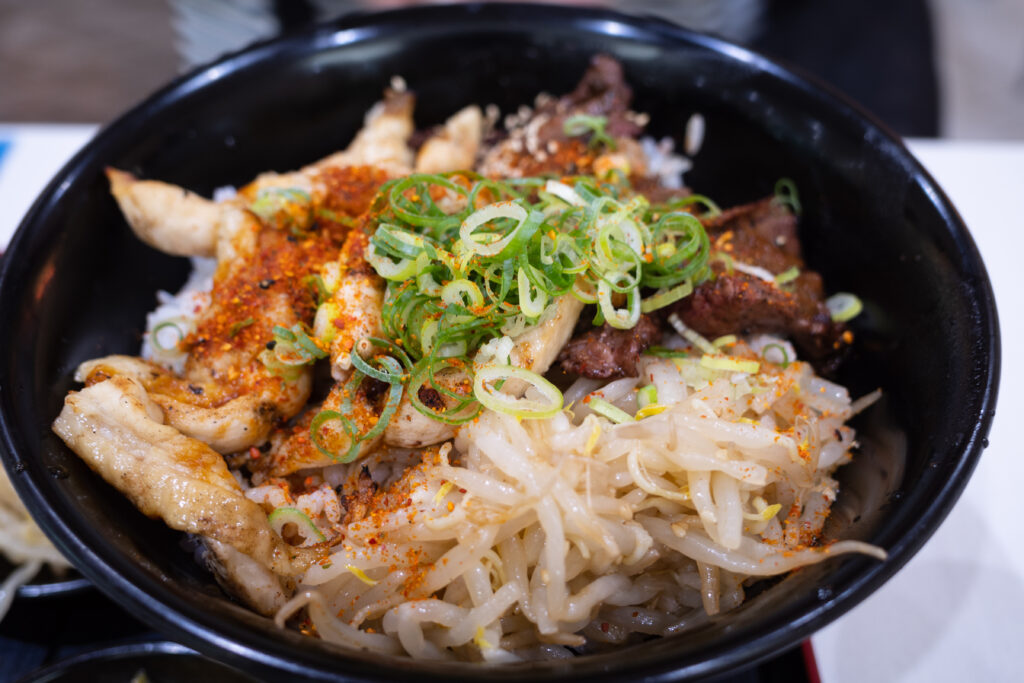
A bowl of grilled meat over rice, lightly dusted with shichimi. The blend clings to the surface, adding warmth and a hint of citrus against the richness of the dish.
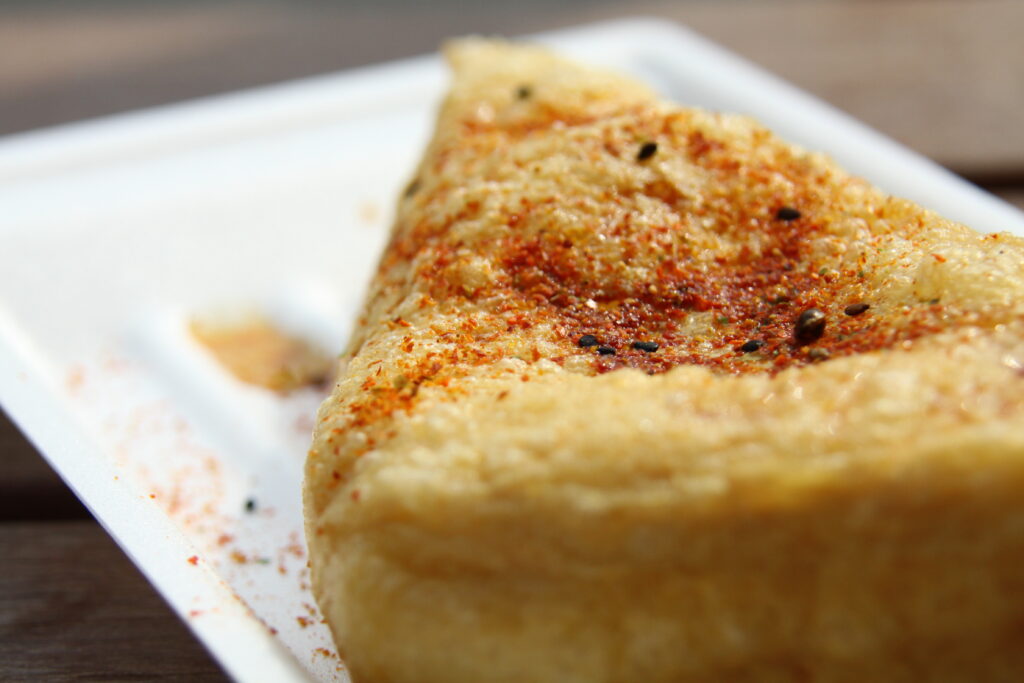
Crisp fried tofu, still warm, takes on a bright red layer of spice. The shichimi brings out the nutty notes of sesame and balances the soft, oily texture.
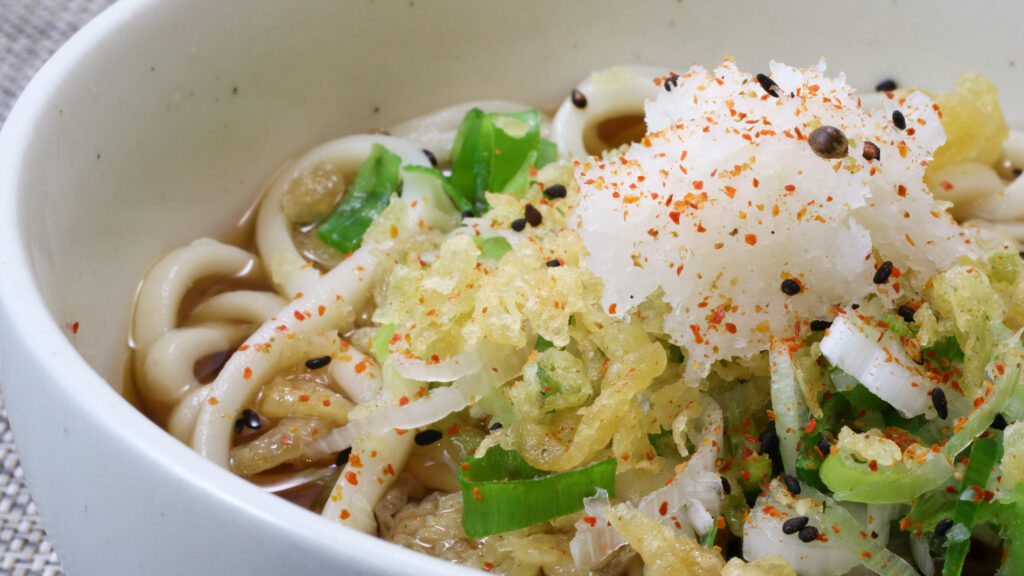
Udon served with grated daikon and tempura flakes—finished with a quiet shower of shichimi. Just enough to lift the broth with heat and fragrance.
🍋 Yuzu Shichimi and the Rise of Fragrant Variations
One of the most notable evolutions in recent years is the inclusion of yuzu peel in place of or alongside traditional citrus. The result is yuzu shichimi, a blend with a clearer, more floral aroma.
This variation, once considered rare or seasonal, is now widely available and often preferred for its brightness. It pairs especially well with fish, steamed vegetables, or even simple tofu.
As Japanese cuisine becomes increasingly global, yuzu shichimi has emerged as a bridge—a way to introduce complexity through a single, elegant note.
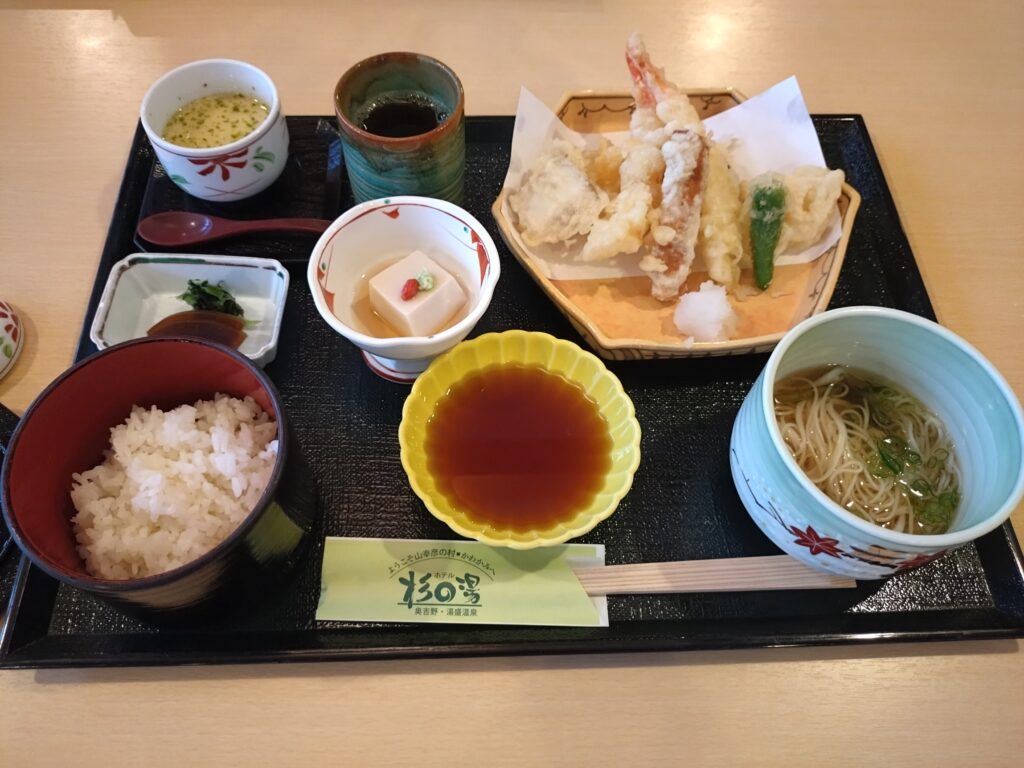
At a restaurant in Nara–Just a small sprinkle over the noodles was enough. The citrus lifted everything—subtle, sharp, and almost floral in the way it lingered.
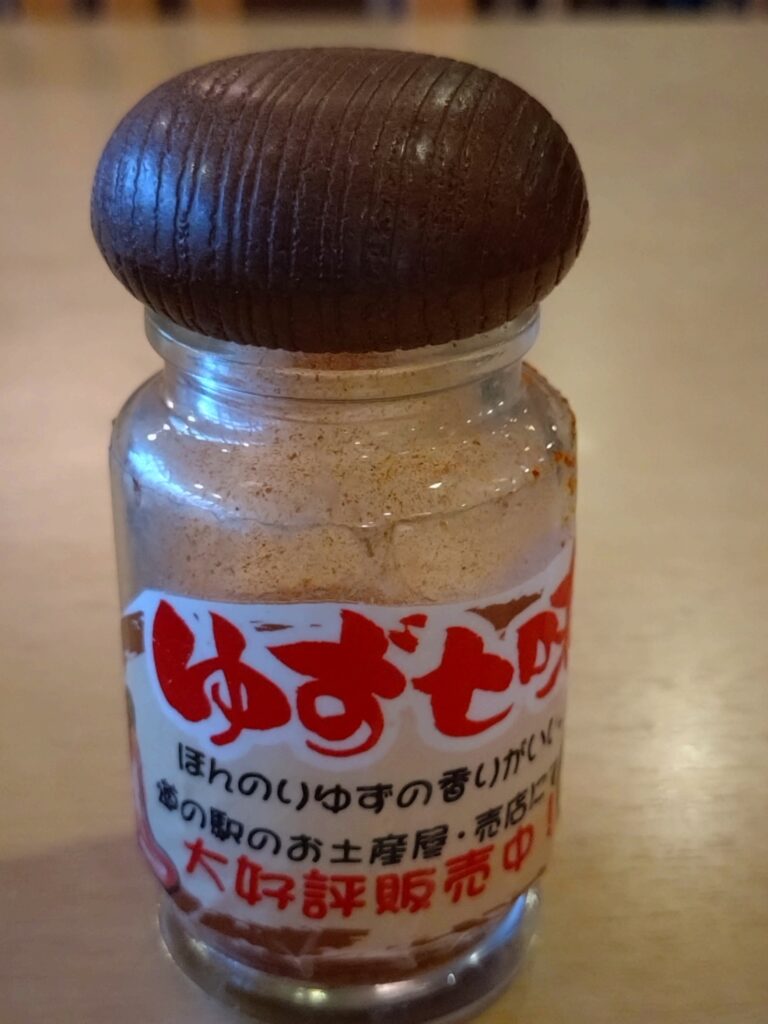
A glass bottle of yuzu shichimi sits quietly on the restaurant table—its fine citrus aroma barely contained, waiting to be released into the steam of a warm bowl.
🌶 Everyday Tips for Using Shichimi
Beyond noodles and soups, shichimi togarashi can be used in countless everyday dishes. Its citrusy, nutty, and spicy notes make it a versatile seasoning. Here are a few easy ideas:
- On Rice and Donburi – A light sprinkle over plain rice, rice bowls, or even fried rice brings aroma and gentle heat.
- With Grilled Foods – Dust it on grilled fish, yakitori, or even roasted vegetables for a balanced kick.
- In Dressings and Sauces – Mix a pinch into soy sauce, salad dressings, or mayonnaise for depth.
- With Tofu and Soups – Add a dusting to chilled tofu, hot pot broth, or even clear soups to brighten the flavor.
In supermarkets, you’ll often see a wide variety of shichimi and other spices—from small tins to resealable pouches, each reflecting different ingredient balances.
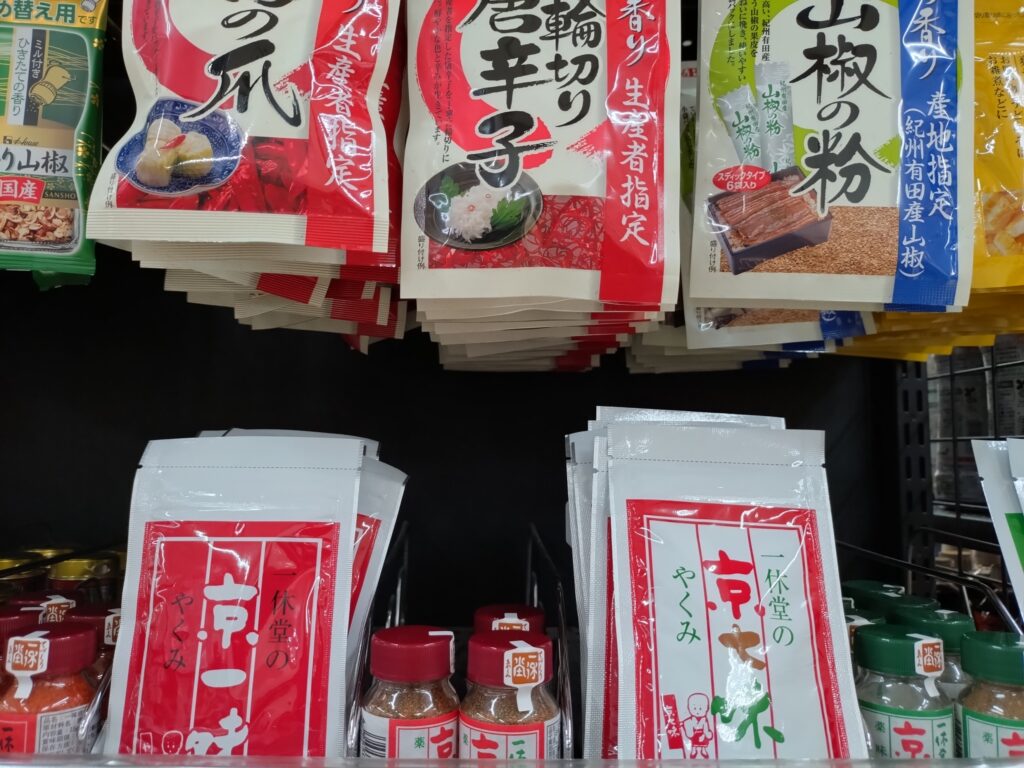
👉 Tip: Shichimi is best enjoyed fresh. To keep the aroma alive, store it in a cool, dark place and try to use it within a few months.
🔥 Shichimi Beyond Japan
In restaurants abroad, shichimi often appears as a garnish or secret ingredient. Chefs use it to finish grilled meats or to infuse oils and sauces with complexity.
But shichimi’s global path is still unfolding. Unlike soy sauce or miso, it carries no dominant taste identity, allowing it to adapt and surprise. It can be citrusy, earthy, floral, sharp, or smoky—depending on its maker.
For some, that makes it mysterious. For others, endlessly useful.
🌿 Craftsmanship and the Future of Shichimi
In recent years, small-batch producers have begun reimagining shichimi using local herbs, heirloom peppers, and unusual textures. Some blends incorporate lavender, roasted citrus, or fermented elements.
Others aim for minimalism—just three or four ingredients, each chosen for clarity and purpose.
There are also shifts in audience.
As more people seek additive-free, gluten-free, and natural seasonings, shichimi offers both tradition and transparency. Its brief shelf life, especially for blends with yuzu or fresh sanshō, has encouraged a return to seasonal buying and small production.
In this way, shichimi continues to evolve—not away from its roots, but through them.
📝 Kaha’s Note
Shichimi is more than a seasoning—it’s a flavorful reflection of Japan’s culinary spirit. From temple stalls in Edo to global gourmet menus, it continues to evolve while staying true to its roots. Whether sprinkled on noodles or blended into creative dishes, shichimi offers a touch of spice, history, and harmony in every bite.
Try a pinch. It might just change the way you season your world.
💻 Explore More
🌈 Back to Home
Want to explore more places and stories in Japan?
👉 Return to the main page
📸 Image Credits
- All personal photos taken by the author.
- Food images of grilled meat rice bowl, fried tofu, and udon with daikon from Adobe Stock.


コメント