
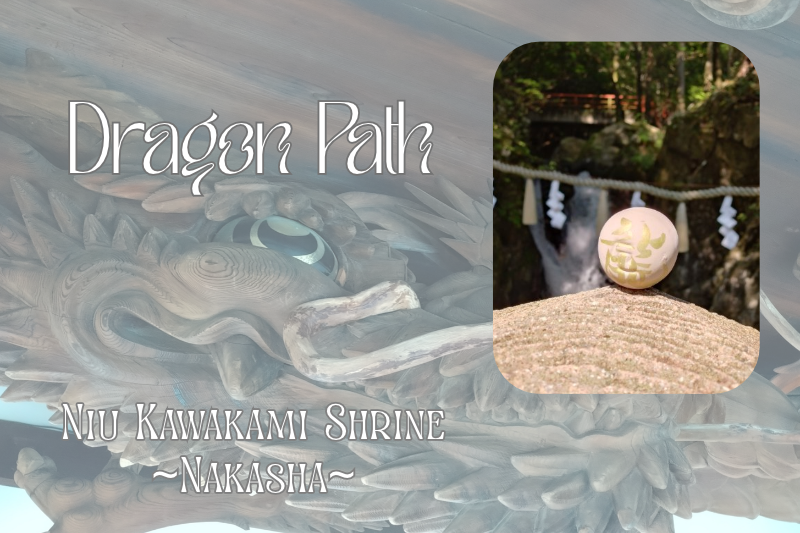
💧 Lead-in
From the deep valleys of Shimosha and the mountain heights of Kamisha, the Dragon Path now follows the water to Niu Kawakami Shrine – Nakasha.
At the heart of Nakasha is Mizuhanome-no-Kami (罔象女神), the goddess who governs water. For centuries, people have come to this shrine to pray for rain during drought and for clear skies when the rains continued too long.
On the shrine grounds, the sacred water of Niu no Manai rises from a well. Nearby are ancient trees, a small shrine connected with the site’s earlier history, and images of dragons in many different forms.
The journey continues beyond the grounds to Yumebuchi, where three rivers meet, and to a waterfall said to be home to a dragon deity. Here, water connects the shrine’s living traditions with an older story preserved in Japanese legend.
Let’s begin at Nakasha’s gates and follow those threads of water, trees, and dragons together.
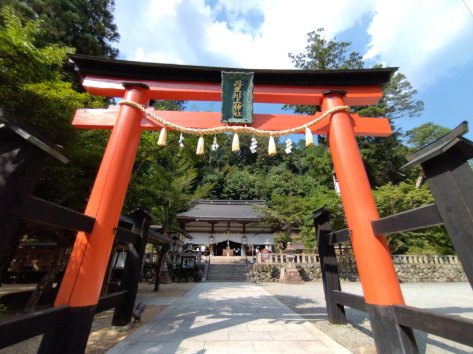
The torii and approach to Niu Kawakami Shrine – Nakasha
🎥 Watch on YouTube
A glimpse of the main hall of Niu Kawakami Shrine – Nakasha
🐉 Dragon Presence
At the heart of Nakasha is Mizuhanome-no-Kami (罔象女神), the goddess of water. Enshrined alongside her in the main sanctuary are Izanami-no-Mikoto (伊邪奈美命) and Izanagi-no-Mikoto (伊邪奈岐命). According to the shrine, Mizuhanome is their child, a deity who watches over water in all its forms.
There is another familiar name within the shrine grounds. Amaterasu Ōmikami (天照大神) is enshrined in the east sanctuary. In the Kojiki, Mizuhanome comes into being during Izanami’s illness after the birth of the fire deity, while Amaterasu is born later from Izanagi’s purification. Their stories bring different moments in the myths of water, fire, and cleansing into this one shrine.
Nakasha also holds a connection to the dragon deities we encountered earlier on this path. At the nearby Suijinsha (水神社), Takaokami-no-Kami (高龗神) of Kamisha and Kuraokami-no-Kami (闇龗神) of Shimosha are enshrined together. After visiting those two shrines, finding their deities here felt like a quiet meeting of the three chapters.
Within the grounds stands Ryūjinsha (龍神社), where five dragon deities—gold, blue, red, black, and white—are honored together. Its sign bears the name Ryūjin Daimyōjin (龍神大明神). After encountering the water goddess at Nakasha and the dragon deities of Kamisha and Shimosha, this gathering of five dragons offered another vivid expression of dragon presence at the shrine.
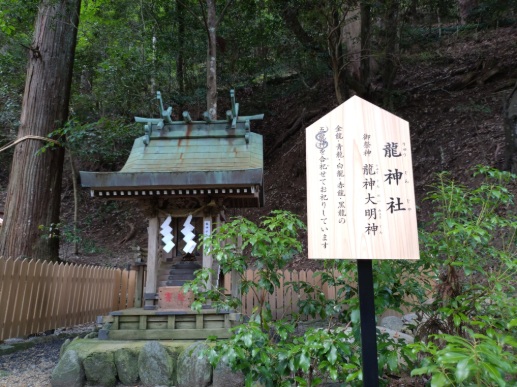
Ryūjinsha, where five dragon deities are honored together at Nakasha.
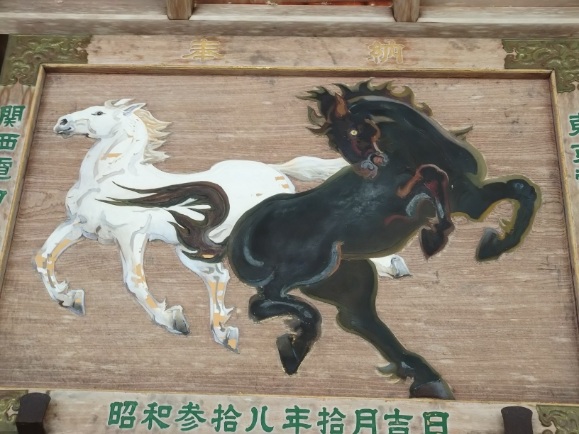
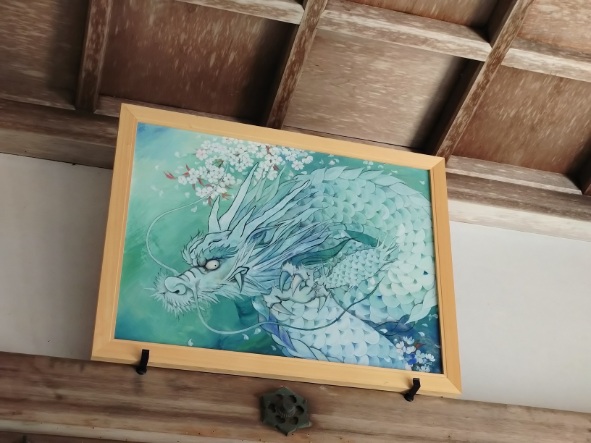
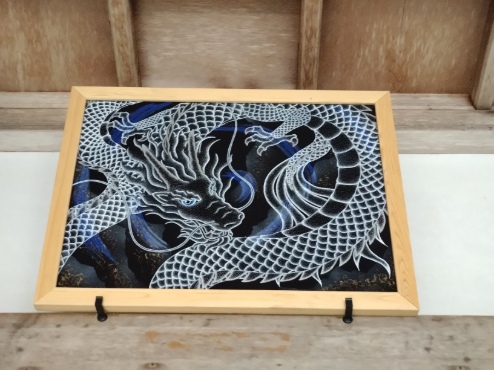
Different images of dragons encountered around the shrine grounds.
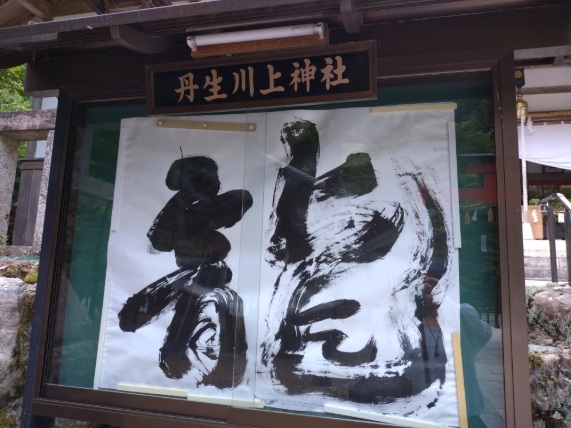
The character 龍, “dragon,” written in expressive brushstrokes.
A sign at the shrine speaks of the dragon deity’s presence throughout the grounds. As I walked, those images and words invited me to notice the dragons woven into Nakasha’s landscape of water.
🎥 Watch on YouTube
A glimpse of the dragon presence at Niu Kawakami Shrine – Nakasha
Beyond the shrine grounds, the stories of water and dragons continue at Yumebuchi, where three rivers meet.
📜 Local Lore
🌊 The Legend of Emperor Jimmu at Yumebuchi
Near Nakasha, the Takami, Hiura, and Shigō rivers meet to form a deep pool called Yumebuchi (夢淵). This meeting of waters is associated with a legend of Emperor Jimmu (神武天皇), traditionally regarded as Japan’s first emperor.
According to the story, Jimmu was preparing to bring Yamato under his rule when he received divine guidance in a dream. Following that message, he had sacred vessels made from earth taken from Mount Kagu. He then traveled to the upper reaches of the Niu River to pray to the deities of heaven and earth.
Jimmu sought a sign about the coming battle. He lowered an itsube, a sacred jar containing sake, into the river: if fish of every size rose to the surface and drifted downstream like leaves, his undertaking would succeed.
The fish did rise and float away. Jimmu rejoiced at the favorable omen. In the shrine’s telling, the fish are linked with ayu (鮎). The character combines 魚, meaning “fish,” and 占, meaning “to read an omen”—just as Jimmu read the movement of the fish as a sign of victory.
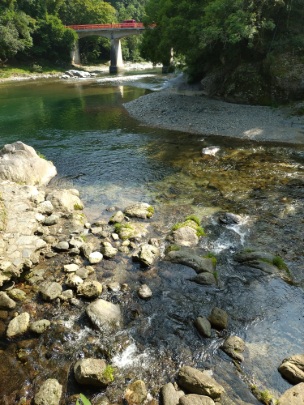
The riverside near Yumebuchi, with a red bridge visible in the distance.
I cannot tell from my photograph whether the water shown is Yumebuchi itself. Still, seeing the rivers flow through this landscape brought the old story closer: a sign of hope found in the movement of water and fish.
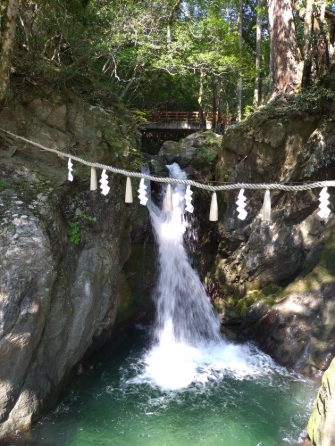
Nearby is Hingashi no Taki (東の瀧), also called the Dragon Waterfall, where a dragon deity is said to dwell. The shrine’s website gives its reading as Himukashi no Taki; in my earlier video, I introduced it as Hingashi no Taki.
🎥 Watch on YouTube
Hingashi no Taki — The Dragon Waterfall
Water pours into the river at the Dragon Waterfall near Niu Kawakami Shrine – Nakasha. In the next part of this journey, we will return to the falls with a ryūdama, a small ball offered with a wish.
✨ Sacred Highlights
💧 Niu no Manai — Water from Beneath the Shrine
After hearing the story of Yumebuchi, I returned to the water within Nakasha’s grounds.
Niu no Manai (丹生の真名井) is the shrine’s sacred well. According to the shrine, water flows from the mountain behind the main sanctuary, passes beneath it as underground water, and rises here. Visitors can receive this water, associated with the blessings of Mizuhanome-no-Kami.
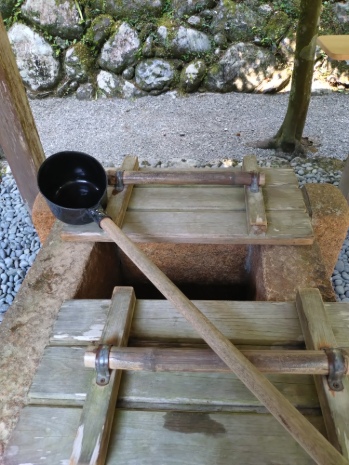
The sacred water of Niu no Manai, rising from a well within the shrine grounds.
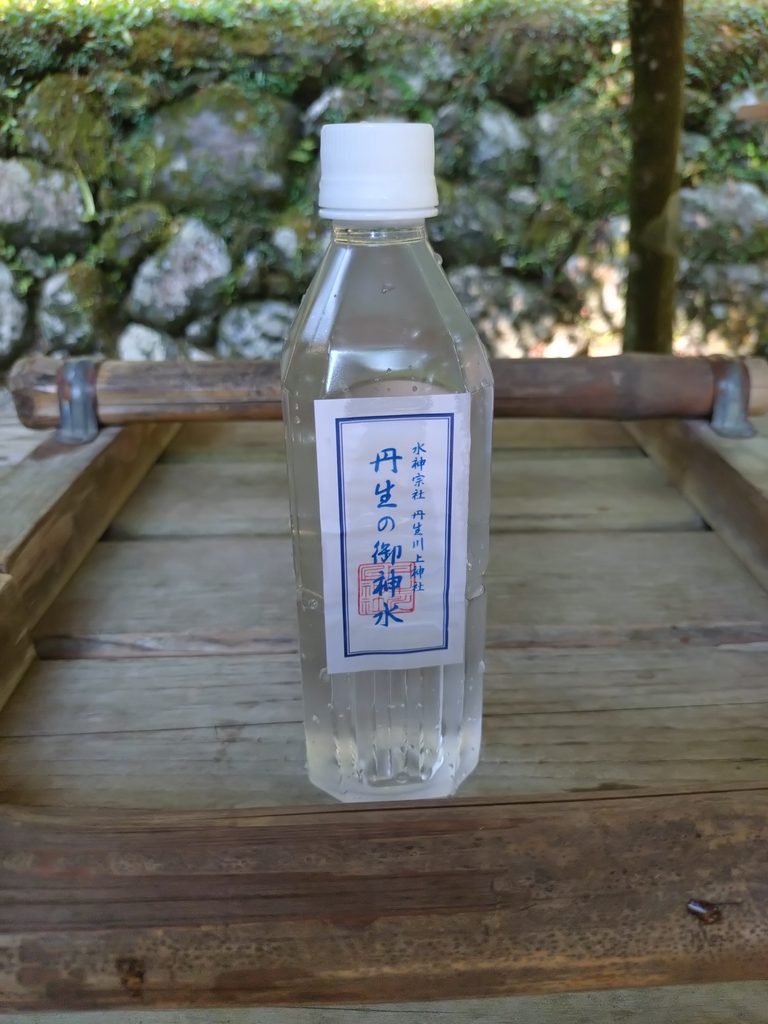
Visitors can bring a container or purchase a bottle at the shrine to receive the sacred water. I filled a bottle during my visit and carried a little of Nakasha’s water with me.
At Nakasha, water is more than a story told about the distant past. It is present here, quietly flowing where visitors can see it.
🌳 The Wish-Granting Cedar and Kodama Shrine
Another powerful presence in the grounds is Kanae no Ōsugi (叶えの大杉), the Wish-Granting Cedar. The shrine describes this great tree as more than 1,000 years old. Visitors place their hands against its trunk and speak a wish from the heart.
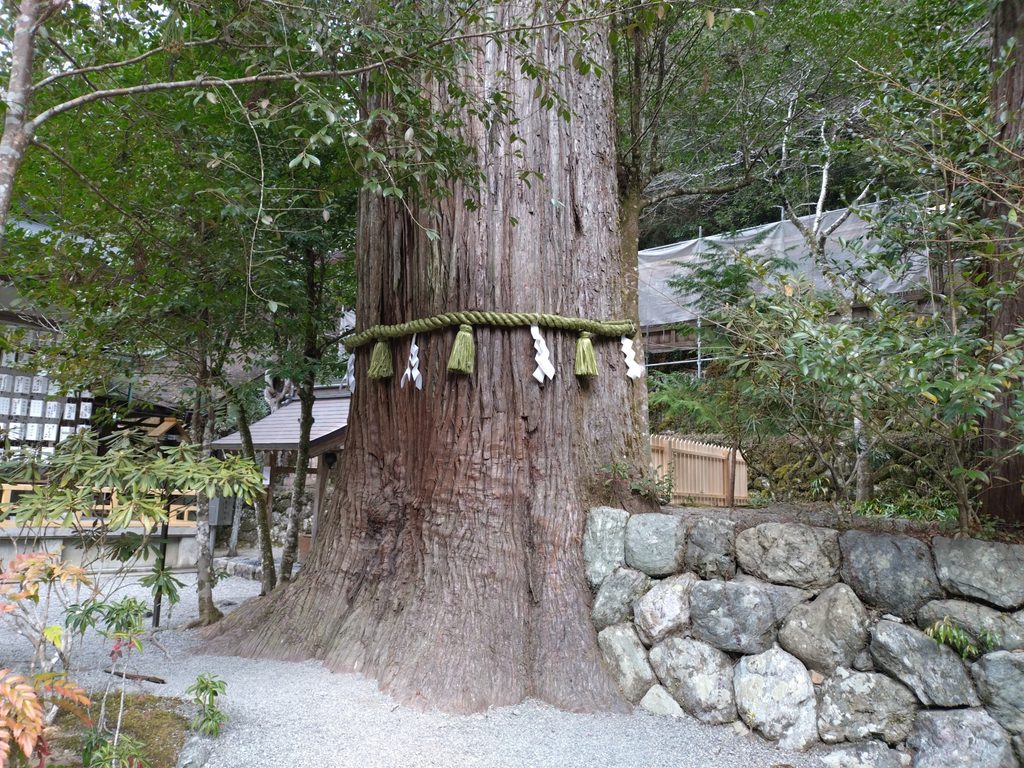
Kanae no Ōsugi, the ancient Wish-Granting Cedar at Nakasha.
Kodama Shrine (木霊神社), dedicated to Itakeru-no-Mikoto (五十猛命), a deity associated with forests and forestry, is also on the shrine grounds. The name kodama also evokes the spirit or echo of a tree—an apt name in a place where the great cedar draws people close.
🎥 Watch on YouTube
Beneath the Wish-Granting Cedar
As you watch, you are welcome to hold your hands toward the screen and bring your own wish to mind.
🦉 Niu’s Nade-Fukurō
The shrine’s nade-fukurō, or “stroking owl,” adds a gentler encounter to the walk. The shrine tells of an owl that came to live in the Wish-Granting Cedar and watched over the grounds at night. The owl figure was carved from an old mountain cherry tree; visitors are invited to stroke it while offering their prayers.
In Japanese, fukurō can also suggest fu-kurō, “no hardship,” making the owl a familiar symbol of good fortune.
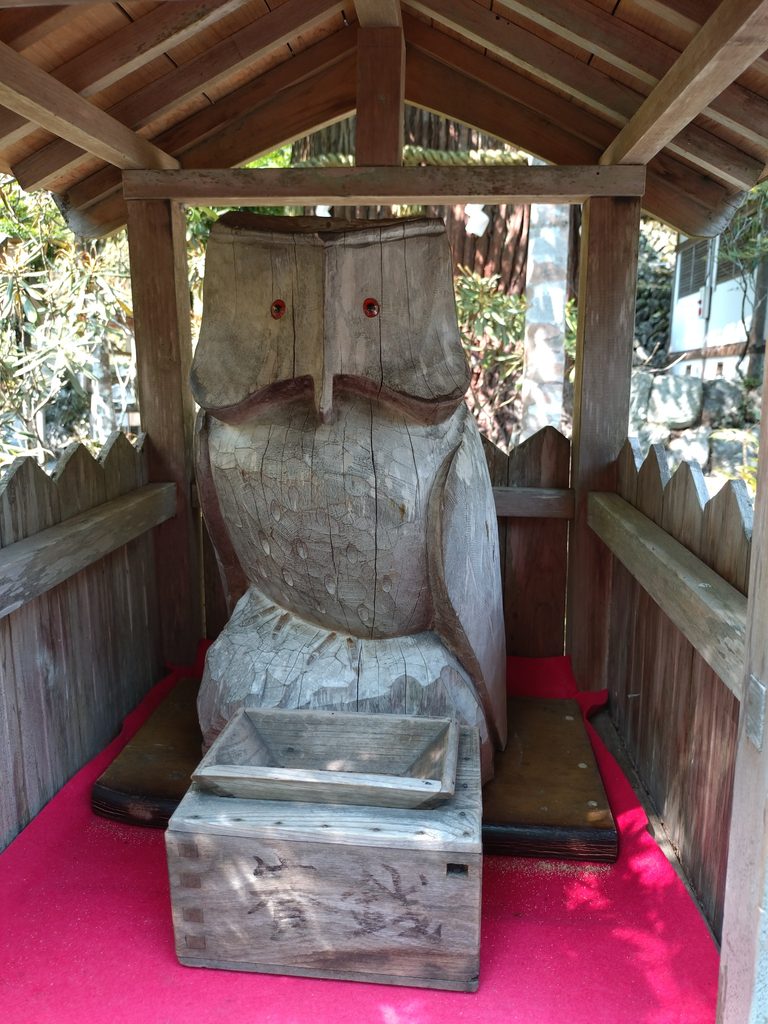
Niu’s nade-fukurō, a carved owl visitors can gently touch.
🐉 Ryūdama at the Dragon Waterfall
I returned to Hingashi no Taki (東の瀧) in summer to offer a ryūdama (龍玉) for the second time. After my previous wish had come true, I was happy to stand beside the waterfall again with a new wish in my heart.
The shrine’s instructions are to breathe into the small opening of the ball three times while holding your wish in mind, then cast it into the waterfall. I followed those steps and watched the ryūdama disappear into the rushing water.
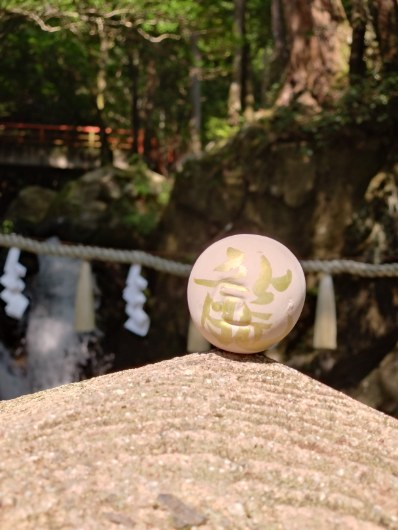
A ryūdama bearing the golden character 龍, placed near the waterfall before I cast it into the water.
🎬 Watch on Instagram
On Instagram, I shared a short video capturing the moment I cast my ryūdama into the Dragon Waterfall. Look for the ryūdama offering at Hingashi no Taki among my posts.
Watch on Instagram — Rainbow Awakening
🌳Hongū-san and the Kodama Cedar
Across the river from Nakasha stands Niu Shrine, affectionately called Hongū-san. Nakasha describes it as an earlier shrine site, and a local saying encourages visitors to pray at both places. Nearby, a sign at the Kodama Cedar invites visitors to step inside the great tree and feel its ki, or life energy. It was another moment when the trees seemed to have a presence of their own.
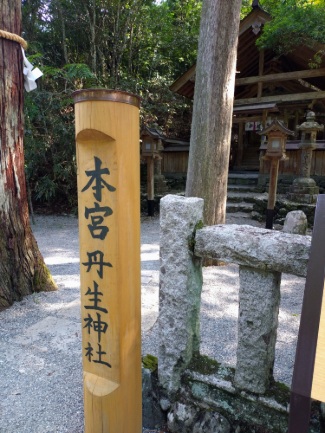
The entrance to Hongū-san, Niu Shrine
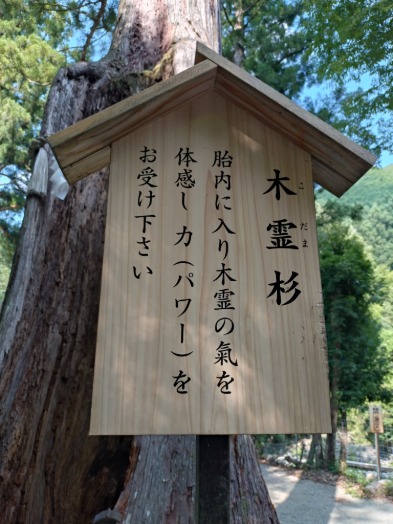
A sign inviting visitors to experience the energy of the Kodama Cedar
🎥 Watch on YouTube
Inside the Kodama Cedar — looking up from within a sacred tree
As you watch, take a gentle breath and imagine yourself standing inside the cedar. Open yourself to the tree’s quiet strength.
🧵 Hidden Threads
🪣The Sacred Name Manai
At Nakasha, I received water from Niu no Manai. The shrine says it begins at Mount Omuro behind the main sanctuary, travels beneath the sanctuary, and rises in this well. It is treasured as purifying water blessed by Mizuhanome-no-Kami. Yet the name Manai also leads to a much older story.
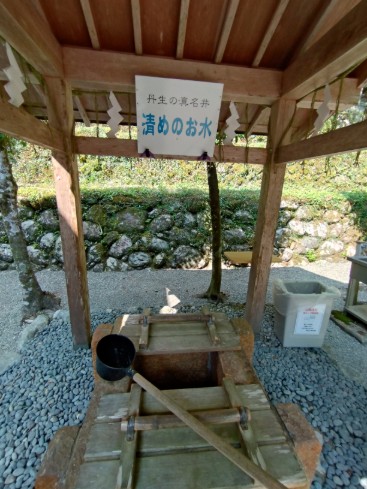
The sacred well of Niu no Manai at Nakasha
In the Kojiki, Amaterasu and her brother Susanoo prepare for an ukehi, a sacred rite to reveal his true intentions. Before they bring forth new deities, each rinses the object received from the other in the water of Ame no Manai, the heavenly sacred well. Amaterasu cleanses Susanoo’s sword; from what she then breathes out, the Munakata Three Goddesses are born, including Ichikishimahime-no-Mikoto. Susanoo cleanses Amaterasu’s jewels, and five male deities are born. The well’s water has a place in this moment of purification and divine birth.
The name lives on at other sacred waters. At Manai Shrine in Kyoto, part of the Motoise Kono Shrine complex, a spring is called Ame no Manai no Mizu. Its own tradition tells of water brought down from heaven by an ancestor of the shrine’s priestly family. Nakasha’s well and Kyoto’s spring have different histories, but their shared name recalls the sacred well of myth.
New to the kami in these stories? Begin with this gentle guide to their origins and connections.

🎬Mizuhanome’s Name in Your Name (Kimi no Na wa / 君の名は。)
Another thread reaches into a Japanese animated film. Makoto Shinkai, the director of the Japanese animated film Your Name, has said that its heroine Mitsuha was named after Mizuhanome, the water goddess worshipped at Nakasha. Mitsuha lives in a mountain town and belongs to a family that cares for a shrine. One day, she and a boy named Taki, who lives in Tokyo, begin mysteriously waking up in each other’s bodies. As they try to understand their connection, the story draws together shrine traditions, memory, and time.
Knowing the goddess behind Mitsuha’s name makes this meeting between ancient myth and modern storytelling especially intriguing. A name encountered at a quiet shrine in Yoshino also lives on in an animated story watched around the world.
🎥Official trailer for Your Name, from Toho Movie Channel.
💚 Kaha’s Whisper
At Nakasha, I felt the power of nature all around me. There was the sacred water rising at Niu no Manai, the great cedar trees, the owl watching over the grounds, and the rivers flowing beyond the shrine. Each had a presence of its own.
At Hingashi no Taki, I placed my wish in a ryūdama and let it go into the waterfall. As I followed the water from the well toward the river, I felt that the dragons here belonged to this living landscape — to the trees, the water, and the quiet strength of the place itself.
Each time I visit Niu Kawakami Shrine, it seems to show me another face—through water, trees, and the quiet presence of the dragon deities. Even after visiting all three shrines, I feel that my journey with the water deities is still unfolding.
🌈 Follow the Woven Threads
The story of Emperor Jimmu’s divination at Yumebuchi continues in an unexpected place: a Yoshino sweet shaped like an ayu fish. Discover the legend and the wagashi it inspired.
🐟 Discover the Story of Yoshino Ayu

Then follow the waters of Niu Kawakami back through the other two shrines in this journey.
🐎 Return to Shimosha

⛰️ Visit Kamisha

🐉 Begin the Dragon Path
Travel back to Ryūsenji Temple, where the Eight Great Dragon Kings and a sacred spring opened this journey.

Thank you for following the Dragon Path through all three Niu Kawakami shrines. May the sound of their waters stay with you a little longer.
Explore more stories of Japan’s sacred places, nature, traditions, and the quiet threads that connect them at Rainbow Awakening.
コメント