
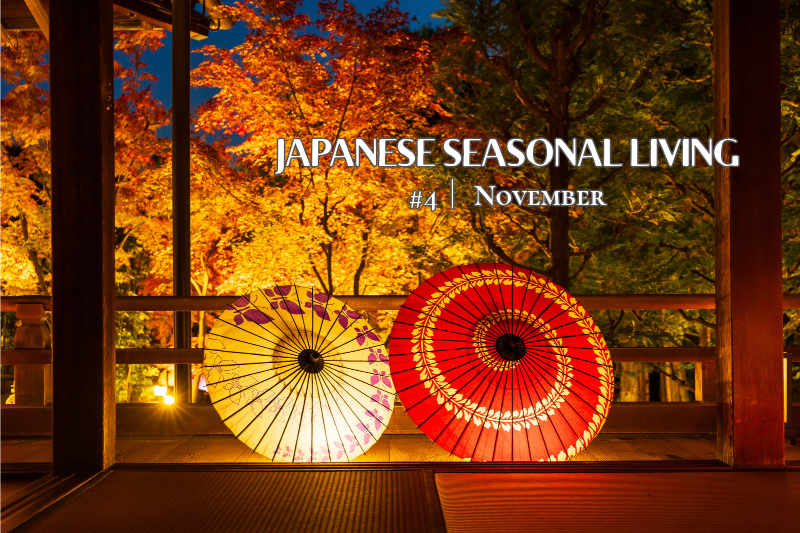
- 🍀 Lead-in
- 📅 November Seasonal Highlights
- 🎭 November 3 │ Bunka no Hi (文化の日) — Culture Day
- ❄️ November 7 │ Rittō (立冬) — The Beginning of Winter
- 🪭 November 7 & 19 │ Tori no Ichi (酉の市) — The Festival of Lucky Rakes
- 👘 November 15 │ Shichi-Go-San (七五三) — Celebrating Children’s Growth
- 🌨️ November 22 │ Shōsetsu (小雪) — Light Snow
- 🌾 November 23 │ Kinrō Kansha no Hi (勤労感謝の日) & Niinamesai (新嘗祭)
- 🍁 Momijigari — The Japanese Tradition of Autumn Leaf Viewing
- ⛩️ Kamiarizuki — When the Gods Gather in Izumo
- 🎎 November Festivals & Cultural Events
- 🥢 Seasonal Nourishment — Hoshigaki, Japan’s Naturally Sweet Autumn Treat
- 🍊 Explore the Season
- ✨ November in a Few Words
🍀 Lead-in
November is one of the most beautiful times of year in Japan, as mountains, gardens, temples, and shrines come alive with brilliant shades of red, orange, and gold.
It is also a month rich in Japanese traditions. Families visit shrines to celebrate their children’s growth, colorful festivals bring good-luck charms and ancient customs to life, and in Izumo, the gods are believed to gather for their annual meeting.
As autumn deepens and the first signs of winter approach, November also brings opportunities to give thanks for the harvest and enjoy the seasonal flavors of Japan.
This month, let’s explore the tradition of momijigari (autumn leaf viewing), discover fascinating festivals and customs, visit some beautiful autumn destinations, and enjoy a few simple pleasures of the season.
📅 November Seasonal Highlights
🎭 November 3 │ Bunka no Hi (文化の日) — Culture Day
Culture Day is a national holiday in Japan, dedicated to promoting culture, the arts, and freedom and peace.
The date also marks the birthday of Emperor Meiji. Around this holiday, museums, art exhibitions, traditional performances, and cultural events offer opportunities to explore Japan’s artistic heritage.
❄️ November 7 │ Rittō (立冬) — The Beginning of Winter
Rittō is one of Japan’s 24 traditional seasonal divisions (Nijūshi Sekki), marking the beginning of winter according to the traditional calendar.
Although autumn foliage may still be approaching its peak in Kyoto and other parts of Japan, the days are growing shorter and the air gradually cooler.
🪭 November 7 & 19 │ Tori no Ichi (酉の市) — The Festival of Lucky Rakes
Tori no Ichi is a traditional festival held on the Days of the Rooster in November, particularly at shrines and temples in the Tokyo area.
One of its most distinctive features is the engimono kumade — decorative bamboo rakes adorned with symbols of good fortune, prosperity, and success.
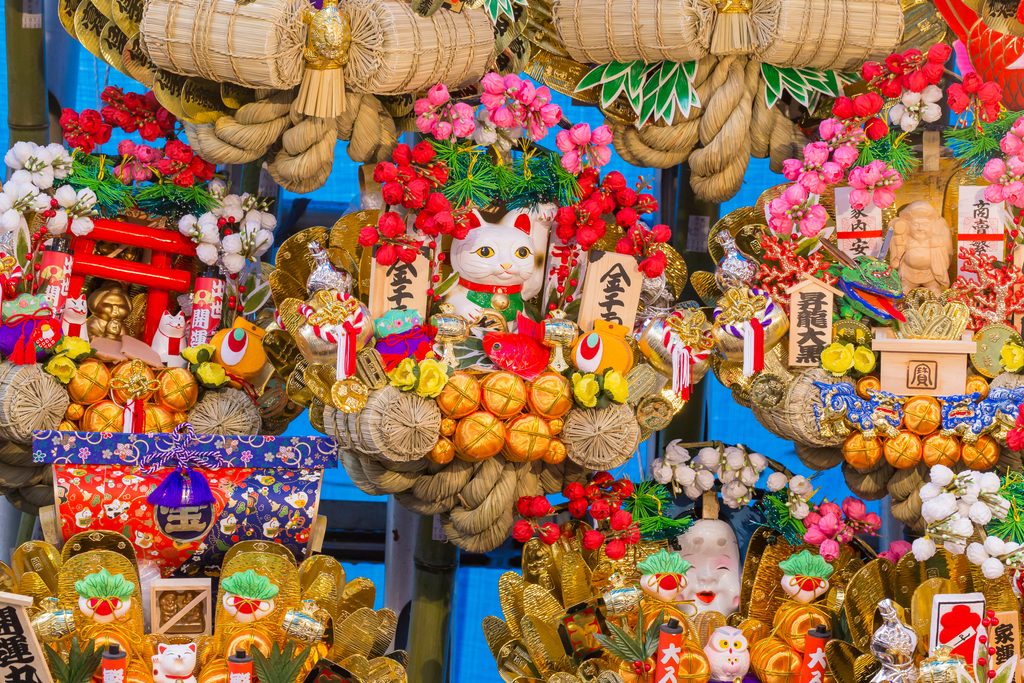
Decorative kumade rakes adorned with traditional symbols of good fortune and prosperity.
Just as an ordinary rake gathers fallen leaves, these colorful rakes are believed to gather good luck and prosperity.
In 2026, Tori no Ichi takes place on November 7 (Ichi no Tori) and November 19 (Ni no Tori).
👘 November 15 │ Shichi-Go-San (七五三) — Celebrating Children’s Growth
Shichi-Go-San, literally meaning “Seven-Five-Three,” is a traditional celebration for children at the ages of three, five, and seven.
Families visit shrines to express gratitude for their children’s growth and pray for their continued health and happiness.
Children often wear beautiful kimono or traditional formal clothing, and receive chitose ame, long candies symbolizing wishes for a long and healthy life.
Although November 15 is the traditional date, many families celebrate on nearby weekends or other convenient days.
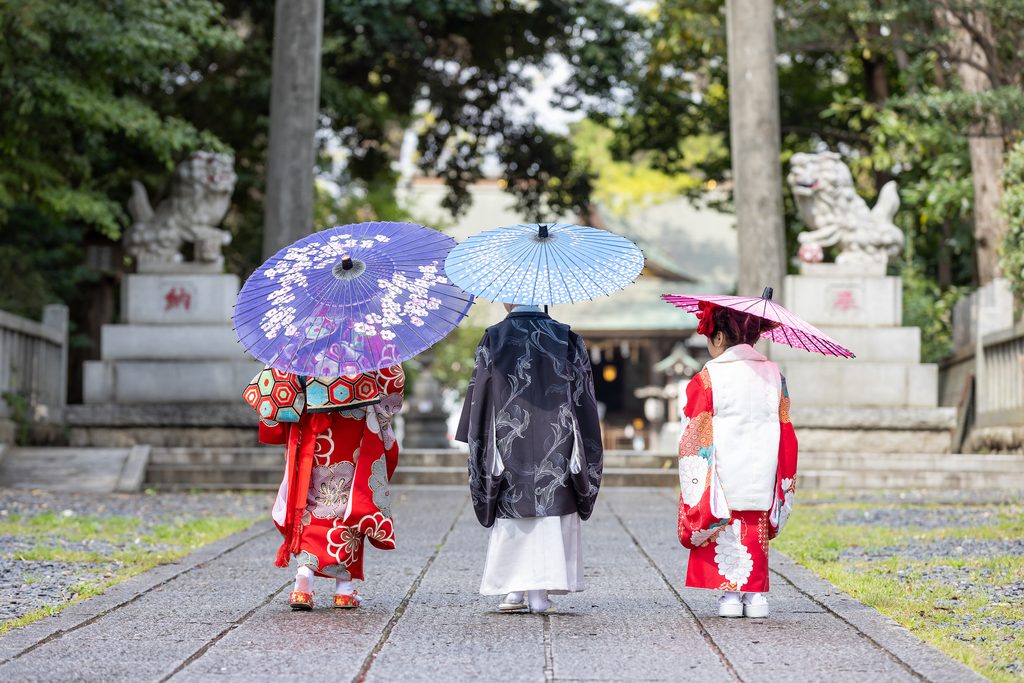
Children dressed in traditional kimono for Shichi-Go-San, a celebration of their growth and well-being.
🌨️ November 22 │ Shōsetsu (小雪) — Light Snow
Shōsetsu, meaning “light snow,” is another of Japan’s 24 traditional seasonal divisions.
It evokes the time when the first light snow may begin to appear in colder regions and mountains, even while autumn colors linger elsewhere.
🌾 November 23 │ Kinrō Kansha no Hi (勤労感謝の日) & Niinamesai (新嘗祭)
November 23 is Labor Thanksgiving Day, a national holiday recognizing work, production, and mutual appreciation.
The date also coincides with Niinamesai, an ancient imperial harvest ritual in which the Emperor offers newly harvested rice and other grains to the deities and partakes of the offerings.
The ceremony reflects the longstanding importance of rice cultivation and gratitude for the harvest in Japanese culture.
🍁 Momijigari — The Japanese Tradition of Autumn Leaf Viewing
One of Japan’s most beloved autumn traditions is momijigari (紅葉狩り), the custom of going out to admire the changing colors of the leaves.
The word momiji refers to autumn foliage, especially the colorful leaves of Japanese maple trees, while gari means “hunting.”
But why is admiring leaves called hunting?
In Japanese, the word gari gradually came to be used for activities that involve seeking out seasonal treasures in nature, such as mushroom gathering and fruit picking. Momijigari describes the pleasure of searching for beautiful autumn colors rather than collecting the leaves themselves.
The appreciation of autumn foliage has deep roots in Japanese culture. During the Heian period (794–1185), aristocrats celebrated the changing seasons through poetry, music, and excursions into nature. Autumn leaves became a familiar subject in waka poetry, expressing both the beauty of the season and the passing of time.
Today, people continue this tradition by visiting gardens, walking along mountain paths, and exploring temples and shrines framed by red and golden leaves.
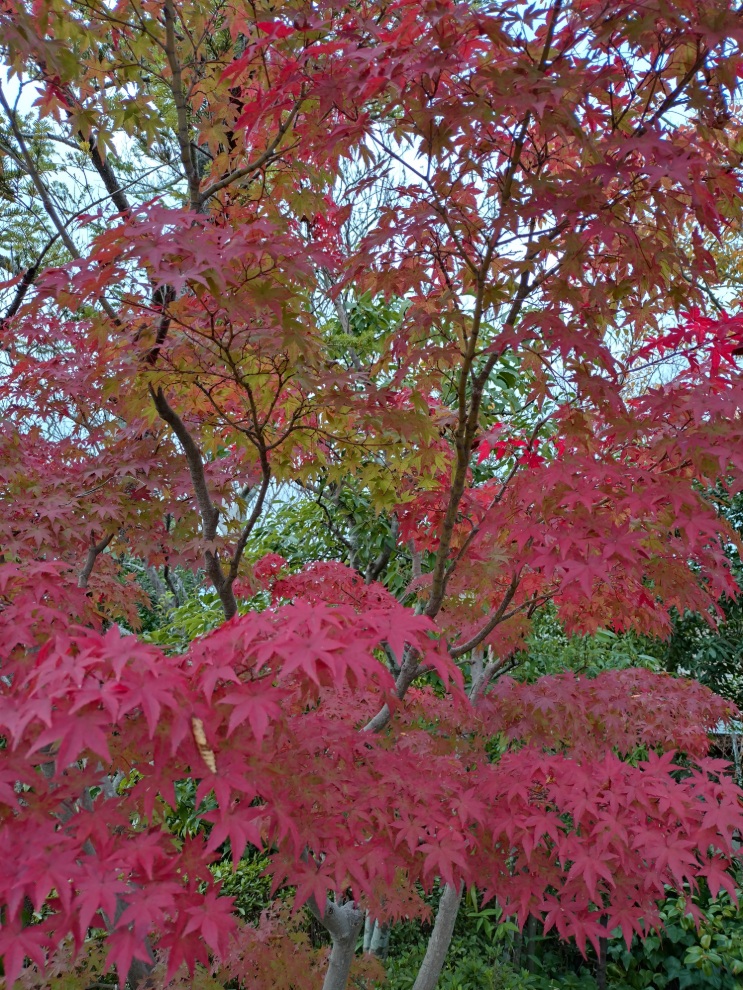
Red maple leaves in autumn, Kyoto, Japan.
Famous Autumn Foliage Destinations
Kyoto
- Tōfuku-ji Temple (東福寺) — Famous for its spectacular maple-filled valley and views from the Tsūtenkyō Bridge.
- Eikan-dō Temple (永観堂) — Known for its beautiful autumn colors surrounding temple buildings, gardens, and ponds.
- Arashiyama (嵐山) — A scenic area where forested mountains turn shades of red, orange, and gold.
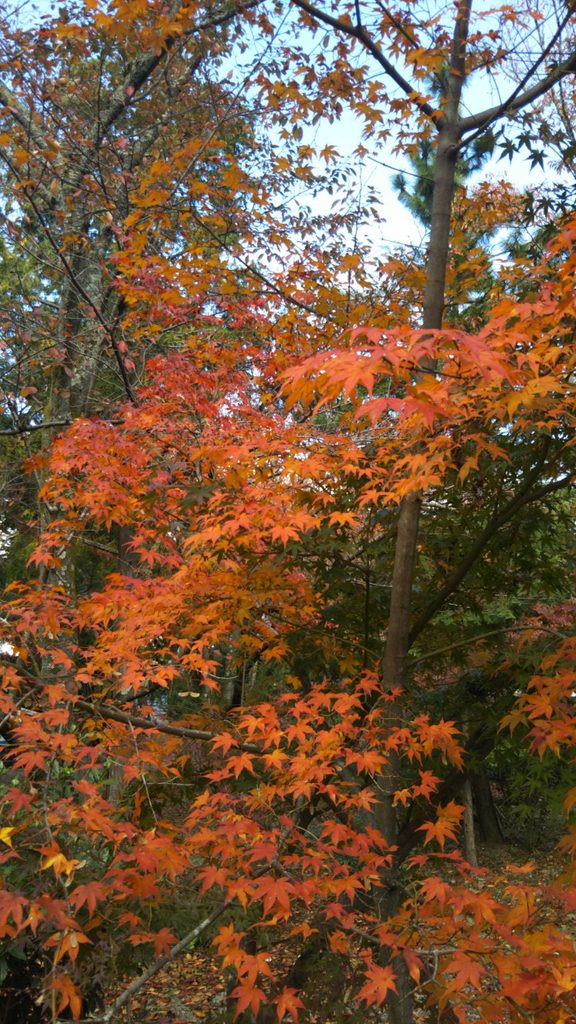
Golden-orange maple leaves in Kyoto during autumn.
Nara
- Tanzan Shrine (談山神社) — Famous for its brilliant autumn foliage surrounding a beautiful thirteen-story pagoda.
- Nara Park (奈良公園) — A peaceful landscape of colorful trees, ancient temples, and freely roaming deer.
- Okadera Temple (岡寺) — A temple in Asuka known for its autumn maple leaves and colorful seasonal displays.
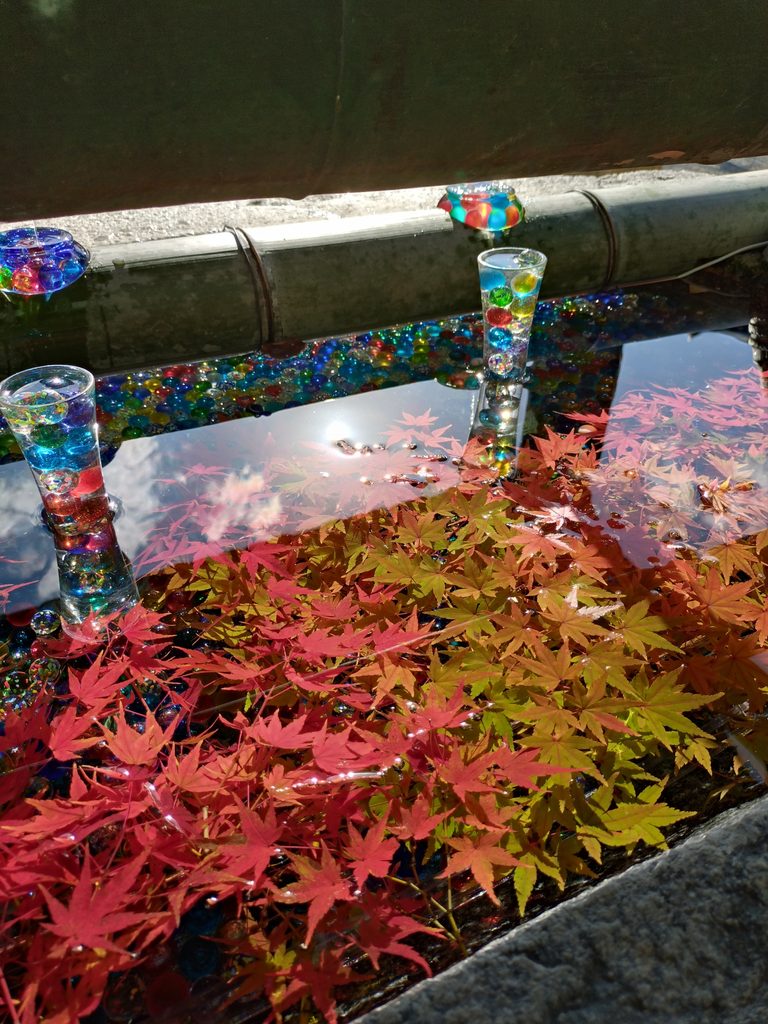
Autumn maple leaves floating among sparkling glass ornaments at Okadera Temple in Asuka, Nara Prefecture. Photographed in November 2025.
Whether enjoying a famous view or discovering a small seasonal detail along the way, momijigari invites us to appreciate the fleeting beauty of autumn.
I’m also planning to visit some beautiful autumn destinations this November, and I look forward to sharing more of Japan’s seasonal colors and stories here on Rainbow Awakening.
⛩️ Kamiarizuki — When the Gods Gather in Izumo
In the traditional Japanese lunar calendar, the tenth month is known as Kannazuki (神無月), often interpreted as the “month without gods.”
According to a well-known tradition, this is the time when deities from across Japan gather in Izumo, in present-day Shimane Prefecture. For this reason, the month is called Kamiarizuki (神在月), the “month with gods,” in Izumo.
The gathering is associated with Izumo Taisha, one of Japan’s most important Shinto shrines. According to tradition, the deities hold meetings known as kamuhakari, discussing matters such as human relationships and the bonds that connect people.
The sacred gathering begins with the Kami-mukae-shinji, a ceremony welcoming the deities at Inasa Beach, followed by the Kamiari-sai rituals at Izumo Taisha.
These ceremonies are observed according to the traditional lunar calendar, so their dates change each year on the modern calendar.
🌈 Explore More — The Sacred Stories of Izumo
Discover more about the gathering of the gods, the legends of Ōkuninushi, and the sacred traditions of Izumo in these Rainbow Awakening stories.
Divine Thread #9-1 — Izumo: Where the Gods and Goddesses Hold Sacred Council

Divine Thread #9-2 — Beloved by Many, Tested by Fate: Ōkuninushi’s Journey

Divine Thread #9-3 — The Arrival: Welcoming the Kami at Inasa Beach

Divine Thread #10 — Sukunahikona: The Small God of Healing from Another Realm

🎥 Watch on YouTube | Autumn Ocean Healing
The Sounds of Inasa Beach — Izumo, Japan
Take a moment to relax and listen to the gentle rhythm of the waves at Inasa Beach.
Let the natural sounds of the autumn sea bring a little peace and calm to your day. 🌊
🎎 November Festivals & Cultural Events
November brings a variety of cultural celebrations to Japan, from elegant traditional dances in Kyoto to historical processions in Nara.
November 1–10 │ Gion Odori (祇園をどり) — Kyoto
Location: Gion Kaikan Theater, Kyoto
Performances: 1:30 PM and 4:00 PM daily
Held in Kyoto’s Gion Higashi district, Gion Odori features traditional dance performances by geiko and maiko.
Their beautiful kimono, graceful movements, and traditional music offer a fascinating glimpse into Kyoto’s living performing arts.
November 3 │ Autumn Heijō-kyō Tenpyō Procession (秋の平城京天平行列) — Nara
Route: JR Nara Station → Sanjō Street → Tōdai-ji Temple and surrounding areas
Time: Approximately 1:00–4:00 PM
This colorful procession recreates the atmosphere of Japan’s eighth-century imperial capital.
Around 120 participants dressed as Emperor Shōmu, Empress Kōmyō, court nobles, guards, and musicians walk through the historic streets of Nara.
It is a wonderful opportunity to see the elegance of ancient Japanese court culture brought to life.
The procession may be canceled in severe weather.
November 14 │ Kyokusui no En (曲水の宴) — Kyoto
Location: Kitano Tenmangū Shrine, Kyoto
Time: 1:00–2:00 PM (scheduled)
This elegant cultural event features waka poetry and Chinese-style verse recitations inspired by the refined artistic traditions of Japan’s classical court.
Held in honor of Sugawara no Michizane, the scholar and poet enshrined at Kitano Tenmangū, the ceremony offers a glimpse into Japan’s literary heritage.
🥢 Seasonal Nourishment — Hoshigaki, Japan’s Naturally Sweet Autumn Treat
As autumn turns toward winter, persimmons (kaki, 柿) ripen into beautiful shades of orange, adding warmth to gardens and countryside landscapes across Japan.
One of Japan’s traditional seasonal foods is hoshigaki (干し柿), dried persimmons made by peeling fresh fruit and hanging it in a cool, well-ventilated place.
Rows of orange persimmons suspended beneath the eaves of houses have long been a familiar sight in rural Japan during late autumn and early winter.
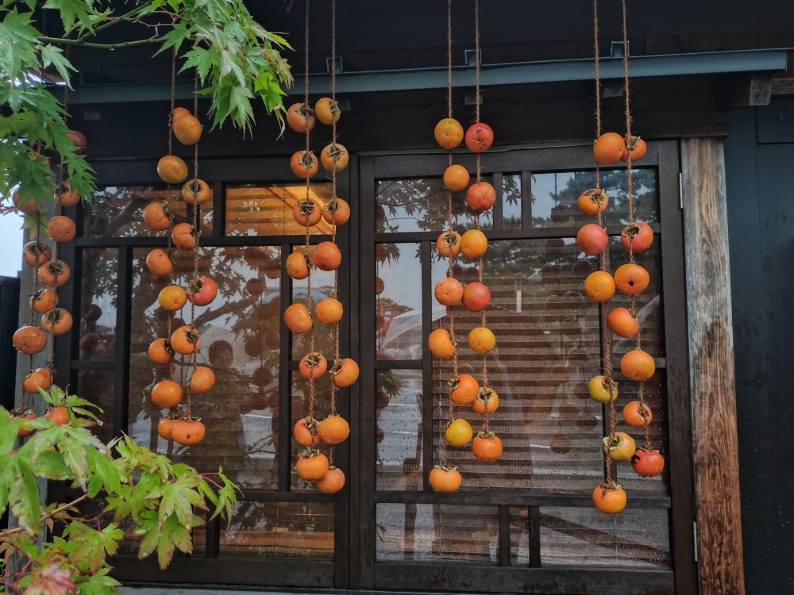
Persimmons hanging to dry outside a soba restaurant in Izumo, Shimane Prefecture.
Why Do Bitter Persimmons Become Sweet?
Interestingly, hoshigaki is usually made from shibugaki (渋柿), a type of persimmon that is too astringent to enjoy fresh.
Its sharp, puckering taste comes from soluble tannins. During drying, these tannins become insoluble, so the fruit no longer tastes astringent. At the same time, moisture evaporates and the natural sugars become more concentrated.
The result is a wonderfully sweet, chewy fruit — made without adding sugar.
Sometimes a delicate white powder appears on the surface of dried persimmons. This is not flour or added sugar, but natural sugars from the fruit that have crystallized.
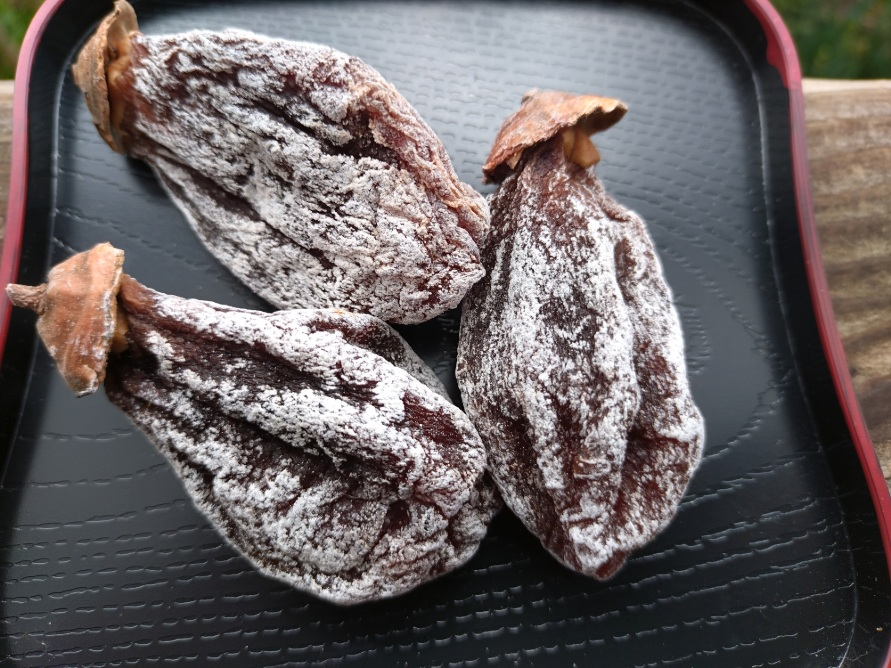
Homemade hoshigaki with a delicate coating of naturally crystallized fruit sugars.
A Taste of Japanese Tradition
Drying persimmons was also a practical way to preserve the autumn harvest for the colder months.
Today, hoshigaki remains a traditional sweet, often enjoyed with Japanese green tea.
I was fortunate to receive some homemade hoshigaki from a neighbor near my family home. Receiving this seasonal treat reminded me how traditional food customs continue to be passed along through everyday acts of sharing.
🍊 Explore the Season
The Taste of Autumn — Persimmons
Discover more about the history, cultural traditions, and personal stories surrounding kaki in Japan.

Amazake Milk — A Favorite with a New Perspective
In an earlier post, I shared amazake milk, a drink I first discovered at a small kōji-focused restaurant in Kyoto.
At the time, I enjoyed making it with convenient store-bought amazake.
Since then, I’ve begun taking lessons about kōji and experimenting with freshly prepared rice kōji. Through these experiences, I’ve come to appreciate the differences in preparation and processing between various amazake products.
There is still much to discover, and I look forward to sharing more about this fascinating part of Japanese food culture in a future article.

✨ November in a Few Words
Follow the crimson leaves along ancient temple paths.
Celebrate the children growing into their future.
Imagine the gods gathering beneath the skies of Izumo.
Find the sweetness of autumn hanging beneath the eaves.


コメント