

🌸Lead-in
In Japan, signs of Hinamatsuri (Girls’ Festival or Dolls’ Festival) begin to appear from around February,
when shops start displaying hina dolls and seasonal foods such as hina-arare, small colorful rice crackers associated with the Doll Festival.
Hinamatsuri, celebrated on March 3rd, is a traditional occasion that wishes for the health, happiness, and peaceful growth of children, especially girls.
Even in everyday spaces like shopping centers,
these gentle seasonal displays quietly announce the arrival of early spring.
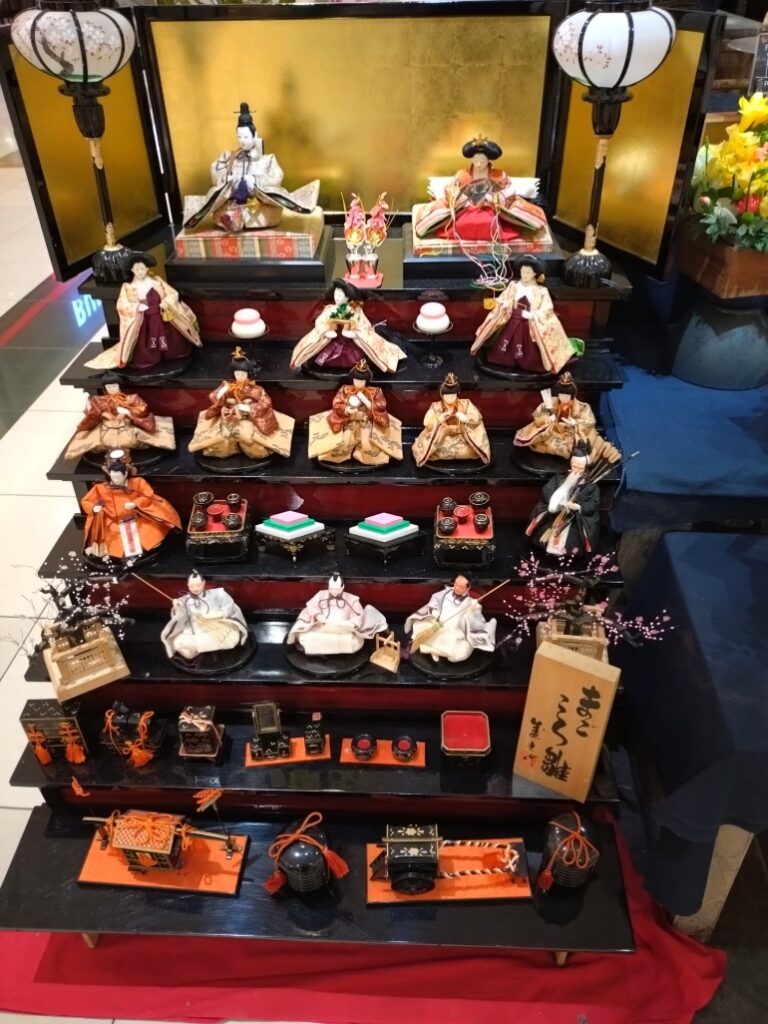
Hinamatsuri dolls displayed at a shopping center in Japan, quietly marking the approach of the Doll Festival season.
🎎The Symbolism of Hina Dolls
Hina dolls are more than seasonal decorations;
they are quietly regarded as symbolic figures that embody wishes for protection, harmony, and well-being.
When displayed during the Hinamatsuri season,
they represent gentle hopes for children’s healthy growth and a peaceful future.
Their refined appearance, careful arrangement, and elegant attire also reflect aesthetic values deeply rooted in Japanese culture,
where beauty, seasonality, and meaning are often expressed in subtle ways.
Even in modern settings such as homes, shops, and public displays,
hina dolls are appreciated not only for their visual beauty,
but also for the quiet cultural sentiments they carry from generation to generation.
Rather than being festive in a loud sense,
their presence creates a calm and reflective atmosphere that softly marks the arrival of the season.
⏳ A Gentle Historical Background
The historical origins of Hinamatsuri are not defined by a single event,
but are generally understood to have developed gradually from multiple cultural customs in Japan.
It is often said that one influence was the ancient purification practice known as “hina-nagashi,”
in which simple dolls were set afloat on rivers to symbolically carry away misfortune.
Another related tradition is “hiina-asobi,” a form of aristocratic doll play enjoyed during the Heian period.
Over time, these practices are believed to have gently evolved,
shifting from ritual and play into the seasonal hina doll displays seen today.
Rather than having a strictly fixed origin,
Hinamatsuri is often regarded as a tradition shaped by layers of seasonal belief, aesthetic refinement, and cultural continuity across generations.
🍡 Seasonal Foods of Hinamatsuri
Seasonal foods play a gentle and meaningful role in the celebration of Hinamatsuri,
reflecting wishes for health, happiness, and harmonious growth.
One of the most recognizable treats is hina-arare,
small colorful rice crackers traditionally enjoyed during the Doll Festival season.
Their soft pastel colors are often associated with the changing seasons and the quiet arrival of spring.
Depending on the region, hina-arare may be lightly sweet or mildly salted,
showing subtle variations in local food traditions.
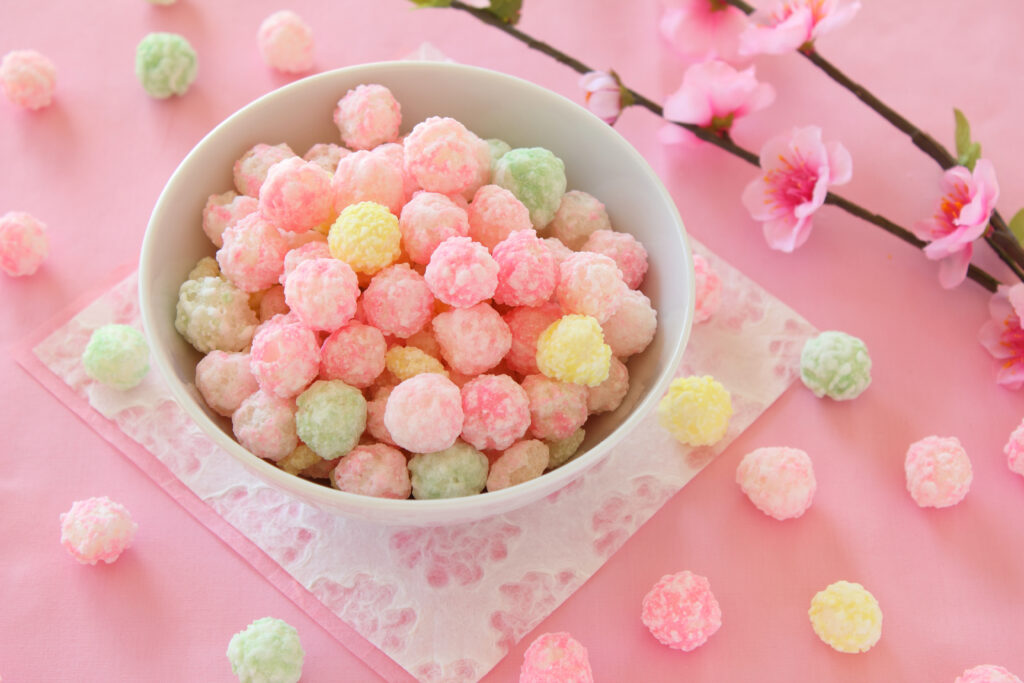
Hina-arare, small colorful rice crackers traditionally enjoyed during Hinamatsuri.
Another symbolic dish is clear clam soup made with hamaguri.
Because the two shells of a hamaguri clam match perfectly only with their original pair,
they are traditionally regarded as a symbol of harmony and a good future relationship.
For this reason, hamaguri is often included in Hinamatsuri meals as a gentle wish for well-being and auspicious connections.
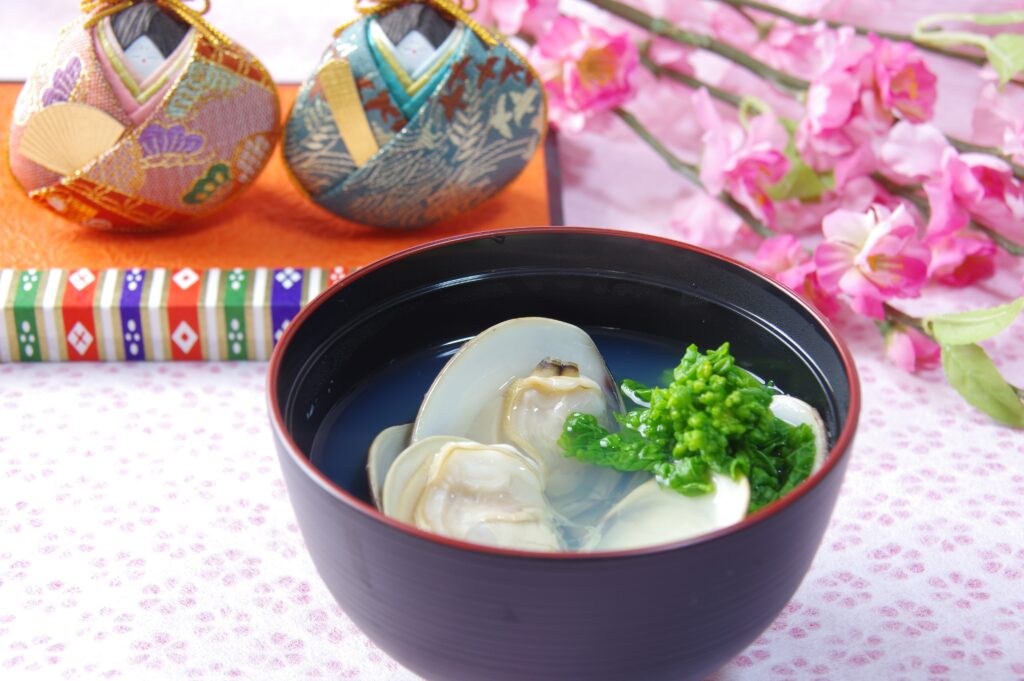
Clear clam soup (hamaguri) traditionally served during Hinamatsuri,
with hina dolls placed in the background, possibly crafted using clam shells.
Chirashi zushi is also commonly prepared,
with its colorful ingredients representing celebration and seasonal abundance.
In some homes, temari zushi — small, delicately shaped sushi balls —
are served as a festive and visually graceful dish suited to the occasion.
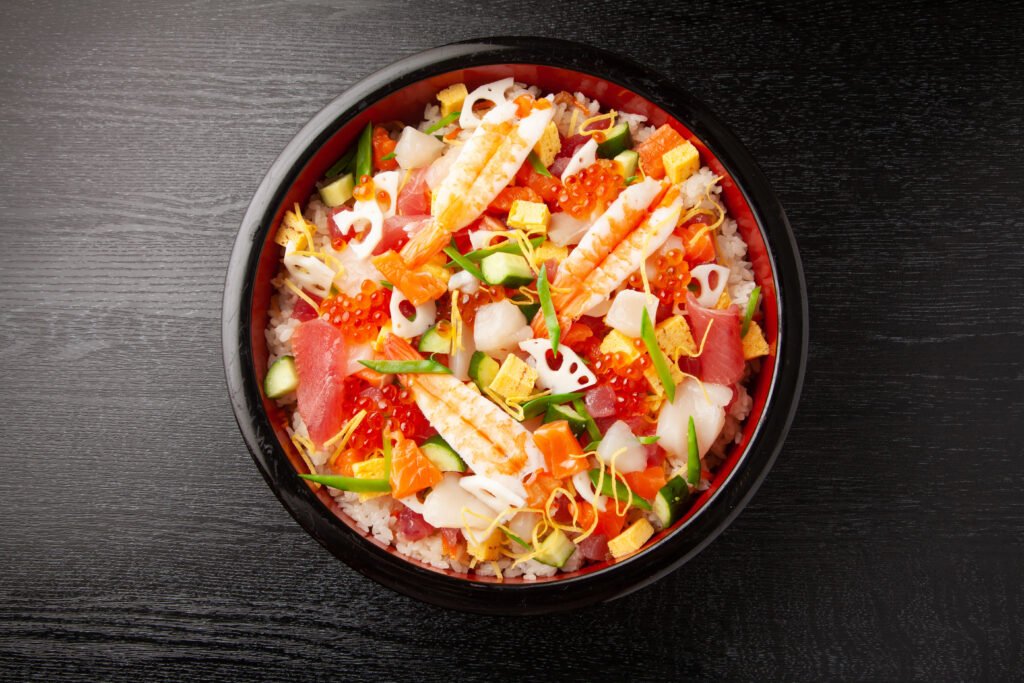
Chirashi zushi, a colorful celebratory dish often prepared for Hinamatsuri and other festive occasions in Japan.
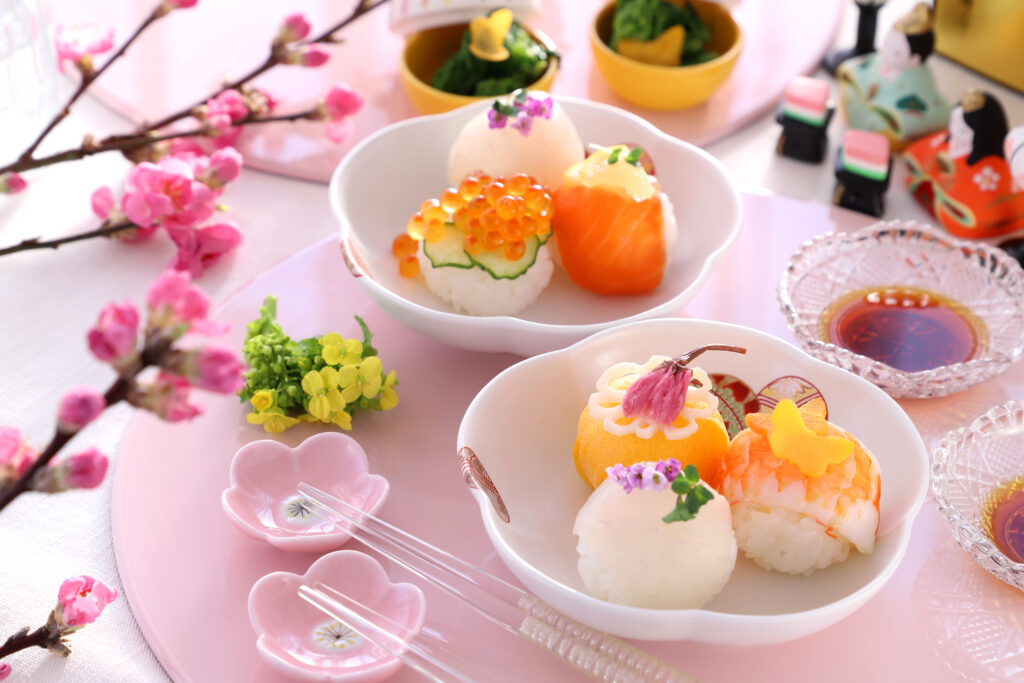
Temari zushi, delicately shaped sushi balls often served during Hinamatsuri for their graceful and festive appearance.
Hishimochi, layered diamond-shaped rice cakes in soft colors such as pink, white, and green,
are another traditional element associated with the festival.
These colors are often interpreted as symbols of seasonal transition, purity, and vitality,
quietly expressing hopes for protection and healthy growth.
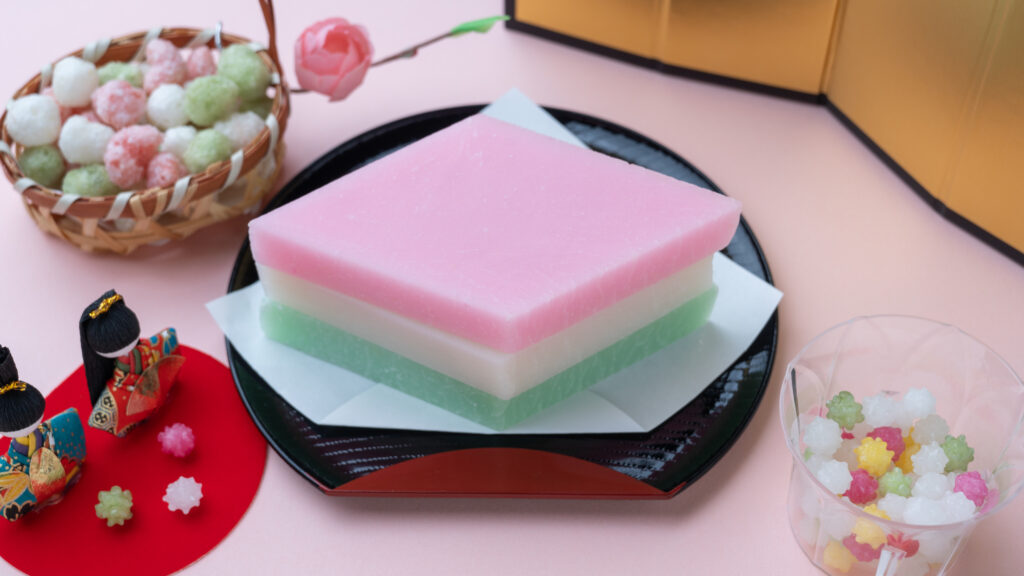
Hishimochi, a three-layered rice cake in soft pink, white, and green,
traditionally prepared for Hinamatsuri.
Even today, these foods are not always prepared in a formal manner,
but may appear in shops, homes, and seasonal displays,
gently connecting everyday life with traditional cultural customs.
🌷How Hinamatsuri is Celebrated Today
Today, Hinamatsuri is celebrated in quieter and more flexible ways than in the past.
In earlier times, families with daughters often displayed hina dolls at home,
sometimes on elaborate tiered platforms.
Today, however, living spaces and lifestyles have changed,
and many households choose smaller or simpler arrangements,
while others may celebrate the season through decorations, seasonal foods,
or gentle displays encountered in public spaces such as shops and cultural venues.
It was once commonly said that hina dolls should be put away soon after March 3rd,
or a daughter’s marriage would be delayed.
Today, this is often understood as a cultural saying shaped by values of an earlier era
rather than a literal belief.
Even now, Hinamatsuri is not always marked by grand displays or formal customs.
Instead, it often lives quietly through seasonal decorations, family memories,
and small moments that acknowledge the arrival of early spring.
In this way, the festival continues to exist not only as a tradition,
but as a gentle cultural presence woven into everyday life.
🎎 Regional Traditions and Seasonal Timing
While Hinamatsuri is widely celebrated on March 3rd,
seasonal customs can vary depending on the region.
In some areas, hina dolls are displayed for a longer period,
and in certain rural communities, the decorations may remain until early April,
reflecting traditions connected to the old lunar calendar and local seasonal rhythms.
In my own rural hometown as well, it sometimes felt natural
for seasonal displays to remain a little longer than the standard date.
For example, in traditional areas such as Dorogawa in Nara,
hina dolls may be displayed throughout March,
and in some places even until early April, reflecting older seasonal customs.
At one traditional inn, I was told that they continue to exhibit elaborate hina doll displays
alongside kimono and seasonal decorations during this period.
However, this does not necessarily mean that every household in the region follows the same practice,
as such extended displays and kimono exhibitions may be unique to specific cultural or hospitality settings.
These variations suggest that Hinamatsuri is not observed in exactly the same way everywhere.
Rather than being a strictly fixed event,
it gently adapts to local customs, climate, and the pace of life in each region.
Even today, this quiet flexibility allows the festival
to remain a living seasonal tradition
woven softly into both modern and traditional settings.
💭 Kaha’s Note
Traditionally, Hinamatsuri has been known as a festival that wishes for the health and happiness of girls,
while Children’s Day in May has been associated with the growth and well-being of boys.
Each occasion developed its own decorations, symbolic dolls, and seasonal foods over time.
Today, however, society has changed,
and it is no longer natural to view such traditions strictly through the lens of gender.
Some aspects of traditional customs may feel different when seen from a modern perspective.
Yet, beyond these historical meanings,
Hinamatsuri still holds a gentle cultural value that can be appreciated in many ways.
Rather than following customs in a fixed manner,
it may be more meaningful to adapt them to one’s own lifestyle
and enjoy the cultural atmosphere they bring into everyday life.
At my mother’s home, hina dolls are still carefully displayed each year as the season approaches.
Seeing them again quietly brings back memories of my childhood,
my grandmother, and the soft feeling of early spring in Japan.
I would like to continue displaying them,
not simply as decorations,
but as a way to gently reconnect with memory, family,
and the cultural rhythms that have accompanied the seasons for generations.
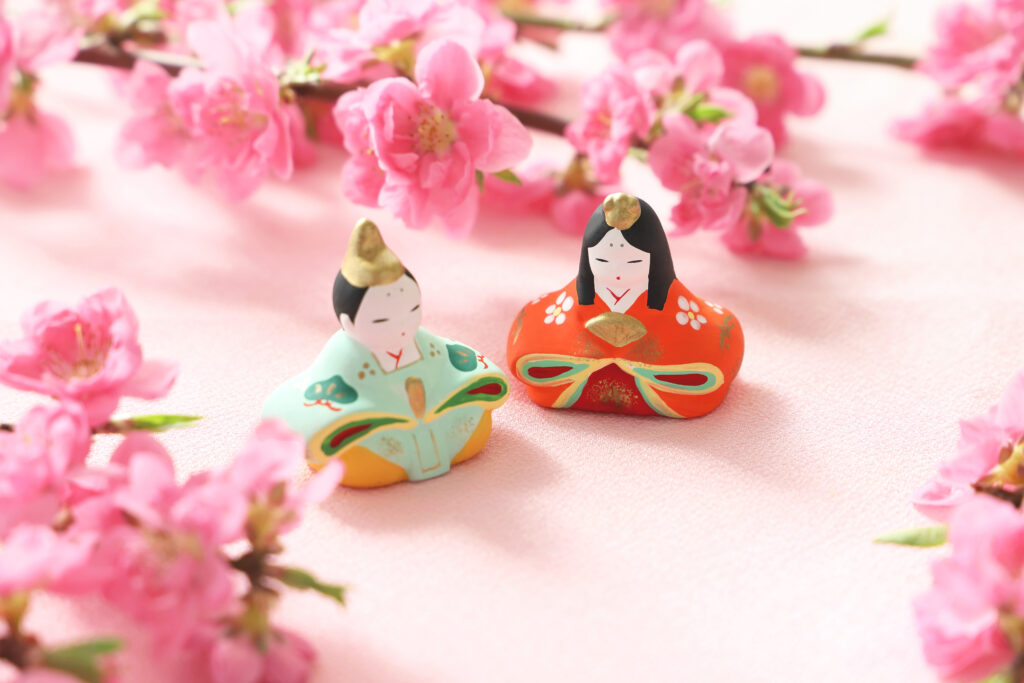
A small hina doll set suited to modern living spaces.
🌈Explore more
If you’d like to explore more reflections on Japanese seasonal culture and quiet spiritual moments, you’re warmly invited to continue here:
- 🌸 Earth Whispers #6: Plum Blossoms — The First Whisper of Spring
https://8rainbow.work/%f0%9f%8c%9fearth-whispers-6-plum-blossoms-the-first-whisper-of-spring/
Plum blossoms arrive first — and soon, cherry blossoms will follow.


コメント