

⛩️Lead-in
Many visitors come to Fushimi Inari Taisha to walk through the famous Thousand Torii Gates. But beyond the iconic vermilion tunnels lies another world—one filled with hidden shrines, sacred trees, ancient traditions, and quiet encounters waiting to be discovered.
As the head shrine of more than 30,000 Inari shrines across Japan, Fushimi Inari is far more than one of Kyoto’s most famous landmarks. It is a sacred mountain where history, faith, and nature have been intertwined for over 1,300 years.
Today, let’s step beyond the famous torii gates and discover the hidden encounters that make Fushimi Inari truly unforgettable.
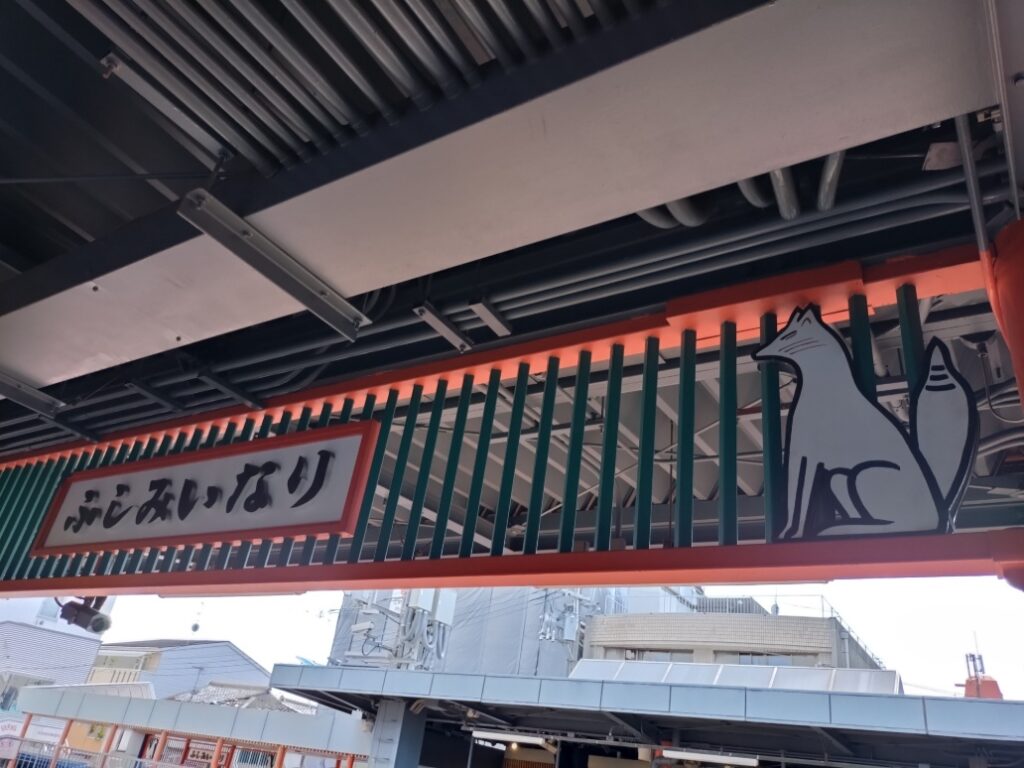
Even before reaching the shrine, Fushimi Inari Station welcomes visitors into the world of Inari with its vivid vermilion design and fox-inspired details.
✨ A Glimpse of This Journey
A few moments from this journey have already been shared on Instagram. If you’d like to see more photos and a short video from Fushimi Inari, feel free to visit @8rainbowawakening.jp.
🦊What Is Inari?
Inari, affectionately known in Japan as O-Inari-san, is one of the country’s most familiar and widely worshipped divine presences.
Originally associated with rice, agriculture, and abundant harvests, Inari worship gradually came to embrace many forms of prosperity in everyday life—including success in business, the well-being of the household, and the fulfilment of personal wishes.
The principal deity associated with Inari worship is Ukano-Mitama Ōkami, a deity deeply connected with food, fertility, and earthly abundance.
Foxes are often seen throughout Inari shrines, but they are not the deity themselves. They are regarded as the sacred messengers of Inari Ōkami, which is why fox statues often stand near shrine entrances and sacred spaces.
To learn more about Ukano-Mitama and the deeper meaning of earthly abundance, visit my previous article:
🔗 Divine Thread #13 │ Ukano-Mitama – Goddess of Earthly Abundance
https://8rainbow.work/%f0%9f%a7%b5divine-thread-13-ukano-mitama-goddess-of-earthly-abundance/
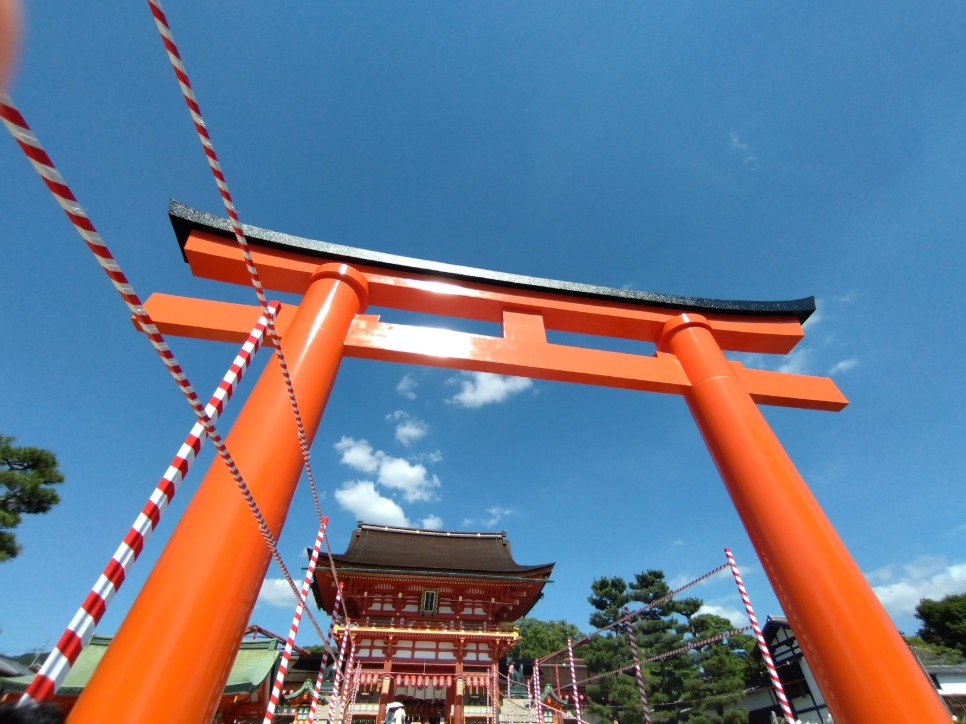
Great Torii Gate The great torii marks the entrance to the sacred world of Fushimi Inari. During my visit, preparations for the summer festival had already begun, adding another layer of seasonal tradition to the shrine.
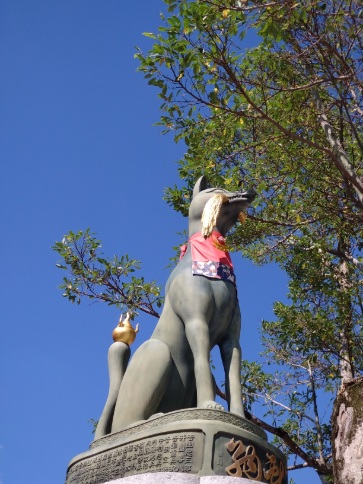
Sacred Fox Messenger Foxes are the sacred messengers of Inari Ōkami and can be found throughout Fushimi Inari Taisha.
🙏 The Five Deities of Fushimi Inari Taisha
Unlike many visitors realize, Fushimi Inari Taisha enshrines five deities rather than just one. Together, they are collectively known as Inari Ōkami, with each deity representing one of the great virtues of Inari.
The five deities are:
- Ukanomitama no Ōkami (宇迦之御魂大神)
- Satahiko no Ōkami (佐田彦大神)
- Ōmiyanome no Ōkami (大宮能売大神)
- Tanaka no Ōkami (田中大神)
- Shino Ōkami (四大神)
Together, these five deities embody the many virtues and blessings of Inari Ōkami. For centuries, people have visited Fushimi Inari to pray for abundant harvests, prosperity in business, household well-being, and the fulfillment of their wishes.
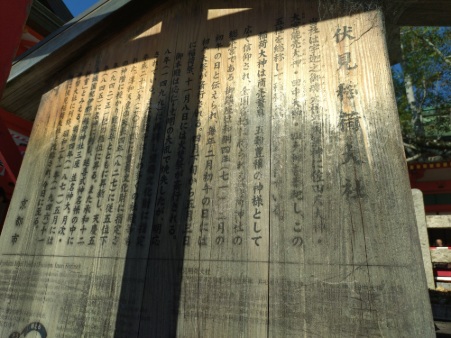
The shrine’s official sign introduces the five deities collectively known as Inari Ōkami, each representing one of the great virtues of Inari.
⛩️ The Thousand Torii Gates
One of the most iconic sights at Fushimi Inari Taisha is the Senbon Torii (千本鳥居), or “Thousand Torii Gates.” While senbon literally means “one thousand,” the name is traditionally used to express “countless” or “many.” In fact, approximately 10,000 vermilion torii gates are spread throughout Mount Inari, creating breathtaking pathways through the sacred forest.
These torii have been dedicated by worshippers from across Japan as offerings of gratitude or prayers for wishes yet to be fulfilled. If you look closely, you will notice that the name of the donor and the date of dedication are inscribed on the back of each gate.
Walking through the seemingly endless tunnels of vermilion torii is more than one of Kyoto’s most memorable experiences—it is a symbolic journey, leaving the ordinary world behind and stepping into the sacred realm of Inari Ōkami.
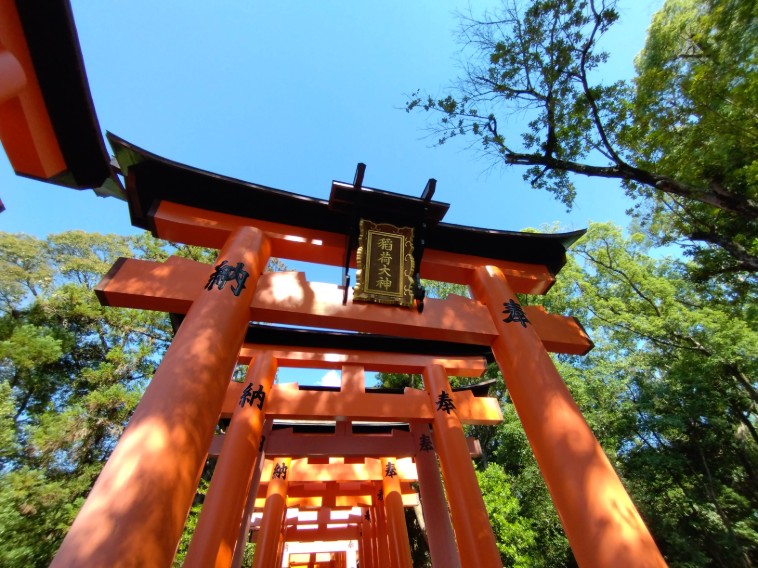
The Entrance to the Senbon Torii The first rows of vermilion torii welcome visitors into the sacred mountain of Inari, where thousands of gates have been dedicated over generations.
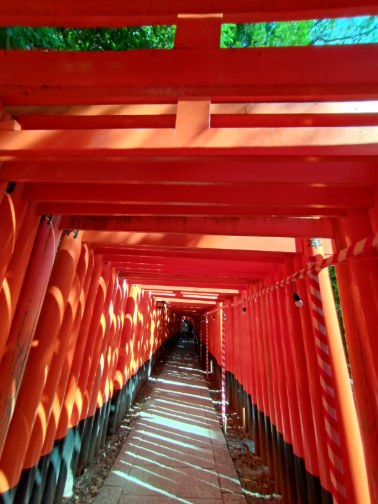
Inside the Senbon Torii Walking beneath the endless rows of vermilion torii is one of the most unforgettable experiences at Fushimi Inari Taisha.
🌿Hidden Encounters Beyond the Torii
While following the famous Senbon Torii, I noticed a few small paths leading away from the crowds. Curious to see where they would lead, I discovered another side of Fushimi Inari—quiet, sacred places that many visitors may simply pass by.
Two of my favorite discoveries were a sacred healing pine and a peaceful cluster of hidden shrines, each revealing a different aspect of Inari’s rich spiritual tradition.
🌲 The Sacred Healing Tree
Tucked away just off the main path stands Neagari no Matsu (値上がりの松), a sacred pine whose roots rise above the ground. Its name carries a double meaning in Japanese: while “neagari” literally means “raised roots,” it also sounds like “rising prices,” making it a popular place to pray for prosperity and business success.
The tree is also affectionately known as Hizamatsu-san (膝松:”Knee Pine”). Visitors pray here for relief from knee or back pain by walking beneath the raised roots or gently touching the tree before touching the affected part of their own body.
This unique tradition beautifully reflects the way Japanese spirituality connects nature, language, and everyday hopes, transforming an ordinary pine into a place of healing and blessing.
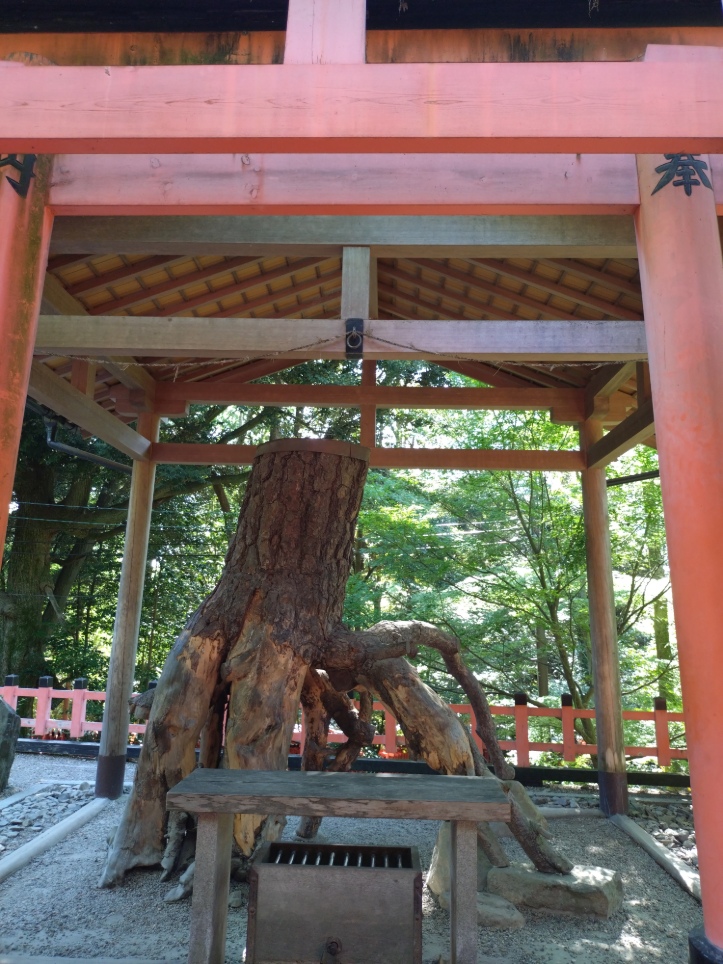
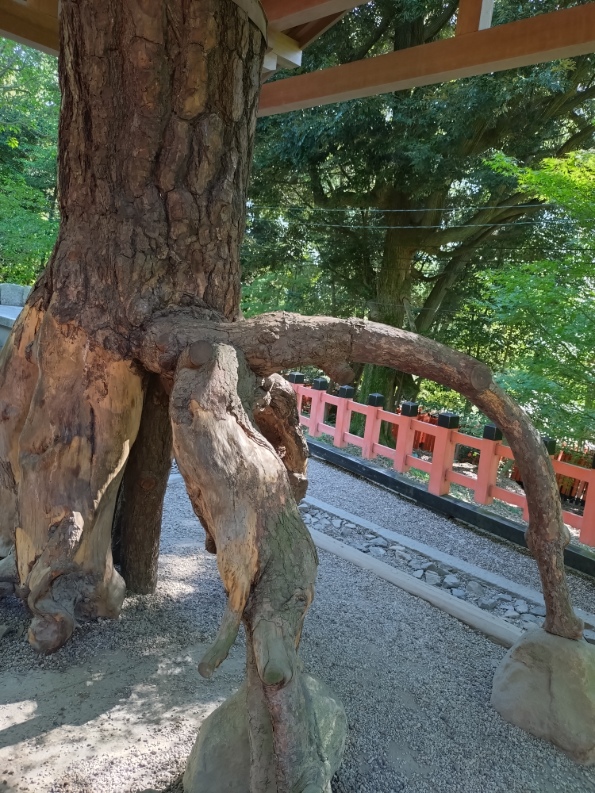
Neagari no Matsu (Hizamatsu-san) Known as both the “Root-Rising Pine” and the “Knee Pine,” this sacred tree is visited by people praying for prosperity, good health, and healing.
🎥Watch on YouTube 👉https://youtube.com/shorts/0GHDXJt2984 Experience the peaceful atmosphere of Neagari no Matsu (The Sacred Healing Tree) and discover why this quiet corner of Fushimi Inari has been cherished for generations.
🪨Otsuka – Hidden Shrines of Mount Inari
While following one of the quieter side paths, I came across a peaceful Otsuka (お塚), a small sacred area where numerous stone altars and shrines stand together. Unlike the main shrine buildings, these places reflect a more personal and intimate form of Inari worship, created through generations of devotion.
As I looked more closely, I noticed that one of the central stones was dedicated to Amaterasu Ōmikami, the Sun Goddess. Continuing around the shrine, I then discovered another stone inscribed with the name Tamahime Ōkami. I noticed a fox statue also standing nearby, giving this quiet corner a distinctive atmosphere unlike anywhere else I visited within the shrine grounds.
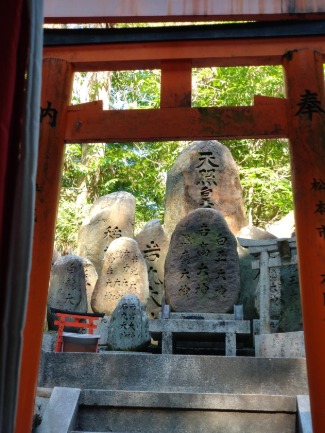
A stone monument dedicated to Amaterasu Ōmikami, the Sun Goddess, stands at the center of this quiet Otsuka, framed by a small torii gate.
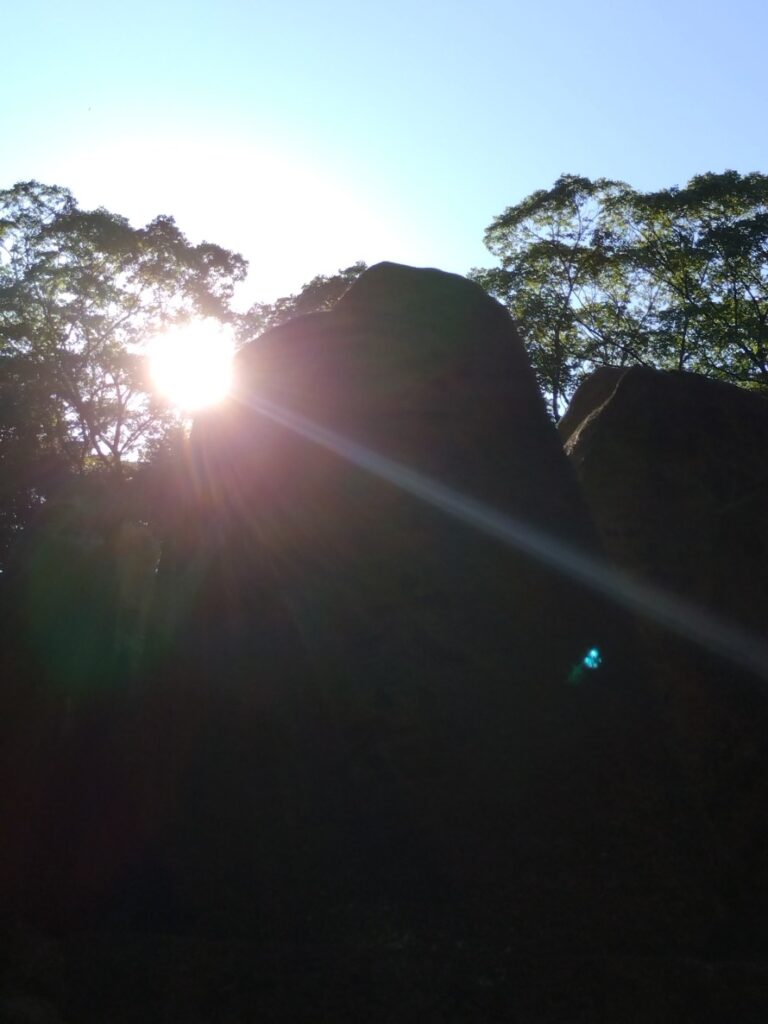
Sunlight illuminated the Otsuka as I explored this peaceful corner. Although the inscription is difficult to read in the light, the stone dedicated to Tamahime Ōkami stands where the sun’s rays gently fall, creating a memorable moment during my visit.
After returning home, I became curious about Tamahime Ōkami. Although there are various interpretations, some sources suggest that Tamahime Ōkami (玉姫大神) may refer to Ukanomitama Ōkami, the principal deity of Inari worship. Learning this made the encounter feel even more meaningful to me.
Nearby, I also noticed a small shrine with a sign inviting visitors to pray for world peace. Seeing this in a place visited by people from around the world made me feel that it remains a meaningful prayer for our time.
These unexpected discoveries reminded me that Fushimi Inari is far more than the famous torii gates. Sometimes, simply taking a small detour reveals another layer of its rich spiritual tradition.
🌿 Looking Ahead
If I share a video of this peaceful corner in the future, I’ll add it to What’s New? and the Rainbow Threads index so it’s easy to find.
💖Kaha’s Note
I had visited Fushimi Inari once before, a long time ago. Back then, I came simply because someone invited me. I wasn’t particularly interested in the shrine itself, nor had I begun exploring spirituality, so apart from the famous torii gates, I don’t remember very much.
This time was different.
For reasons I couldn’t quite explain, I simply felt drawn to return. Instead of walking straight through the shrine, I found myself slowing down, taking small detours, and noticing details I would have easily passed by before.
Those quiet moments led me to hidden shrines, a sacred healing pine, and unexpected discoveries that completely changed my impression of Fushimi Inari.
The lively approach to the shrine was also part of the experience. Filled with traditional shops, modern cafés, and local specialties, the approach to the shrine felt like another expression of the abundance that Inari has symbolized for centuries.
After buying souvenirs for my family and friends, the shop owner kindly gave me a broken fox-shaped rice cracker that could no longer be sold. It was such a small gesture, yet it became one of the memories that stayed with me the most.
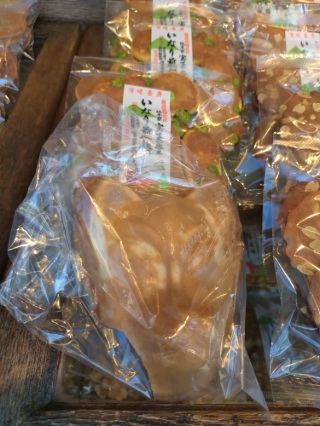
A fox-shaped rice cracker, kindly gifted by a shop owner—a simple gesture that made my visit to Fushimi Inari even more memorable.
To finish the day, I enjoyed a rich matcha soft serve ice cream. On such a hot summer afternoon, it tasted even better than I had expected.
Looking back, I realized that it wasn’t Fushimi Inari that had changed—it was me.
Sometimes, when we revisit the same place at a different stage of life, it quietly reveals a completely new story. 🦊⛩️✨
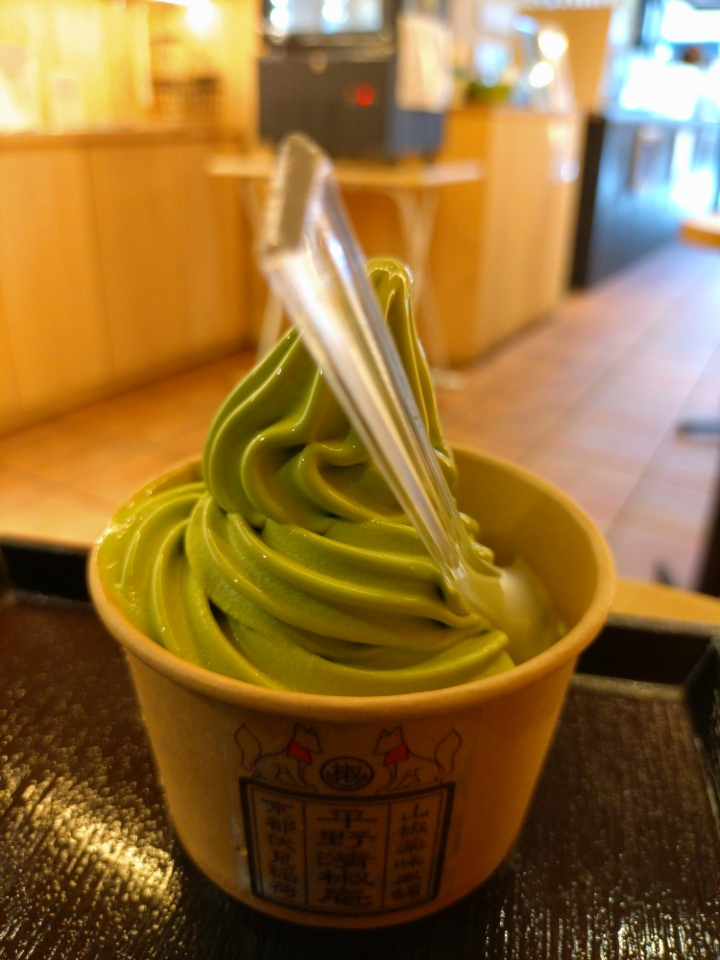
One last taste of Kyoto—a rich matcha soft serve enjoyed after a day filled with hidden encounters and quiet discoveries.
🌈Explore More
If you’d like to discover more about Japan’s sacred places, hidden traditions, and meaningful journeys, explore the articles below or visit the homepage to continue your journey.


コメント