

The Chanting Heart of Kyoto’s Sacred Night
- ✨ Lead-in
- ⛩️ Shinto-Buddhist Harmony in Gion Matsuri(祇園祭)
- 🎐 Gion’s Streets as Sacred Stage
- 👘 The Maiko and the Spirit of Elegance
- 🔥 The Power of Movement and Sound
- 🛕 Rituals of a City in Motion
- 🗺️ Gion Matsuri Map & Recommended Walking Route
- 🎒 Practical Tips for Visitors
- 🏯 Kyoto Tourist Info & Useful Links
- 🕊 Kaha’s Note
- 📚 Posts:
- 🔚 Back to Home
✨ Lead-in
Step into Kyoto’s sacred pulse—where ancient spirits ride towering floats, chants echo down lantern-lit streets, and the city moves in harmony with its mythic past.
Gion Matsuri isn’t just a festival; it’s a living heartbeat passed through generations, still felt in every corner of Kyoto each July.
⛩️ Shinto-Buddhist Harmony in Gion Matsuri(祇園祭)
How divine traditions merged to shape Kyoto’s most iconic festival
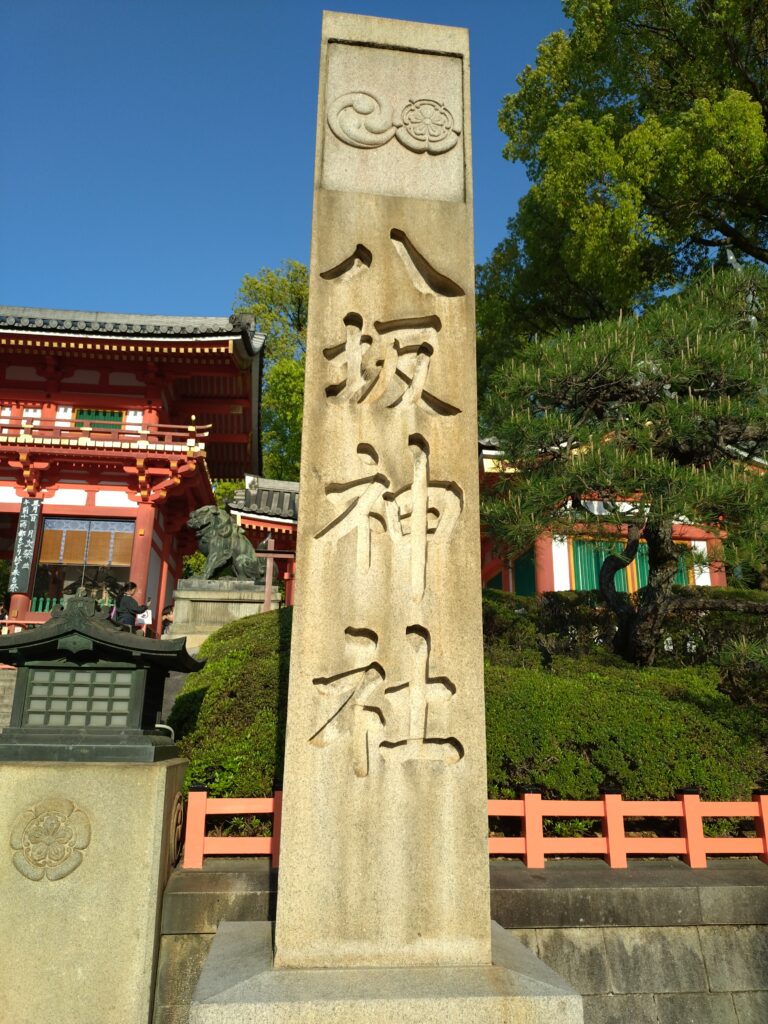
The stone pillar proudly declaring “Yasaka Shrine”—a symbol of spiritual authority in Gion.
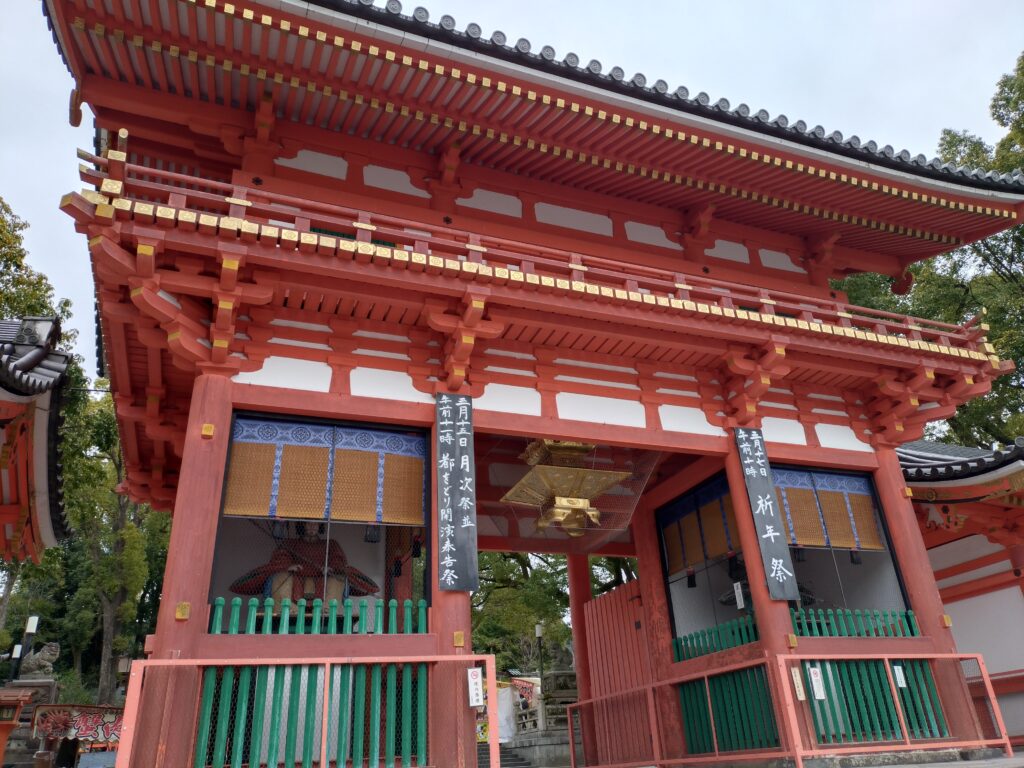
Yasaka Shrine’s grand gate, where Kyoto’s prayers for protection have echoed since the 9th century. This photo was taken earlier this year.
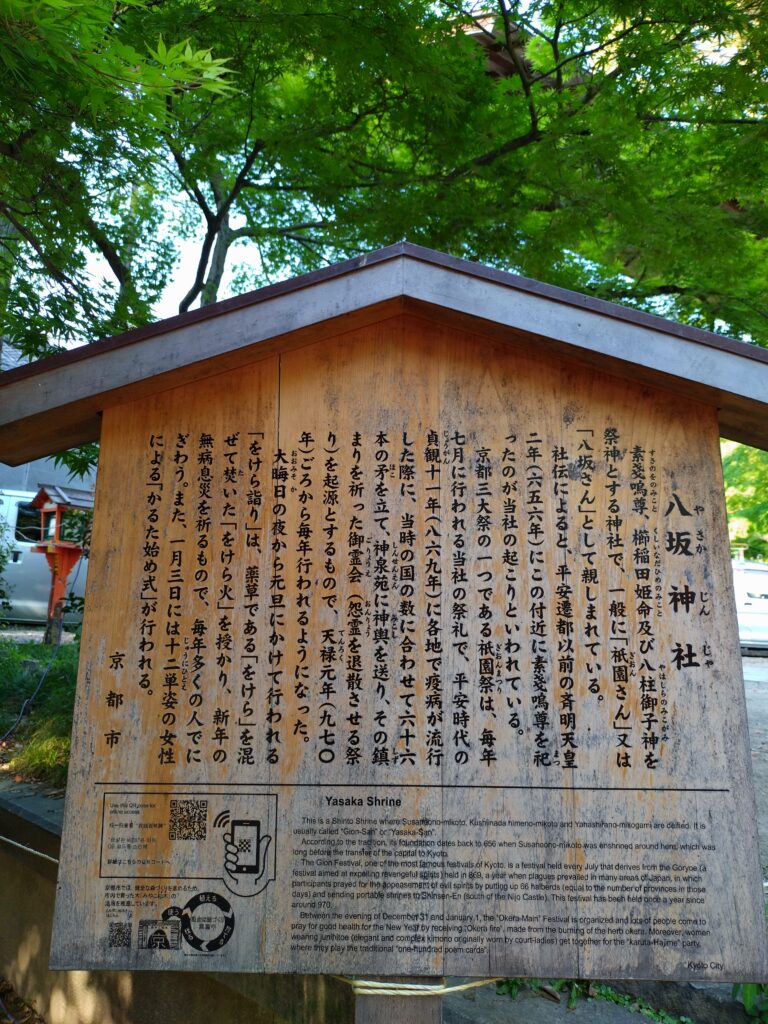
A wooden sign at Yasaka Shrine (八坂神社)explains the origins of the Gion Matsuri, tracing it back to pleas for divine help during an ancient epidemic.
Interestingly, Yasaka Shrine’s own inscriptions describe Susanoo-no-Mikoto—the heroic Shinto storm god who slays Yamata-no-Orochi—as its enshrined deity.
However, historical sources trace the festival’s origin to Gozu Tennō, a deity once feared as the source of plague and divine punishment. In 869, Kyoto faced a deadly epidemic, and rituals were performed to calm this fearsome force and transform crisis into protection.
Over centuries, these two deities became spiritually intertwined, a reflection of Japan’s unique tradition of shinbutsu shūgō—where Shinto and Buddhist beliefs don’t conflict, but coexist and evolve together.
Just as Benzaiten and Ichikishima-hime became fused in coastal shrines, so too did Gozu Tennō and Susanoo converge in Kyoto’s sacred heart.
To walk the streets of Gion Matsuri is not simply to celebrate—it’s to enter a space shaped by layered belief, resilience, and reverence.
This is not a festival of conflict. It is a festival of harmony.
🎐 Gion’s Streets as Sacred Stage
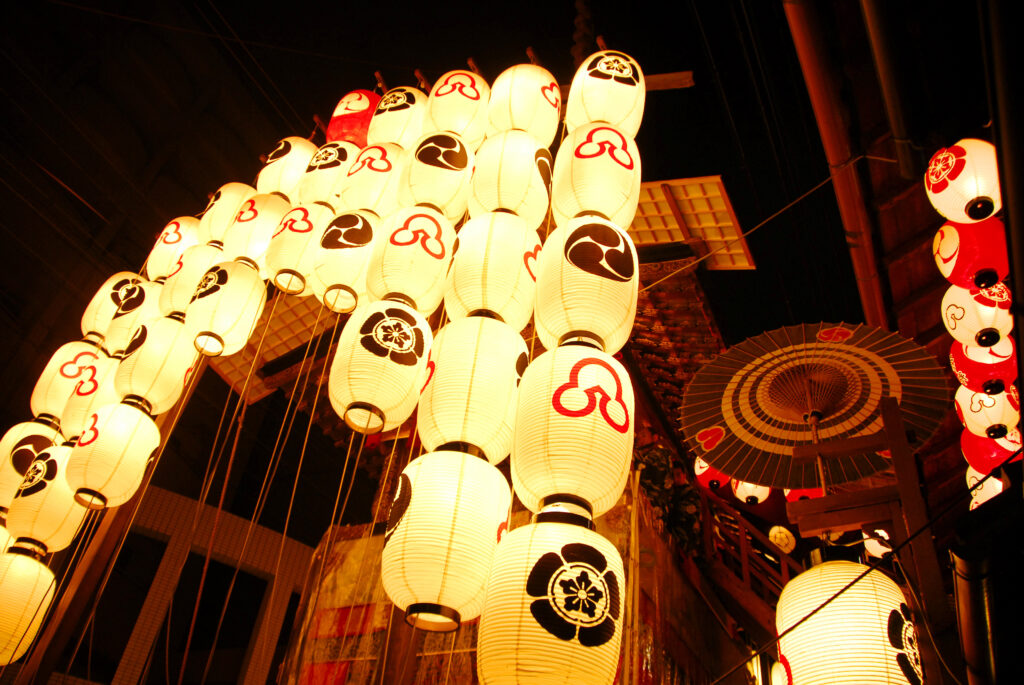
A stunning night view of the festival float glowing with lanterns—it’s like a sacred ship navigating Kyoto’s summer streets.
From July 1st to 31st, Kyoto becomes a sacred stage.
The Yamaboko Junko (山鉾巡行) floats dominate the city during the Saki Matsuri (July 17) and Ato Matsuri (July 24), moving through Shijō, Kawaramachi, and Oike Streets.
Each float—hand-built and centuries old—is pulled by teams chanting yoiyoiyoiyo, their wheels groaning like spirits moving through time.
The city glows during Yoiyama nights (July 14–16 & 21–23), where lanterns light side streets, food stalls fill the air with summer aromas, and crowds wander between sacred and festive.
👘 The Maiko and the Spirit of Elegance
In the flow of festival nights, Kyoto’s maiko appear like floating memories.
They offer prayers at Yasaka Shrine, dressed in seasonal kimono, moving with grace between ritual and spectacle.
Their presence is tradition embodied—not for show, but as part of Kyoto’s living spirit.
🔥 The Power of Movement and Sound
Wheels rumble, voices rise, and Kyoto’s streets come alive with summer spirit.
This isn’t just celebration—it’s sacred choreography.
Even visitors unfamiliar with the myths feel it: a rhythm beneath their feet, echoing down stone alleyways.
It’s not just a performance. It’s presence.
🛕 Rituals of a City in Motion
Daily rituals at Yasaka Shrine continue all month: purification rites, offerings, and blessings.
Gion Matsuri began as a plea in crisis, and it survives as a testament to transformation.
Fear was not exiled—it was embraced, honored, and turned into protection through faith.
In every chant, in every glow, that transformation lives on.
🗺️ Gion Matsuri Map & Recommended Walking Route
Navigate Kyoto’s sacred streets with intention
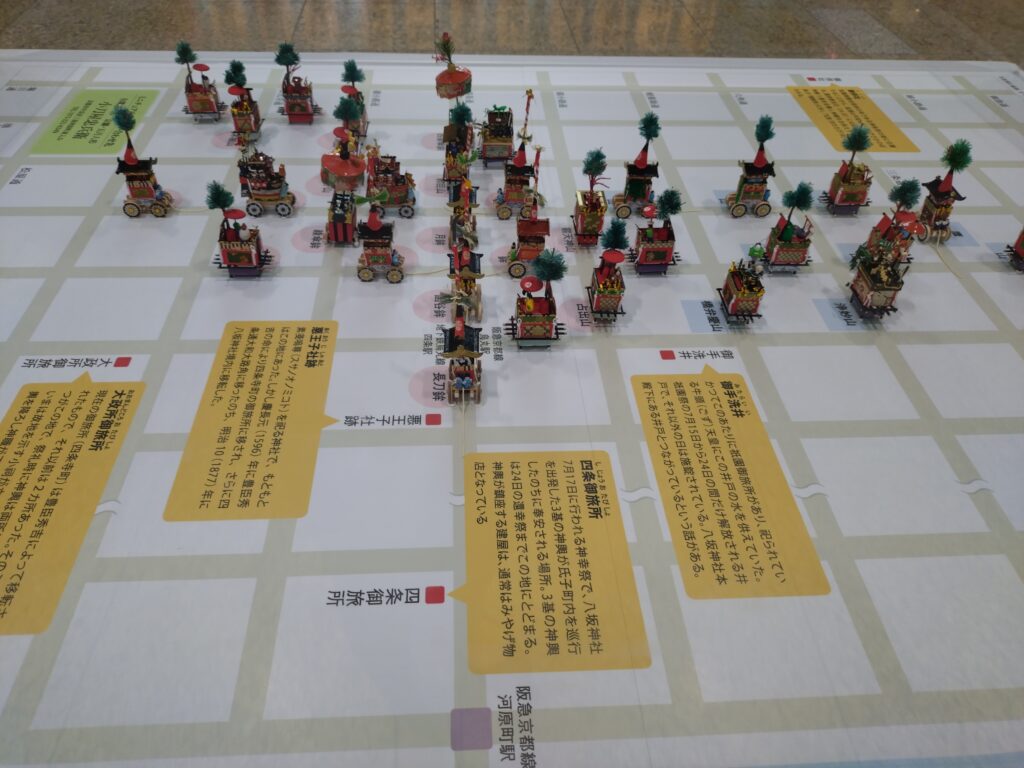
A miniature model of the entire float route just outside the ticket wicket of JR Kyoto Station, showing all the yamaboko placements and flow through downtown Kyoto.
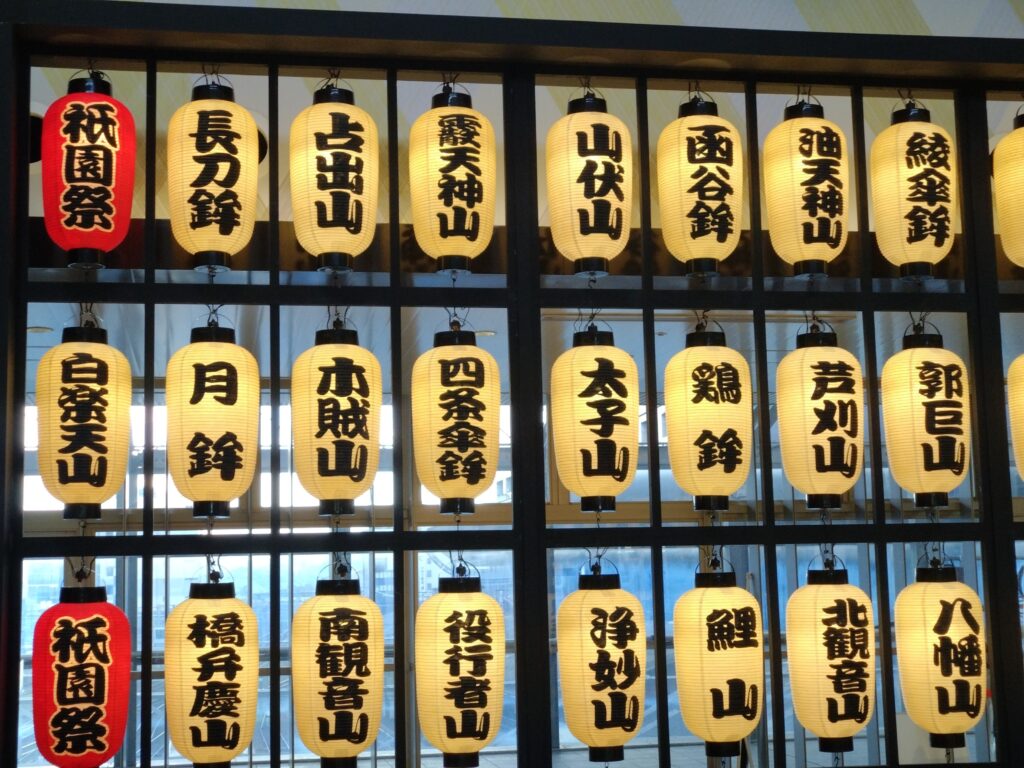
Lanterns line the wall, each one labeled with the name of a float—offering a glowing tribute to the spiritual guardians of the city.
🧭 Suggested walking route:
- Yasaka Shrine →start point; near Gion‑Shijō & Kawaramachi
- Shijō Street →main float parade path.
- Kawaramachi Street → crowd intensifies.
- Oike Street (float turns) →see floats perform dramatic turns.
- Optional: Hanamikoji & Kenninji Temple →for historic ambiance.
- Return via Yoiyama lantern alleys→ (July 14–16 & 21–23) full of lanterns, street food, and music.
🗺️ Float route maps:
- JRailPass: Gion Matsuri Overview
- Kyoto Travel: Official Festival Guide
🎒 Practical Tips for Visitors
A joyful festival, but plan wisely
- ✅ Yes—there are plenty of yatai!
You’ll find takoyaki, yakisoba, kakigōri, grilled squid.
➤ Bring cash. Some stalls don’t accept IC cards. - 🚇 Charge your IC card (Suica, PASMO) in advance.
Transit gets jammed—especially post 4 p.m. on July 17 & Yoiyama nights. - 🌞 Kyoto in July = hot & humid.
Bring water, fans, cooling towels. Heatstroke is a real risk. - 🍽️ Dining flexibility is key.
Don’t rely on restaurants—enjoy street food and keep moving. - 🚶♀️ Go with the flow.
Crowds move slow. Float-watching takes patience—but rewards immersion.
🏯 Kyoto Tourist Info & Useful Links
📌 Tourist Centers:
- Kyoto Station Info Center
(Open daily 9 a.m.–7 p.m., multilingual, free maps) - Gion Info Desk
(Open during July; float updates, tips, real-time help)
🌐 Event Resources:
- GionFestival.org – Official Festival Schedule
- Kyoto Travel – Festival Maps & Updates
- JapanTravel.com – Visitor Advice
🌀 Gion Matsuri is not just a spectacle—it’s a living, breathing city event. You won’t “control” it—but you’ll become part of it. Amid the chants, lantern glow, and summer heat, many say they feel a surge of divine energy and collective joy that only Kyoto in July can offer.
🕊 Kaha’s Note
After the stillness of Nara, Kyoto feels like it breathes fire. Not in a violent way, but with focused vitality.
The floats don’t just move—they command. The chants don’t just echo—they shake.
And yet, there’s calm in the chaos. Like everything is exactly where it should be.
It’s said that the rhythm of the floats and the glow of lanterns have a way of touching even casual onlookers.
Maybe it’s the sound. Maybe it’s the history.
Or maybe, just maybe, it’s something deeper.
📚 Posts:
Now available
👉Divine Thread #1: Benzaiten: The Hidden Water Face of Saraswati Discover the Goddess of Flow, music and wisdom widely worshipped in Japan.
👉Divine Thread #2: Konohanasakuya-hime: Flame, Flower, and the Feminine Divine
Discover the spirit of Mount Fuji, who burns yet protects—Japan’s volcanic goddess of transformation.
What’s Next
👉Earth Whispers <Soulful Shares:Ancient Lotus Flower now in Bloom!(Working Title)Meet Lotus flowers in Japan.
👉Crystal Light #2:Seiryu Stone│A powerful stone from Yasaka Shrine, which brings protection and purification.
🔚 Back to Home
Want to explore more places and stories in Japan?
👉 Return to the main page(http://8rainbow.work)

コメント