
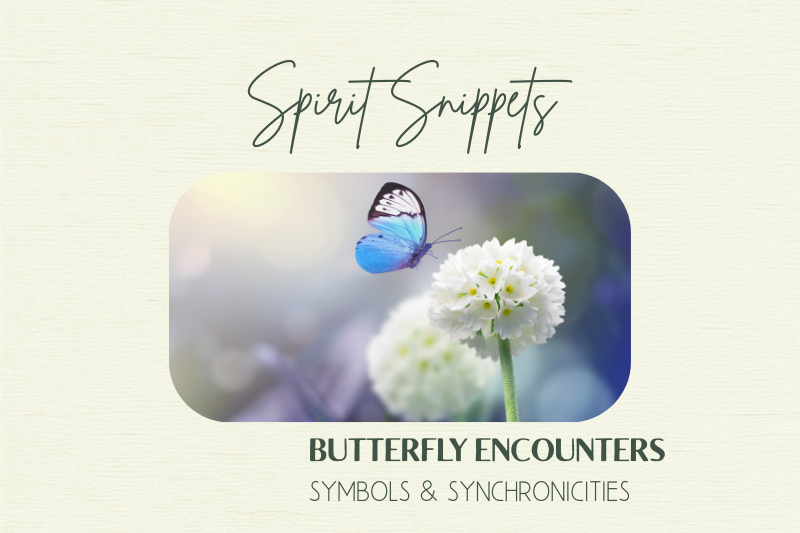
- 🦋 Lead-in
- 🗾 Butterflies in Japanese Culture & Spiritual Traditions
- 🎨 Butterfly Colors & Their Spiritual Meanings
- ✨ Places, Moments & Butterfly Encounters
- 🏝️ Black Butterflies on Awaji Island
- 🐉 Butterflies on Okami Island and at Tsunekami Shrine
- 🎥 Butterfly Encounters at Sacred Places
- 💙 Kaha’s Note
- 🌈 Explore More
🦋 Lead-in
During my journeys to sacred places in Japan, I have encountered butterflies again and again — in many different colors and in many different settings.
This August, on the mountain path to Oi-no-Shimizu on Awaji Island, I saw many black butterflies. They appeared both on my way to the sacred spring and again on my return journey.
Because butterflies have also appeared during many of my other visits to shrines, temples, and sacred landscapes — including at Ise Jingū and many other places across Japan — these repeated encounters made me pause and look back at the pattern more closely.
Why have butterflies become symbols of transformation, the soul, and good fortune? And what might their color, location, or repeated appearance add to the meaning of an encounter?
In this Spirit Snippet, we’ll explore butterflies in Japanese culture and spiritual traditions, along with some of the memorable encounters that have accompanied my own sacred journeys across Japan.
🗾 Butterflies in Japanese Culture & Spiritual Traditions
Butterflies have long appeared in Japanese art and culture. Their delicate forms can be found on kimono, Noh costumes, lacquerware, paintings, and family crests.
Butterfly designs also became family crests known as chō-mon (蝶紋). One of the best-known forms is the ageha-chō mon (揚羽蝶紋), particularly associated with the Taira clan and later used by other warrior families.
Butterflies also appear in the history of Japanese wedding traditions. Some Edo-period wedding robes were decorated with pairs of folded-paper butterflies representing the newly married couple. In some Shinto wedding ceremonies, small ornaments known as ochō and mechō (雄蝶・雌蝶) may be attached to the sake vessels used during san-san-kudo (三々九度) — the ceremonial exchange of sake between the bride and groom.
However, butterflies are not necessarily a prominent or widely recognized feature of weddings in Japan today. These ornaments are small details, and customs vary depending on the shrine, region, and style of ceremony. Even people who have attended a Japanese wedding may not have noticed them.
The butterfly’s life cycle has also made it a natural symbol of transformation, growth, renewal, and new beginnings. It begins as an egg, emerges as a caterpillar, enters the stillness of the chrysalis, and finally appears with wings — able to enter a world it could not reach before.
In some Japanese folk beliefs and stories, butterflies have also been associated with the soul, whether living or departed. Their light, silent movement and their ability to appear and disappear so suddenly may have contributed to this mysterious connection.
Today, some people interpret a butterfly appearing after the loss of a loved one, near a grave, or during a meaningful moment as a sign of remembrance or spiritual presence. This is not one belief shared by everyone in Japan, nor does every butterfly traditionally represent a soul. Still, the association helps explain why an unexpected butterfly can feel like a quiet messenger from something unseen.
🎨 Butterfly Colors & Their Spiritual Meanings
Butterfly encounters are often interpreted through their color, with each color inspiring different symbolic meanings.
These are not fixed meanings from traditional Japanese culture. Many are modern spiritual interpretations, and their meanings can vary depending on the source, culture, and person. They are best understood as themes for reflection rather than as a universal symbolic code.
Black — Black butterflies are often associated with major transformation, protection, intuition, energetic change, and messages connected with ancestors. Although they may initially appear mysterious or even ominous, they are frequently interpreted in a positive way. When a black butterfly appears at a shrine or another sacred place, some people regard it as a sign of welcome, protection, or acknowledgment from the deity of the place.
White — White butterflies are commonly associated with purity, peace, protection, good fortune, and new beginnings. They are also sometimes regarded as messengers of the divine or as a gentle spiritual presence, especially when they appear at a shrine, temple, or during a moment of prayer.
Yellow — Yellow butterflies are often linked with joy, hope, optimism, abundance, and good fortune. Their bright color can evoke sunlight, warmth, and the arrival of a lighter phase of life.
Orange — Orange butterflies are associated with vitality, encouragement, courage, creativity, and taking action. Their appearance may feel like an invitation to move forward with confidence or begin something new.
Blue — Blue butterflies are often connected with truth, sincerity, communication, meaningful relationships, intuition, and spiritual connection. Their striking color can also leave a strong sense of wonder and mystery.
Green — Green butterflies are commonly associated with growth, healing, harmony, renewal, and regeneration. Their color naturally evokes forests, plants, and new life, making them a gentle symbol of recovery and positive growth.
These meanings do not tell us exactly what a butterfly is trying to communicate. Its color is only one part of the encounter. Where it appears, how it behaves, whether several butterflies appear together, and whether the encounter repeats may all influence how meaningful the moment feels.
✨ Places, Moments & Butterfly Encounters
Sometimes it is not only a butterfly’s color that catches our attention, but also where and how it appears.
⛩️ At a Shrine, Temple, or Sacred Place
A butterfly appearing in a place of prayer may naturally feel especially meaningful. Some people interpret it as a sign of welcome, protection, spiritual support, or acknowledgment from the sacred presence of the place.
💧 Near a Spring, River, or Waterfall
Water is often associated with purification, emotion, and renewal. A butterfly appearing near a sacred spring or another waterside landscape may evoke cleansing, transformation, and the beginning of a new phase.
🌿 On a Mountain Path or in a Forest
A butterfly moving beside us on a path can feel like a gentle companion. If it appears at different points along the journey, it may bring a sense of guidance or encouragement to continue forward.
🏠 Near the Home or in a Garden
A butterfly appearing close to home is sometimes associated with positive change, good news, growth, or a new energy entering everyday life.
🤲 When a Butterfly Comes Close or Remains Nearby
An unusually close encounter may feel like an invitation to pause and pay attention. Rather than assigning it one fixed meaning, we might notice what we were thinking or feeling at that moment.
🦋 When Several Butterflies Appear Together
Two or more butterflies flying together may inspire associations with connection, harmony, companionship, or shared transformation.
🔁 When the Encounter Repeats
Repeated encounters are often what make people begin to wonder about synchronicity. A butterfly appearing on both the outward and return journeys, or butterflies appearing repeatedly at different sacred places, may feel different from a single passing sighting.
There is no need to turn every butterfly into a prediction. Perhaps the gentler approach is simply to notice: Where did it appear? How did it behave? What was happening at the time? And what feeling did the encounter leave behind?
🏝️ Black Butterflies on Awaji Island
On August 8, I visited Oi-no-Shimizu, a sacred spring on the eastern side of Awaji Island.
Black butterflies appeared along the mountain path as I walked toward the spring. At one point, three of them fluttered together among the summer greenery. Their dark wings had small, pale, rounded markings that stood out as they moved through the trees.
On my return journey, I encountered black butterflies again.
But they were not the only creatures that appeared during the journey. Along the mountain path, I also encountered eagles, dragonflies, a white butterfly, and even a rainbow-colored lizard.
With so many different forms of life appearing around me, I felt almost as though I were being welcomed by the natural world itself.
Because the black butterflies appeared both on the way to the spring and on the way back, their presence felt less like a single passing moment and more like a quiet thread accompanying me throughout the journey.
After learning that black butterflies appearing at sacred places are sometimes interpreted as signs of welcome, protection, or significant change, I found myself looking back at these repeated encounters with even greater wonder.
🎥 Watch the Encounter
Three black butterflies flutter together among the summer greenery on my return journey from Oi-no-Shimizu.
🐉 Butterflies on Okami Island and at Tsunekami Shrine
Later in summer, I visited Okami Island, a small island associated with dragons.
While I was on the island, a greenish-blue butterfly appeared briefly. I did not have time to take a photograph or video, but the vivid greenish-blue color of its wings remained in my memory.
After leaving Okami Island, I visited Tsunekami Shrine, where I encountered a black butterfly.
Neither encounter was captured by my camera, yet both became part of the day’s journey — first a flash of greenish blue on the Dragon Island, followed by a black butterfly at the quiet shrine.
Coming only a few weeks after the repeated black butterfly encounters on Awaji Island, these moments made me notice how often butterflies had been appearing during my journeys to sacred places.
🎥 Butterfly Encounters at Sacred Places
Over the years, I have encountered butterflies at many shrines, temples, and other sacred places across Japan. These videos preserve three of those quiet moments — each with a butterfly of a different color.
💙 Blue-Green │ Ise Jingū’s Outer Shrine, Mie
A blue-green butterfly rests among small white flowers during a sacred morning at Gekū, the Outer Shrine of Ise Jingū.
🧡 Orange │ Ryūsenji Temple, Nara
An orange butterfly appears before Hachidai Ryūō-dō at Ryūsenji Temple, a sacred place connected with dragons and water in Tenkawa Village.
🖤 Black │ Tsubaki Grand Shrine, Mie
A black butterfly appears during a visit to Tsubaki Ōkami Yashiro, where Sarutahiko Ōkami is the principal deity. The encounter took place near Tsubakikishi Jinja, where Ame-no-Uzume-no-Mikoto is enshrined.
💙 Kaha’s Note
I cannot know for certain whether each butterfly carried a message or was simply following the flowers, light, water, and seasons around it.
Yet when butterflies appear repeatedly during journeys to sacred places — sometimes alongside eagles, dragonflies, and other unexpected creatures — the encounters can feel like a quiet welcome from the natural world itself.
Perhaps their meaning is not something we need to define too quickly. Their presence may simply invite us to pause, notice what is changing, and become more open to the life and subtle connections surrounding us.
Whether we see them as messengers, symbols of transformation, or simply beautiful beings sharing the same moment, I think there is something sacred in noticing.
🌈 Explore More
Continue exploring the sacred places and Japanese traditions connected with these butterfly encounters. From the spring on Awaji Island to Ise, Tenkawa, and the ritual use of sake, each story reveals another thread woven through this journey.
💧 Oi-no-Shimizu — An Ancient Sacred Spring on Awaji Island
Return to the mountain path where the black butterflies appeared, and discover the history and sacred waters of Oi-no-Shimizu.
⛩️ Ise Jingū Gekū and the Ritual of Mike
Explore Gekū, where the blue-green butterfly appeared, and discover the sacred offering of food known as mike at Ise Jingū’s Outer Shrine.

🐉 Where the Dragon’s Journey Begins — Ryūsenji Temple
Visit Ryūsenji Temple in Tenkawa, where the orange butterfly appeared before Hachidai Ryūō-dō, and follow the beginning of the Dragon Path.

🍶 Sake for the Soul — Traditional, Modern & Sacred Uses
If you were curious about san-san-kudo mentioned earlier, discover the wider role of sake in Japanese ceremonies, sacred offerings, celebrations, and everyday life.


コメント