
🍀 Lead-in
This summer, while traveling through Fukui Prefecture on my way to Ongami Island, I passed through the beautiful Mikata Five Lakes region.
From the car, I caught glimpses of blue water surrounded by lush green mountains.
I was surprised to learn that Japan is home to a remarkable group of five lakes, each with its own unique water characteristics — ranging from freshwater to seawater.
Among them is Lake Suigetsu, where approximately 70,000 years of Earth’s history lie preserved beneath the quiet waters.
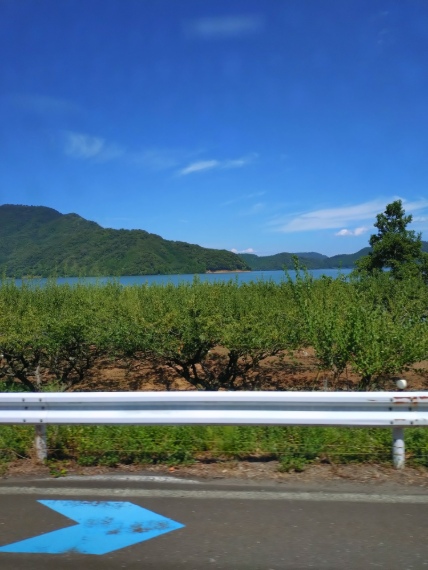
Passing through the Mikata Five Lakes region on a summer journey — Fukui Prefecture, Japan.
🌊 Where Freshwater Meets the Sea
Did you know that some lakes contain both freshwater and seawater?
These are called brackish lakes (汽水湖), where freshwater and saltwater meet and mix.
The Mikata Five Lakes (三方五湖) in Fukui Prefecture are a remarkable example. Although the five lakes are connected by waterways, they have different salt concentrations.
One lake contains freshwater, three contain brackish water, and another contains saltwater.
These differences create diverse habitats for fish and other wildlife. The lakes are also known as the “Five-Colored Lakes”, as their waters can appear in different shades.
Among them, Lake Suigetsu (水月湖) has a particularly unusual structure.
Its upper layer contains water with relatively low salinity, while denser, saltier water remains below. Because the two layers do not mix easily, the deeper water has very little oxygen.
This hidden separation beneath the surface is one of the remarkable natural features of Lake Suigetsu.
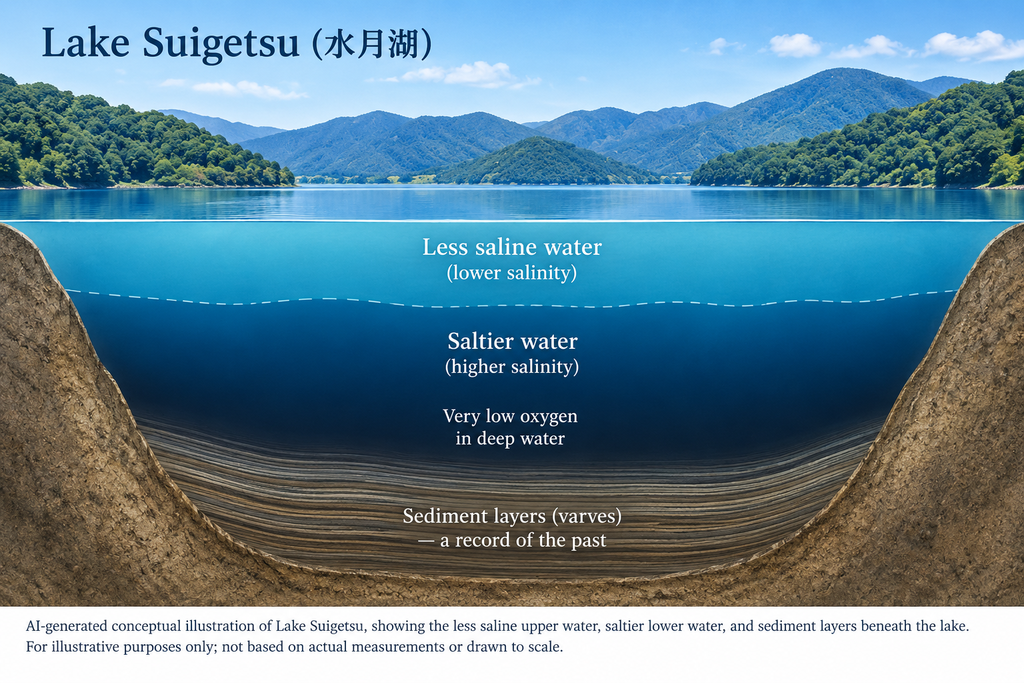
Lake Suigetsu’s layered waters — AI-generated conceptual illustration, not to scale.
⏳ Lake Suigetsu — 70,000 Years Beneath the Water
Beneath the quiet waters of Lake Suigetsu lies an extraordinary record of Earth’s past.
For approximately 70,000 years, thin layers of sediment have accumulated on the lakebed, forming delicate stripes known as varves (年縞).
Each pair of light and dark layers represents one year, much like the annual rings of a tree.
These layers contain traces of pollen, volcanic ash, and other materials that reveal changes in climate and the natural environment over thousands of years.
Scientists have recovered approximately 45 meters of sediment cores from Lake Suigetsu. These carefully preserved layers provide an important reference for understanding past environmental changes and dating ancient archaeological materials.
What appears to be a peaceful lake on the surface holds an extraordinary natural archive beneath its waters — a record written one year at a time.
🌈 Rainbow Line — A View Across the Lakes
One of the best places to appreciate the beauty of the Mikata Five Lakes is Rainbow Line Summit Park, located on Mount Baijō in Fukui Prefecture.
A scenic mountain road leads toward the summit, where visitors can take a chairlift or cable car to a series of observation terraces.
From above, the lakes spread out between the green mountains, with the blue waters of Wakasa Bay stretching toward the horizon.
The panoramic view reveals how closely the five lakes lie together, each with its own shape and character.
It is a beautiful reminder that some of Japan’s most extraordinary natural landscapes are hidden in quiet corners of the country.
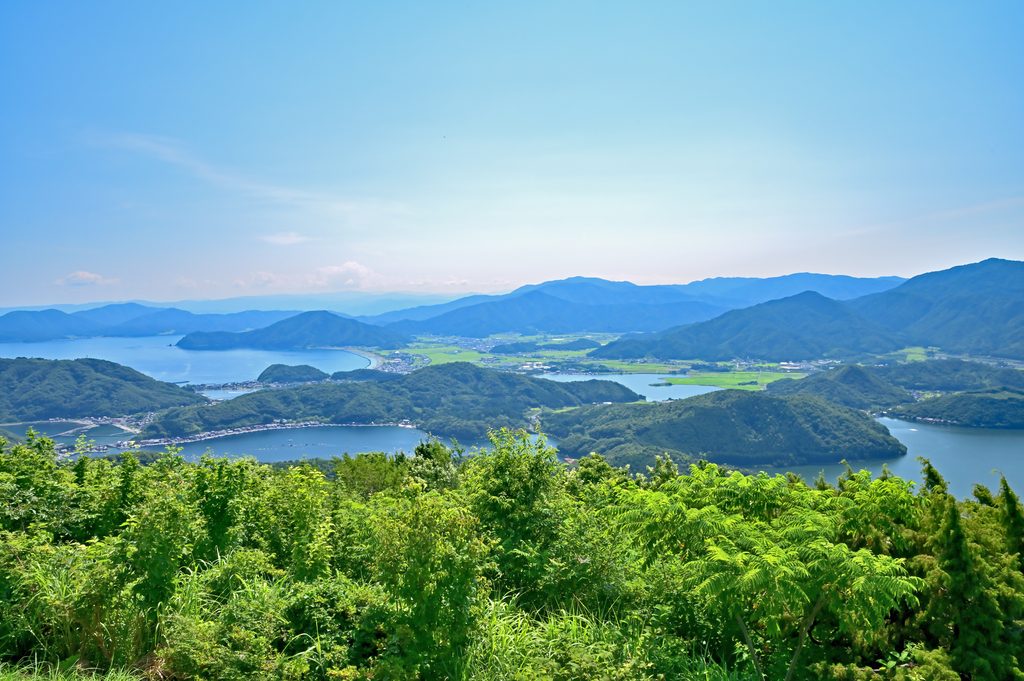
Panoramic view of the Mikata Five Lakes from Rainbow Line Summit Park — Fukui Prefecture, Japan.
🌿 Kaha’s Note
A lake may seem still and timeless, yet beneath its surface, nature is constantly preserving stories we cannot see.
The Mikata Five Lakes remind us that even familiar landscapes can hold unexpected wonders — from the meeting of freshwater and seawater to the delicate traces of thousands of passing seasons.
Sometimes, a glimpse of water along a summer journey is enough to open the door to a much deeper story.
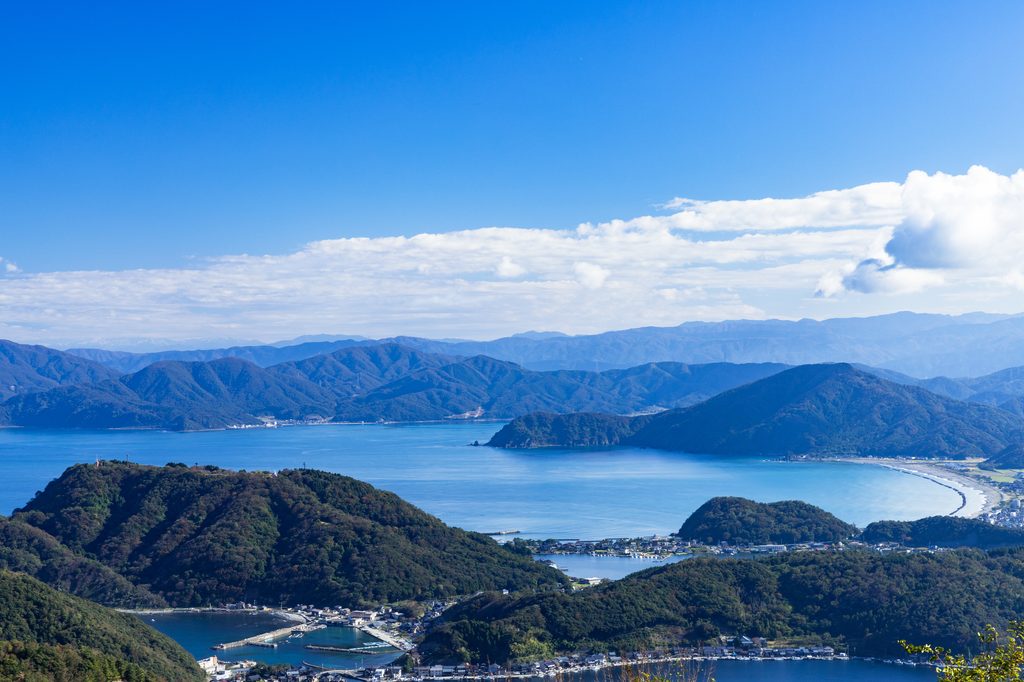
The Mikata Five Lakes region and the surrounding coastal landscape — Fukui Prefecture, Japan.
🌈 Explore More — Coming Soon
My summer journey through Fukui continued beyond the Mikata Five Lakes, toward a mysterious island in Wakasa Bay.
Coming soon to Dragon Path: A journey to Ongami Island, an island associated with dragon imagery, along with a glimpse into the fascinating mermaid legends of the Wakasa region.
Stay tuned for more stories of Japan’s sacred landscapes, ancient legends, and hidden wonders.

コメント